How to Test Hair Porosity Low vs High Porosity Hair Care Guide Best Oils
Have you ever spent a small fortune on high end hair masks and luxury oils only to find that your hair still feels dry, brittle, or strangely greasy? It is a common frustration that leads many to believe their hair is just difficult or that a specific product is a total dud. However, the truth usually has nothing to do with the price tag of your products and everything to do with hair porosity. Understanding your hair porosity is like finding the missing manual for your unique hair type. It determines how your hair receives and retains moisture, which is the foundation of any successful hair care routine.
In this comprehensive guide, we are going to dive deep into the science of hair strands. We will explore what porosity actually is, how you can test it at home with a simple glass of water, and exactly which ingredients will help your specific hair type thrive. Whether you are dealing with stubborn cuticles that refuse to let water in or damaged strands that cannot seem to hold onto hydration, we have the solutions you need to transform your mane.
What Exactly Is Hair Porosity?
To understand porosity, you have to look at the microscopic structure of a hair strand. Each hair is covered in a protective outer layer called the cuticle. Think of the cuticle like shingles on a roof. Hair porosity refers to how open or closed these shingles are. This determines how easily moisture, oils, and chemical treatments can pass in and out of the hair shaft.
There are three main categories of porosity: low, medium, and high. While genetics play a massive role in your natural porosity, external factors like heat styling, chemical processing, and environmental exposure can change your porosity over time. Recognizing where you fall on this spectrum is the first step toward a routine that actually works.
The Simple Hair Porosity Float Test
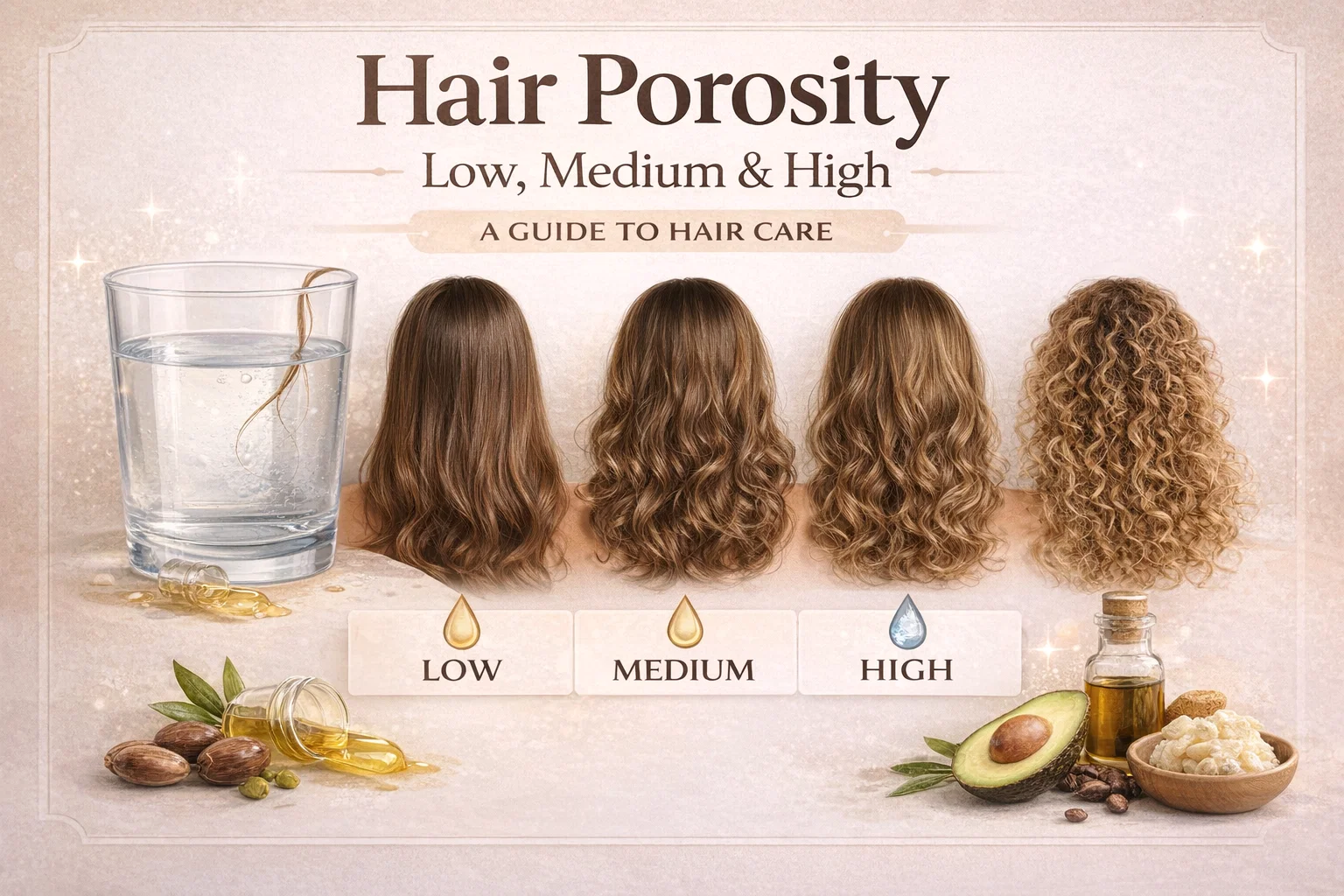
Before you go out and buy a whole new shelf of products, you need to know what you are working with. The most famous and easiest way to check is the Float Test. It requires nothing more than a clear glass of water and a few minutes of your time.
Follow these steps for the most accurate results:
- Start with clean hair: Wash your hair with a clarifying shampoo to remove any product buildup, oils, or silicones that might interfere with the results.
- Dry a strand: Take a single clean, dry strand of hair. It is best to take one that has naturally shed rather than pulling one out!
- The Water Drop: Drop the hair strand into a clear glass of room temperature water.
- The Wait: Watch what happens over the next 2 to 4 minutes.
Analyzing Your Results: What Your Hair Is Telling You
Now that you have completed the test, it is time to interpret what that floating (or sinking) strand means for your daily routine.
Low Porosity: The Water Resisters
If your hair stayed floating on the surface of the water after several minutes, you have low porosity hair. This means your hair cuticles are tightly closed and overlap each other like a suit of armor. While this is great for keeping moisture locked in once it is there, it makes it incredibly difficult for moisture to get inside in the first place. You might notice that water beads up on your hair when you are in the shower or that it takes a very long time for your hair to get fully saturated.
Medium Porosity: The Perfect Balance
If your hair slowly drifted toward the middle of the glass, congratulations! You have medium porosity hair. This is often considered the ideal state. Your cuticles are slightly raised, allowing just the right amount of moisture to enter while preventing too much from escaping. This hair type usually holds styles well and requires the least amount of maintenance to stay healthy.
High Porosity: The Moisture Sponges
If your hair sank to the bottom of the glass almost immediately, you have high porosity hair. This means your cuticles are widely spaced or even have gaps and holes in them. While your hair absorbs water and products very quickly, it loses them just as fast. High porosity hair is often the result of damage from bleaching, frequent coloring, or excessive heat styling. It often feels dry to the touch even shortly after applying moisturizer.
Deep Dive Into Low Porosity Hair Care
Low porosity hair can be stubborn. Because the cuticles are so tight, products tend to sit on the surface, leading to product buildup. If you feel like your hair gets greasy or weighed down easily, this is likely why.
Best Practices for Low Porosity
The goal here is to open the cuticle. The best way to do this is with indirect heat. When you apply a deep conditioner, use a steaming cap or a warm towel. The warmth gently lifts those stubborn cuticles, allowing the nutrients to actually enter the hair shaft. You should also focus on using lightweight, water based products rather than heavy creams.
The Best Oils for Low Porosity
Avoid heavy oils like coconut or castor oil, as they will just sit on the surface and cause a mess. Instead, reach for oils with smaller molecular structures that can slip through the tight cuticles:
- Jojoba Oil: Closely mimics the natural oils of your scalp.
- Argan Oil: Lightweight and packed with Vitamin E for shine.
- Grapeseed Oil: An ultra light oil that adds moisture without the weight.
Mastering Medium Porosity Maintenance
Even though medium porosity hair is easy to manage, you cannot ignore it entirely. The focus here is on maintenance and balance. You want to ensure you are giving your hair a healthy mix of moisture and protein to keep those cuticles in their happy, semi open state.
Care Tips for Medium Porosity
Use a combination of rinse out conditioners and leave in treatments. You have the flexibility to experiment with different textures, but try not to overdo it with heavy proteins or harsh chemicals that could push your hair into the high porosity category. Regular deep conditioning once a week is usually enough to keep this hair type glowing.
The Best Oils for Medium Porosity
You can handle slightly richer oils than the low porosity group:
- Sweet Almond Oil: Great for sealing in moisture after a wash.
- Olive Oil: Perfect for a pre shampoo treatment.
- Coconut Oil: Can be used sparingly to help maintain protein levels.
Rescuing and Managing High Porosity Hair
High porosity hair is the most fragile of the three. Because the cuticles are always open, the hair is prone to frizz, tangling, and breakage. You need to act as a barrier to keep moisture from evaporating into the air.
Care Tips for High Porosity
The key for high porosity hair is to use rich, creamy products. Look for anti frizz formulas and products that contain proteins to help fill in the gaps in your cuticles. Cold water rinses at the end of your shower can also help to manually lay the cuticles flat, trapping in the hydration you just applied.
The Best Oils and Butters for High Porosity
You need heavy hitters that will create a seal over the hair shaft:
- Avocado Oil: Rich in fatty acids that penetrate and nourish deeply.
- Jamaican Black Castor Oil: A thick oil that is legendary for sealing moisture and promoting growth.
- Shea Butter: Provides a heavy protective layer to prevent moisture loss throughout the day.
Common Mistakes to Avoid
Regardless of your porosity, there are a few universal traps that people fall into. One of the biggest mistakes is using silicones to mask damage. While they make hair look shiny, they can create a waterproof barrier that prevents any actual moisture from reaching the hair. This is especially dangerous for low porosity hair.
Another mistake is neglecting the scalp. Your hair porosity refers to the hair fiber, but healthy hair starts at the follicle. Ensure you are massaging your scalp and keeping it clean so that the new hair growing in is as healthy as possible. Finally, do not assume your porosity is the same all over your head. It is very common to have high porosity ends (due to age and damage) and low or medium porosity roots!
Building Your Personal Routine
Now that you have the knowledge, it is time to audit your bathroom cabinet. If you have low porosity hair, swap that heavy butter for a light milk. If you have high porosity hair, stop using thin lotions and upgrade to a thick, luscious cream. Remember that hair care is a journey of trial and error. The water test gives you the map, but you still have to drive the car.
Keep a hair journal if you are making big changes. Note down how your hair feels after using a specific oil or after a heat treated deep conditioning session. Within a few weeks, you will likely see a massive difference in the manageability and shine of your hair.
Conclusion: Embrace Your Unique Texture
Cracking the code of hair porosity is truly a game changer for anyone serious about hair health. By understanding whether your cuticles are tightly closed, perfectly balanced, or wide open, you can stop wasting money on products that do not serve you. Whether you are reaching for Jojoba oil to coax moisture into low porosity strands or sealing high porosity curls with Shea butter, you are now equipped with the science to make the best choices for your hair.
Consistency is the secret ingredient. Now that you know your type, stick to the recommended oils and techniques for at least a month. Your hair will thank you with incredible shine, reduced frizz, and the kind of health that turns heads. Happy styling!