How to Use Gua Sha for Face Lifting Step-by-Step Guide for Jawline Radiant Skin ʚɞ
If you have been scrolling through your social media feeds lately, you have likely seen beautiful jade or rose quartz tools being swept across glowing faces. This ancient practice, known as Gua Sha, has taken the modern wellness world by storm, and for good reason. Far from being just a passing trend, Gua Sha is a deeply rooted therapeutic technique from Traditional Chinese Medicine that offers a natural, holistic way to achieve a lifted, contoured, and radiant complexion without the need for invasive procedures.
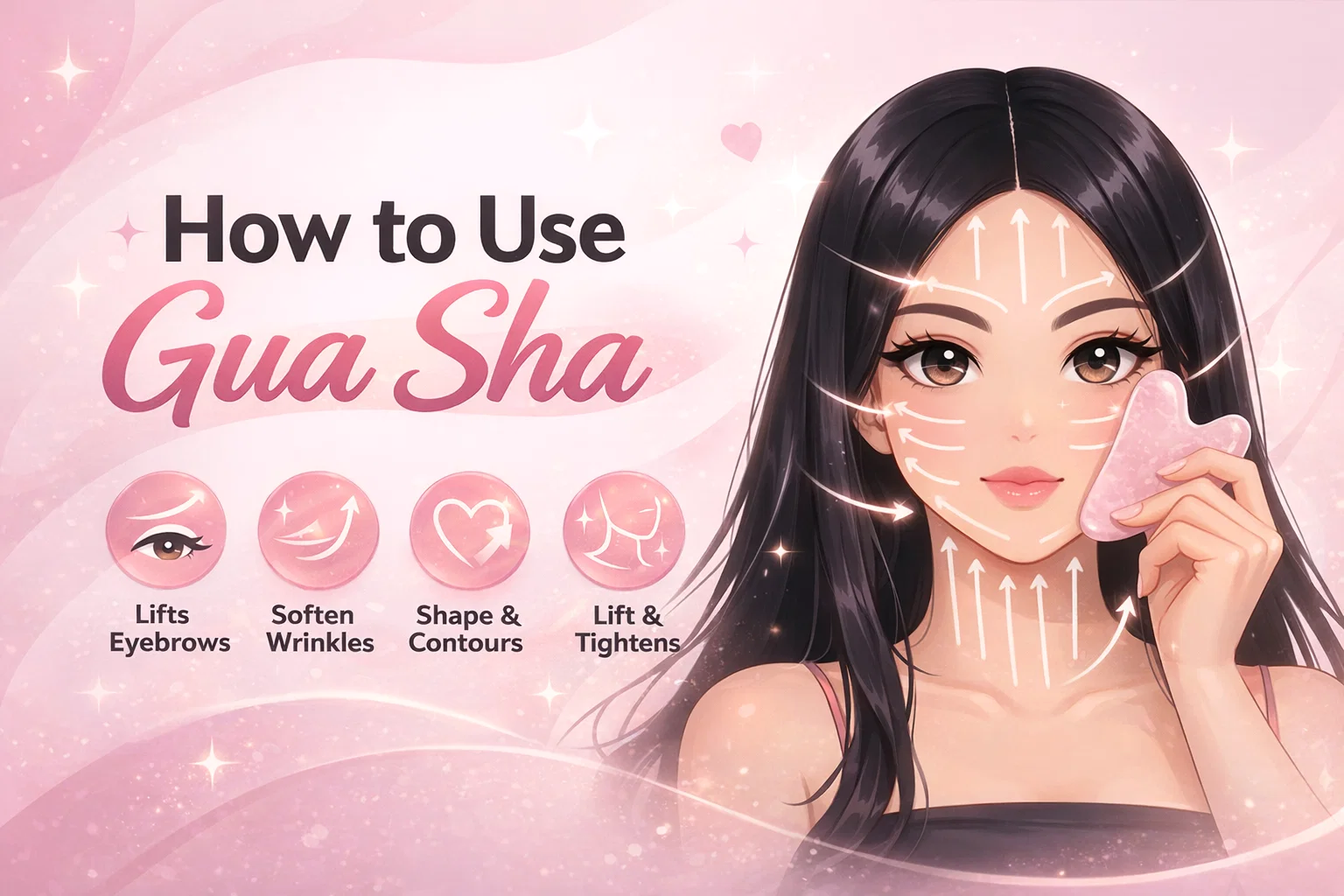
The image provided offers a perfect visual roadmap for anyone looking to start this journey. It highlights how a simple stone tool can target specific concerns like eyebrow lifting, wrinkle smoothing, and jawline firming. By following the natural flow of your lymphatic system and facial muscles, you can transform your skincare routine into a meditative ritual that feels as good as it looks. Let us dive deep into the world of Gua Sha and explore how you can master these techniques at home.
What Exactly is Gua Sha and Why is it Essential?
Gua Sha translates literally to scraping sand. While the traditional body treatment involves firmer pressure to release stagnant energy or heat, facial Gua Sha is a much gentler version designed to move lymphatic fluid and release muscle tension. The goal is not to cause redness or bruising but to stimulate blood flow and encourage the skin to heal and renew itself from the inside out.
In our modern lives, we hold an incredible amount of tension in our faces. Whether it is squinting at a computer screen, clenching our jaws during stressful meetings, or simply the effects of gravity, our facial muscles can become tight and stagnant. This tension often leads to fine lines, puffiness, and a dull complexion. Gua Sha acts as a form of exercise for the face, stretching the fascia and allowing for better nutrient delivery to the skin cells.
The Benefits of a Consistent Practice
- Natural Contouring: By focusing on the jawline and cheekbones, you can achieve a more defined and sculpted look.
- Reduced Inflammation: The sweeping motions help move stagnant lymph fluid toward the lymph nodes, significantly reducing morning puffiness and under-eye bags.
- Enhanced Product Absorption: Using a tool over your favorite face oil or serum helps push the ingredients deeper into the dermis for better results.
- Softened Fine Lines: Regular massage relaxes the muscles responsible for expression lines, such as crow’s feet and forehead wrinkles.
- Stress Relief: The rhythmic nature of the practice lowers cortisol levels and provides a much-needed moment of mindfulness in a busy day.
Preparing Your Skin for the Perfect Glide
Before you pick up your tool, preparation is key. You should never use a Gua Sha tool on dry skin. Doing so can cause tugging, stretching, and irritation, which defeats the purpose of the treatment. Start with a clean face and apply a generous amount of facial oil. You want enough slip so the tool glides effortlessly, but not so much that you lose control of the movement.
Choose an oil that suits your skin type. Squalane or jojoba oils are fantastic for acne-prone skin because they are non-comedogenic. For those with dry or aging skin, look for richer oils like rosehip, argan, or sea buckthorn. Once your skin is prepped, you are ready to follow the directional arrows shown in the guide to begin your lifting session.
Step-by-Step Guide to Facial Lifting and Contouring
To get the best results, always work from the center of the face outward and upward. This encourages the drainage of fluids toward the ears and down the neck, where the primary lymph nodes are located. Use light to medium pressure and hold your tool at a 15-degree angle, almost flat against the skin, rather than perpendicular.
Smoothing the Forehead and Lifting Eyebrows
Start at the center of your forehead, between the brows. Using the flat or slightly curved side of the tool, sweep upward toward the hairline. This helps smooth out those horizontal forehead wrinkles and provides a gentle lift to the entire brow area. To target the eyebrows specifically, use the notched end of the tool to hug the brow bone, sweeping from the start of the brow out toward the temple. This creates an immediate “open-eye” effect and reduces the look of heavy lids.
Brightening the Eye Area and Reducing Puffiness
The skin around the eyes is incredibly delicate, so use the lightest pressure here. Using the small rounded end of your Gua Sha, start at the inner corner of the eye and very gently sweep outward toward the temple. This movement is essential for moving fluid away from the under-eye area, which helps minimize dark circles and puffiness. It is a game-changer for those who wake up with “tired” eyes.
Sculpting the Cheekbones and Softening Smile Lines
To define the cheeks, use the long curved side of the tool. Start at the side of the nose and sweep along the underside of the cheekbone toward the ear. If you struggle with deep nasolabial folds or smile lines, focus on the area around the mouth, using small upward strokes to plump the tissue and relax the surrounding muscles. You will notice that after just a few passes, your cheeks look more vibrant and lifted.
Defining the Jawline and Supporting the Neck
A sharp jawline is one of the most sought-after results of Gua Sha. Use the heart-shaped notch of your tool to “hug” the jawbone. Start at the chin and sweep firmly along the bone all the way to the earlobe. At the end of the stroke, give the tool a little wiggle to stimulate the lymph nodes located right behind the ear. This helps flush out the toxins you have just moved.
The Importance of the Neck Area
Many people forget that the neck is the “drainage pipe” for the face. If your neck is tight, the fluid from your face has nowhere to go. Following the upward arrows on the neck in the guide helps firm the skin and improve the appearance of tech-neck lines. However, to finish your routine, you should also perform a few downward strokes on the sides of the neck to help the lymphatic fluid drain into the body’s main system. This ensures that the puffiness you removed from your face does not just sit at the jawline.
Choosing the Right Tool for Your Goals
While the technique is the most important factor, the material and shape of your tool can influence your experience. Most beginners start with a “heart” or “wing” shaped tool, as these are versatile enough to fit all the contours of the face mentioned in our guide.
Jade vs. Rose Quartz
Jade is naturally cooling but warms up quickly upon contact with the skin. In traditional medicine, it is known for its balancing and healing properties. It is often recommended for morning use to Revitalize the skin. Rose Quartz, on the other hand, stays cool for a longer period. It is often associated with the heart chakra and is perfect for a calming evening routine focused on self-love and soothing inflammation.
Advanced Materials
If you are looking for something different, Stainless Steel tools are becoming popular because they are non-porous and incredibly easy to sanitize. There is also Bian stone, which contains a high number of minerals and is said to emit ultrasonic pulsations that further enhance circulation. No matter which material you choose, ensure the edges are smooth and free of chips to protect your skin.
Common Mistakes to Avoid
Even though Gua Sha is a safe and gentle practice, there are a few pitfalls that can hinder your progress or cause irritation. First, never use a tool on broken skin, active cystic acne, or rashes. You do not want to spread bacteria or cause further inflammation in those areas.
Second, avoid using too much pressure. It is a common misconception that pressing harder leads to faster results. In reality, the lymphatic system is very close to the surface of the skin, so a light touch is actually more effective for depuffing. Finally, be consistent. You will see an immediate glow after one session, but the structural changes like a lifted brow or a firmer jawline come from practicing 3 to 5 times a week over several months.
Integrating Gua Sha Into Your Lifestyle
The beauty of this practice is its flexibility. You do not need an hour-long spa session to see results. Even five minutes of intentional movement while you watch your favorite show or after you apply your skincare at night can make a difference. It is an opportunity to disconnect from technology and reconnect with your body.
Think of Gua Sha as a long-term investment in your skin health. While topical creams work on the surface, this tool works on the foundation. It keeps the blood flowing, the muscles relaxed, and the spirit calm. When you feel good on the inside, it naturally reflects as a healthy, vibrant glow on the outside.
Conclusion
The art of Gua Sha is a beautiful bridge between ancient wisdom and modern self-care. As the guide illustrates, every part of the face can benefit from these intentional, upward movements. By incorporating these techniques into your routine, you are doing more than just chasing a beauty standard; you are supporting your body’s natural detoxification process and giving yourself the gift of relaxation. Grab your tool, find your favorite oil, and start sweeping your way to a more lifted and radiant you. The journey to better skin is literally in your hands. Save these tips and start your practice today!