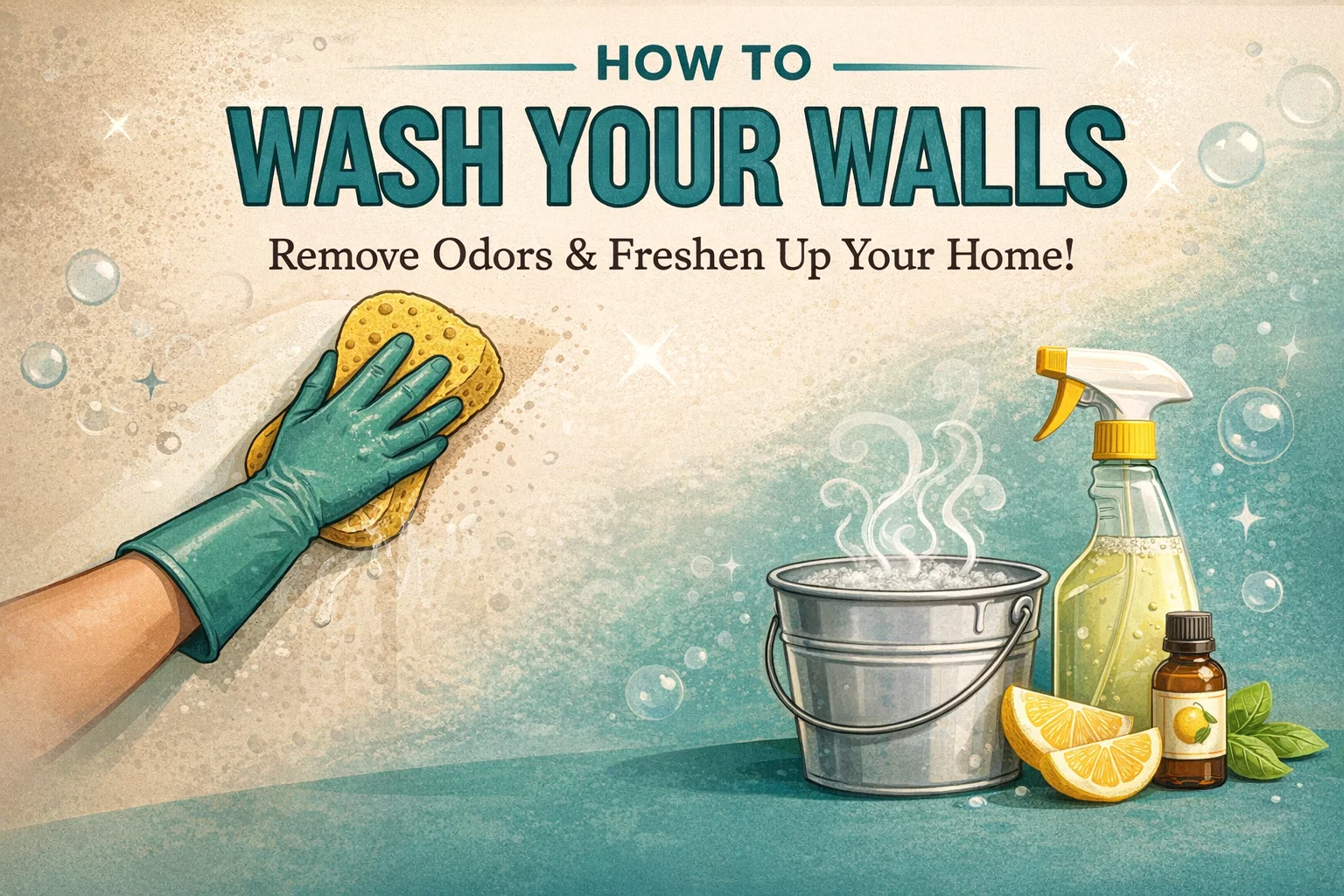
How to Wash Walls to Remove Old House Smells and Refresh Your Home
We often focus our cleaning efforts on the floors, countertops, and appliances, but have you ever stopped to consider your walls? It is easy to overlook them because they do not accumulate grime in the same visible way a stovetop does. However, walls are essentially large, vertical filters. Over time, they act like a sponge, absorbing everything from cooking grease and dust to cigarette smoke and pet dander. This buildup is often the hidden culprit behind that lingering, stale odor that just will not go away no matter how many candles you light.
If you are frustrated by a home that never seems to smell truly fresh, it is time to look at your walls. A deep wall wash is one of the most underrated home maintenance tasks, and the best part is that you do not need harsh chemicals to get the job done. With a few simple pantry staples and a little elbow grease, you can restore your home to a state of freshness.
Why Your Walls Might Be the Source of Bad Odors
Walls have surface textures that are surprisingly porous. Whether you have flat latex paint, textured wallpaper, or even semi-gloss finishes, these surfaces hold onto microscopic particles. When you cook dinner, tiny droplets of oil become airborne and eventually settle on your walls. While these droplets might not be visible initially, they form a sticky film that traps dust and odors over months and years.
This is particularly problematic in high-traffic areas like kitchens and hallways. If you have ever walked into an older home and noticed a specific, heavy scent, you are likely smelling the cumulative effect of years of trapped environmental particles. Simply painting over these surfaces is often a mistake, as the new paint may struggle to adhere to the greasy film, leading to peeling or an uneven finish later on.
The Essential DIY Cleaning Solution
You do not need expensive, industrial-strength cleaners to tackle this project. In fact, the most effective solution is usually found right in your kitchen cabinet. White vinegar is a powerhouse when it comes to breaking down grease and neutralizing odors without leaving behind toxic residue.
What you will need:
- One gallon of hot water (adjust to 32 ounces for smaller jobs)
- Two cups of distilled white vinegar
- A few drops of lemon essential oil (optional, for a fresh scent)
- Large, soft sponges
- Microfiber cloths
- Two buckets (one for the cleaning solution, one for clear rinsing water)
The hot water helps to loosen the grease, while the acidity of the vinegar cuts through the film. Lemon essential oil not only provides a pleasant citrus aroma but also adds a mild antibacterial boost.
Step-by-Step Guide to Washing Your Walls
Preparation is key to ensuring you do not make a mess or damage your wall finish. Start by clearing the area and placing a drop cloth or old towels along the baseboards to catch any drips. Dust the walls first using a dry microfiber mop or a clean duster to remove surface cobwebs and loose debris.
The Cleaning Process
Dip your sponge into the vinegar solution and wring it out thoroughly. You want the sponge damp, not dripping wet, to avoid water damage to your drywall or trim. Start at the top of the wall and work your way down in sections. This prevents dirty water from streaking down areas you have already cleaned. Gently wipe in a circular motion, applying light pressure where you suspect the most grease buildup.
Rinsing and Drying
Once a section is wiped, go over it again with a clean cloth dampened only with plain water. This removes the vinegar residue and any remaining grime. Finally, use a dry, clean microfiber cloth to buff the area dry. Air drying is fine for most surfaces, but a quick buff ensures you do not leave any water spots behind.
Important Safety and Material Considerations
Before you dive in, it is wise to test your cleaning solution on an inconspicuous spot, such as behind a door or near a baseboard. While this vinegar mixture is generally safe for most painted surfaces, some high-end wallpapers or specialty paints may react differently. If you notice any color bleeding or finish dulling, stop immediately and dilute the vinegar further with more water.
Also, never use abrasive scrubbers like steel wool or the rough side of a heavy-duty scouring sponge. These can leave permanent scratches or strip the paint right off the surface. Always opt for soft cellulose sponges or microfiber cloths to keep your walls in pristine condition.
Maintaining a Fresh Home Environment
Once you have performed a deep clean, you will notice an immediate difference in the air quality of your home. To keep it that way, try to incorporate spot-cleaning into your regular routine. If you notice a splash near the stove or a smudge in the hallway, wipe it down immediately rather than waiting for it to build up.
Combining this wall-washing routine with other habits, such as cleaning your light fixtures and washing window treatments, will create a comprehensive approach to home maintenance that keeps stale smells at bay. It is about consistent, small efforts rather than massive, exhausting cleaning marathons.
Conclusion
Refreshing your home does not always require new furniture or expensive air purification systems. Sometimes, the secret to a cleaner, fresher living space is simply going back to basics and maintaining the surfaces we often ignore. By washing your walls with this simple vinegar solution, you are removing years of hidden buildup and creating a healthier environment for you and your family. It is a rewarding project that proves you do not need to spend a lot of money to see a significant improvement in your home’s atmosphere. Grab your supplies, put on some music, and give your home the deep clean it deserves. You will be surprised by how much brighter and fresher every room feels.
Would you like me to create a printable checklist or a visual guide for the best cleaning supplies to keep under your sink?