Ice vs Heat Therapy Guide When to Use Ice or Heat for Pain Relief and Injuries
When you tweak your back lifting a heavy box or wake up with a stiff neck from a poor nights sleep, your first instinct is usually to reach for some form of relief. You head to the freezer for a bag of frozen peas or rummage through the linen closet for that old heating pad. But in the heat of the moment, a critical question arises: which one is actually going to help? Choosing between ice and heat therapy is one of the most common dilemmas in home health care, yet using the wrong one at the wrong time can actually prolong your discomfort or increase inflammation.
Understanding the Fundamentals of Temperature Therapy
To use these tools effectively, we first have to understand how they interact with the human body. Think of ice and heat as biological switches that flip your circulatory system in opposite directions. Cold therapy, or cryotherapy, is primarily a vasoconstrictor. This means it narrows the blood vessels and slows down blood flow to a specific area. By doing this, it significantly reduces the accumulation of fluid that causes swelling and numbing the nerve endings to provide a temporary break from sharp pain.
On the flip side, heat therapy is a vasodilator. It opens up those same blood vessels, encouraging a rush of oxygenated blood and nutrients to the site. This process is essential for healing damaged tissue and relaxing muscles that have locked up due to stress or chronic overuse. Heat also increases the elasticity of connective tissues, which is why it feels so much better to use heat before stretching or moving a stiff joint.
When to Reach for the Ice Pack
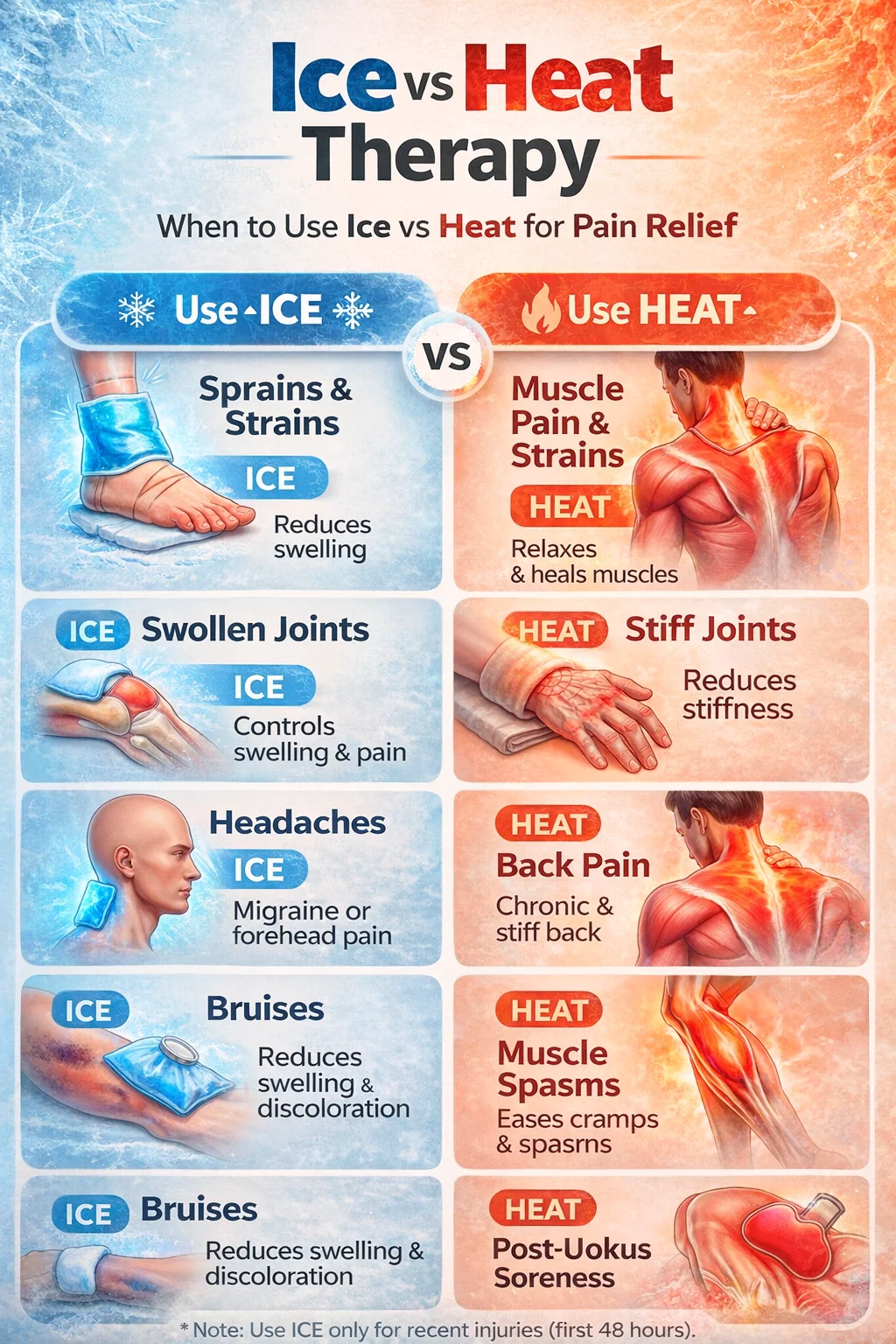
Ice is the undisputed king of acute injuries. If an injury is fresh, meaning it happened within the last 24 to 72 hours, cold is almost always the right choice. This is the period when your body is sending a massive inflammatory response to the site of the trauma. While inflammation is a natural part of healing, too much of it causes intense pressure and pain.
Sprains, Strains, and Pulled Muscles
If you have rolled your ankle or felt a sudden pop in your hamstring, the internal tissues are likely bleeding or leaking fluid. Applying ice immediately helps to limit this internal bleeding and keeps the swelling manageable. Experts recommend the RICE method: Rest, Ice, Compression, and Elevation. During these first few days, aim for 15 to 20 minutes of icing every few hours, ensuring you always have a thin cloth between the ice and your skin to prevent frostbite.
Managing Migraines and Headaches
Interestingly, ice is often the preferred choice for migraines. Since migraines involve the dilation of blood vessels in the brain, applying a cold compress to the forehead or the base of the skull can help constrict those vessels and dull the throbbing sensation. Many find that a cold gel mask provides a level of sensory relief that heat simply cannot match.
Bruises and Acute Flare-ups
A bruise is essentially a collection of blood trapped under the skin. By icing a fresh impact, you limit the amount of blood that escapes the capillaries, which can result in a smaller and less painful bruise. Similarly, if you have a condition like sciatica and you are experiencing a sudden, sharp “lightning bolt” of pain down your leg, ice can help calm the irritated nerve root at the base of your spine.
The Healing Power of Heat
Once the initial swelling of an injury has subsided, or if you are dealing with a nagging, long-term ache, heat becomes your best friend. Heat is about comfort, flexibility, and restoration. It is the go-to solution for the “stiff and sore” category of physical ailments.
Chronic Back and Neck Pain
Most of us spend hours hunched over laptops or steering wheels, leading to “posture syndrome” where the muscles in our neck and shoulders become chronically tight and under-oxygenated. Heat therapy helps to melt away this tension. By applying a heating pad to the upper back or neck, you stimulate blood flow that carries away metabolic waste products like lactic acid, allowing the muscles to finally let go.
Arthritis and Joint Stiffness
For those living with arthritis, mornings can be a struggle as joints feel “rusty” and difficult to move. Heat is excellent for pre-activity preparation. A warm shower or a paraffin wax bath for the hands can lubricate the joints and make daily tasks much more manageable. However, a key exception exists: if an arthritic joint is currently red, hot, and swollen, that is an active flare-up and should be treated with ice instead of heat.
Muscle Cramps and Menstrual Relief
Muscle spasms, whether they are in your calf after a long run or in the uterus during a menstrual cycle, respond beautifully to heat. Heat reduces the “tone” of the muscle, meaning it tells the fibers to stop contracting involuntarily. This is why a warm bath or a localized heat patch is such a staple for soothing abdominal cramps.
The Gray Area: Post-Workout Recovery
If you have ever seen professional athletes submerged in tubs of ice after a game, you might think ice is the only way to recover. However, the science is evolving. Post-workout soreness, often called Delayed Onset Muscle Soreness (DOMS), can be treated with both, depending on your goals.
- Use Ice: If you feel localized inflammation, “hot” spots in your joints, or if you have a specific minor injury that occurred during training.
- Use Heat: If your muscles just feel generally stiff, tight, and overworked. Heat will help promote the blood flow necessary to repair the micro-tears in the muscle fibers that occurred during your workout.
Some athletes even use “contrast therapy,” which involves alternating between hot and cold. This creates a pumping action in the blood vessels, theoretically flushing out toxins and speeding up the delivery of healing nutrients. You might try 3 minutes of heat followed by 1 minute of cold, repeating the cycle three times.
Safety First: Tips for Effective Therapy
While ice and heat are natural remedies, they are powerful and must be used with care to avoid skin damage or worsening your condition. Follow these simple rules for a safer recovery:
The 20-Minute Rule
Never leave a heat pack or an ice pack on for longer than 20 minutes at a time. Prolonged exposure to cold can cause nerve damage or skin issues, while excessive heat can lead to “toasted skin syndrome” or even first-degree burns. Give your skin a break of at least an hour between sessions.
Protective Barriers
Never apply ice or chemical heat packs directly to bare skin. Use a towel, a sleeve, or even a t-shirt as a buffer. This ensures the temperature transfer is gradual and safe.
Check for Sensation
If you have a condition like diabetes or any form of peripheral neuropathy that limits your ability to feel temperature, you must be extremely cautious. Check the skin frequently for signs of redness or blistering, as you may not feel the “sting” of a pack that is too hot or too cold.
Choosing the Right Tools for Your Home Kit
Building a recovery kit doesn’t have to be expensive. For cold therapy, reusable gel packs are fantastic because they remain flexible even when frozen, allowing them to wrap around a knee or wrist. In a pinch, a bag of frozen peas works well because the small round shapes conform to the body. For heat, electric heating pads offer consistent temperature, while microwaveable grain bags (filled with rice or flaxseed) provide a “moist” heat that many find more penetrating and comfortable.
Conclusion: Listening to Your Body
At the end of the day, your body is an incredible communicator. If you apply ice to an injury and it feels remarkably worse or causes your muscles to seize up further, it might be time to switch to gentle heat. Conversely, if you apply heat to a swollen knee and the throbbing intensifies, that is a clear sign that inflammation is the primary issue and cold is needed. By understanding the science of vasoconstriction and vasodilation, you can move from guessing to knowing, taking control of your recovery and getting back to your pain-free self much faster. Keep this guide in mind the next time an ache strikes, and you will be well on your way to a more efficient healing journey.