Inner Child Shadow Work Healing The Shame That Became Your Identity Trauma Prompts
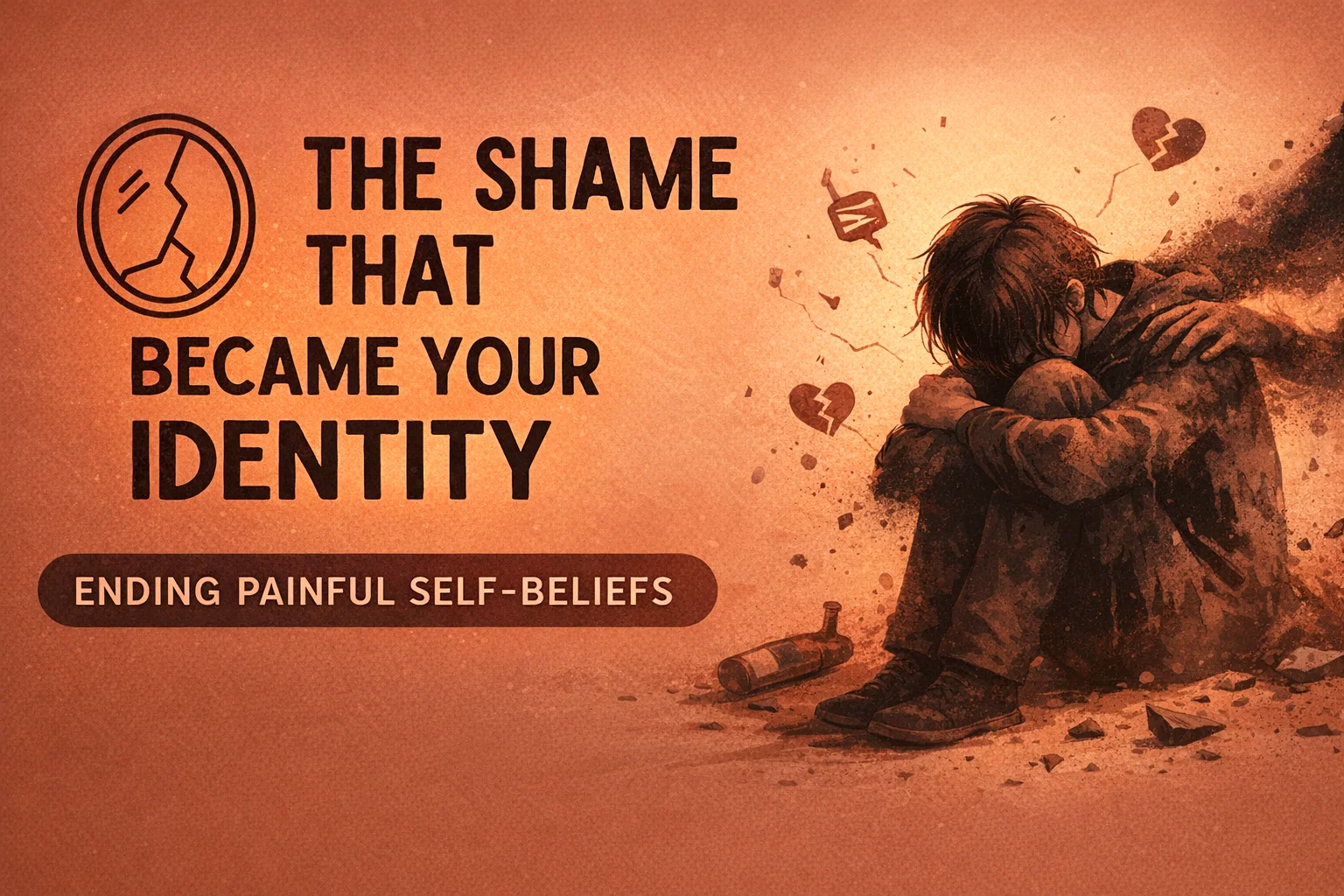
Have you ever looked in the mirror and seen a flaw that you couldn’t look past? Maybe you’ve felt that something about you is just fundamentally wrong. This feeling, the painful and often invisible weight we carry around, is shame. In our fast-paced world, many of us develop a toxic companion that whispers “you’re not enough” or “you’re broken.” This shame, if left unchallenged, can seep so deeply into our sense of self that it becomes part of our very identity. The image you see here is not just a prompt; it’s a powerful tool designed to help you externalize that deep-seated emotion, to draw it out into the open so it can be seen, understood, and eventually, healed. Let’s delve into this profound topic, using the image as a guide, and explore how we can begin to untangle the shame that has woven itself into who we believe we are.
Understanding Shame versus Guilt: Decoding the Distinctions
First, we need to get crystal clear about what shame actually is. A crucial step in this journey is distinguishing shame from its cousin, guilt. While they might feel similar, their internal impact is completely different. Guilt is feeling bad about something you did. Shame is feeling bad about who you are.
Think of it like this: guilt says, “I made a mistake,” while shame says, “I am a mistake.” Guilt focuses on a behavior and can be a healthy motivator for change or making amends. Shame, however, is corrosive. It’s a deep-seated feeling of being defective, flawed, and inherently unworthy of connection and belonging. When guilt is unexpressed or misdirected, it can metastasize into shame, becoming a permanent fixture of our internal landscape.
Shame often thrives in secrecy. When we’re ashamed, we hide. We hide our true selves, our vulnerabilities, and even our strengths. We pull back from relationships, fearful that if people really knew us, they would reject us. Understanding this fundamental difference is vital because it changes the conversation from “what did I do wrong?” to “why do I believe I am wrong?” This shift in perspective is the key that unlocks the door to profound self-compassion.
The Architecture of Identity-Based Shame: How It Finds its Home
Now, let’s look at how shame transforms from a feeling into an entire identity. Imagine your sense of self as a magnificent, unique mosaic. In early life, this mosaic is blank, waiting for experiences to add their color and texture. Positive interactions add vibrant, strong tiles of self-worth. Unfortunately, painful experiences can add dark, jagged, fragile tiles of shame.
This process of internalization usually begins in childhood. When our needs for love, safety, and belonging aren’t met, or when we receive conditional affection, our young minds struggle to make sense of it. Children are inherently egocentric, so they naturally conclude that they must be the cause of the problem. If a parent is emotionally unavailable, a child might think, “I must not be lovable enough.” If they are criticized for being “too sensitive” or “too much,” that criticism gets woven into their identity. Over time, these early messages become the silent, internal script we read from. The voice of the outer critic becomes the voice of the inner critic, a voice we can’t escape because it seems to be our own.
Furthermore, this dynamic is amplified by cultural and societal expectations. Our performance-obsessed culture often measures worth by achievements, beauty, or wealth, creating fertile ground for comparison and the inevitable “less-than” feeling. Media images can create unrealistic standards, further cementing the belief that something is inherently wrong with us because we don’t fit a predetermined mold. Shame becomes the prism through which we view ourselves and our place in the world, distorting reality and making us forget the vibrant person we were meant to be.
A Deep Dive into the Visual Prompt: Externalizing Your Shadow Self
This is where the power of the image and the drawing prompt come into play. The icon in the image is simple but profound: a cracked face in a mirror. It’s the perfect representation of the core issue. We don’t see our whole reflection; we see the fragments, the flaws, the parts we’ve disowned. The cracks are the fault lines of shame. The entire exercise is designed for externalization, a key therapeutic concept. It means taking an internal experience and putting it “out there” where we can work with it safely.
Externalization is important because shame is a phantom; it can disappear into the mist when we try to confront it directly. But by making it tangible through art or writing, we gain power over it. The very act of naming it or drawing it can reduce its intensity. It shifts the dynamic from being consumed by the feeling to being an observer of the feeling. This first step is often the hardest, but it’s also the most liberating. Let’s look at the instructions provided in the image and unpack their significance:
Step-by-Step Guide to the Drawing Prompt: Your Creative Map to Healing
- “Draw shame as clothing, skin, shadow, or stain.” This is brilliant because it asks you to give your inner shame a visible form. Is your shame a thick, itchy, gray cloak you wear? Is it a permanent shadow that follows you? A difficult-to-remove stain? This imagery is powerful. A stain can be scrubbed; a shadow shifts with the light; clothing can be taken off. Just giving it a form starts to separate it from your core identity.
- “Add symbols of the moments shame was planted.” You’re not just drawing an abstract concept; you’re tracing its roots. Think back. What specific events, words, or looks planted that seed? A teacher’s reprimand, a parent’s disappointment, a sibling’s teasing. Use symbols: a red marker, a silent tear, a pointing finger. This step helps you place the shame outside of yourself and back onto the events that created it.
- “Mark who made you feel wrong.” This is a direct challenge to the internalization process. It places responsibility where it belongs. The people who made you feel flawed were acting out of their own unprocessed trauma or limitations. By identifying them, you take back your power and start to dismantle the belief that you were the origin of the feeling.
- “Draw the version of you shame tried to erase.” This is my favorite part! This is an act of reclaiming. Before the cracks, who were you? A child full of curiosity, joy, courage, or creativity. Shame tries to erase our unique spark, making us small and quiet. Here, you get to fan that spark into a flame. What does that original, joyful self look like? Visualize that radiant, pre-shame self and draw it with love.
- “Add one symbol of truth that shame cannot touch.” This is the ultimate symbol of hope and resilience. What is a truth about yourself that no amount of shame can take away? Your capacity for kindness, your intelligence, your love for animals, your sense of justice. Draw it. It might be a single, glowing star or a strong, ancient tree. This symbol serves as an anchor, a reminder that your worth is non-negotiable and inherent.
Engaging with the Writing Prompts: Digging Deeper with Words
The writing prompts are a perfect accompaniment to the drawing exercise. While art accesses the more symbolic, non-verbal parts of our brain, writing engages our language centers, allowing us to build a structured narrative of our own story. Don’t worry about perfect prose; just let your thoughts flow and answer the prompts with complete honesty. Let’s look at each one:
Unpacking the Stories We Were Told: A Critical Look
“What did you learn was wrong about you?” This prompt hits right at the core of identity-based shame. Often, we are given conditional rules: “You’re only good if you’re quiet,” “You’re only lovable if you’re perfect.” What was the implicit message you received? Were you “too sensitive,” “too smart,” or “too silly”? This prompt helps you identify the specific false beliefs that have become the shaky foundation of your self-identity.
Whose Voice is Speaking?: Demystifying the Inner Critic
“Whose voice still lives inside your inner critic?” This is a powerful, eye-opening question. That critical voice that puts you down is rarely your own. It’s often the internalized voice of a parent, a teacher, a bully, or even a societal expectation. Is it your mother’s disapproval, your father’s high standards, or a bully’s cruel words from third grade? By naming the voice, you unmask the critic. It goes from “I am flawed” to “I am carrying around someone else’s opinion of me.” This crucial realization allows you to begin ignoring the critic and cultivating your own compassionate inner voice.
A Journey into Possibility: Who You Are Beyond the Mask
“What would you be without shame?” This is a beautiful exercise in visualization and self-expansion. Take a moment to truly ponder this. Imagine waking up with that heavy weight completely gone. How would you breathe? How would you walk? What dreams would you pursue? Who would you talk to? This prompt isn’t just a fantasy; it’s a target. It helps you build a picture of the life and the self you are working toward. Hold onto that vision; it is your destination and your guide.
Conclusion: The Courageous Path to Reclaiming Your Spark
As the final section of the visual prompt, “WHY IT WORKS,” so poignantly states: “Shame thrives when pain is unseen and unnamed. Externalizing it separates identity from survival beliefs.” This is the entire point. The shame you carry wasn’t born from truth; it was born from a need to survive in an environment that felt, in some way, conditional or unsafe. You adopted certain beliefs about yourself to fit in, to be good, to stay safe.
But those survival mechanisms are no longer serving you. They’ve become a prison. Using these drawing and writing prompts is a powerful act of self-love. It is the beginning of a journey towards self-compassion, acceptance, and a true, unburdened sense of identity. It’s about seeing the cracked reflection in the mirror and having the courage to mend it, not by filling the cracks with more shame, but by sealing them with the golden glue of self-acceptance. So take a moment. Grab a piece of paper, your favorite colors, and a pen. Give yourself the gift of an honest, creative, and healing encounter. You are not your shame. You are the resilient, beautiful soul who shame tried, and failed, to erase. It’s time to bring that soul out into the light.