Kindness vs People-Pleasing 4 Key Differences for Better Boundaries and Mental Health
Have you ever felt completely drained after a day of saying yes to every request that came your way? It is a common struggle. Many of us pride ourselves on being kind, helpful, and supportive friends or colleagues. However, there is a thin, often invisible line between genuine kindness and the trap of people-pleasing. While kindness stems from a place of abundance and care, people-pleasing often comes from a place of fear or a need for validation. Understanding this distinction is one of the most transformative steps you can take for your mental health and personal growth. When you learn to identify these behaviors, you stop sacrificing your own well-being for the sake of others and start building relationships based on mutual respect rather than silent resentment.
The Fundamental Difference Between Kindness and People-Pleasing
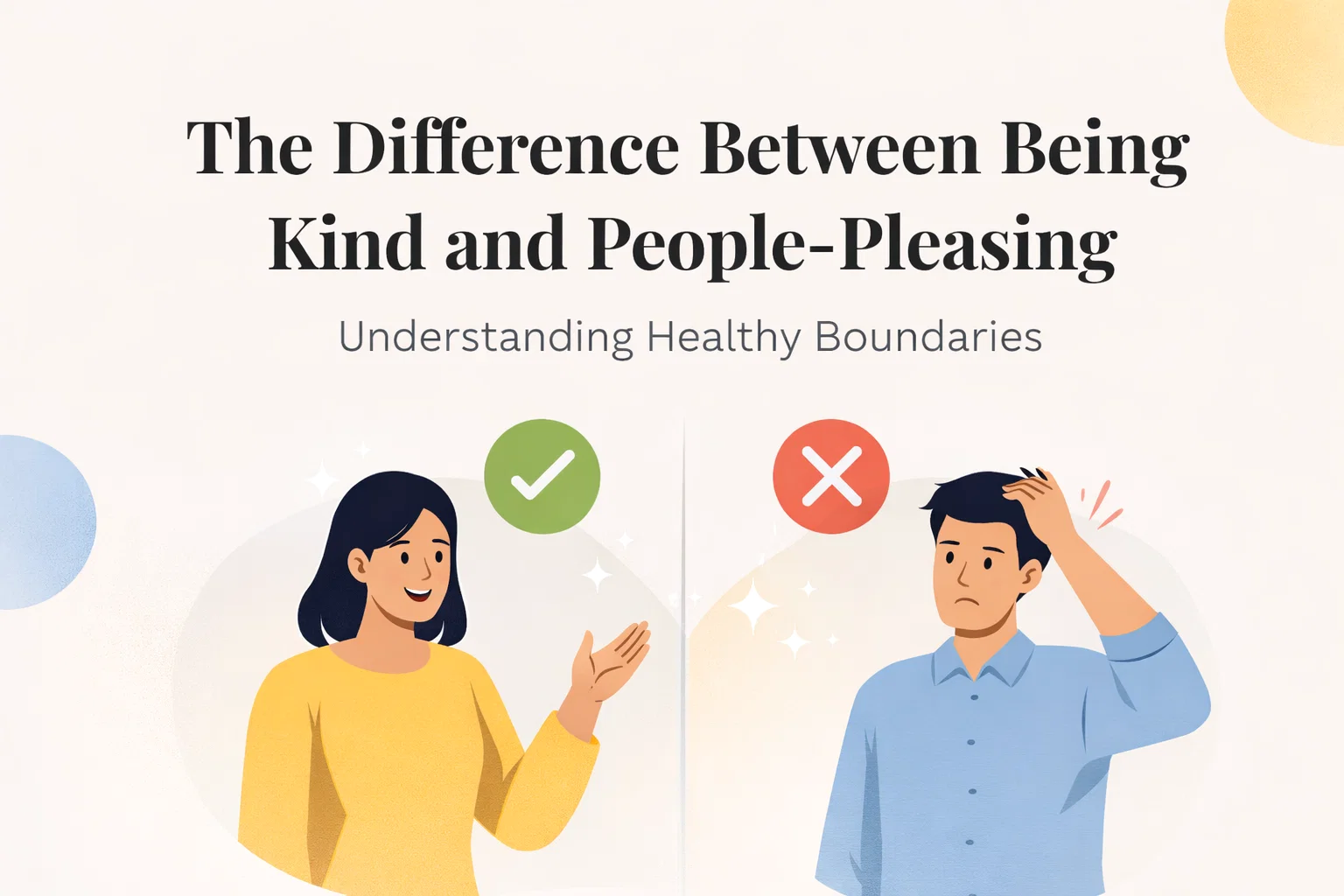
At first glance, kindness and people-pleasing look identical. Both involve helping others, being polite, and contributing to the well-being of those around us. But the internal motivation is entirely different. Kindness is an intentional choice. It is something you do because you want to, and it usually feels good to give. People-pleasing, however, feels like an obligation. It is a reactive behavior where you prioritize the needs of others because you are afraid of conflict, rejection, or being perceived as mean.
One of the clearest ways to tell the difference is by looking at how you feel afterward. Genuine kindness leaves you feeling connected and fulfilled. People-pleasing leaves you feeling exhausted, used, or even annoyed with the person you just helped. Kindness includes you in the equation, while people-pleasing quietly removes your needs from the table entirely.
1. Managing Your Time with Integrity
Time is our most precious resource, and how we give it away says a lot about our boundaries. A kind person knows their schedule and respects their existing commitments. If someone asks for a favor and they are busy, a kind person will say something like, I cannot this week because I have plans, but I am free on Saturday. This approach is honest. it honors the self while still offering support in a way that is sustainable.
The Trap of Canceling Plans
In contrast, a people-pleaser hears a request and immediately feels the pressure to comply, regardless of their current schedule. They might say, Okay, I will cancel my plans and come. By doing this, they are effectively telling themselves and the other person that their own time is not valuable. Over time, this habit leads to burnout because you are never truly resting or honoring your own life. Kindness shows up without compromising your integrity, whereas people-pleasing overrides your personal needs first.
2. Navigating Work Requests and Overcommitment
In a professional setting, the line between being a team player and a doormat can get blurry. Being a kind colleague means offering support within your capacity. For example, saying, I can help with one part of this project, allows you to contribute without drowning in tasks. This builds a reputation for being reliable and realistic. Colleagues respect people who know their limits because they know that when that person says yes, they will actually deliver high-quality work.
The Stress of the Full Plate
The people-pleaser at work often says, Sure, I will handle it, even when their plate is already overflowing. They fear that saying no will make them look incompetent or unhelpful. The result is a massive amount of stress and often a decline in the quality of their work because they are spread too thin. Support with limits builds long-term respect and professional growth. Overcommitting simply builds chronic stress and eventual resentment toward your job.
3. Capacity and the Power of Boundaries
Capacity refers to your emotional and physical energy levels. We all have days where we have plenty to give and days where we are running on empty. A kind person is aware of their battery life. They might tell a friend, I can stay for an hour, but then I need to head out. This allows them to be present and supportive for that hour without pushing themselves into a state of exhaustion. It makes the support they give sustainable over the long term.
When You Feel Drained but Stay Anyway
People-pleasers often ignore their internal warning signs. Even when they are completely drained, they might say, I will stay as long as you need. They believe that being a good person means being infinitely available. However, this is a recipe for a breakdown. If you do not set boundaries on your capacity, you will eventually have nothing left to give to anyone, including yourself. Boundaries are not walls to keep people out. they are gates that allow you to manage your energy so you can stay in the game.
4. Expressing Personal Preferences
Do you often find yourself saying, Anything works, or, I don’t mind, when someone asks for your opinion? While it might seem like you are being easygoing, constantly deferring your preferences is a form of people-pleasing. Kindness includes being honest about what you want. Saying, I would actually prefer the earlier time, is a kind act because it provides clarity. It helps the other person know how to actually please you, making the interaction smoother for everyone.
The Disappearing Act of the People-Pleaser
When you constantly say anything works even when it does not, you are slowly removing your personality and needs from your relationships. This creates a dynamic where your friends or partner do not actually know the real you. Kindness includes you in the decision-making process. People-pleasing quietly removes you until you feel like a background character in your own life. Sharing your preferences is a vital part of being a whole, healthy human being.
How to Transition from Pleasing to Kindness
Moving away from people-pleasing habits takes time and practice. It requires you to get comfortable with the temporary discomfort of saying no. Start small. The next time someone asks for something, take a breath before answering. Ask yourself: Am I saying yes because I want to help, or because I am afraid they will be mad if I don’t?
Practicing Your No
You do not need to give a long explanation when you set a boundary. A simple, I can’t do that right now, but thank you for thinking of me, is often enough. You will find that most people are perfectly fine with a polite refusal. Those who get angry are usually the ones who benefited most from your lack of boundaries, which is a sign that the boundary was necessary in the first place.
The Benefits of Healthy Boundaries
When you stop people-pleasing, your life changes in beautiful ways. You have more energy for the things that actually matter to you. Your relationships become more authentic because they are based on honesty rather than performance. Most importantly, your self-esteem grows. Every time you honor your own time, work capacity, and preferences, you are sending a message to yourself that you are worthy of respect.
Creating Sustainable Support Systems
Ultimately, being kind is about creating a life where you can give from a full cup. When you take care of yourself, your acts of service to others are more meaningful and impactful. You become a better friend, a better employee, and a happier individual. By choosing kindness over people-pleasing, you ensure that your support is sustainable and your spirit remains bright.
Conclusion
The journey from being a people-pleaser to a truly kind person is about reclaiming your power. It is about realizing that you can be a good person and still say no. It is about understanding that your needs are just as important as the needs of those around you. As you begin to implement these changes, remember that kindness includes you. Do not leave yourself out of the circle of compassion that you so freely offer to others. Start small, stay consistent, and watch as your world transforms into a more balanced and respectful place. Save these reminders for the next time you feel the urge to overcommit, and choose the path of kindness instead.