Long Hair Care Tips Best Growth Routine for Healthy, Shiny Thick Hair
Achieving the long, flowing hair of your dreams is a journey that requires more than just patience. It demands a dedicated approach to health, maintenance, and the right tools. If you have been staring at your reflection wondering why your hair seems to hit a certain length and then stop, or why it feels brittle and dry, you are not alone. Transitioning from average length to a cascading mane involves understanding the science of hair growth and the daily habits that protect your strands from the elements and internal stressors. By adopting a holistic routine, you can transform dull, stagnant locks into a vibrant crown of healthy, shiny hair.
The Foundation of Growth: Trimming for Length
It might seem counterintuitive to cut your hair when you are trying to grow it out, but regular trims are the secret weapon of every long-hair enthusiast. When you neglect your ends, split ones begin to form. Once a hair strand splits at the bottom, that tear can travel all the way up the shaft, causing the entire hair to break off or become permanently damaged. This leads to thin, frizzy ends that make your hair look shorter and less healthy than it actually is.
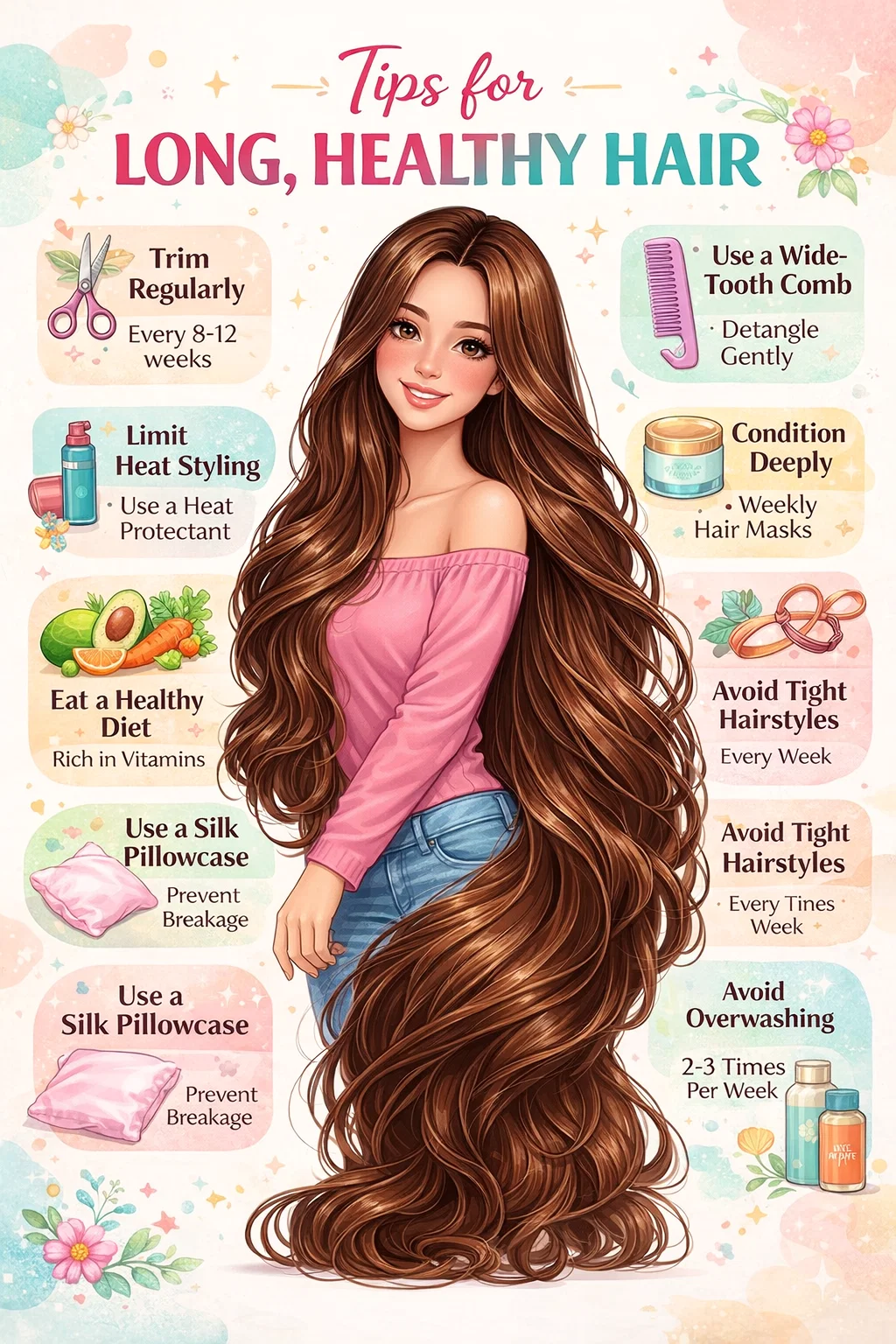
Aim to visit your stylist every 8 to 12 weeks for a micro-trim. You do not need a full haircut; simply asking for a dusting of the ends will remove the damaged parts while preserving the majority of your length. This practice ensures that your hair remains thick and strong from the root to the very tip, allowing you to reach your goal length without having to deal with a ragged appearance.
Recognizing When You Need a Trim
If you notice that your hair is tangling more easily at the bottom or that the ends look translucent when held up to the light, it is time for a visit to the salon. Healthy hair should feel smooth and consistent in thickness throughout the entire length. By staying ahead of the damage, you prevent the need for a drastic cut later on, keeping your progress steady and your silhouette sharp.
Mastering the Art of Gentle Detangling
Long hair is naturally more prone to knots, and how you handle those tangles determines whether your hair stays on your head or ends up in your brush. Using a standard fine-tooth comb or a rough brush on wet hair is one of the fastest ways to cause breakage. When hair is wet, it is at its most elastic and fragile state, making it incredibly easy to snap.
Instead, always reach for a wide-tooth comb. This tool allows you to work through knots without putting unnecessary tension on the hair follicle. Start at the very bottom of your hair and work your way up toward the roots in small sections. This bottom-up approach ensures that you are clearing the path for the comb rather than pushing a large knot down into a tighter, more difficult tangle.
The Benefits of Detangling While Conditioning
For those with particularly stubborn knots, try detangling in the shower while your hair is coated in a slippery conditioner or a deep-conditioning mask. The product provides the necessary lubrication for the comb to glide through effortlessly. This not only saves time but also ensures that every strand is coated in moisture while remaining protected from the physical stress of brushing.
Thermal Protection and Heat Management
We all love the look of a sleek blowout or perfect curls, but excessive heat is the primary enemy of shine and moisture. High temperatures from flat irons and curling wands strip the hair of its natural oils and weaken the protein structure of the strand. Over time, this results in “bubble hair” or permanent heat damage that can only be fixed by cutting it off.
If you must use heat, always apply a high-quality heat protectant spray or serum first. These products create a thin barrier that distributes heat more evenly and slows down the rate at which moisture evaporates. Additionally, try to lower the temperature setting on your tools. Most people do not need the highest heat setting to achieve their desired style. Aim for the lowest temperature that still gets the job done.
Deep Conditioning: The Weekly Moisture Boost
As hair grows longer, the natural oils produced by your scalp have a harder time traveling all the way down to the ends. This is why long hair often feels oily at the roots and parched at the tips. To bridge this gap, incorporating a weekly deep conditioning treatment is essential. These masks are formulated with higher concentrations of proteins, oils, and humectants than standard conditioners, allowing them to penetrate deeper into the hair cuticle.
Apply your treatment to clean, damp hair, focusing primarily on the mid-lengths and ends. For an extra boost, wrap your hair in a warm towel or use a shower cap to trap the natural heat from your scalp. This helps open the cuticle so the nutrients can be fully absorbed. After 15 to 20 minutes, rinse with cool water to seal the cuticle and lock in that incredible shine.
Nutrition and Hydration from Within
External products can do a lot, but the health of your hair truly begins inside your body. Hair is made of a protein called keratin, and its growth is fueled by the vitamins and minerals you consume daily. If your diet is lacking in essential nutrients, your body will prioritize your vital organs over your hair, leading to slow growth and thinning.
Focus on a diet rich in the following hair-loving foods:
- Leafy Greens: Spinach and kale provide iron and folate, which help red blood cells carry oxygen to your scalp.
- Healthy Fats: Avocados and walnuts are packed with Omega-3 fatty acids that provide the oils needed for a glossy finish.
- Proteins: Lean meats, beans, and eggs provide the building blocks for hair structure.
- Biotin and Zinc: Found in seeds and nuts, these help prevent hair loss and promote a healthy scalp environment.
Do not forget the power of water. Dehydration can lead to a dry scalp and brittle hair. Drinking at least eight glasses of water a day ensures that your hair follicles stay hydrated and capable of producing strong, resilient strands.
Protecting Your Hair While You Sleep
You spend about a third of your life sleeping, and during that time, your hair is often subjected to friction against your pillowcase. Traditional cotton pillowcases are actually quite rough on a microscopic level. They absorb moisture from your hair and cause friction every time you toss and turn, leading to the dreaded “bedhead” and increased breakage.
Switching to a silk or satin pillowcase is one of the easiest upgrades you can make to your beauty routine. The smooth surface allows your hair to glide effortlessly without snagging. Silk also helps your hair retain its natural moisture levels. If you have very long hair, you might also consider wearing it in a loose braid or using a silk bonnet to keep it contained and tangle-free throughout the night.
The Golden Rule: Avoid Overwashing
Many people feel the need to wash their hair every single day, but for long hair, this is often too much. Shampoo is designed to remove excess oil, but it also strips away the sebum that keeps your hair protected. Overwashing leads to a dry, itchy scalp and dull, lifeless strands. It can even trigger your scalp to produce even more oil to compensate, creating a frustrating cycle of grease and dryness.
Try to limit your hair washing to 2 or 3 times per week. On your off days, you can use a bit of dry shampoo at the roots to soak up any excess oil. When you do wash, focus the shampoo on the scalp where the oil is concentrated, and let the suds rinse through the ends without scrubbing them directly. This cleanses the hair without depleting the moisture from the oldest, most fragile parts of your mane.
The Importance of Avoiding Tight Hairstyles
High ponytails and tight buns are convenient, but they put constant tension on the hair follicles around your hairline and the nape of your neck. Over time, this can lead to traction alopecia, a form of hair loss caused by pulling. To keep your hair healthy, opt for loose braids, low ponytails, or use silk scrunchies instead of traditional elastic bands that can cut into the hair shaft. Giving your hair a break by wearing it down frequently will help maintain the strength of your roots.
Your Journey to Radiant Long Hair
Consistency is the most important factor when it comes to hair care. You will not see a foot of growth overnight, but by implementing these small, daily changes, you will notice a significant improvement in the texture, strength, and appearance of your hair within a few weeks. Treat your hair like a delicate fabric. If you are gentle with it, provide it with the right nutrients, and protect it from harsh environments, it will reward you with incredible length and a healthy glow.
Start today by evaluating your current routine. Swap out that old brush for a wide-tooth comb, invest in a silk pillowcase, and plan your next deep-conditioning session. Every effort you make to preserve the integrity of your hair brings you one step closer to the long, beautiful hair you have always wanted. Remember that healthy hair is a reflection of your overall wellness, so take care of yourself, stay hydrated, and enjoy the process of nurturing your natural beauty.