Lovage Herb Health Benefits, Uses Perennial Growing Guide
Have you ever walked through a historic herb garden and spotted a towering, leafy giant that looks a bit like celery on steroids? If you have, you likely met Lovage. It is one of those old-world herbs that has sadly fallen out of favor in modern supermarkets, yet it remains a secret weapon for chefs and permaculture gardeners alike. Known botanically as Levisticum officinale, this perennial powerhouse is not just a treat for the taste buds but a robust addition to your natural medicine cabinet. If you are looking for a plant that offers savory flavor, digestive support, and returns faithfully year after year, it is time to get introduced to this incredible herb.
There is a reason the ancient Greeks and Romans absolutely loved this plant. It is resilient, aromatic, and incredibly versatile. Whether you want to spice up a winter stew, soothe an upset stomach, or simply fill a shady corner of your garden with lush greenery, lovage delivers. Let’s dive deep into everything you need to know about growing, eating, and benefiting from this “savory celery” of the herb world.
What Exactly is Lovage?
Lovage is a tall, perennial plant belonging to the Apiaceae family, which makes it a cousin to carrots, parsley, celery, and dill. Visually, it resembles a much larger, wilder version of flat-leaf parsley or celery. When we say large, we mean it. Under the right conditions, this plant can shoot up to seven feet tall, making it an architectural statement piece in any garden design.
The flavor is often described as “savory celery,” but that hardly does it justice. Imagine the best parts of celery combined with parsley, a hint of anise, and a deep, yeasty richness that reminds many people of Maggi seasoning or bouillon. In fact, in some parts of Europe, it is colloquially called the “Maggi plant” because the flavor is so similar to the famous soup seasoning. Every part of the plant is edible, from the thick, hollow stems and glossy green leaves to the spicy seeds and hearty roots.
The Impressive Health Benefits of Lovage
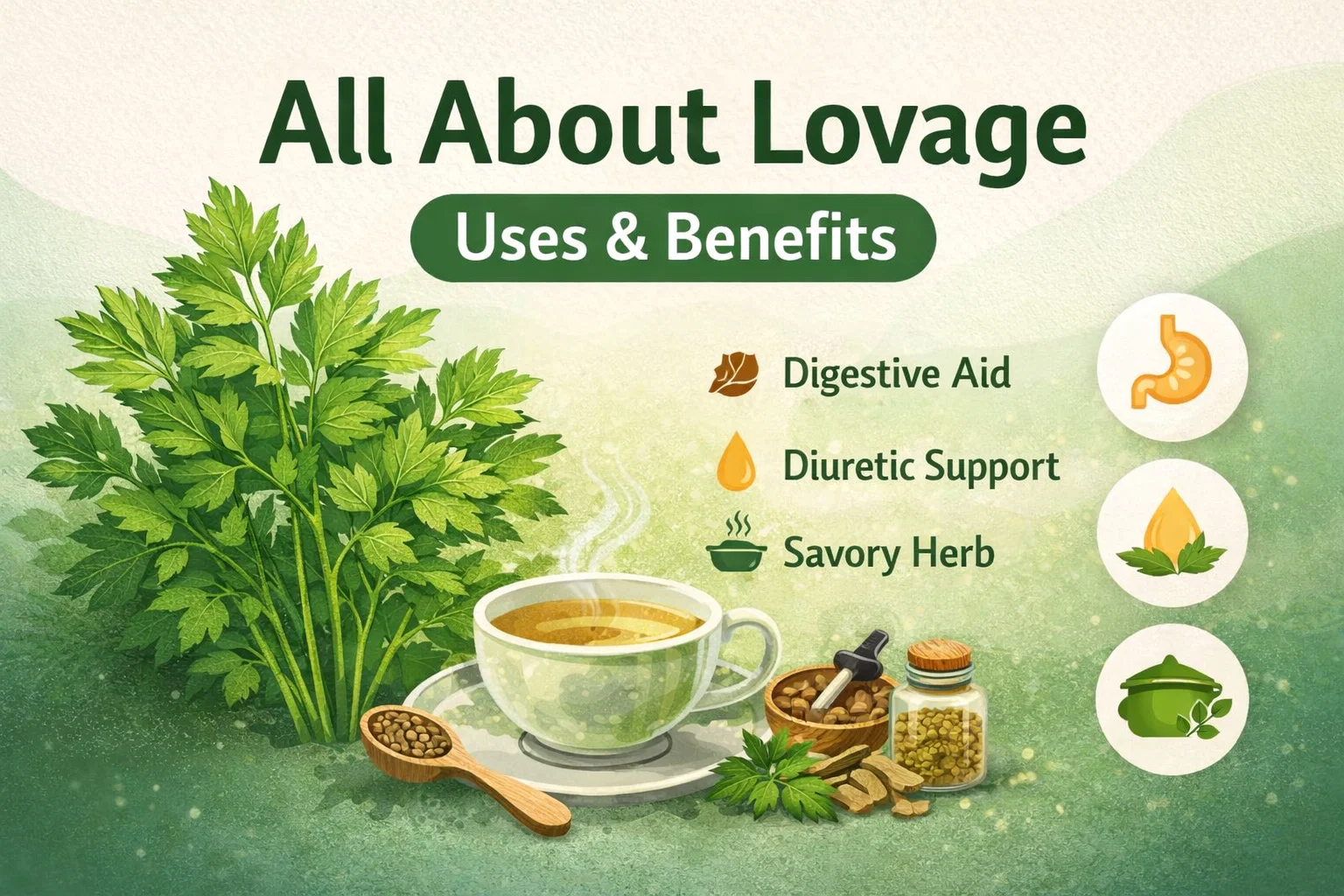
While it is delicious in the kitchen, lovage has a long history as a medicinal herb. The image above highlights several key uses that have been passed down through generations of herbalists. It is a fantastic example of food as medicine.
Digestive Aid and Soothing Support
One of the primary traditional uses for lovage is as a digestive aid. The plant contains compounds that can help settle a rumbling stomach and reduce bloating. If you have ever felt heavy after a large meal, a tea made from lovage leaves or roots is a traditional remedy to get things moving again. It acts as a carminative, which is a fancy way of saying it helps expel gas from the digestive tract, making you feel much more comfortable.
Diuretic Support and Urinary Health
Lovage is known as a natural diuretic. This means it encourages the body to flush out excess fluids and salt through urine. This property makes it valuable for supporting urinary tract health. By increasing urine flow, it helps irrigate the kidneys and urinary tract, potentially helping to flush out minor grit or bacteria. Because of this aquaretic effect, it is often found in herbal blends designed for kidney support or detox protocols. Just remember that because it flushes fluids, you should drink plenty of water when consuming it medicinally.
Culinary Uses: The Kitchen Star
If you love cooking savory comfort foods, you need this herb in your life. It provides a depth of flavor that salt and pepper simply cannot achieve on their own. Because the flavor is quite potent, a little goes a long way. You might need two stalks of celery to flavor a soup, but only a few leaves of lovage will achieve the same intensity.
Leaves for Soups and Stews
The leaves are best used fresh, though they can be dried. They are the perfect addition to potato soups, chicken broths, and vegetable stews. You can chop them up and toss them into a salad for a zesty kick that replaces the need for heavy dressings. Try mixing chopped lovage leaves into softened butter to create a compound butter that melts beautifully over grilled steak or roasted vegetables.
Stems Like Celery
The hollow stems have a wonderful crunch and a strong celery flavor. You can slice them and use them exactly as you would celery in a mirepoix base for sauces. They are also fantastic when candied. Yes, candied lovage stems are a traditional confection that was once quite popular! For a more savory application, use the hollow stems as an eco-friendly, edible straw for a Bloody Mary. The savory notes of the herb pair perfectly with tomato juice.
Seeds and Roots
Do not let the end of the season stop your culinary adventures. When the plant goes to seed, harvest them. Lovage seeds look like fennel seeds and have a spicy, aromatic punch. They are excellent crushed and rubbed onto pork roasts or baked into savory breads and crackers. The roots, which can be dug up in the fall, can be peeled and boiled as a vegetable or dried and ground for teas and tinctures. The root has the most concentrated flavor and medicinal properties, so use it sparingly.
A Complete Growing Guide
One of the best “Fun Facts” about lovage is its longevity. As the guide notes, “Plant Once, Enjoy for Years!” It is a hardy perennial that will come back bigger and stronger every spring. It is incredibly low maintenance, making it perfect for beginner gardeners or those who practice “lazy gardening.”
Climate and Hardiness
Lovage is a cold-hardy champion. It thrives in USDA Hardiness Zones 3 through 9. This means it can survive harsh, freezing winters where temperatures drop significantly below zero. In fact, it actually benefits from a period of cold dormancy. In the spring, it is one of the first plants to poke its head through the soil, often beating the daffodils.
Sun and Soil Requirements
While many Mediterranean herbs like rosemary and thyme crave baking hot sun and dry soil, lovage is different. It prefers a balance. Sun exposure: It does well in full sun but actually appreciates part shade, especially in warmer climates where the afternoon sun can scorch its leaves.
Soil needs: This plant is a hungry giant. It desires rich, moist, and well-drained soil. Before planting, it is a great idea to amend your garden bed with plenty of compost or well-rotted manure. Unlike lavender which likes poor soil, lovage wants nutrients to fuel its massive growth. It also loves moisture. Do not let the soil dry out completely. If you have a damp corner of the garden where other herbs struggle with “wet feet,” lovage might be the perfect candidate for that spot.
Spacing and Size
Give it room! We cannot stress this enough. A mature lovage plant can reach heights of 5 to 7 feet and can spread 3 feet wide. You really only need one plant for an average family. If you plant more than one, space them at least 2 to 3 feet apart to ensure good air circulation. Because of its height, it belongs at the back of the herb border so it does not shade out smaller plants like basil or cilantro.
Harvesting and Preserving
You can start harvesting leaves as soon as the plant has established itself and has plenty of foliage. It is best to harvest in the morning after the dew has dried but before the sun gets too hot. This preserves the essential oils that give the plant its flavor and medicinal properties.
If the plant starts to flower and you want to keep harvesting leaves, snip off the flower stalks. This directs the plant’s energy back into leaf production. However, if you want the seeds, let it bloom! The yellow umbrella-shaped flowers are also a magnet for beneficial insects like pollinators and parasitic wasps, which can help keep pests down in the rest of your garden.
To preserve your harvest, you have a few options. Drying is the most common method, but be warned that dried lovage loses a bit of its punch. A better method is freezing. You can chop the leaves and freeze them in ice cube trays with a little water or olive oil. Then, in the middle of winter, you can just pop a “lovage cube” into your soup pot for an instant taste of summer.
Why You Need Lovage Now
In a world of standardized grocery store produce, growing your own lovage is an act of culinary rebellion. You are accessing a flavor profile that money often cannot buy because fresh lovage does not travel or store well commercially. It connects you to history, connecting your garden to the plots tended by Romans and medieval monks.
Beyond the history and the flavor, it is simply a practical choice. It is a perennial, meaning you get a massive return on investment for a single planting. It is tough, rarely suffers from pests, and provides harvestable goods from early spring right through to the first hard frost. Whether you are interested in natural wellness, gourmet cooking, or simply want a stunning, architectural plant to anchor your garden beds, lovage is the answer.
So, find a sunny (but not too sunny) spot, enrich that soil, and get planting. By next summer, you will be standing in the shadow of your very own 7-foot herb giant, wondering how you ever cooked without it.