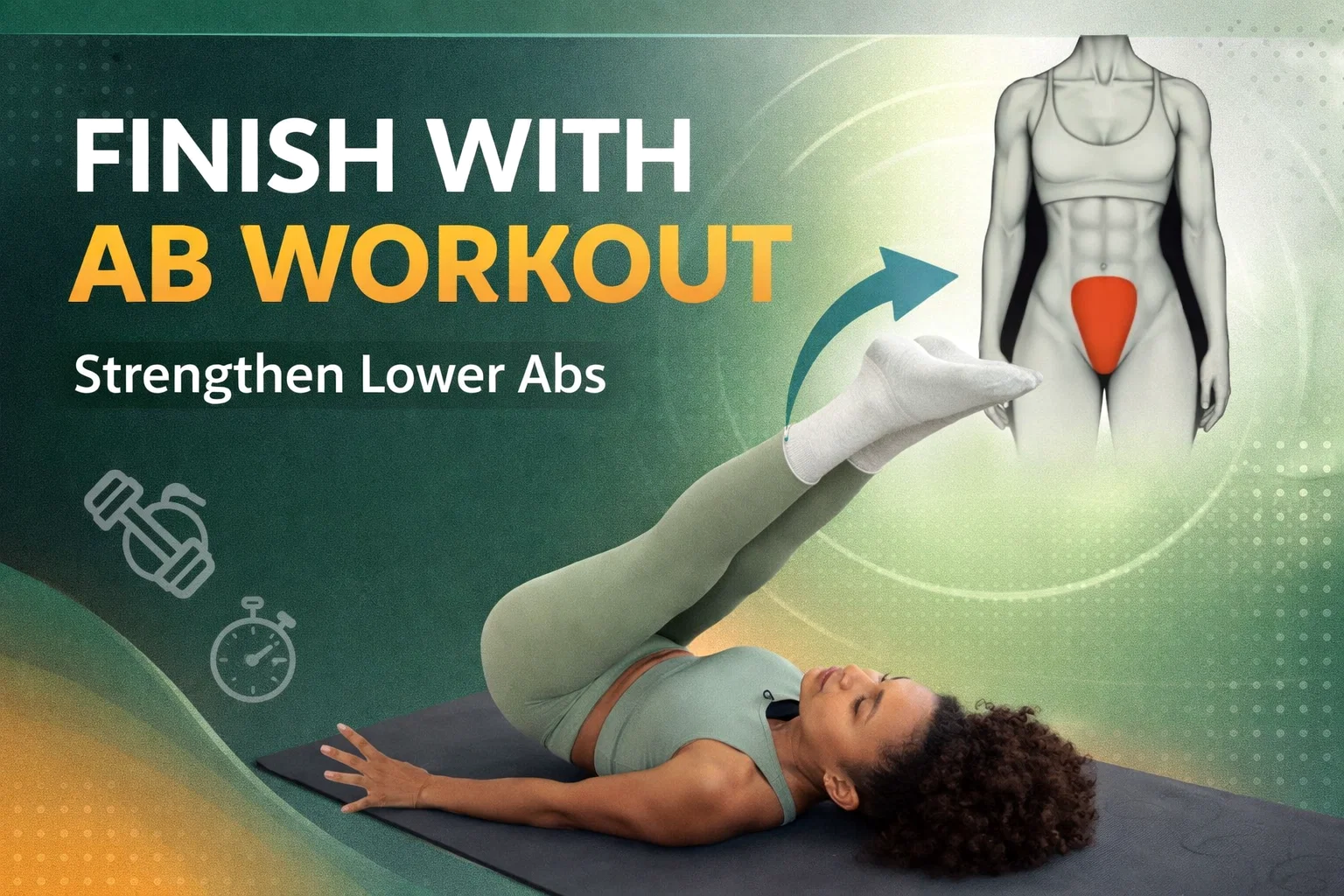
Lower Abdominal Workout for a Toned Core 4×12 Reverse Crunches Routine
Welcome, fitness enthusiasts! In our continuous journey toward achieving a balanced, strong, and functional physique, we often find ourselves searching for that extra edge to truly define our efforts. We spend hours on compound movements and cardio, yet there is one area that frequently requires a more surgical focus: the lower abs. A defined, strong core isn’t just about aesthetics; it is the cornerstone of posture, powerful movement, and injury prevention. If you have been looking for that perfect finisher to sculpt your midsection and build incredible core stability, look no further. Today, we are deep-diving into the “Conclude With Abdominals 4×12” routine, featuring a powerful exercise, complete with expert tips and important considerations to ensure you finish your workout with maximum impact and optimal results.
The Essential Core Finisher
When you are designing a well-rounded fitness regimen, it’s easy to focus solely on the ‘glamour muscles’ or big strength exercises. However, the true sign of a mature workout routine lies in its attention to detail, especially in the final minutes. This is where the concept of a core finisher shines. A dedicated finisher is designed to fully fatigue the targeted muscle group at the very end of your workout, pushing you to your limits and ensuring that every single fiber has been engaged. In the realm of abdominal training, specifically targeting the lower abs is notoriously difficult. Standard crunches often rely too heavily on the upper abdominals and hip flexors, leaving the crucial lower section underserved. This is precisely why incorporating a focused, high-intensity finisher is non-negotiable for anyone looking for that comprehensive, chiseled core appearance.
Deconstructing the Reverse Crunch
The core of this powerful finisher, as depicted, is the Reverse Crunch. This isn’t just any crunch variation; it is a masterclass in isolated lower abdominal engagement. Unlike its more popular counterpart, which lifts the shoulders toward the knees, the Reverse Crunch keeps the upper body grounded while the pelvis and lower spine are curled off the floor. This crucial mechanics change shifts the entire burden of movement and resistance to the rectus abdominis muscles, forcing them to work through a distinct and effective range of motion. Mastering this movement is about more than just checking off repetitions; it’s about understanding the synergy between mind and muscle and learning how to activate and control your body with precision.
Step-by-Step Breakdown
The foundation of any successful exercise is flawless technique. Before you dive into intense training, it is absolutely essential to internalize the correct form. Rushing through repetitions with poor alignment will not only sabotage your results but can also put unnecessary strain on your lower back. The Reverse Crunch may seem straightforward, but executing it with true control requires attention to detail. Follow these steps to ensure you are getting the absolute most out of every single rep and protecting your body while you build incredible core strength.
- 1. The Correct Start Position: Begin by lying flat on your back on a comfortable exercise mat. Your entire spine, including your lower back, should be pressed firmly into the floor, leaving no gap whatsoever. Bend your knees at a 90-degree angle and lift your feet off the ground, positioning your shins parallel to the ceiling. This initial ‘posterior pelvic tilt’ is critical for safeguarding your lumbar spine and should be maintained as your primary focus throughout the entire set.
- 2. Optimal Arm Placement: You have a few options for your hands, each offering a different level of stability. Placing your palms flat down by your hips is generally the most stable and supportive option. For more advanced practitioners seeking a greater challenge, you can bring your hands up behind your head (without pulling on your neck) or extend them straight over your shoulders. Regardless of which position you choose, remember that your core is the power source, not your arms.
- 3. Mastering the Ascent: This is the key moment. Engage your lower abdominal muscles with deep intention, visually and mentally focusing on the target area, as shown in the anatomy guide in the original routine. Exhale powerfully and, while maintaining the bend in your knees, use purely abdominal power to curl your pelvis off the floor, bringing your knees slowly and with perfect control toward your chest. This contraction must be deliberate; avoid jerking or using momentum, which will always displace the work away from the target muscles.
- 4. Controlled Descent: This is the phase that most people neglect, yet it’s often the most productive part of the lift. Once you have reached the peak contraction where your hips are elevated, begin to lower your pelvis back down to the starting position with utmost control. This ‘eccentric’ phase is vital for building deep muscle strength. Aim to take twice as long to lower your hips as you did to lift them. Inhale as you return, and ensure you keep that lower back securely pressed to the mat; do not let your legs drop too quickly.
Pro Tips for Maximum Engagement
The difference between a moderately effective workout and an extraordinary, transformative one often lies in the mental focus and small adjustments you make during each set. Your training should never just be a physical exertion; it is a mental game of focus, discipline, and visualization. Beyond just knowing the basic steps, these professional tips will help you transcend the ordinary, truly unlocking the deep engagement of those challenging lower abs and dramatically accelerating your progress toward that powerful, defined core you are working so hard to achieve.
- Focus on Hips, Not Knees: A very common mistake that undermines the entire movement is simply pumping your knees back and forth, which primarily works the hip flexors. Instead, keep your focus entirely on the movement of your hips. Think about tilting your tailbone and pubic bone up toward the ceiling. When done correctly, this will naturally cause your knees to travel toward your chest as a byproduct of the pelvic curl, ensuring that your abdominals, not your hips, are driving the movement.
- Visualize the Target Area: The brain-to-muscle connection is not a myth; it is one of the most powerful tools in any athlete’s arsenal. Referencing the anatomy guide that highlights the specific target area is invaluable. As you perform each repetition, mentally direct your energy and focus to that specific lower abdominal region. Imagine that single muscle contracting and shortening with every curl, pulling your hips up. This dedicated visualization dramatically enhances muscle recruitment and overall effectiveness.
- Breathe for Success: Your breathing pattern is more than just a physiological necessity; it is a critical component of core stabilization and movement power. Many people instinctively hold their breath during challenging exercises, but this is a mistake. Instead, utilize your breath to enhance your core control. Exhale forcefully through the entire contraction as you pull your hips up, which helps tighten your abdominal wall for a more intense contraction. Inhale deeply and fully as you control the descent, expanding your rib cage and preparing your body for the next powerful contraction.
Why “Conclude With Abdominals 4×12” Works
The genius of this finisher is not just in the choice of exercise, but in its strategic placement and structure. The timing of a finisher is key. By placing it at the very end of your workout, your primary energy stores for major lifts have already been tapped. This forces your body to rely on specific muscle groups, rather than general body power, leading to a much more isolated and potent stimulus. If you did this routine at the beginning of your workout, you might use momentum and whole-body power to lift your hips. By doing it at the end, when your energy is lower, you must engage your abdominals with much more intention to complete the same movement.
The “4×12” rep and set scheme is another perfect strategic choice. Four sets are a significant volume that ensures thorough fatigue of the target muscle. It forces you to maintain consistent effort and form even as your body grows tired. Twelve repetitions is an ideal ‘sweet spot’ for hypertrophy (muscle growth) and endurance, striking a balance between heavy resistance and high volume. This repetition count challenges you to perform enough clean, controlled movements to really stimulate adaptation and growth without being so high that your technique is guaranteed to fail before the end of the set. Together, this structure provides the ultimate prescription for a transformative finishing routine.
Beyond the Crunch: Your Holistic Ab Strategy
While this Reverse Crunch finisher is an incredible and highly effective tool, no single exercise, however potent, exists in a vacuum. True success in abdominal definition and strength comes from a comprehensive, holistic approach. You can build the most powerful abdominal muscles on the planet, but if they are hidden beneath a layer of adipose tissue, they will remain invisible. To truly unlock and reveal the fruits of your labor, you must prioritize and master three key foundational pillars: nutrition, consistent resistance training, and quality recovery.
- The Nutrition Advantage: You have undoubtedly heard the phrase “abs are made in the kitchen,” and it is absolutely true. Achieving abdominal definition requires a sustained caloric deficit to reduce overall body fat, combined with a sufficient protein intake to support muscle repair and growth. Focus on a diet rich in lean proteins, complex carbohydrates, and plenty of healthy fats, while simultaneously being mindful of your refined sugar and processed food intake. This isn’t just a physical change; it’s a mental and emotional challenge that requires discipline and dedication to fuel your body with the nutrients it needs, rather than the calories it craves. Consistency and moderation in your eating habits are as critical as consistency in your workouts.
- Comprehensive Core Training: The core is a sophisticated, multifaceted muscle group, and a well-designed routine should reflect that complexity. While the Reverse Crunch is excellent for targeting the lower abs, your training must also address the obliques (for rotational strength and definition), the upper rectus abdominis, the transverse abdominis (for deep, corset-like stability), and the lower back extensors. Integrate a diverse array of exercises like planks, bird dogs, Russian twists, and Pallof presses into your weekly regimen. This all-encompassing approach builds a strong, functional, and aesthetically pleasing midsection from every single angle.
- The Power of Recovery: In our zeal for progress, it is easy to forget that rest is just as important as the work itself. Your muscles grow and adapt not while you are training, but during the crucial recovery periods in between. Overtraining is a very real pitfall that can lead to burnout, stagnation, and debilitating injuries. Be sure to prioritize seven to nine hours of quality sleep per night, stay adequately hydrated throughout the day, and incorporate dedicated rest and active recovery days into your schedule. Listen attentively to your body; if you are experiencing sharp, localized pain that is distinct from the normal ‘burn’ of a good workout, it is a sign to stop and rest. Respecting your recovery will pay off in long-term, sustainable, and peak performance.
Avoiding Common Lower Back Pitfalls
As powerful as the Reverse Crunch can be, it carries a potential for misuse that can lead to significant discomfort and even injury in the lower back. The key culprit is almost always letting the lower spine arch away from the mat during the descent. This places an immense amount of sheering force on your lumbar vertebrae, which can cause pain, herniation, and chronic issues over time. To avoid this potentially devastating mistake, prioritize and maintain the posterior pelvic tilt (pressing your lower back to the mat) with absolute ruthlessness from the first rep to the very last one. If you find that your back is arching, it is an unmistakable signal that you have chosen a difficulty level that you are not yet ready to control. Instead of pushing through with bad form, scale the movement back: lower your legs less far, reduce the range of motion, or work on strengthening your transverse abdominis with foundational exercises like dead bugs until your core can truly handle the full load. The health of your spine is always more important than any single rep.
Finish Strong, Finish Focused
As you incorporate the “Conclude With Abdominals 4×12” routine into your fitness journey, remember that consistency and intention are your most valuable assets. The final minutes of your workout are not just a time to mindlessly go through the motions; they are an opportunity to put the definitive exclamation point on your efforts and to push yourself beyond what you previously thought possible. Embrace the challenge, find that deep core connection, and finish every workout with the same unwavering focus and passion that you started with. A stronger, more powerful, and beautifully defined core is not just a dream; it is an achievable reality, and you now have the knowledge and the strategy to make it happen.
Get after it, stay dedicated to the process, and never forget that a powerful finish is not just a conclusion; it’s the ultimate victory!