My Responsibilities to Myself Self Care Habits, Healthy Boundaries Personal Growth Tips
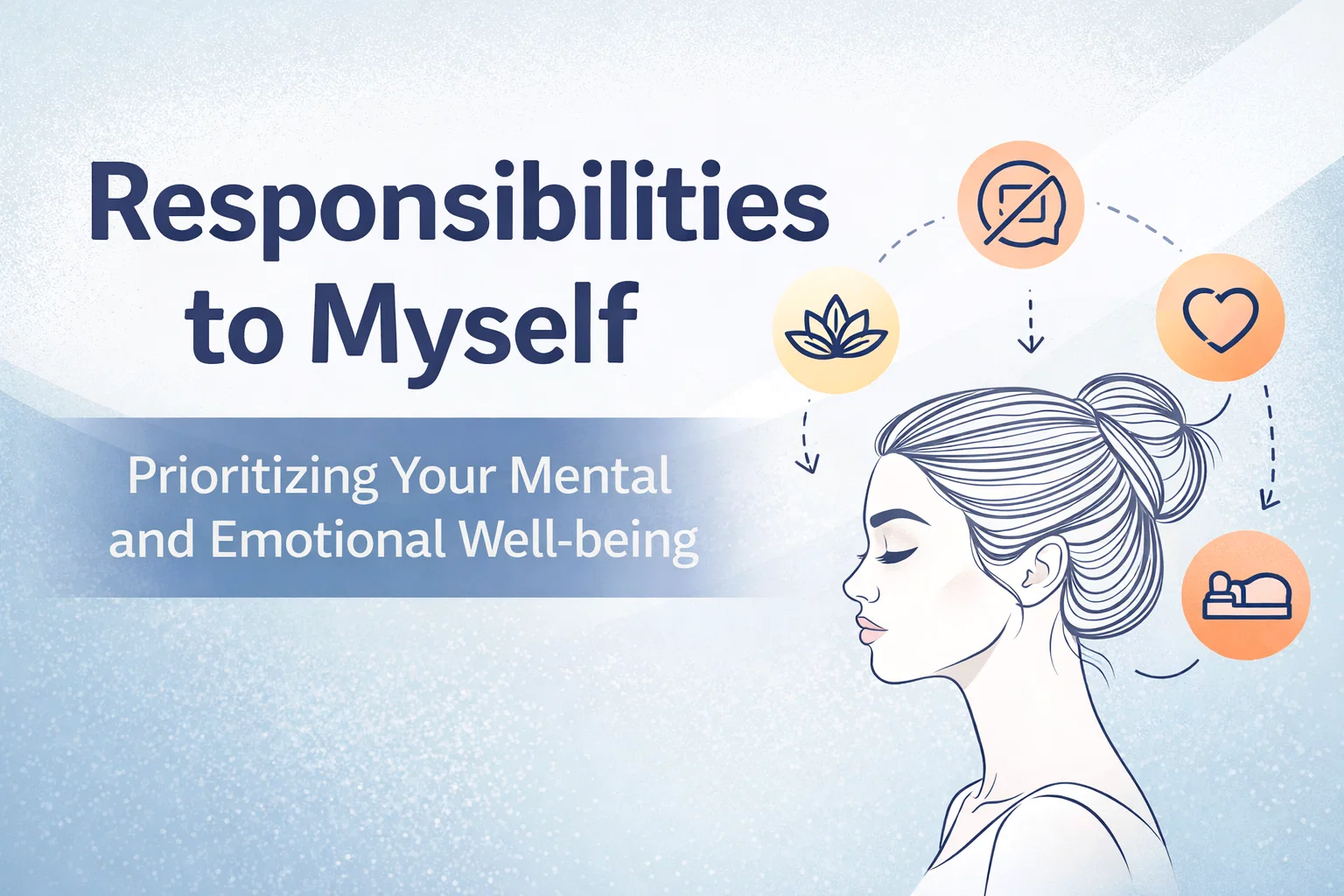
We often spend our entire lives fulfilling obligations to everyone else. We show up for our jobs, we support our friends, we nurture our families, and we meet the expectations of society. But in the middle of this constant cycle of giving, many of us forget the most important person in the equation: ourselves. Taking care of your mental and emotional well-being is not a luxury or an act of selfishness. It is a fundamental responsibility. When you look at the concept of self-care, it is much deeper than a bubble bath or a weekend getaway. It is about the daily, intentional choices you make to protect your peace and foster your own growth.
The Foundation of Self-Responsibility
The journey to a healthier mindset starts with the realization that you are the primary caretaker of your own life. No one else can feel your stress, process your trauma, or understand your boundaries quite like you can. This means that the first step in any wellness journey is taking ownership of your internal state. When we talk about responsibilities to ourselves, we are talking about creating a safe harbor within our own minds where we can retreat, recharge, and refocus.
By prioritizing your own needs, you are actually becoming more available to the world around you. Think of it like the oxygen mask metaphor on an airplane: you must secure your own mask before helping others. If you are running on empty, you have nothing left to give. Therefore, looking inward is the most outward-facing thing you can do for your community and your loved ones.
Prioritizing Boundaries for Mental Clarity
One of the most powerful things you can do for your mental health is to set and hold firm boundaries. Boundaries are the invisible lines that define where you end and where someone else begins. They are not meant to shut people out, but rather to show people where the door is. When you prioritize boundaries, you are telling the world that your time, your energy, and your emotional space are valuable.
How to Identify Your Boundaries
Setting boundaries starts with self-awareness. You need to pay attention to the moments when you feel resentful, drained, or overwhelmed. These feelings are often signals that a boundary has been crossed. Perhaps it is a coworker who calls you late at night, or a friend who constantly vents to you without asking if you have the emotional capacity to listen. Once you identify these triggers, you can begin the process of communicating your limits clearly and kindly.
Holding the Line
It is one thing to set a boundary, but it is another thing entirely to hold it. People who are used to you always saying yes might push back at first. However, staying consistent is key. You do not need to over-explain your reasons. A simple statement such as, I cannot take on any more projects right now, or, I need some quiet time this evening, is enough. Remember, those who get angry when you set a boundary are usually the ones who benefited from you not having any.
The Art of Staying Away from Drama
In our modern, hyper-connected world, drama is everywhere. It is in our social media feeds, our office gossip, and sometimes even in our family dynamics. Choosing to stay away from drama is a radical act of self-preservation. When you engage in unnecessary conflict or get wrapped up in problems that are not yours to solve, you are leaking precious energy that could be spent on your own healing and growth.
Peace is a choice that you have to make every single day. This might mean hitting the unfollow button on accounts that make you feel inadequate or walking away from a conversation that is turning toxic. By distancing yourself from chaos, you create the space necessary for your inner peace to flourish. You are not being cold; you are being protective of your spirit.
Investing in Your Personal Growth
Personal growth is a lifelong investment that pays the highest dividends. It is the process of learning, unlearning, and evolving into the best version of yourself. This responsibility involves looking at your habits, your mindsets, and your goals with a critical but loving eye. Investing in growth means you are willing to do the hard work of self-reflection.
The Importance of Continuous Learning
Growth often comes from stepping outside of your comfort zone. This could involve reading books that challenge your perspective, taking a course to learn a new skill, or seeking therapy to work through past wounds. When you commit to growth, you stop being a victim of your circumstances and start becoming the architect of your future. Every bit of knowledge you gain and every emotional hurdle you clear makes you more resilient.
Healing as a Daily Practice
Healing is not a destination; it is a continuous practice. We all carry scars from the past, whether they are from childhood experiences, failed relationships, or professional setbacks. Healing myself is a phrase that should be on every person’s to-do list. This involves acknowledging your pain without letting it define you. It means practicing self-compassion when you make mistakes and giving yourself the grace to move at your own pace.
Telling Others What You Need
One of the biggest myths we believe is that if people truly love us, they should instinctively know what we need. This expectation often leads to disappointment and resentment. The truth is that communication is a vital responsibility to yourself. You must be willing to use your voice to advocate for your own well-being.
Whether you need more support at home, a day of silence, or words of affirmation, it is your job to express those needs. Being clear about your requirements is a form of respect for both yourself and the people in your life. It removes the guesswork and builds stronger, more authentic connections. When you tell others what you need, you are taking the lead in your own care.
The Necessity of Rest and Recovery
We live in a culture that glorifies the hustle. We are told that if we are not constantly producing, we are falling behind. However, the human spirit is not a machine. Taking a rest when you need it is not a sign of weakness; it is a biological and psychological necessity. Rest is the fuel that allows you to keep going.
Recognizing the Signs of Burnout
Burnout does not happen overnight. It is a slow erosion of your energy and enthusiasm. Signs of burnout include chronic fatigue, irritability, and a lack of motivation. If you find yourself feeling cynical or detached, it is time to stop. Give yourself permission to do nothing. Whether it is a nap, a walk in nature, or simply sitting in silence, these moments of stillness are where your mind and body repair themselves.
Redefining Productivity
It is time to redefine what it means to be productive. True productivity includes the time you spend sleeping, dreaming, and relaxing. Without rest, your creativity withers and your health suffers. By making rest a responsibility, you are ensuring that you can show up fully when it matters most. You are honoring the rhythm of your body rather than fighting against it.
Maintaining Inner Peace in a Loud World
Inner peace is not the absence of trouble, but the presence of calm within the trouble. Setting and holding your inner peace requires a dedicated effort to filter what you allow into your consciousness. This involves being mindful of the media you consume, the people you surround yourself with, and the thoughts you choose to entertain.
Practices like meditation, journaling, and deep breathing can help you anchor yourself. When you have a strong internal foundation, the storms of life may shake you, but they will not break you. You become the eye of the hurricane, steady and centered while everything else swirls around. This peace is your birthright, and it is your responsibility to guard it fiercely.
Taking Care of Your Basic Needs
Sometimes, the most profound acts of self-care are the simplest ones. Taking care of your needs means ensuring you are hydrated, well-fed, and physically active. It means going to the doctor for checkups and getting enough sunlight. When we ignore our physical needs, our mental health inevitably declines.
Treat yourself with the same tenderness you would give to a child or a pet. Make sure you are meeting your basic requirements for survival and comfort every day. These small acts of self-maintenance build a sense of self-worth. They send a message to your brain that you are important and deserving of care.
Conclusion: The Journey of Self-Devotion
Embracing your responsibilities to yourself is a transformative journey. It requires a shift in perspective from seeing self-care as an afterthought to seeing it as a priority. By setting boundaries, staying away from drama, investing in your growth, and honoring your need for rest, you are creating a life that feels as good on the inside as it looks on the outside.
Remember that you are a work in progress. There will be days when you struggle to hold your boundaries or when the drama of life feels overwhelming. In those moments, return to the basics. Be kind to yourself, express your needs, and take a deep breath. You are the only person who will be with you for your entire life, so make sure that relationship is the healthiest one you have. Start today by choosing one responsibility to focus on, and watch how your world begins to change for the better.