Natural Chinese Remedies for Stress Relief Herbal Formulas, Acupressure Mind-Body Practices
In our fast paced modern world, stress has become an almost constant companion. From demanding work schedules to the endless buzz of digital notifications, our nervous systems are often stuck in a state of high alert. While many turn to temporary fixes, there is a profound and ancient wisdom found in Traditional Chinese Medicine (TCM) that offers a more holistic path to tranquility. By looking at health as a balance of energy, TCM provides us with a diverse toolkit of herbal remedies, physical movements, and sensory practices designed to lower cortisol and restore a sense of inner harmony.
The Foundations of Emotional Balance in TCM
At the heart of Chinese medicine is the concept of Qi (pronounced chee), the vital life force that flows through pathways in the body known as meridians. When we experience chronic stress, this flow becomes stagnant or blocked, leading to symptoms like irritability, insomnia, and physical tension. Unlike Western approaches that might focus solely on suppressing symptoms, TCM seeks to identify the root cause of the imbalance. By nourishing the organs and clearing these energetic blockages, we can achieve a state of emotional resilience that feels both grounded and sustainable.
Understanding the Role of the Liver and Spleen
In the TCM framework, specific organs are tied to certain emotional states. The Liver is often seen as the general of the body, responsible for the smooth flow of Qi. When the Liver Qi is stagnant, we feel frustrated and “stuck.” On the other hand, the Spleen is closely linked to our ability to process thoughts. Overthinking and worry can deplete Spleen energy, leading to fatigue and digestive issues. Recognizing these connections allows us to choose specific remedies that target our unique stress profile.
Powerful Herbal Formulas for Emotional Regulation
One of the most effective ways to manage stress in this tradition is through patent medicines or herbal formulas. These are not just random collections of plants but carefully balanced recipes where each ingredient plays a specific role. These formulas work to harmonize the body and mind simultaneously.
Xiao Yao San: The Free and Easy Wanderer
Perhaps the most famous formula for stress is Xiao Yao San. Often translated as the Free and Easy Wanderer, it is designed specifically to soothe the Liver and strengthen the Spleen. It is the go to choice for those who feel a sense of tightness in the chest, frequent irritability, or the physical manifestations of PMS. By clearing tension, it allows the spirit to feel more liberated and flexible, much like the name suggests.
Gui Pi Tang: Restoring the Spleen and Heart
If your stress manifests as overthinking, poor memory, or difficulty falling asleep, Gui Pi Tang might be the answer. This formula focuses on nourishing the Blood and tonifying the Qi. It helps to anchor the mind, making it particularly useful for students, professionals, or anyone whose brain feels like it is constantly running on a treadmill. By “restoring the Spleen,” it improves the body’s ability to produce the energy needed to stay calm under pressure.
Gan Mai Da Zao Tang: For Deep Sadness and Moodiness
Sometimes stress goes beyond simple frustration and dips into a sense of melancholy or emotional volatility. Gan Mai Da Zao Tang is a gentle yet profound formula made of licorice, wheat, and jujube dates. It is traditionally used to “calm the spirit” and is wonderful for those going through significant life transitions or periods of deep emotional exhaustion.
Sipping Your Way to Calm: Single Herbs and Teas
You do not always need a complex formula to find relief. Many single herbs and common pantry items in Chinese households serve as potent stress relievers. Preparing a cup of herbal tea can be a meditative ritual in itself, providing a sensory break from a hectic day.
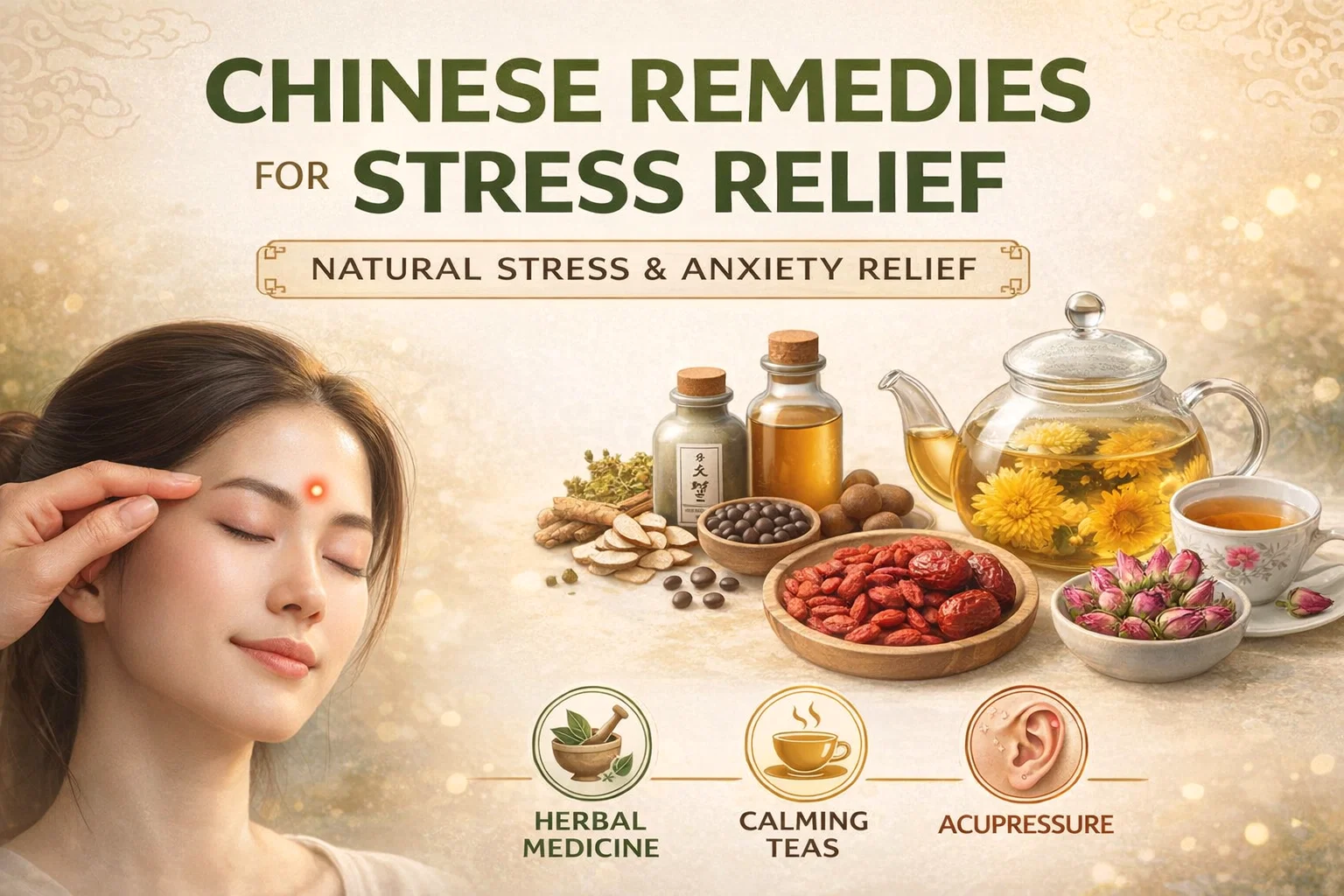
- Chrysanthemum Tea: This beautiful floral tea is known for its cooling properties. In TCM, anger and stress are often seen as “heat” rising to the head. Chrysanthemum helps clear this heat, soothing the eyes and calming a fiery temper.
- Rose Bud Tea: Known for its ability to move stagnant Qi, rose bud tea is a wonderful mood lifter. It has a gentle aromatic quality that helps open the chest and ease a heavy heart.
- Goji and Jujube: These two are often paired together. Goji berries nourish the Liver, while Jujube (red dates) build resilience and calm the mind. They add a natural sweetness to teas and snacks, providing a steady source of nourishment.
The Power of Your Own Hands: Acupressure for Cortisol Reduction
Acupressure is essentially acupuncture without the needles. By applying firm pressure to specific points on the body, you can signal the nervous system to shift from “fight or flight” mode into “rest and digest” mode. This is one of the most accessible forms of self care because you can do it anywhere.
Yintang: The Hall of Impression
Located directly between the eyebrows, Yintang is often called the third eye point. Applying gentle pressure here for one to two minutes is incredibly effective for calming the mind and reducing anxiety. It is the perfect point to use right before bed or during a high pressure meeting to regain your focus.
Shen Men: The Master Calming Point
Located in the upper hollow of the ear, Shen Men translates to Spirit Gate. This is considered one of the most powerful points for overall stress relief. Stimulating this point can help regulate the autonomic nervous system and reduce the physical sensations of stress throughout the whole body.
He Gu (LI4): Releasing Head Tension
Found in the web between the thumb and index finger, He Gu is a versatile point known for relieving pain and tension in the upper body. Important Note: This point should be avoided during pregnancy as it has a strong downward moving energy. For others, it is a fantastic tool for clearing a stress headache.
Tai Chong (LR3): Relieving Frustration
Located on the top of the foot between the big toe and the second toe, Tai Chong is the primary point for smoothing Liver Qi. If you feel “fed up” or physically tight, massaging this point can help move that stagnant energy and release pent up frustration.
Cultivating Harmony with Mind-Body Practices
Beyond what we ingest or the points we press, TCM emphasizes the importance of movement. Physical activity in the Chinese tradition is rarely about high intensity strain; instead, it focuses on the cultivation and circulation of energy.
Qigong: Meditation in Motion
Qigong is a practice that combines gentle movement, rhythmic breathing, and focused intention. Unlike a gym workout that might leave you exhausted, a Qigong session is designed to leave you feeling more energized yet peaceful. By synchronizing the breath with slow, fluid motions, you allow the Qi to circulate freely, preventing the blockages that lead to chronic stress.
The Modern Convenience of Ear Seeding
Ear seeding is a form of auriculotherapy that has gained massive popularity recently. Small seeds (often from the Vaccaria plant) or tiny metal beads are placed on specific points on the ear with adhesive tape. These “seeds” provide continuous stimulation to the points, such as Shen Men, throughout the day. It acts as a constant reminder for your body to stay calm, providing ongoing relief even when you are busy.
Integrating Ancient Wisdom into a Modern Life
The beauty of these Chinese remedies lies in their versatility. You do not have to overhaul your entire life to see the benefits. It can be as simple as swapping your afternoon coffee for a cup of Chrysanthemum tea or taking two minutes to massage the Yintang point before a big presentation. These small acts of self-regulation add up, creating a foundation of health that helps you navigate the ups and downs of life with greater ease.
When we approach stress through the lens of TCM, we stop seeing it as an enemy to be defeated and start seeing it as a signal from our body that something is out of balance. This shift in perspective is empowering. It transforms us from passive sufferers of stress into active participants in our own healing journey. By nourishing our bodies with the right herbs and moving our energy with intention, we can find a lasting sense of peace that resides deep within.
Conclusion: Finding Your Path to Calm
Ancient Chinese medicine offers a treasure trove of tools for anyone seeking a natural, holistic approach to stress relief. From the sophisticated herbal formulas that balance our internal chemistry to the simple power of acupressure and Qigong, these practices have stood the test of time for a reason. They work by treating the whole person, recognizing that our emotions, physical health, and environment are all deeply interconnected. As you begin to explore these remedies, remember to listen to your body and consult with a qualified practitioner to find the specific approach that works best for you. Embrace these traditions, and you may find that the “Free and Easy Wanderer” within you is ready to emerge.
Would you like me to generate some meta tags or an excerpt for this WordPress post to help with your SEO?