Natural Non-Toxic Bathroom Cleaning Odor Control DIY Hacks Eco-Friendly Toilet Care Tips
Stepping into a clean bathroom should feel like entering a private spa, but for many of us, that experience is often ruined by the stinging scent of bleach or the overwhelming artificial fragrance of synthetic air fresheners. We have been conditioned to believe that if it does not smell like a laboratory, it is not actually clean. However, the image of your ideal bathroom is likely much closer to nature. By embracing non-toxic, natural solutions, you can achieve a level of freshness and hygiene that is better for your lungs, your skin, and the environment. This guide explores how to transform your bathroom maintenance routine using simple, powerful ingredients like vinegar, baking soda, and essential oils.
The Hidden Cost of Conventional Bathroom Cleaners
Most commercial cleaning products are a cocktail of volatile organic compounds and harsh disinfectants. While they certainly kill bacteria, they also linger in the air long after you have finished scrubbing. In a small, often poorly ventilated space like a bathroom, these fumes can lead to respiratory irritation or headaches. Moving toward a non-toxic approach is not just about being eco-friendly; it is about creating a healthier indoor air quality for your family. The beauty of natural cleaning is that it relies on basic chemistry rather than complex, mysterious toxins to get the job done.
Essential Oils: The Power of Plant-Based Antibacterials
Essential oils are the secret weapon of a natural bathroom. They do much more than just smell good. Many oils possess inherent properties that make them perfect for sanitation. When you see bottles of tea tree, lemon, or eucalyptus on your shelf, you are looking at a concentrated toolkit for a fresher home.
Tea Tree Oil for Antimicrobial Support
Tea tree oil is perhaps the most famous essential oil for cleaning, and for good reason. It is widely recognized for its antimicrobial and antifungal properties. In a damp environment like a bathroom, where mold and mildew love to hide, tea tree oil acts as a natural deterrent. Adding a few drops to your cleaning sprays provides an extra layer of protection against invisible germs.
Lemon and Eucalyptus for Deodorizing
If you want that classic clean smell without the synthetic “lemon zest” chemicals, real lemon essential oil is the answer. It is naturally uplifting and helps to cut through grease or soap scum. Eucalyptus, on the other hand, provides a medicinal, refreshing scent that makes the room feel deeply purified. These oils do not just mask odors; they help neutralize the bacteria that cause them in the first place.
Mastering Freshness and Odor Control
Bathrooms are high-traffic areas where odors can become trapped. Instead of reaching for an aerosol spray that simply coats your nasal passages in perfume, try these targeted, natural methods to keep the air light and clean.
The Baking Soda Jar Trick
Baking soda is a natural miracle worker because of its ability to neutralize both acidic and alkaline odor molecules. A simple way to keep your bathroom smelling neutral is to place a small, open jar of baking soda on a shelf or behind the toilet. You can stir in ten drops of lavender or lemongrass oil to create a continuous, subtle fragrance. Unlike a plug-in air freshener, this setup actually absorbs the bad smells rather than fighting them.
Vinegar Sprays for Instant Neutralization
Vinegar is highly acidic, which makes it excellent at breaking down the particles that cause unpleasant smells. A simple mixture of equal parts water and white distilled vinegar in a glass spray bottle can be used as a quick air mist. While it has a sharp scent initially, the vinegar smell dissipates quickly, taking the unwanted bathroom odors along with it.
Non-Toxic Toilet Care and Deep Cleaning
The toilet is often the most dreaded part of the cleaning routine, leading many to reach for the strongest bleach available. But you can achieve a sparkling, hygienic finish using the classic combination of baking soda and vinegar. This duo creates a chemical reaction that fizzes and foams, lifting stains and mineral deposits from the porcelain surface.
- Step 1: Sprinkle a generous amount of baking soda into the toilet bowl and let it sit for a few minutes.
- Step 2: Pour a cup of white vinegar over the soda and watch the effervescent action work its magic.
- Step 3: Scrub with a toilet brush and flush for a chemical-free shine.
For added freshness, you can drop two drops of peppermint or tea tree oil into the water before you begin scrubbing. This leaves the entire area smelling crisp and ensures you are disinfecting as you clean.
Tackling Mold and Moisture Support
Bathrooms are breeding grounds for mold due to the constant presence of steam and water. Preventing mold is much easier than removing a full-blown infestation, and natural solutions are surprisingly effective at keeping these spores at bay.
The Power of Proper Ventilation
No amount of cleaning can replace the importance of airflow. Always run your exhaust fan during and for twenty minutes after a shower. If you do not have a fan, cracking a window is essential. Reducing the humidity in the room is your first line of defense against mold growth on grout and ceilings.
Vinegar as a Mold Preventative
White vinegar is known to kill a high percentage of mold species. Keeping a spray bottle of straight vinegar in the shower allows you to give the walls a quick mist after use. This prevents soap scum from building up and creates an environment where mold cannot easily take hold. For areas that are already showing signs of spotting, a paste made of baking soda and a little water, scrubbed with a stiff brush, can lift the stains without damaging your lungs.
Building Your Natural Cleaning Kit
Switching to a non-toxic bathroom does not require a massive investment. In fact, it usually saves money in the long run because the ingredients are multi-purpose and bought in bulk. Here is what you need to get started:
- White Distilled Vinegar: The ultimate all-purpose cleaner and glass polisher.
- Baking Soda: For scrubbing, deodorizing, and whitening.
- Castile Soap: A plant-based liquid soap that can be mixed with water for a gentle surface wash.
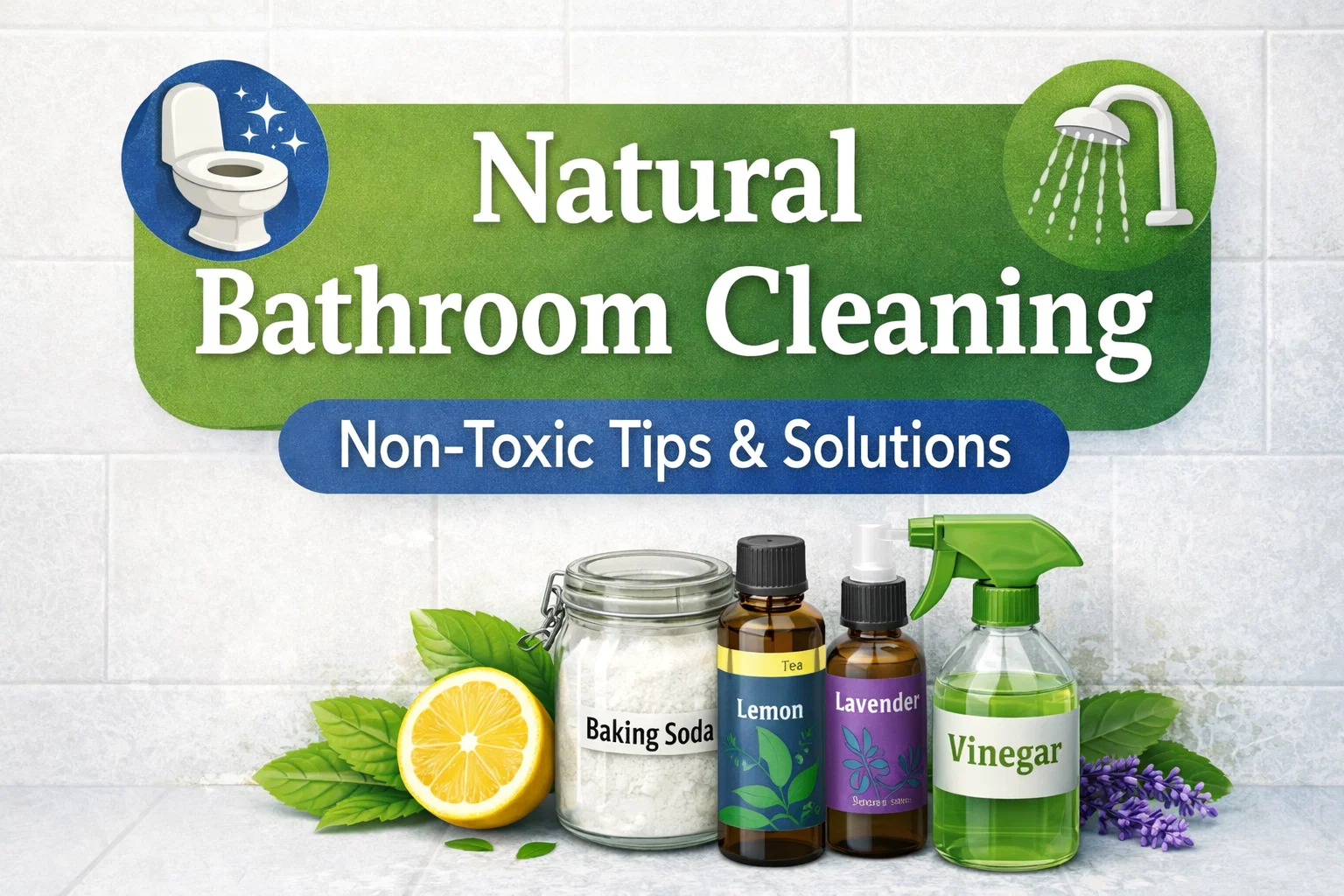
- Essential Oils: Specifically tea tree, lemon, and lavender for their cleaning properties.
- Glass Spray Bottles: These are better than plastic because essential oils can degrade plastic over time.
Why “Natural” Matters for Your Home Sanctuary
Your bathroom is a place of hygiene and self-care. It is where you wash away the day and prepare for the morning. When you use natural, non-toxic solutions, you are respecting that space. You are choosing ingredients that are safe for children and pets who might crawl on the floors or touch the surfaces. Beyond the health benefits, there is a certain satisfaction in knowing exactly what is in your cleaning products. You are moving away from a “slash and burn” approach to germs and toward a balanced, holistic way of maintaining your home.
Conclusion: A Greener, Fresher Future
Transitioning to a natural cleaning routine for your bathroom and toilets is one of the easiest ways to reduce your toxic load at home. By utilizing the fizzing power of baking soda and vinegar, the antimicrobial strength of tea tree oil, and the refreshing scent of citrus, you can maintain a space that is both spotless and safe. Remember that consistency is the key to natural cleaning. Small, regular efforts like a daily vinegar mist or a weekly baking soda scrub will keep your bathroom glowing without ever needing to crack a window to escape bleach fumes again. Start small, swap out one bottle at a time, and enjoy the peace of mind that comes with a truly clean home.
Would you like me to generate a list of specific essential oil blends for different seasons to help you customize your bathroom’s scent?