Nervous System Reset 10-Minute Restorative Yoga Childs Pose for Stress Anxiety Relief
In our modern world, we are often praised for our ability to stay busy. We wear our packed schedules like badges of honor, pushing through fatigue with caffeine and sheer willpower. However, there is a silent cost to this perpetual motion. Most of us are not just tired; we are overstimulated. Our brains are bombarded with a constant stream of notifications, deadlines, and digital noise that keeps our internal alarm systems in a state of high alert. When we spend too much time holding it together, our biology begins to suffer. This is where the concept of a nervous system reset becomes more than just a luxury; it becomes a vital practice for survival and long term health.
Understanding the Science of Overstimulation
To understand why a ten minute reset is so effective, we first need to look at how the human nervous system functions. We operate primarily through two branches of the autonomic nervous system: the sympathetic and the parasympathetic. The sympathetic nervous system is our gas pedal. It is responsible for the fight or flight response, prepping our body to handle threats by increasing heart rate and sharpening focus. In contrast, the parasympathetic nervous system is our brake. It facilitates the rest and digest functions, allowing the body to repair tissues, balance hormones, and lower blood pressure.
The problem arises when we stay on the gas pedal for too long. Chronic stress keeps us locked in a sympathetic state, meaning our bodies never get the signal that the danger has passed. This leads to brain fog, digestive issues, and emotional volatility. A nervous system reset is a physical intervention that manually flips the switch from sympathetic to parasympathetic, telling your biology that it is finally safe to let go.
The Difference Between Yoga Fitness and Nervous System Hygiene
When many people think of yoga, they imagine complex poses, sweating, and intense stretching. While that form of exercise has its benefits, what we are discussing here is entirely different. This is nervous system hygiene. In this practice, there is no performance. You are not trying to touch your toes or build muscle. Instead, you are using gravity and props to create a container of safety for your body.
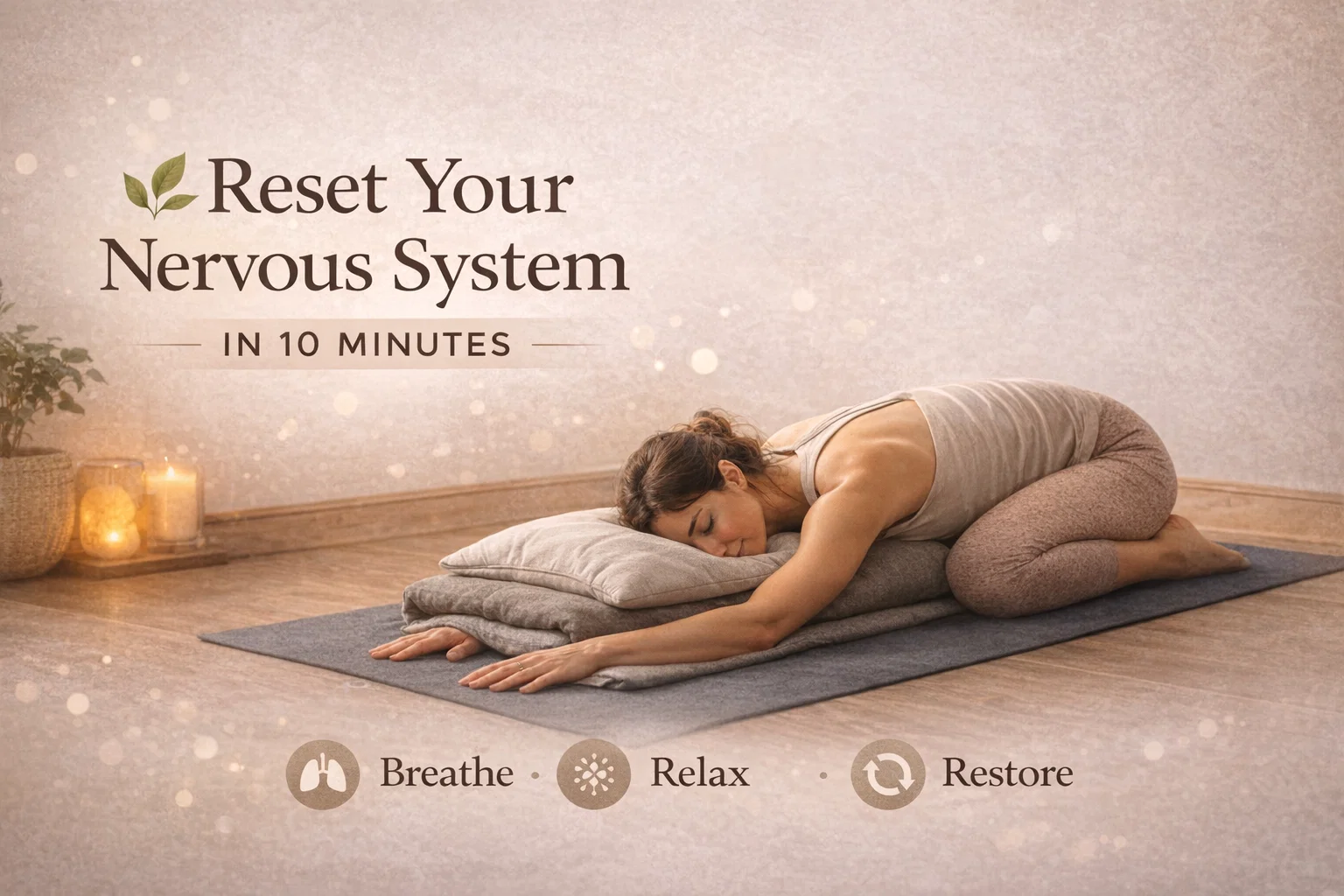
In restorative practices like the one shown in the image, the goal is to eliminate all effort. If you feel a deep stretch, you are actually doing too much. The aim is to support the spine so completely that the muscles can literally soften off the bone. When the muscles stop gripping, the nervous system receives a message: the environment is secure. This allows your brain to stop scanning for threats, which is the exact moment when true cellular healing begins.
The Power of the Supported Child Pose
The specific position featured in the image is a variation of the child pose, often called Balasana in yoga. By using a bolster or a stack of folded blankets, you elevate the floor to meet your chest. This creates a sense of being held, which is deeply grounding for the human psyche. Closing the front of the body in this way protects our most vulnerable organs, signaling to the ancient parts of our brain that we are shielded from the outside world.
Why Ten Minutes is the Magic Number
You might wonder why you cannot just do this for sixty seconds and feel the same effect. The answer lies in our biology. Our systems have a certain amount of inertia. It takes time for cortisol levels to drop and for the heart rate variability to shift. Staying in the pose for eight to ten minutes allows your physiology to actually switch gears. It is the difference between a quick car wash and a full engine tune up. By committing to the full duration, you allow the relaxation response to move from the surface level down into your deep tissues.
How to Set Up Your Home Reset Space
You do not need a professional studio to practice nervous system hygiene. You can create a sanctuary right in your living room or bedroom. The key is to minimize external input so your internal world can settle. Here is how to get started:
- Find your props: Use a yoga bolster, or if you do not have one, grab two or three firm bed pillows or a rolled up sleeping bag.
- Control the lighting: Dim the lights or use a sleep mask to signal to your pineal gland that it is time to wind down.
- Manage the temperature: Your body temperature drops when you relax, so keep a warm blanket nearby to drape over your back.
- Eliminate noise: Turn off your phone or use a white noise machine if your environment is loud.
The Physical Benefits of Regular Resets
While the mental benefits of feeling calm are obvious, the physical benefits of a nervous system reset are profound. When you shift into a parasympathetic state, your body prioritizes maintenance. Your digestive system receives more blood flow, which can alleviate issues like bloating or discomfort. Your immune system becomes more efficient at identifying and neutralizing pathogens. Additionally, by releasing the chronic tension held in the neck, shoulders, and hips, you can reduce the frequency of tension headaches and chronic pain.
Improving Sleep Quality
Many people struggle with insomnia because they try to go from sixty miles per hour to zero the moment their head hits the pillow. Their nervous system is still humming with the day’s stress. Performing a ten minute reset before bed acts as a bridge. It lowers your heart rate and prepares your brain for deep, restorative sleep cycles. Instead of tossing and turning with a racing mind, you enter sleep from a place of existing stillness.
Enhancing Emotional Resilience
When our nervous system is frayed, we react to small inconveniences with outsized emotions. We snap at loved ones or feel defeated by minor setbacks. Regular nervous system hygiene increases your window of tolerance. It gives you a buffer so that when life gets hectic, you have a reservoir of calm to draw from. You become less reactive and more responsive, which improves your relationships and your overall quality of life.
Making the Reset a Daily Habit
Consistency is more important than duration. Even if you can only find five minutes on a particularly busy day, that time is still a gift to your health. Try to link the practice to an existing habit. Perhaps you do your reset right after you get home from work to transition into your evening, or perhaps it is the last thing you do before getting into bed. The more you do it, the more your body will recognize the position and begin to relax the moment you settle onto your pillows.
Listening to Your Body
One of the most important aspects of this practice is learning to listen to what your body needs. Some days, you might want to turn your head to one side; other days, you might prefer to rest your forehead straight down. There is no right or wrong way to feel, as long as you feel supported. If you feel any pinching or discomfort, adjust your pillows. This is a time of no performance and no forcing. You are simply practicing the art of being.
Conclusion: Coming Back Home to Yourself
In a world that constantly demands our attention and energy, taking ten minutes to do nothing is a radical act of self care. It is an acknowledgment that your worth is not tied to your productivity and that your body deserves a break from the constant pressure of holding it all together. By incorporating a nervous system reset into your routine, you are not just relaxing; you are practicing essential hygiene for your mind and soul.
Remember that healing starts when the brain stops scanning for threats. By choosing to sit in stillness, by choosing to support your spine, and by choosing to breathe deeply, you are telling yourself that you are safe. You are allowing yourself to let go. This is how you reclaim your peace and how you truly come back home to yourself. Start today, find your pillows, and give yourself the gift of ten minutes of pure, uninterrupted rest.