Normal Blood Pressure Chart by Age Healthy Range for Men, Women Kids
Understanding your health starts with understanding your numbers. For many of us, a trip to the doctors office involves a quick wrap of a blood pressure cuff, a few moments of silence, and a set of numbers that might feel like a foreign language. However, blood pressure is one of the most vital indicators of cardiovascular health, serving as a silent messenger for what is happening inside your arteries. Because our bodies change so much as we grow, what is considered a normal reading for a toddler is vastly different from what is expected for a senior citizen. This guide dives deep into the nuances of blood pressure by age, helping you decode those numbers and take proactive steps toward a long, vibrant life.
What Exactly Is Blood Pressure?
Before we break down the charts, it is essential to understand what those two numbers actually represent. Your blood pressure reading consists of the systolic pressure and the diastolic pressure. Systolic, the top number, measures the force your heart exerts on the walls of your arteries each time it beats. Diastolic, the bottom number, measures the force on the walls of your arteries when your heart rests between beats.
Think of it like a plumbing system in a house. If the water pressure is too low, the water will not reach the second floor. If the pressure is too high, the pipes are at risk of bursting or leaking over time. For our bodies, maintaining that Goldilocks zone of pressure is the key to preventing long term damage to the heart, brain, and kidneys. Because our circulatory systems mature and eventually age, these benchmarks shift as the years go by.
The Importance of Age in Your Readings
Age plays a pivotal role in determining what is normal. In children, blood pressure is relatively low because their blood vessels are smaller and their hearts do not have to work as hard to circulate blood through a smaller body. As we reach adulthood, our blood vessels become firmer and the body grows larger, leading to a steady increase in what is considered a standard reading. Once we enter our senior years, the natural aging of the arteries can cause readings to climb slightly higher. Understanding these shifts is the first step in avoiding unnecessary worry or identifying a potential concern before it becomes a problem.
Understanding Blood Pressure Ranges: Infants to Teens
When looking at the chart, the youngest group starts with infants aged 1 to 12 months. For these little ones, a normal reading is around 90/60. This reflects the delicate nature of their cardiovascular systems. As children grow into the 1 to 5 year range, you will notice the numbers start to climb slightly, with 95/65 being the average normal. By the time a child reaches the 6 to 13 year mark, a reading of 105/77 is considered typical. Monitoring these numbers in children is often done during routine checkups to ensure they are developing at a healthy rate and to rule out any underlying conditions.
The Transition Into Young Adulthood
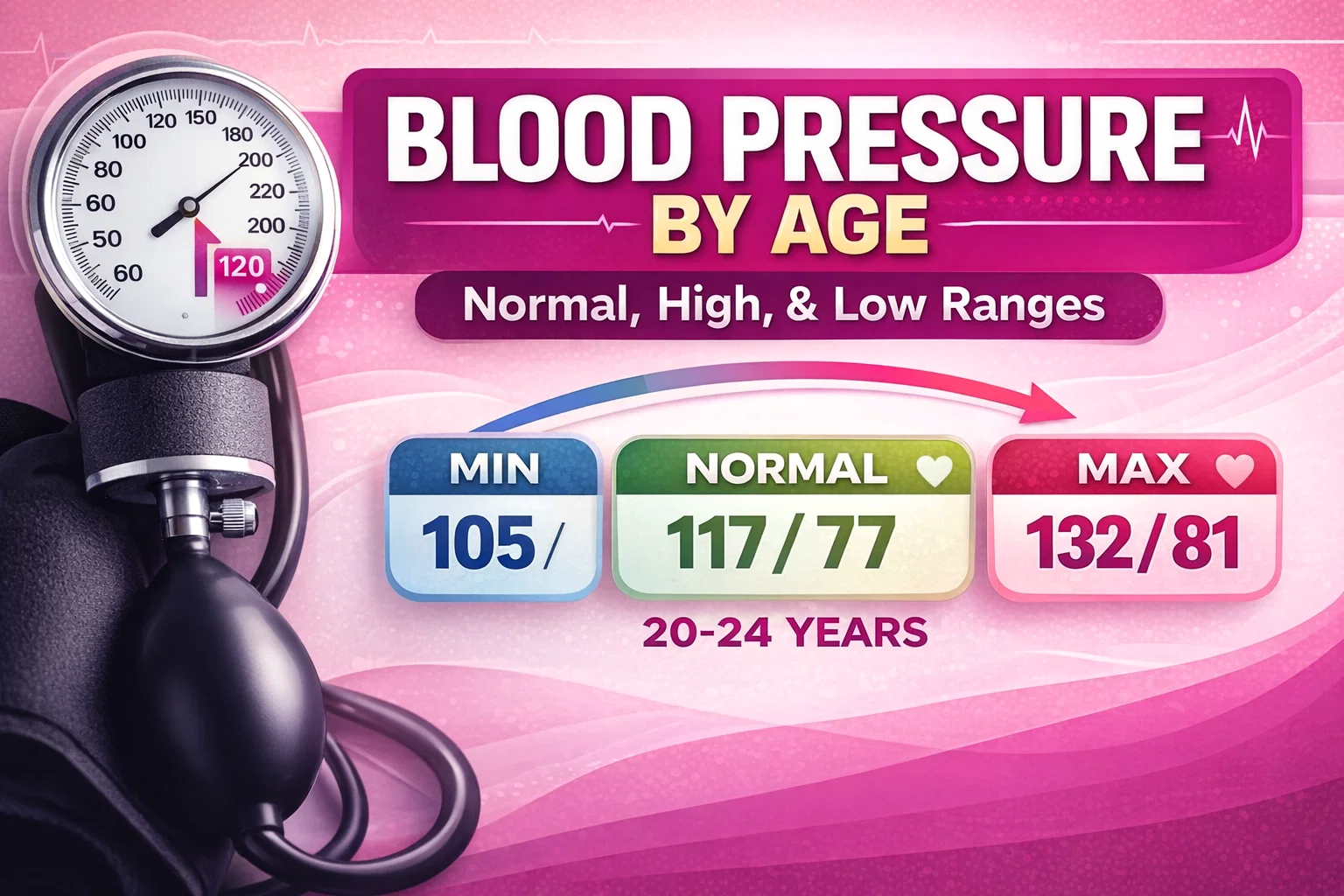
Once we jump into the 20 to 24 year age bracket, we see the numbers stabilize into what many of us recognize as the standard adult range. A normal reading for this group is approximately 117/77. It is a time when many young adults feel invincible, but this is actually the most critical period to establish a baseline. High blood pressure that starts in your twenties can have a cumulative effect on your heart health later in life. Establishing healthy habits now can keep those numbers in the normal range for decades to come.
The Mid-Life Shift: Ages 25 to 54
As we move through our thirties and into our fifties, the chart shows a gradual upward trend. For those in the 30 to 34 year range, a reading of 122/81 is the benchmark for normal. By the time you reach the 40 to 44 year bracket, that number nudges up to 125/83. This slow increase is a natural part of the aging process as the heart works harder to pump blood through a body that may be dealing with the stressors of modern life, career demands, and perhaps a less active lifestyle than in our younger years.
Between the ages of 50 and 54, the normal range moves to 127/83. This is often a turning point where many people start to pay closer attention to their heart health. It is the perfect time to evaluate diet and exercise routines, as the foundation you build during these years will dictate your health in your sixties and beyond.
The Golden Years: Managing Pressure in Seniors
For those aged 55 and older, the chart shows that the max range begins to push into the 140s. For example, individuals aged 60 to 64 might see a normal reading of 131/86, while those over 80 years old might have a normal reading of 135/82 with a maximum of 155/90. While these higher numbers are common in older age due to the loss of elasticity in the arteries, it is still vital to keep them within a safe range to prevent strokes or heart attacks.
Why Blood Pressure Rises as We Age
There are several physiological reasons for the upward trend in blood pressure as the years pass. One of the primary factors is arteriosclerosis, which is the natural thickening and hardening of the walls of the arteries. As the arteries become less flexible, the heart has to pump with more force to move blood throughout the body. Additionally, the kidneys become less efficient at processing sodium as we age, which can lead to fluid retention and higher pressure. While some of this is unavoidable, lifestyle choices can significantly slow down these age-related changes.
How to Get an Accurate Reading at Home
Many people find that their blood pressure spikes the moment they step into a doctors office, a phenomenon known as white coat syndrome. Because of this, home monitoring has become a popular and effective tool for tracking health. However, getting an accurate reading requires more than just putting on a cuff and pressing a button. To get the most reliable data, you should follow a specific protocol.
- Find Your Zen: Sit quietly for at least five minutes before you take your reading. Avoid caffeine, exercise, or smoking for 30 minutes prior.
- Position Matters: Sit in a chair with your back supported and your feet flat on the floor. Do not cross your legs. Your arm should be supported on a flat surface, like a table, with your upper arm at heart level.
- The Right Fit: Ensure the cuff is the correct size for your arm. A cuff that is too small can give a falsely high reading, while one that is too large can give a falsely low reading.
- Consistency is Key: Take your blood pressure at the same time each day, such as in the morning before medication or in the evening before dinner. This allows you to see trends rather than isolated spikes.
Lifestyle Changes to Support Healthy Blood Pressure
If your numbers are creeping toward the maximum range for your age, there is plenty you can do to bring them back down naturally. Small, sustainable changes often yield the biggest results over time. You do not have to overhaul your entire life in a single day. Instead, focus on one or two areas and build from there.
The Power of a Heart Healthy Diet
What you put on your plate has a direct impact on your arteries. Reducing sodium intake is one of the fastest ways to lower blood pressure, as salt causes the body to hold onto extra fluid. Focus on the DASH diet, which emphasizes fruits, vegetables, whole grains, and lean proteins. Foods rich in potassium, like bananas, spinach, and sweet potatoes, can help your body flush out excess sodium and ease the tension in your blood vessel walls.
Move Your Body Every Day
Exercise is like a workout for your heart. When you engage in cardiovascular activity, your heart becomes stronger and can pump blood with less effort. This reduces the force on your arteries and lowers your blood pressure. Aim for at least 150 minutes of moderate intensity exercise per week, such as brisk walking, swimming, or cycling. Even a 20 minute walk after dinner can make a difference if you do it consistently.
Manage Stress for Better Numbers
We often underestimate the impact of stress on our physical health. When you are stressed, your body releases a surge of hormones like adrenaline and cortisol, which temporarily increase your heart rate and tighten your blood vessels. Chronic stress keeps your body in this state for too long, leading to long term issues. Finding healthy ways to cope, whether through meditation, deep breathing exercises, or simply spending time in nature, is essential for maintaining a healthy blood pressure range.
When Should You See a Doctor?
While tracking your numbers at home is a great habit, it should never replace professional medical advice. If you consistently see readings that fall into the max category for your age group, it is time to schedule a consultation. High blood pressure often has no symptoms, which is why it is called the silent killer. However, if you experience sudden blurred vision, chest pain, severe headaches, or shortness of breath, you should seek medical attention immediately, as these can be signs of a hypertensive crisis.
Preparing for Your Appointment
When you go to see your doctor, bring a log of your home readings. This provides a much clearer picture of your health than a single reading in the office. Be prepared to discuss your diet, activity level, and any family history of heart disease. Your doctor can help determine if lifestyle changes are enough or if medication is necessary to keep you in the safe zone. Remember, taking medication is not a failure; it is a tool to help you live a longer, healthier life.
Final Thoughts on Monitoring Your Health
Navigating the world of blood pressure can feel overwhelming, but it is ultimately about empowerment. By understanding the normal ranges for your age and keeping a close eye on your own numbers, you are taking charge of your future. Whether you are in your twenties and looking to build a foundation of health, or in your eighties and aiming to maintain your vitality, these numbers are a map to your well being. Stay curious, stay active, and keep your heart health a top priority. Your body will thank you for years to come.