Poisonous Herbs in Witchcraft History Ancient Folklore Symbolic Meanings in Modern Magic
The history of witchcraft and herbalism is often painted with broad strokes of mystery and magic, but at its heart lies a deep, sometimes dangerous relationship with the natural world. Among the most intriguing aspects of this history is the role of poisonous plants. These were not the everyday herbs found in a kitchen garden; they were the potent, volatile botanical allies that demanded absolute respect and extensive knowledge. Understanding the cautionary role of these herbs allows us to appreciate the complexity of ancient practices and how they have evolved into the symbolic traditions we see today.
The Sacred and the Dangerous: A Delicate Balance
In the transition from ancient folklore to modern practice, the perception of poisonous plants has shifted from physical tools to powerful archetypes. Historically, these plants were known as the herbs of the shadow side. They represented the threshold between life and death, the conscious and the subconscious. To the ancient practitioner, a plant like Henbane or Belladonna was a living entity with a spirit that could offer profound insights if approached correctly, or devastating consequences if mishandled. This duality is why they were rarely used as everyday ingredients but were instead reserved for significant rituals and charms.
The danger associated with these plants was never taken lightly. Old grimoires and oral traditions are filled with warnings, emphasizing that power and peril go hand in hand. This respect for the botanical world is a cornerstone of witchcraft history. It reminds us that nature is not merely a resource to be consumed, but a force to be reckoned with. By studying these plants, we learn about the boundaries set by our ancestors and the wisdom they gained through centuries of observation and experience.
The Infamous Five: Icons of the Poison Path
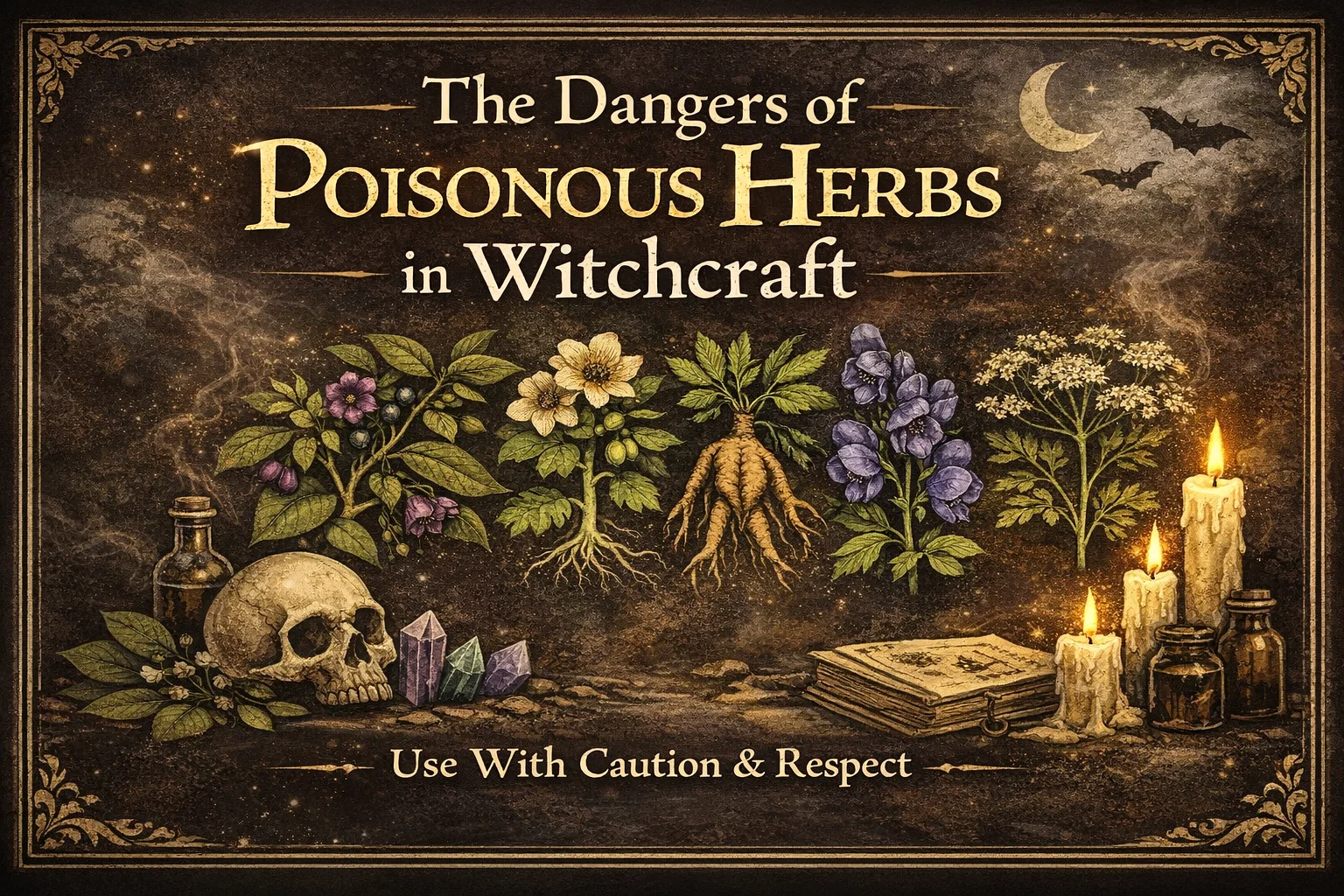
When we look at the historical record of witchcraft, five specific plants frequently stand out due to their potency and the legends surrounding them. Each carries a unique signature and a specific role in the tapestry of magical history.
Belladonna: The Beautiful Lady
Atropa belladonna, commonly known as Deadly Nightshade, is perhaps the most famous of the poisonous herbs. Its name, meaning beautiful lady, refers to the historical practice of women using the juice of the berries to dilate their pupils, a look considered alluring at the time. However, in the context of magic, Belladonna was used for much deeper purposes. It was associated with visions and the ability to see beyond the physical realm. Because of its high toxicity, it was often used in the form of ointments or symbolic talismans rather than being ingested.
Henbane: The Herb of Spirits
Henbane has a long association with the underworld and the summoning of spirits. Its jagged leaves and sticky, foul-smelling foliage marked it as a plant of the wild. Historically, it was used in incense to facilitate spirit journeys and divination. The plant contains powerful alkaloids that can induce heavy sleep and vivid hallucinations, leading to its reputation as a gateway to the other side. In modern symbolism, Henbane represents the courage to face one’s shadows and the search for hidden truths.
Mandrake: The Humanoid Root
Few plants carry as much folklore as the Mandrake. Its root often resembles a human figure, leading to the legend that it would scream when pulled from the earth, a sound so piercing it could be fatal. Because of its humanoid shape, it was prized as a powerful talisman for protection, fertility, and wealth. Mandrake was often kept in a special box and treated with great reverence, acting as a household guardian. Today, it remains a symbol of the deep connection between humanity and the earth.
Monkshood: The Queen of Poisons
Also known as Aconite or Wolfsbane, Monkshood is visually stunning with its deep blue or purple hooded flowers. However, it is one of the most lethal plants in the world. Historically, it was used to tip arrows for hunting and in protection magic to ward off negative influences. Its cold, sharp energy makes it a symbol of boundaries and endings. In a historical context, it represented the finality of death and the necessity of protection in a dangerous world.
Hemlock: The Stoic End
Hemlock is forever linked to the death of Socrates, marking it as a plant of transition and finality. In witchcraft history, it was used in spells related to paralysis, both physical and metaphorical. It was a plant of the crossroads, used to signify the end of one chapter and the beginning of another. Its delicate, lacy white flowers hide a potent neurotoxin, serving as a reminder that beauty can often mask a sharp edge.
Modern Witchcraft: From Physical to Symbolic
In contemporary practice, the use of these plants has undergone a radical transformation. While historical practitioners may have risked their lives to harness the power of these herbs, modern witchcraft focuses on honoring them symbolically. This shift reflects a deeper understanding of safety and a focus on the psychological and spiritual lessons these plants provide. We no longer need to ingest or handle toxic plants to connect with their energy; instead, we use their stories, illustrations, and botanical correspondences.
- Visual Representation: Keeping illustrations or dried, non-toxic parts of the plant as symbolic talismans on an altar.
- Ritual Metaphor: Using the themes of the plants, such as Mandrake for grounding or Belladonna for intuition, in meditation and journaling.
- Botanical Study: Learning the science and history of these plants as a way to connect with the wisdom of the past.
- Flower Essences: Using highly diluted, safe homeopathic preparations that capture the energetic imprint without the physical poison.
The Role of Old Grimoires and Legends
The legends we read today are not just stories; they are the cautionary logs of those who came before us. Old grimoires often hid the identities of these plants behind folk names or codes to ensure that only the initiated could understand the instructions. This secrecy served as a safety mechanism. By decoding these texts, we gain a glimpse into a world where every plant had a voice and every action had a consequence. These stories teach us that wisdom is gained through patience and respect, not through reckless experimentation.
Legends also serve to personify the plants, making their dangers more relatable. The screaming Mandrake or the deadly beauty of Belladonna creates a mental map of what to approach with care. By respecting these stories, modern practitioners maintain a link to their ancestors while ensuring their own safety in the present day.
Healing and Heart Magic: Finding Light in the Shadow
It may seem contradictory to associate poisonous herbs with healing or heart magic, but in the context of witchcraft history, healing often involved addressing the darkest parts of the human experience. These plants were used to help people navigate grief, end toxic relationships, and find the strength to face their fears. This is the essence of heart magic: the ability to find wholeness even in the face of danger.
When we look at the role of these herbs as symbols of boundaries and endings, we see their true potential for personal development. Setting a boundary is an act of self-love, and ending a cycle that no longer serves you is a form of healing. The poisonous herbs, with their uncompromising nature, provide a perfect archetype for these necessary life changes.
Conclusion: Seeking Wisdom, Not Risk
The journey through the history of poisonous herbs in witchcraft is a path of discovery that leads to a deeper appreciation for the natural world. It reminds us that magic is not always about the light and the easy; it is also about the dark, the difficult, and the dangerous. By honoring these plants symbolically, we carry forward the wisdom of our ancestors without the physical risks they faced. We learn that power comes from knowledge, and respect is the highest form of magic.
As you explore your own path, let the stories of Belladonna, Henbane, Mandrake, Monkshood, and Hemlock serve as a guide. Seek wisdom in their legends, find strength in their symbols, and always remember that the most potent magic is that which is practiced with a clear mind and a respectful heart. The history of these herbs is a testament to human curiosity and the enduring desire to understand the mysteries of the earth.