Polyvagal Theory Nervous System Ladder Guide for Regulation and Mental Health
Have you ever felt like your emotions were a runaway train, or perhaps the exact opposite, like you were frozen in place and unable to feel anything at all? Understanding the human nervous system is often the missing piece of the puzzle when it comes to mental health and emotional resilience. The concept of the Nervous System Ladder, rooted in Polyvagal Theory, provides a clear and actionable map to help us navigate these complex internal states. Instead of feeling like a victim of your moods, you can begin to see your body as a sophisticated instrument that is constantly trying to keep you safe. By learning to identify where you are on this ladder, you gain the power to climb back toward a state of peace and connection.
What is the Nervous System Ladder
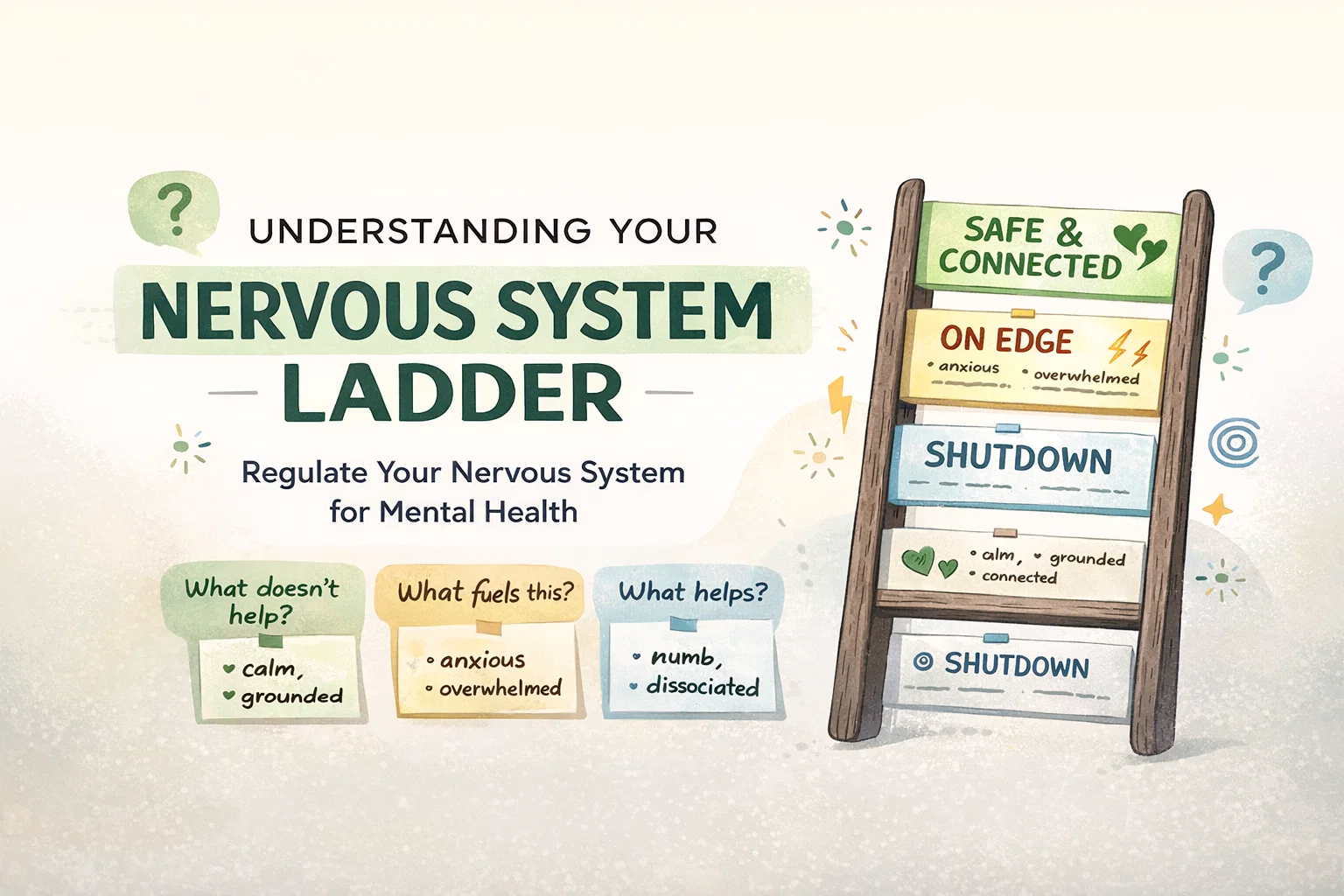
The Nervous System Ladder is a visual representation of how our autonomic nervous system shifts in response to stress and safety. Developed by researchers like Dr. Stephen Porges and popularized by clinicians like Deb Dana, this model suggests that our bodies move through three primary states. At the top of the ladder is the state of safety and connection. In the middle, we find the “fight or flight” response, often characterized as being on edge. At the bottom is the shutdown state, where the body effectively pulls the emergency brake to protect itself from overwhelming intensity.
The beauty of this model lies in its simplicity. It moves us away from judgmental language like “I am being lazy” or “I am being dramatic” and replaces it with biological understanding. When you realize that your “laziness” is actually a biological shutdown or your “irritability” is a mobilized stress response, you can meet yourself with compassion rather than criticism. This shifts the focus from “what is wrong with me” to “what does my nervous system need right now.”
The Bottom Rung: Understanding the Shutdown State
When the world feels like too much and our internal resources are depleted, we may slide down to the bottom of the ladder. This is known as the Dorsal Vagal state. In this space, the body focuses on conservation. You might feel numb, disconnected, or even dissociated from your surroundings. It is a heavy, foggy feeling where even simple tasks like answering a text message feel like climbing a mountain. Your thoughts might turn toward hopelessness, whispering that nothing matters or that you just want to disappear into the background.
Body Signals of Shutdown
- Feeling Heavy: Your limbs might feel like lead, making movement slow and labored.
- Tiredness: A deep, bone-weary exhaustion that sleep does not seem to fix.
- Numbness: A lack of physical sensation or a feeling of being “spaced out.”
- Holding Breath: Shallow, infrequent breaths as the body tries to remain still and unnoticed.
In this state, you might find yourself staring at nothing for long periods or ignoring friends because the energy required for social interaction is simply not there. It is important to recognize that this is a protective mechanism. Your body believes it is under such a high level of threat that the only way to survive is to go into “power save” mode. Recognizing this state allows you to stop fighting yourself and start looking for small, low-pressure ways to wake the body back up.
The Middle Rung: Navigating the On Edge State
Just above shutdown is the Sympathetic nervous system state, often referred to as being “on edge.” This is the realm of fight or flight. Here, your body is flooded with energy intended for action. You might feel anxious, irritated, or incredibly sensitive to noise and light. Your thoughts are often focused on “what if” scenarios, worrying about the future, or creating strict rules for yourself and others to regain a sense of control.
Recognizing the High Energy of Anxiety
- Rapid Heartbeat: Feeling your pulse in your chest or neck.
- Tightness: Tension in the jaw, shoulders, and chest.
- Fidgeting: An inability to sit still, often manifesting as pacing or tapping.
- Hyper-vigilance: Being easily startled by small sounds or movements.
When you are on edge, your behavior often becomes snappy or impulsive. You might overdo things, trying to stay busy to outrun the anxiety, or you might avoid scary tasks altogether because the perceived risk feels too high. The goal in this state is not to “calm down” immediately, which can feel impossible, but to find safe ways to release that pent-up energy so the body can eventually return to a state of rest.
The Top Rung: Safe and Connected
The top of the ladder is the Ventral Vagal state. This is where we want to spend the majority of our time. Here, we feel calm, content, and curious about the world. We are capable of social engagement, meaning we can look people in the eye, listen deeply, and feel a genuine sense of belonging. In this state, our thoughts are flexible; we know we aren’t perfect, but we feel that it is okay to be exactly who we are.
Signs of a Regulated Nervous System
- Steady Breath: Slow, deep, and rhythmic breathing.
- Relaxed Muscles: A lack of chronic tension in the body.
- Openness: Feeling interested in learning new things or meeting new people.
- Warmth: A physical sense of comfort and ease.
When you are safe and connected, you can handle life’s challenges without spiraling. You might enjoy time with people, get things done without feeling rushed, and find yourself laughing or joking around. This is the state of “flow” where creativity and intimacy thrive. Cultivating habits that keep us at the top of the ladder is the core of long-term wellness.
What Pulls Us Out of Balance
Movement on the ladder is constant. No one stays at the top forever, and that is perfectly normal. However, certain triggers can cause us to slip down. Understanding these triggers is essential for prevention. Stressors like skipping meals, lack of sleep, or bottling up emotions can tip us over the edge. Often, it is the accumulation of small things rather than one large event that causes a spiral. Comparing yourself to others on social media or having no downtime in a busy schedule are common modern triggers that drain our emotional reserves.
It is also helpful to look at what “fuels the fire” when we are already on edge. Ruminating on negative thoughts, isolating yourself, or reacting impulsively to situations can keep you trapped in a high-stress state. By identifying these patterns, you can start to intervene earlier. If you know that doomscrolling makes your shutdown worse, you can make a conscious choice to put the phone down when you feel that heaviness starting to set in.
Practical Strategies for Regulation
Once you know where you are on the ladder, you can apply specific tools to help you move toward the top. The strategy depends entirely on which rung you are currently standing on. What helps someone in an anxious state might actually be overwhelming for someone in a shutdown state.
Moving from Shutdown to Connection
If you are at the bottom of the ladder, the goal is “gentle mobilization.” You need to slowly wake the body up without shocking the system. Small movements are key. This could mean stretching while sitting on the couch, humming a favorite song, or listening to upbeat music. Parallel play, which involves being in the same room as someone you trust without the pressure to talk, can also be a wonderful way to feel connected without being overwhelmed.
Moving from On Edge to Calm
If you are in the middle of the ladder, you have excess energy that needs a “safe release.” Instead of trying to force yourself to meditate, try something that uses the energy. Going for a run, punching a pillow, or engaging in deep, forceful breathing can help. Writing down your worries can also help “zoom out” and remind your brain that you are not in immediate physical danger. Once the peak energy has passed, soothing music or a warm bath can help bridge the gap back to safety.
Building Your Personal Wellness Toolkit
The most effective way to use the Nervous System Ladder is to create your own personalized version of it. Take time when you are feeling good to write down what helps you stay at the top. Who are the people you feel safest with? What routines, such as morning coffee or evening walks, keep you grounded? What does your body feel like when you are at your best?
By documenting these details, you create a manual for your future self. When you inevitably find yourself on a lower rung, you won’t have to think hard about what to do; you can simply refer to your toolkit. This practice builds “vagal tone,” which is the ability of your nervous system to bounce back from stress more quickly. Over time, you will find that while you still move up and down the ladder, you spend much more time at the top and much less time stuck at the bottom.
Embracing the Journey Toward Resilience
Living with a nervous system that feels unpredictable can be exhausting, but it does not have to be your permanent reality. The Nervous System Ladder reminds us that our feelings are not random; they are meaningful signals from a body that is working hard to protect us. Whether you are dealing with the frantic energy of anxiety or the heavy fog of depression, there is always a path back to connection.
Self-regulation is a skill that takes practice, patience, and a great deal of self-love. Some days you will climb the ladder with ease, and other days you might feel stuck on a single rung for a while. That is okay. Every time you notice where you are and take a small step toward safety, you are rewiring your brain for resilience. You deserve to feel safe in your own skin, and by using these tools, you can slowly turn that possibility into your everyday experience.
As you move forward, keep this ladder in your mind as a compassionate guide. Use it to check in with yourself throughout the day. Ask yourself, “Where am I right now, and what is one small thing I can do to feel a little more connected?” These tiny shifts, practiced consistently, lead to profound changes in your mental health and overall quality of life. Save these prompts, share them with loved ones, and start building a life where you feel truly safe and connected.