Rice Water Skin Hack for Glowing Skin Natural DIY Face Toner Brightening Skincare Tip
Achieving a radiant, clear complexion doesn’t always require a shelf full of expensive luxury products. Sometimes, the most effective beauty secrets are sitting right in your kitchen pantry. Rice water has been a staple in Asian beauty rituals for centuries, prized for its ability to transform dull skin into a glowing masterpiece. This simple, natural skin hack is gaining massive popularity again because it is accessible, affordable, and incredibly effective. If you are looking for a way to tighten your pores, reduce acne, and boost your skin’s natural collagen without harsh chemicals, you have come to the right place. In this guide, we will dive deep into why rice water is the ultimate DIY skincare miracle and how you can start using it today.
The Ancient History of Rice Water in Beauty
While it might seem like a modern viral trend, using rice water for skin and hair health dates back over a thousand years. In Japan, Heian period court ladies were known for their floor length hair, which they kept healthy and strong by rinsing it with Yu-Su-Ru, the water obtained from washing rice. Similarly, in China, the Yao women of Huangluo Village are world famous for their long, dark hair that rarely turns grey, a feat they attribute to fermented rice water.
Beyond hair care, women throughout East Asia have used rice water as a facial wash to maintain a porcelain-like complexion. It was a natural way to protect the skin from the sun and keep it supple. Today, modern science is finally catching up to these ancient traditions, confirming that rice water is packed with vitamins, minerals, and amino acids that are essential for skin health. By bringing this ancient practice into your modern routine, you are tapping into a time tested method for achieving a timeless glow.
Why Your Skin Loves Rice Water
What exactly makes rice water so special? When you soak or boil rice, the water becomes infused with a variety of skin loving compounds. One of the most important components is Inositol, a carbohydrate that helps repair damaged skin and improves elasticity. It also contains Ferulic acid, a powerful antioxidant that protects the skin from free radicals and environmental stressors.
Natural Brightening Properties
If you struggle with hyperpigmentation, sun spots, or an uneven skin tone, rice water might be your new best friend. It contains enzymes that have a natural lightening effect on the skin. Regular use can help fade dark spots and give your face a more uniform, bright appearance. Unlike chemical lighteners, rice water is gentle and works gradually to reveal your natural radiance.
Anti-Aging and Collagen Boosting
As we age, our natural collagen production begins to slow down, leading to fine lines and wrinkles. Rice water is rich in antioxidants that fight the oxidative stress responsible for aging. Some studies suggest that rice water can inhibit the activity of elastase, an enzyme that breaks down elastic fibers in the skin. By preserving your skin’s elasticity, rice water helps maintain a youthful, firm texture.
Soothing Acne and Inflammation
For those with sensitive or acne prone skin, finding a product that doesn’t cause irritation is a challenge. Rice water acts as a natural astringent, helping to tighten pores and reduce excess oil production. Its cooling properties also make it excellent for soothing redness and calming inflammation associated with breakouts or sunburns. It creates a protective barrier on the skin, keeping moisture in and irritants out.
How to Make the Perfect Batch of Rice Water
Creating your own rice water at home is incredibly simple and requires no specialized equipment. While there are a few different methods, the soaking method is often the most popular for beginners because it is quick and preserves the nutrients without the need for heat.
Step 1: The Initial Rinse
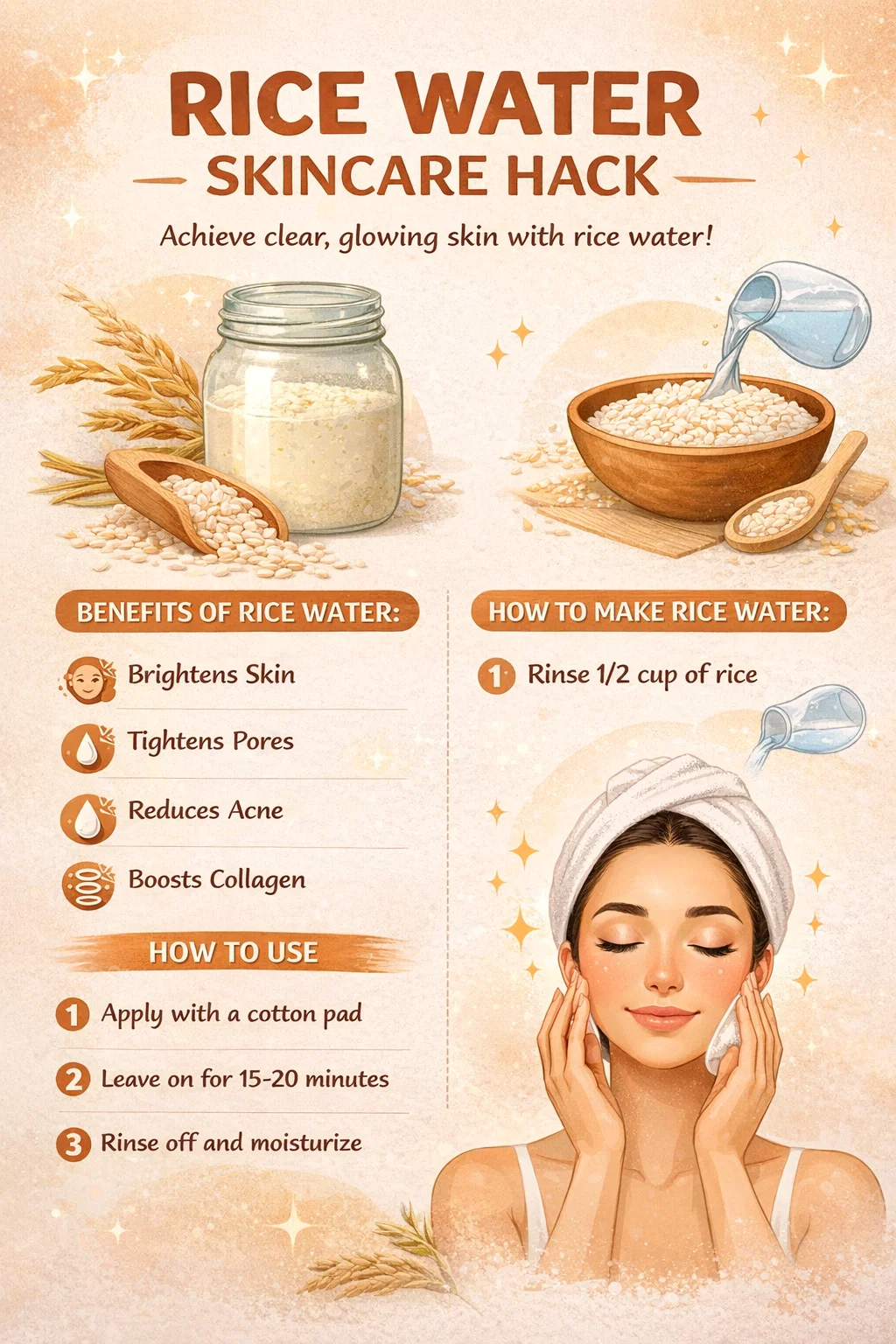
Start with half a cup of uncooked rice. You can use white rice, brown rice, or even jasmine rice. The first step is crucial: rinse the rice thoroughly with plain water to remove any dirt, dust, or impurities. You want the water you eventually use on your face to be as clean as possible. Drain this initial rinse water and keep the cleaned rice in a bowl.
Step 2: Soaking for Nutrient Extraction
Add two cups of filtered water to your cleaned rice. Let it soak for about 30 minutes. During this time, you can lightly swirl the rice or press down on it with a spoon to help release the vitamins and minerals into the water. You will notice the water turning a milky, opaque white color. This is a sign that the beneficial starches and nutrients are moving from the grain into the liquid.
Step 3: Straining and Storing
Once the 30 minutes are up, strain the rice and collect the water in a clean glass jar or spray bottle. Do not throw the rice away! You can still cook it and eat it, making this a zero waste beauty hack. Store your jar of rice water in the refrigerator. Cold rice water feels amazing on the skin and helps to further constrict pores. It will stay fresh for about four to five days.
Advanced Method: Fermented Rice Water
If you want to take your skincare to the next level, consider fermenting your rice water. Fermentation lowers the pH of the water to match the natural pH of your skin. It also produces a substance called Pitera, a clear liquid rich in vitamins and organic acids that is a signature ingredient in many high end Japanese skincare brands.
To ferment your rice water, follow the soaking steps above but leave the jar at room temperature for 12 to 24 hours instead of putting it straight into the fridge. Once it starts to smell slightly sour, the fermentation process is complete. Boil the fermented water briefly to stop the process, let it cool, and then refrigerate. Fermented rice water is more potent, so you may want to dilute it with plain water if you have very sensitive skin.
The Best Way to Use Rice Water in Your Daily Routine
Integrating rice water into your skincare regimen is easy because it is so versatile. It can replace several steps in your current routine or act as an additional boost when your skin needs a little extra love.
Using Rice Water as a Toner
The most common way to use rice water is as a toner. After cleansing your face with your usual soap or wash, pat your skin dry. Soak a cotton pad in cold rice water and gently swipe it over your entire face and neck. Alternatively, you can put the water in a spray bottle and mist it directly onto your skin. This helps to remove any lingering impurities while immediately starting the brightening and tightening process.
The Soothing Face Mask Method
For a more intensive treatment, you can use rice water as a soak for a DIY sheet mask. Take a clean paper towel or a compressed silk mask tablet and soak it in a bowl of rice water. Apply the wet mask to your face and leave it on for 15 to 20 minutes. This allows the skin to deeply absorb the nutrients. When you remove the mask, do not rinse your face immediately. Let the remaining liquid air dry to lock in the benefits.
Incorporating Rice Water into Your Morning Wash
If you find that your skin feels tight or dry in the mornings, try skipping your cleanser and washing your face with only rice water. It provides a gentle cleanse that doesn’t strip away your natural oils. It leaves the skin feeling soft, hydrated, and ready for your moisturizer and sunscreen. It is a fantastic way to wake up your complexion and reduce morning puffiness.
A Step by Step Guide to the Rice Water Skin Hack
To ensure you get the best results, follow this simple three step application process:
- Apply: Use a cotton pad or your clean fingertips to apply the rice water to your face and neck. Focus on areas with enlarged pores or uneven pigmentation.
- Wait: Leave the rice water on your skin for 15 to 20 minutes. This gives the antioxidants and inositol time to penetrate the skin layers.
- Rinse and Moisturize: Gently rinse your face with lukewarm water to remove any excess starch. Follow up immediately with your favorite moisturizer to seal in the hydration.
Common Questions and Tips for Success
Is rice water suitable for all skin types? Generally, yes. Because it is a natural, single ingredient solution, most people find it very tolerable. However, those with extremely dry skin should be careful not to over use it, as the starch can have a slight drying effect if left on for too long without moisturizing afterward. Always perform a patch test on your jawline before applying it to your entire face.
Another tip is to always use high quality rice. If possible, choose organic rice to ensure that no pesticides or chemicals leach into your DIY toner. The fresher the rice water, the better the results will be. If the water in your jar starts to smell unpleasantly sour or changes color, it is time to discard it and make a fresh batch.
The Long Term Benefits of Consistency
Skincare is a marathon, not a sprint. While you might notice an immediate softness after your first use of rice water, the real magic happens after several weeks of consistent application. Over time, you will likely notice that your skin tone looks more even, your pores appear smaller, and your face has a natural radiance that doesn’t wash off. It is about feeding your skin the nutrients it needs to thrive from the outside in.
Conclusion: Embracing Natural Beauty Solutions
The rice water skin hack is a beautiful reminder that we do not always need complicated formulas to see real results. By returning to simple, nature based ingredients, we can care for our bodies in a way that is both sustainable and effective. Whether you are a skincare minimalist or a beauty enthusiast looking for the next great addition to your routine, rice water offers a wealth of benefits that are hard to ignore.
Give this DIY toner a try this week and see how your skin responds. It is an easy, relaxing ritual that brings a piece of ancient wisdom into your home. Your journey to glowing, clear skin might be as simple as a half cup of rice and a little bit of time. Save this guide so you can refer back to the steps whenever you need a refresh. Here is to your most radiant skin yet.