Salt vs Sugar How Diet Impacts Fluid Retention and Inflammation Explained
Have you ever noticed that after a particularly salty meal, your rings feel tight or your shoes are a little snug? Or perhaps you have experienced that mid-afternoon slump after indulging in a sugary treat, leaving you feeling inflamed and foggy? While we often think of salt and sugar as just flavor enhancers, they act as powerful physiological triggers within the body. Specifically, these dietary staples significantly influence fluid regulation and systemic inflammation, both of which place a tangible burden on your lymphatic system.
Understanding how these ingredients affect your internal landscape is not about achieving dietary perfection. Instead, it is about gaining the awareness needed to make choices that support your body’s natural ability to maintain balance. By looking closer at the mechanics of fluid retention and inflammatory responses, you can take proactive steps to feel lighter, more energized, and ultimately more comfortable in your own skin.
Shutterstock
The Role of Salt: Why Sodium Leads to Fluid Retention
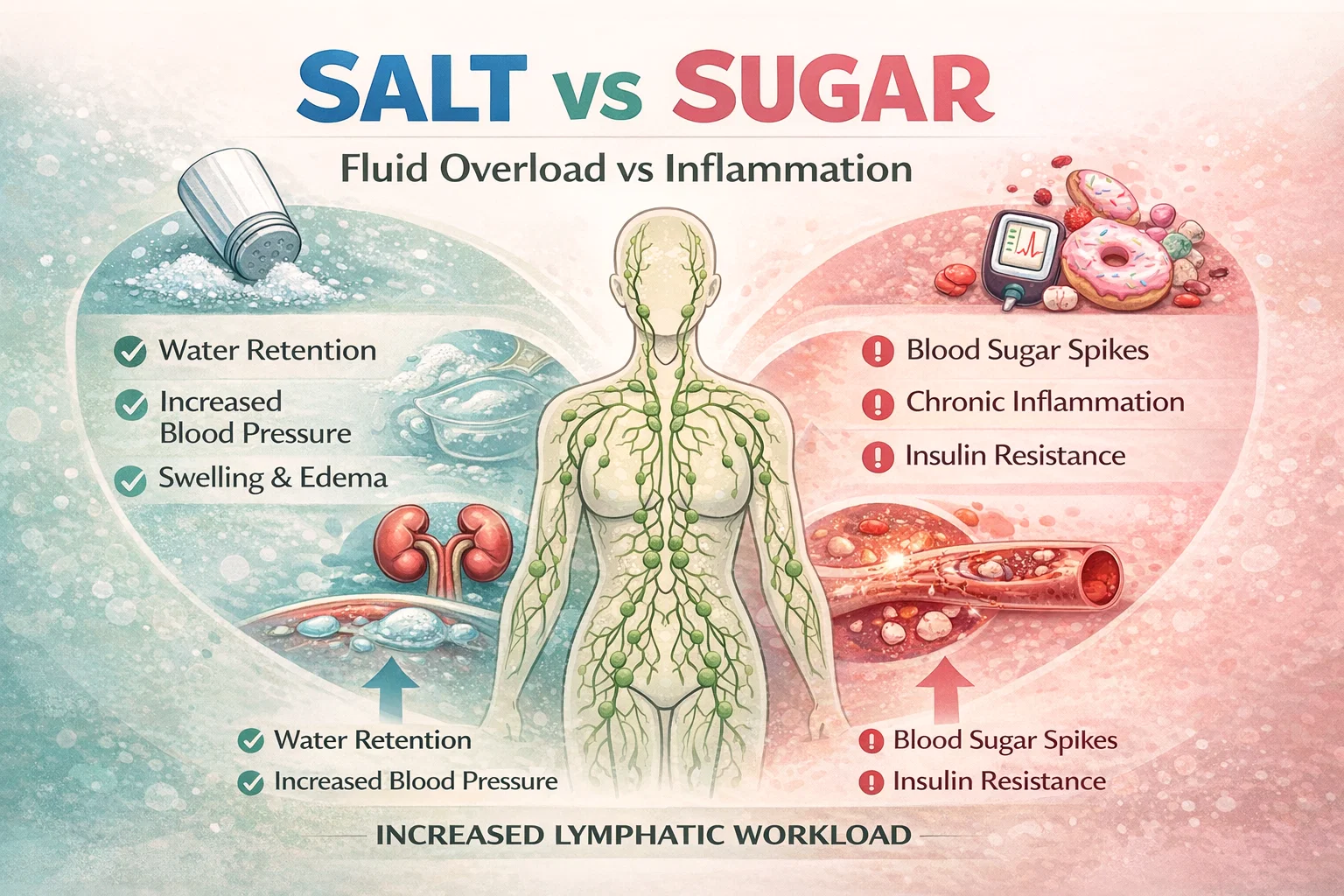
Sodium is an essential electrolyte required for nerve transmission and muscle function. However, the modern diet is frequently overloaded with sodium, which disrupts the body’s delicate fluid balance. When you consume excess salt, your body prioritizes maintaining the correct concentration of sodium in your blood. To achieve this, it retains water, effectively diluting the extra salt.
From Plasma Volume to Interstitial Swelling
This process begins with an increase in plasma volume. As your kidneys work overtime to manage this surge, you experience elevated blood pressure, which places extra stress on your cardiovascular system. Over time, this fluid does not just stay in your blood vessels. It begins to leak into the interstitial spaces, which are the gaps between your cells. This is exactly what leads to that physical sensation of puffiness or edema in your hands, feet, and ankles.
Your lymphatic system acts as the body’s drainage network, responsible for clearing this excess interstitial fluid. When you consistently consume high levels of salt, you are essentially asking your lymphatic system to work at double capacity. When that drainage system becomes overwhelmed, fluid stagnates, and the cycle of bloating continues.
The Sugar Impact: Inflammation and Cellular Stress
While salt primarily drives issues related to fluid balance, sugar creates a different set of challenges centered around metabolic stress and inflammation. When you consume refined sugars, your body experiences a rapid glucose spike. This sharp rise necessitates a large release of insulin to move the glucose into your cells. Chronic spikes, however, lead to insulin elevation, which can trigger a cascade of systemic reactions.
Inflammatory Cytokines and Endothelial Health
The danger of high sugar intake goes beyond the pancreas. Elevated insulin levels and constant blood sugar fluctuations are associated with the release of inflammatory cytokines. These are signaling proteins that promote inflammation throughout the body. Perhaps most critically, this inflammatory environment can lead to endothelial dysfunction.
The endothelium is the delicate lining of your blood vessels. When this lining becomes dysfunctional due to persistent inflammation, it loses its ability to properly regulate blood flow and vascular integrity. This dysfunction further complicates fluid circulation and places an even higher workload on the lymphatic system, which is already struggling to manage metabolic waste products produced during these inflammatory events.
Synergistic Effects: The Double Burden on the Lymphatic System
It is rarely the case that we consume salt and sugar in isolation. Many processed foods are packed with high amounts of both, creating a compounding effect. When your body is fighting the fluid retention caused by sodium while simultaneously battling the inflammatory response triggered by sugar, your lymphatic workload skyrockets.
Signs Your System is Overloaded
How do you know if your body is struggling to manage this load? Common symptoms include:
- Persistent morning puffiness or facial swelling.
- A feeling of heaviness in the limbs.
- Difficulty losing weight despite a caloric deficit.
- General lethargy or feelings of systemic sluggishness.
- Frequent skin issues or sensitivity.
Practical Strategies for Reducing Your Load
The goal here is not to eliminate salt or sugar entirely, but to shift your habits toward a more sustainable balance. Small, consistent changes can significantly reduce the pressure on your lymphatic and circulatory systems.
Reducing Sodium Intake
Most of the salt in the typical diet comes from processed foods rather than the salt shaker. Start by reading labels and opting for low-sodium versions of canned goods, sauces, and snacks. Prioritize whole, unprocessed foods like vegetables, grains, and legumes, which naturally contain lower levels of sodium and higher amounts of potassium, a mineral that helps balance out the effects of sodium.
Stabilizing Your Blood Sugar
Preventing the sharp glucose spikes that lead to inflammation is key. Pair carbohydrates with healthy fats, fiber, or protein to slow down the absorption of sugar into your bloodstream. For example, instead of eating fruit alone, pair it with a handful of nuts. Replace refined snacks with whole food alternatives that provide a steady, sustained release of energy throughout the day.
Supporting Lymphatic Flow
Beyond dietary changes, support your lymphatic system directly. Movement is critical because the lymphatic system does not have a pump like the heart. Gentle activities like walking, rebounding, or yoga can help move lymph fluid through the body. Staying hydrated is equally important, as it helps your kidneys flush out excess sodium more effectively.
Conclusion: Empowering Your Body for Long-Term Wellness
By understanding the direct link between what you eat and how your body functions at a cellular level, you move from a place of frustration to a place of empowerment. You now know that the puffiness and inflammation you feel are not just aesthetic concerns but indicators of how hard your systems are working to maintain homeostasis.
Small adjustments, like choosing whole foods over processed ones and prioritizing steady energy levels, can have a profound impact on your lymphatic health. It is about listening to your body, understanding these triggers, and choosing to support your internal systems every single day. Start with one change this week, and you will likely find that you feel much lighter and more vibrant for it.
Would you like me to create a 7-day meal plan template that focuses on reducing sodium and stabilizing blood sugar to support lymphatic health?