Setting Boundaries Moving On Quotes Self-Care and Relationship Healing Inspiration
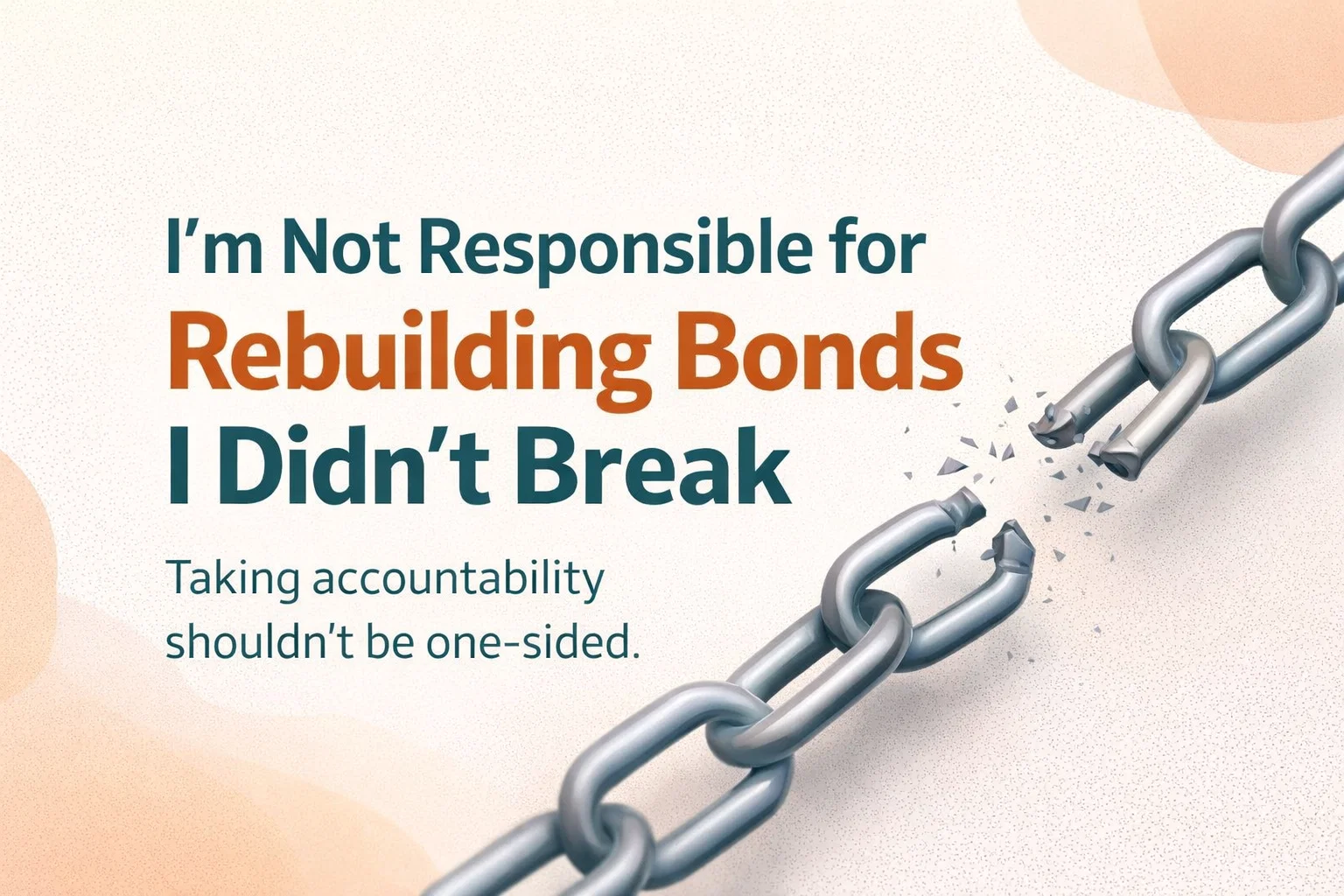
We have all been there. You are staring at your phone or sitting in a quiet room, feeling the heavy weight of a fractured relationship pressing down on your chest. There is a specific kind of exhaustion that comes from trying to bridge a gap that you did not create. The image above captures this sentiment perfectly with a simple yet profound truth: It isn’t my responsibility to rebuild a bond that I didn’t break. This single sentence is more than just a quote. It is a manifesto for anyone who has ever felt pressured to fix a situation they did not damage. In the world of modern relationships and personal growth, understanding where your responsibility ends and someone else’s begins is the ultimate key to emotional freedom.
The Psychology of the Unbroken Bond
When a relationship hits a breaking point, the natural human instinct is often to reach out and try to mend it. We are social creatures by design, and our brains are wired to seek harmony. However, there is a distinct difference between being a peacemaker and being a martyr. When you take on the task of rebuilding a bond that you did not break, you are essentially telling the other person that their actions have no consequences. You are teaching them that they can cause damage and wait for you to do the heavy lifting of repair.
This dynamic often stems from a place of high empathy or a fear of abandonment. You might feel that if you do not step in, the relationship will stay broken forever. While that might be true, it is important to ask yourself what kind of relationship you are fighting to save. A bond that requires only one person to maintain it is not a partnership. It is a burden. Recognizing that the responsibility of repair lies with the person who caused the fracture is not an act of malice. It is an act of self-respect.
Defining Your Emotional Boundaries
Setting boundaries is one of the most discussed topics in wellness today, yet it remains one of the hardest things to implement. A boundary is not a wall to keep people out. It is a gate that defines what you are willing to accept and what you are not. When you decide that you will no longer be the sole architect of a relationship’s recovery, you are setting a boundary around your own time, energy, and mental health.
Recognizing the Signs of Emotional Overextension
- Constant Fatigue: You feel drained after every interaction or even just thinking about the person.
- Resentment: You feel a simmering anger because you are doing all the emotional labor.
- Guilt: You feel like it is your fault the relationship is stagnant, even if you were the one wronged.
- Anxiety: You are constantly rehearsing conversations in your head to try and find a way to fix things.
If these signs resonate with you, it is a clear indicator that you have stepped outside of your own emotional jurisdiction. You cannot fix a problem you did not create because you do not have access to the other person’s internal motivations or willingness to change. By stepping back, you are giving the other person the space to realize the impact of their actions.
The Myth of Being the Bigger Person
Society often encourages us to be the bigger person. We are told to forgive, forget, and reach out first to show maturity. While forgiveness is a beautiful tool for personal healing, being the bigger person should never mean becoming a doormat. True maturity involves holding people accountable for how they treat you. If someone breaks a bond through betrayal, neglect, or disrespect, the ball is firmly in their court. Reaching out first in these scenarios often bypasses the necessary steps of apology and changed behavior that are required for a healthy reconciliation.
Rebuilding a bond requires a foundation of trust. If that trust was broken by someone else, they are the only ones who can provide the materials to rebuild it. When you jump in to do it for them, you are building on a foundation of sand. It might look okay for a while, but the first sign of trouble will cause the whole structure to collapse again because the root issue was never addressed by the person responsible.
Why Silence is a Valid Response
In a world that demands constant connection, silence can feel like a failure. We feel the need to explain, to argue, or to beg for understanding. But sometimes, silence is the loudest and most effective response you can give. Choosing not to engage in the rebuilding process is not a “silent treatment” designed to punish. Instead, it is a neutral stance that says, I am here, but I am not doing the work for you.
This period of silence allows you to reconnect with yourself. When you stop obsessing over a broken bond, you suddenly find hours of mental space that were previously occupied by stress. You can use this energy to focus on your own hobbies, your health, and the relationships in your life that are actually reciprocal and life-giving. You might find that once you stop trying to fix the broken bond, you don’t actually miss it as much as you thought you would.
How to Maintain Peace During the Transition
- Practice Affirmations: Remind yourself daily that your peace is worth more than a forced connection.
- Limit Social Media: Avoid checking the other person’s updates, as this keeps the wound fresh.
- Journaling: Write down exactly what happened so you don’t gaslight yourself into thinking you were the one who broke the bond.
- Seek Support: Talk to friends or a therapist who can validate your perspective and help you stay strong in your boundaries.
The Path to Authentic Healing
Healing is a non-linear process. There will be days when you feel empowered by your decision to step back, and there will be days when you feel a deep sense of loss. Both of these feelings are valid. It is okay to grieve the bond that was broken while simultaneously refusing to fix it yourself. Grieving shows that the relationship mattered to you. Refusing to fix it shows that you matter to yourself.
As you move forward, you will begin to attract people who understand the value of a two way street. You will find that healthy relationships do not require one person to do all the heavy lifting. They are built on mutual respect, shared effort, and a collective desire to keep the bond strong. The energy you save by not rebuilding what you didn’t break is the very energy you will use to build something new and beautiful with people who truly deserve a place in your life.
Closing Thoughts on Holding Your Ground
The journey toward radical self-responsibility includes knowing what is not your responsibility. If you have been carrying the weight of a broken relationship, today is the day to set it down. You are not being cold, and you are not being difficult. You are simply being fair to yourself. Relationships are a bridge built from both sides. If you have done your part and the other side is missing, it is okay to walk away from the edge and find a different path.
Remember that your worth is not defined by how many people you can “fix” or how many broken bonds you can glue back together. Your worth is inherent. By honoring the truth shown in the image, you are making a profound investment in your future self. You are choosing a life of clarity, respect, and genuine connection over a life of constant repair and emotional exhaustion. Stand firm in your truth, protect your peace, and trust that the right people will always do the work to stay by your side.
Would you like me to help you draft some specific responses or affirmations to help maintain these boundaries in your daily life?