Signs a Woman Is Giving Up on a Relationship Emotional Detachment Tips
Navigating the complex landscape of human emotions often feels like trying to read a map where the ink is slowly fading. Relationships are built on a foundation of communication, vulnerability, and mutual effort, but what happens when that foundation begins to crumble in silence? The image of a woman slowly giving up is not usually a sudden explosion or a dramatic exit. Instead, it is a quiet, steady retreat into herself. Understanding these subtle shifts in behavior is essential for anyone looking to salvage a connection or for those who need to validate their own feelings of detachment. When the spark of engagement turns into the cold ash of indifference, the journey toward emotional distance has already begun.
The Subtle Art of Emotional Withdrawal
Emotional withdrawal is a psychological defense mechanism that occurs when a person feels that their needs are no longer being met or that their voice is no longer heard. In many cases, it is a survival tactic used to protect the heart from further disappointment. When a woman starts to pull back, it is rarely about a single event. It is usually the result of a long period of feeling misunderstood, neglected, or undervalued. This process of giving up is often described as a slow fade rather than a sharp break.
One of the first things to go is the desire to share the small details of the day. Those little anecdotes about a coworker or a funny thing seen at the grocery store seem less important to share when you feel like the person on the receiving end is not truly listening. This creates a vacuum where intimacy used to live. As the silence grows, so does the distance, making it harder to find the way back to the closeness that once defined the relationship.
The End of the Infinite Conversation
In the early stages of a healthy relationship, conversations feel like they could go on forever. There is a genuine curiosity about the other person’s thoughts and experiences. However, when a woman is giving up, she stops being the one to initiate these talks. The proactive energy that used to drive the connection vanishes. You might notice that the phone stays silent more often or that dinner table discussions feel like pulling teeth. This lack of initiation is a clear indicator that she has stopped investing her mental energy into maintaining the bridge between you both.
The Power of Short Responses
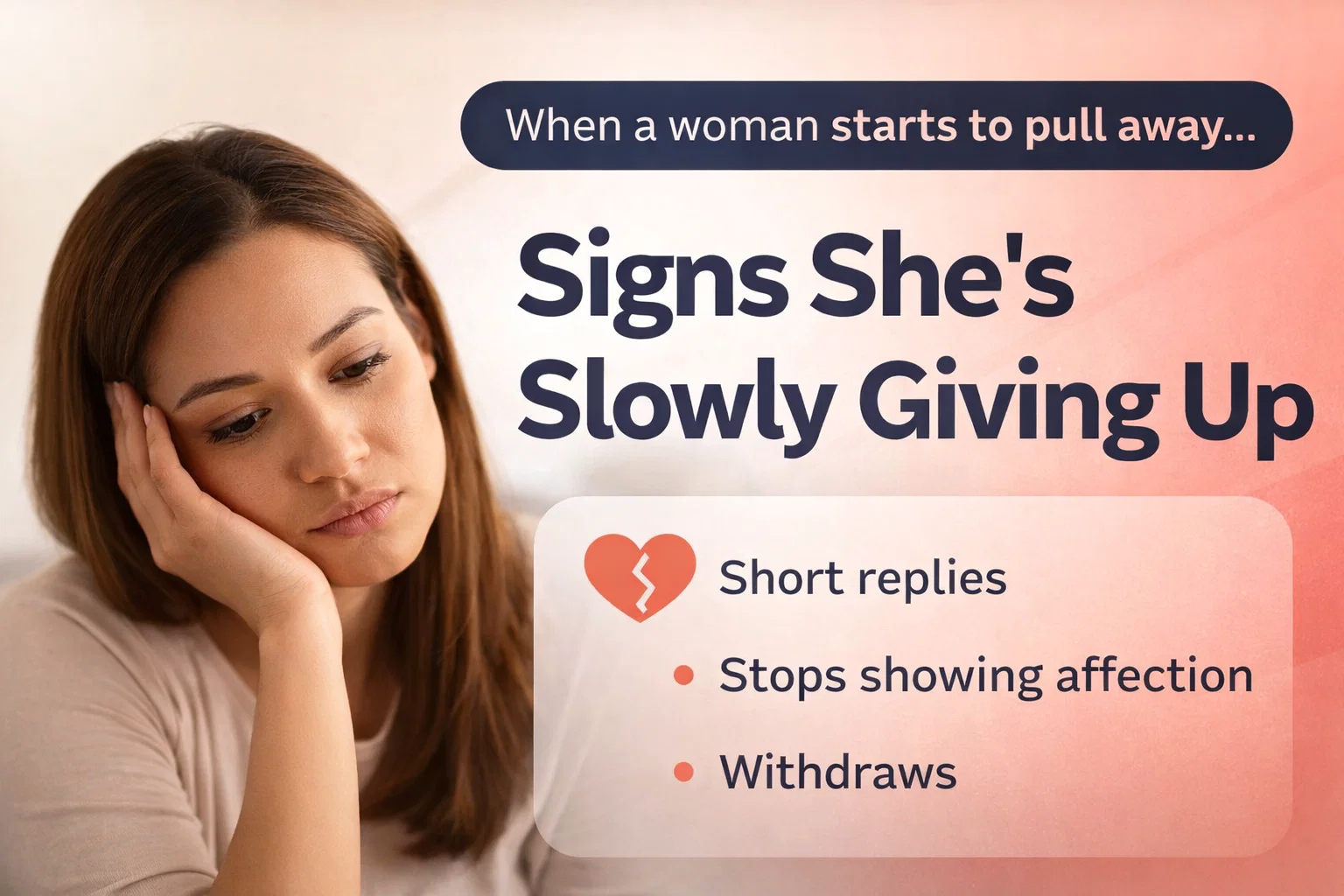
Communication is not just about the frequency of talking, but the quality of the exchange. When replies shift from thoughtful sentences to one-word answers like okay or cool, the depth of the relationship is being stripped away. These short responses act as a barrier. They provide the bare minimum required to acknowledge a statement without inviting further dialogue. It is a way of saying that I am physically present but mentally and emotionally elsewhere. By keeping things brief, she avoids the potential for conflict but also the possibility of connection.
Choosing Silence Over Conflict
It is a common misconception that a lack of arguing means a relationship is peaceful and healthy. In reality, healthy relationships require a certain level of friction to grow and resolve issues. When a woman stops arguing, it often means she has reached a point of total exhaustion. She no longer believes that expressing her frustrations will lead to any meaningful change. This is the stage of quiet agreement, where she simply nods along to avoid the stress of a fight that she feels she has already lost a hundred times before.
This disconnection is far more dangerous than a loud argument. An argument shows that there is still enough passion and care left to fight for a better outcome. Silence, on the other hand, suggests that the outcome no longer matters. By choosing to disconnect rather than engage in a debate, she is effectively closing the door on the possibility of resolution. She is conserving her energy for her own life outside of the partnership.
Finding Solitude in a Shared Space
Spending more time alone is a hallmark of the detachment process. This might look like staying in a different room, picking up new solo hobbies, or staying late at work. While everyone needs personal space, a sudden increase in the desire to be alone often indicates that being around the partner has become draining rather than life-giving. The home, which should be a sanctuary for the couple, starts to feel like a place where two people are simply coexisting. This physical distance is a direct reflection of the emotional walls being built up day by day.
The Cooling of the Emotional Climate
Tone carries more weight than words ever could. A shift to a colder, quieter, or more distant tone is a sensory cue that the emotional climate has changed. It is the absence of warmth in a greeting or the lack of enthusiasm in a laugh. This tone acts as a protective layer, keeping others at arm’s length. When the tone shifts, it signals that the safety and comfort once found in the relationship have evaporated, replaced by a professional or polite distance that lacks any real intimacy.
Digital Distancing and Social Cues
In our modern world, social media often becomes a mouthpiece for our internal states. A woman who is giving up might start posting quotes that reflect her inner turmoil or her new outlook on life instead of explaining her feelings to her partner. These quotes serve as a safe way to express pain or a desire for independence without having to face a direct confrontation. It is a signal to the world and perhaps a subconscious cry for help, indicating that she is processing her emotions through external sources rather than through the relationship itself.
- Quotes as a Shield: Using the words of others to describe a personal struggle.
- Reduced Digital Footprint: Posting less about the relationship and more about personal growth.
- Seeking External Validation: Looking for support from friends or online communities to fill the void.
The Transition to Independent Action
A significant turning point occurs when a woman starts doing what she wants without informing her partner. This is not about a lack of respect, but a regained sense of autonomy. In a connected relationship, partners usually check in with each other out of a sense of shared life. When that checking in stops, it shows that she no longer sees the partner as a primary stakeholder in her decisions. She is beginning to build a life where her choices are hers alone, independent of the influence or approval of someone else.
The Heartbreak of Withdrawn Affection
Physical and emotional affection are the lubricants of a romantic bond. When a woman stops showing affection, it is rarely an act of malice or hate. Instead, it is a response to deep-seated hurt. It is difficult to be vulnerable and physically close to someone when you feel emotionally unsafe or neglected. The withdrawal of touch, hugs, and words of affirmation is a way to protect the self from further vulnerability. This lack of affection creates a chill that is hard to ignore, marking the transition from lovers to mere acquaintances.
From Please Understand Me to You Never Will
Perhaps the most heartbreaking shift in this entire process is the change in perspective regarding being understood. Early on, a woman will often plead for her partner to see her point of view. She will explain, cry, and try different ways to bridge the communication gap. However, when she gives up, she reaches a state of resignation. The phrase you never will understand becomes her internal or external mantra. Once she accepts that her partner is incapable or unwilling to see her heart, the motivation to keep trying completely disappears. This is the death of hope within the relationship.
The Danger of It is Okay
We often use the phrase it is okay as a polite way to move past minor inconveniences. But when a woman starts saying it is okay to everything, including major issues, it is a sign of ultimate defeat. She isn’t saying that things are actually fine. She is saying that she knows nothing will change, so there is no point in bringing it up. This passive acceptance is a form of emotional checked-out behavior. It is the final stage of surrender, where the relationship has become so stagnant that she no longer believes it is worth the effort to point out the flaws.
How to Address the Silence
If you recognize these signs in your own life or in your partner, it is important to realize that the window for change is closing, but it may not be shut yet. Addressing these issues requires a radical level of honesty and a willingness to listen without defensiveness. It involves asking the hard questions and being prepared for the answers. If the goal is to rebuild, it will take more than just a single conversation. It will take a consistent, long term effort to restore the trust and safety that have been lost over time.
Steps Toward Reconnection
Reconnecting with someone who has emotionally checked out is a delicate process. It starts with acknowledging the distance without blaming the other person. Saying something like I have noticed we have been distant lately and I really miss our connection can be more effective than asking Why are you acting like this? It is about creating a space where the other person feels safe enough to be vulnerable again. This requires patience, active listening, and a genuine desire to change the behaviors that led to the withdrawal in the first place.
Prioritizing Self-Care and Clarity
For the woman who is in the process of giving up, this is a time for immense self-care. It is important to evaluate whether the relationship can be saved or if the detachment is a necessary step toward a healthier future. Seeking the help of a therapist or a trusted mentor can provide the clarity needed to make these difficult decisions. Understanding your own worth and recognizing that you deserve to be in a relationship where you are heard and valued is the most important part of this journey. Whether you stay or go, your emotional health must come first.
Moving Forward with Intention
The journey of a woman giving up is a poignant reminder of the fragility of human connections. It highlights the importance of consistent effort, open communication, and the need for mutual respect. While these signs are heavy and often signal the end of a chapter, they also provide an opportunity for profound personal growth. By paying attention to these quiet signals, we can learn to be better partners and more self-aware individuals. Life is too short to live in a state of quiet resignation. Whether through reconciliation or the courage to walk away, everyone deserves to find a path that leads to genuine peace and emotional fulfillment. Embracing the truth of a situation is the only way to eventually move toward a brighter, more authentic future.