Stop Overthinking What You Can Cannot Control Anxiety Mental Health Circle of Control
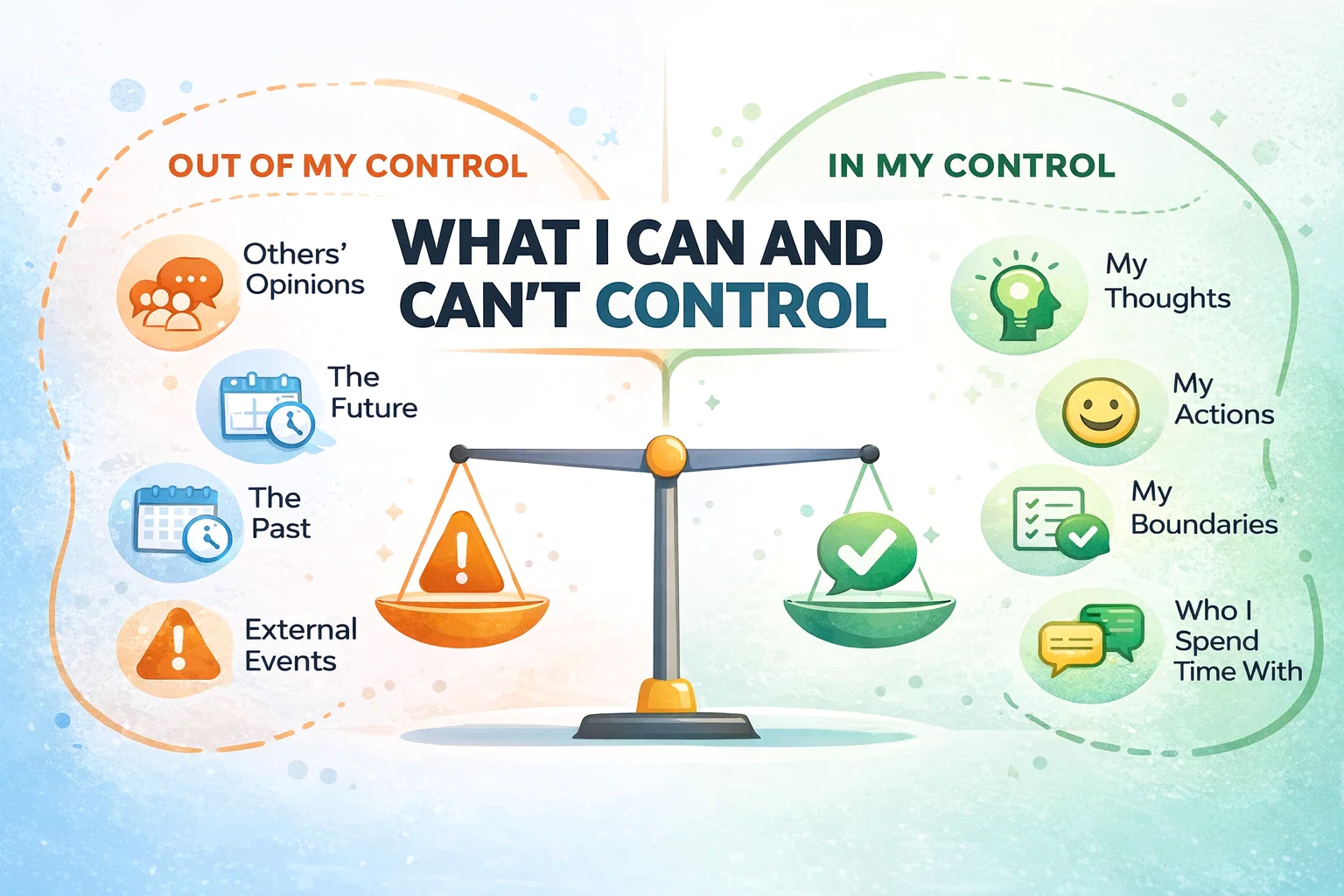
We have all been there: lying awake at 2 AM, replaying a conversation from three years ago or worrying about a meeting that hasn’t even happened yet. It feels like your brain is a browser with fifty tabs open, and you can’t find which one is playing the music. This state of constant mental friction is often the result of trying to carry the weight of things we simply cannot change. The image of the Circle of Control is more than just a diagram; it is a blueprint for mental freedom. By distinguishing between what is within our power and what belongs to the rest of the world, we can finally stop the cycle of burnout and start investing our energy where it actually yields a return.
The Psychology Behind the Circle of Control
The concept of the Circle of Control is rooted deeply in Stoic philosophy and modern Cognitive Behavioral Therapy. At its core, it suggests that human suffering often stems from a misplaced sense of responsibility. When we try to control the weather, the economy, or how our neighbors perceive us, we are fighting an uphill battle against reality. This creates a state of chronic stress because we are seeking a specific outcome in a system where we have zero agency.
Psychologically, focusing on the outer circle—the “Out of My Control” zone—leads to feelings of helplessness and anxiety. Conversely, when we pull our focus back to the inner circle, we experience a sense of “agency.” Agency is the belief that you can take meaningful action to affect your own life. Even in the middle of a chaotic situation, finding one small thing you can control (like your breathing or your next words) can instantly lower your cortisol levels and clear your head.
Understanding the Outer Circle: What to Let Go Of
The list of things outside our control is objectively massive, yet these are the very things that usually dominate our thoughts. Understanding why these items are unchangeable is the first step toward releasing them.
Other People’s Opinions and Behaviors
You can be the most delicious peach in the world, and there will still be someone who simply does not like peaches. Other people’s opinions are filtered through their own past traumas, biases, and current moods. You are responsible for how you treat them, but you are not responsible for their reaction to you. Trying to manage someone else’s perception of you is a full-time job that pays zero dollars and offers no vacation time.
The Past and The Future
The past is a finished book. You can study it to learn lessons, but you cannot rewrite the ink. Similarly, the future is a collection of possibilities, many of which are influenced by external events that haven’t occurred yet. While we can plan for the future, we cannot control the ultimate outcomes. Ruminating on “what was” or “what if” only steals the energy you need for “what is.”
External Events and Time
Global events, the economy, and the literal passage of time are constants. You cannot stop yourself from aging, and you cannot dictate the flow of traffic on your way to work. When we fight these realities, we create “secondary suffering.” The first suffering is the event itself (being stuck in traffic); the secondary suffering is the anger and resistance we feel because we think it shouldn’t be happening.
Mastering the Inner Circle: Where Your Power Lies
The “In My Control” zone is where your life actually happens. This is your personal jurisdiction. When you master these elements, you become much more resilient to the chaos happening outside the circle.
Your Words and Your Attitude
The way you speak to others—and perhaps more importantly, the way you speak to yourself—sets the tone for your entire reality. Your attitude is the lens through which you view the world. If you choose a lens of curiosity rather than judgment, your daily experience shifts immediately. You may not control the situation, but you control the narrative you tell yourself about that situation.
Your Boundaries
Boundaries are the fences you build to protect your energy. You cannot control if someone asks for too much of your time, but you absolutely control whether you say “yes” or “no.” Setting boundaries is an act of self-respect that tells the world how you expect to be treated. It is one of the most proactive tools in the inner circle.
Processing Your Emotions
While emotions often arise involuntarily, what you do with them is within your control. You can choose to suppress them, which leads to future explosions, or you can choose to process them through journaling, movement, or therapy. Taking ownership of your emotional health is a hallmark of personal growth.
How to Apply This to Daily Anxiety
Knowing the theory is one thing, but applying it during a panic attack or a stressful workday is another. Here is a step-by-step guide to using this visual tool in real-time:
- The Pause: When you feel your heart rate rising, stop for a second. Ask yourself: “Is what I am worrying about inside or outside my circle?”
- The Inventory: Literally list the stressors. If “what my boss thinks of me” is on the list, move it to the outer circle. If “completing my task to the best of my ability” is there, keep it in the inner circle.
- The Shift: Redirect every ounce of that wasted “outer circle” energy into an “inner circle” action. Instead of worrying about the economy, look at your personal budget. Instead of worrying about a past mistake, write down the lesson and move on.
The Benefits of Living Within Your Circle
When you commit to this mindset, the changes in your life are often profound. You will likely notice these benefits within just a few weeks of practice:
Increased Productivity
When you stop leaking energy into things you can’t change, you suddenly have a surplus of focus. You get more done because you are working on solvable problems rather than spinning your wheels on unsolvable ones.
Improved Relationships
By releasing the need to control or change the people around you, you allow your relationships to breathe. You become a more supportive partner, friend, and colleague because you are no longer projecting your anxieties onto them.
Emotional Resilience
You become like a tree with deep roots. The wind (external events) may blow, and the leaves may shake, but the core of who you are remains steady. You know that no matter what happens outside, you have the tools to manage what happens inside.
Daily Habits to Strengthen Your Focus
Focusing on your circle of control is like a muscle; it requires consistent training. Consider incorporating these small habits into your routine:
- Morning Intention: Before checking your phone, decide on one “inner circle” thing you will prioritize today, such as your kindness or your focus.
- Digital Detox: Much of the “outer circle” noise comes from social media and 24-hour news. Limit your exposure to give your brain a break from global stressors you cannot influence.
- Evening Review: Reflect on your day. Did you spend more time in the inner or outer circle? Don’t judge yourself; just observe and adjust for tomorrow.
Moving Forward with Clarity
The beauty of the Circle of Control is its simplicity. It doesn’t require a degree in psychology or years of meditation to understand. It only requires a moment of honesty with yourself. The world is big, loud, and often unpredictable. You cannot quiet the storm, but you can certainly learn how to sail your own ship.
By choosing to focus on your responses, your energy, and your self-talk, you reclaim the power that anxiety tried to steal. You realize that while you are not in control of everything, you are in control of the things that matter most. Start small, be patient with yourself, and watch as your world becomes a much more manageable and peaceful place to inhabit.
Would you like me to expand on any specific section or generate another post for your blog?