Stop Quitting Too Soon 5 Simple Tips to Stay Consistent and Finally See Results
We have all been there. You start a new fitness routine or a clean eating plan with a surge of energy and a fridge full of kale. For the first week, you are a machine. By week three, the initial excitement has evaporated, the scale has not moved an inch, and that old voice in your back of your mind starts whispering that maybe this plan just does not work for you. Most people assume they fail because they chose the wrong program, but the reality is much simpler and more frustrating. They fail because they did not stay with the plan long enough to let the physiological and psychological changes actually take root.
Consistency is the least sexy part of self-improvement. It is boring, repetitive, and often feels like you are shouting into a void. However, according to the principles of the Glow Club, fat loss and personal transformation do not require a revolutionary new method every thirty days. They require the discipline to stick to a good plan even when it feels like nothing is happening. This post will dive deep into the five pillars of long-term consistency so you can finally break the cycle of starting over every Monday morning.
1. Decide Before You Feel Motivated
One of the biggest traps in the wellness world is the reliance on motivation. Motivation is a feeling, and feelings are notoriously unreliable. They are influenced by how much sleep you got, the weather outside, and even what you ate for dinner last night. If your plan only survives on the days you feel inspired, it is destined to fail. High-achievers do not wait for the spark; they rely on commitment.
Commit to a Fixed Time Frame
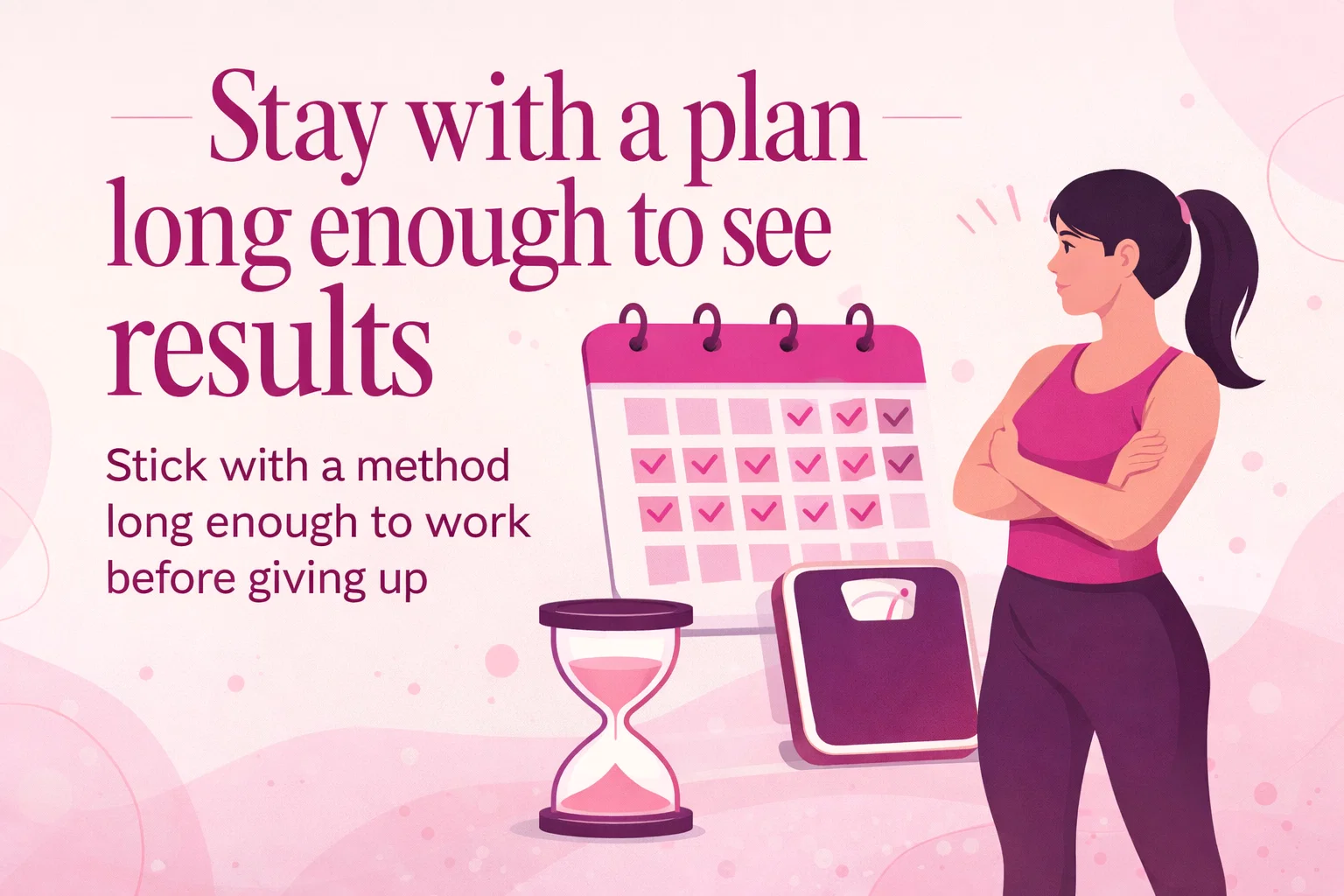
To see real biological changes, you need to commit to a block of time before you even think about evaluating the results. A window of 8 to 12 weeks is generally the gold standard. This duration allows your body to move past the initial water weight shifts and hormonal adjustments. During this phase, you must adopt a no-switching policy. No tweaking the macros every three days and no jumping to the latest TikTok workout trend. You simply show up because you already made the decision weeks ago.
The Power of Pre-Decision
When you decide your actions in advance, you remove the “decision fatigue” that leads to poor choices. If you have already decided that you are going to the gym at 6:00 AM regardless of how you feel, you do not have to have an internal debate with your alarm clock. The decision is already made. You are just the person carrying out the orders.
2. Expect the Nothing is Happening Phase
There is a dangerous period in every transformation journey known as the plateau or the adaptation phase. This is the gap between starting a new habit and seeing the physical manifestation of that habit. During these weeks, the scale might stay stuck. You might feel flat, tired, or even slightly discouraged. This is not a sign that the plan is failing; it is a sign that your body is adapting.
Understanding Biological Adaptation
Your body is a survival machine. When you change your activity levels or caloric intake, your body does not immediately shed weight. It tries to maintain homeostasis. It is recalibrating its energy expenditure and hormonal signaling. If you expect this phase, you will not panic when it arrives. You will recognize it as a necessary step in the process rather than a reason to quit.
Redefining Progress
When the scale is not moving, look for other markers of success. Are your energy levels more stable? Is your sleep quality improving? Are you able to lift slightly more weight than you could last week? These are the quiet indicators that the plan is working beneath the surface. Trust the biology and stay the course.
3. Track Trends, Not Moments
We live in a culture of instant gratification, which makes us hyper-focused on single moments. We freak out over one high-calorie meal or one missed workout. We weigh ourselves daily and let a 0.5-pound increase ruin our entire mood. This micro-management of data is the enemy of long-term success because it ignores the big picture.
The Law of Averages
One meal does not make you healthy, and one meal does not make you unhealthy. It is the aggregate of your choices over weeks and months that determines your outcome. If you eat 21 meals a week and 19 of them are on-plan, you are succeeding. Instead of obsessing over daily fluctuations, look at your weekly or monthly averages. Are you generally trending in the right direction? If so, you are winning.
Separating Emotion from Data
Data should be used as a compass, not a judge. When you look at a single weigh-in, it is easy to get emotional. When you look at a graph of 60 days of weigh-ins, the daily spikes disappear into a larger downward trend. Stop looking for daily validation and start looking for patterns. Patterns tell the truth; moments often lie.
4. Simplify Instead of Intensify
When progress feels slow, our natural instinct is to do more. We think we need more cardio, more restrictive dieting, or more supplements. This is usually the exact opposite of what we should do. Adding intensity to a plan that is already hard to maintain is a recipe for burnout.
The Sustainability Test
The best plan is the one you can actually follow on your worst day, not just your best day. If your routine requires two hours of meal prep and ninety minutes at the gym every single day, it is likely too fragile to survive a busy work week or a family emergency. Usually, the answer is to make your habits easier to repeat, not harder to survive.
Focus on the Big Rocks
In the world of health, there are big rocks and there are pebbles. The big rocks are sleep, protein intake, and consistent movement. The pebbles are things like specific supplement timing or the exact brand of organic tea you drink. When you feel overwhelmed, stop worrying about the pebbles. Get back to the big rocks. A simple, consistent plan will beat a complex, intermittent plan every single time.
5. Tie Your Identity to Consistency, Not Outcomes
Most people set goals based on outcomes: I want to lose 10 pounds or I want to run a 5k. While these are great starting points, they are fragile because once the goal is reached (or if progress toward it slows), the motivation disappears. To stay with a plan long-term, you need to shift your identity.
Identity-Based Habits
Instead of saying “I am someone who wants to lose weight,” try saying “I am the type of person who never misses a workout.” This shifts the focus from a distant result to a daily action. When your identity is tied to the act of showing up, every day you follow your plan is a “win,” regardless of what the scale says. You are casting a vote for the person you want to become.
Results Follow Identity
Results are a lagging measure of your habits. Your current physical state is a reflection of your habits over the last six months. If you change the identity and the habits today, the results will eventually have no choice but to follow. Focus on the person who shows up even when it is not exciting, and the outcome will take care of itself.
Conclusion: The Week You Want to Quit is the Week You Should Stay
There is a common saying in the fitness world that the week you feel most like starting over is usually the week you are closest to a breakthrough. Transformation is not a linear path; it is a series of plateaus followed by sudden jumps in progress. If you quit during the plateau, you never get to see the jump.
You do not need a better plan. You do not need a more expensive coach or a magic pill. You need to stay with a good plan long enough to see what it can actually do. Save your energy for the boring days and keep showing up. Your future self will thank you for not giving up when things got quiet. Remember, consistency is the only “secret” that actually works. Trust the process, embrace the boring phases, and let time do the heavy lifting for you.
Would you like me to create an SEO-optimized meta description or a list of internal linking suggestions for this post?