Sustainable Home Rhythms Simple Daily Routines for a Peaceful and Organized Home Lifestyle
Do you ever feel like your home life is a constant cycle of catching up? The dishes stack up, the laundry feels infinite, and finding a moment of genuine peace seems like a luxury reserved for vacations. If you’re nodding along, you are certainly not alone. Many of us struggle to find a balance between maintaining an organized space and actually enjoying the sanctuary we call home. The problem is not the chores themselves; it’s often how we approach them. We tend to view home maintenance as a set of daunting burdens, rather than a natural, nurturing flow. But what if there was a way to shift that perspective and transform the way you interact with your living space?
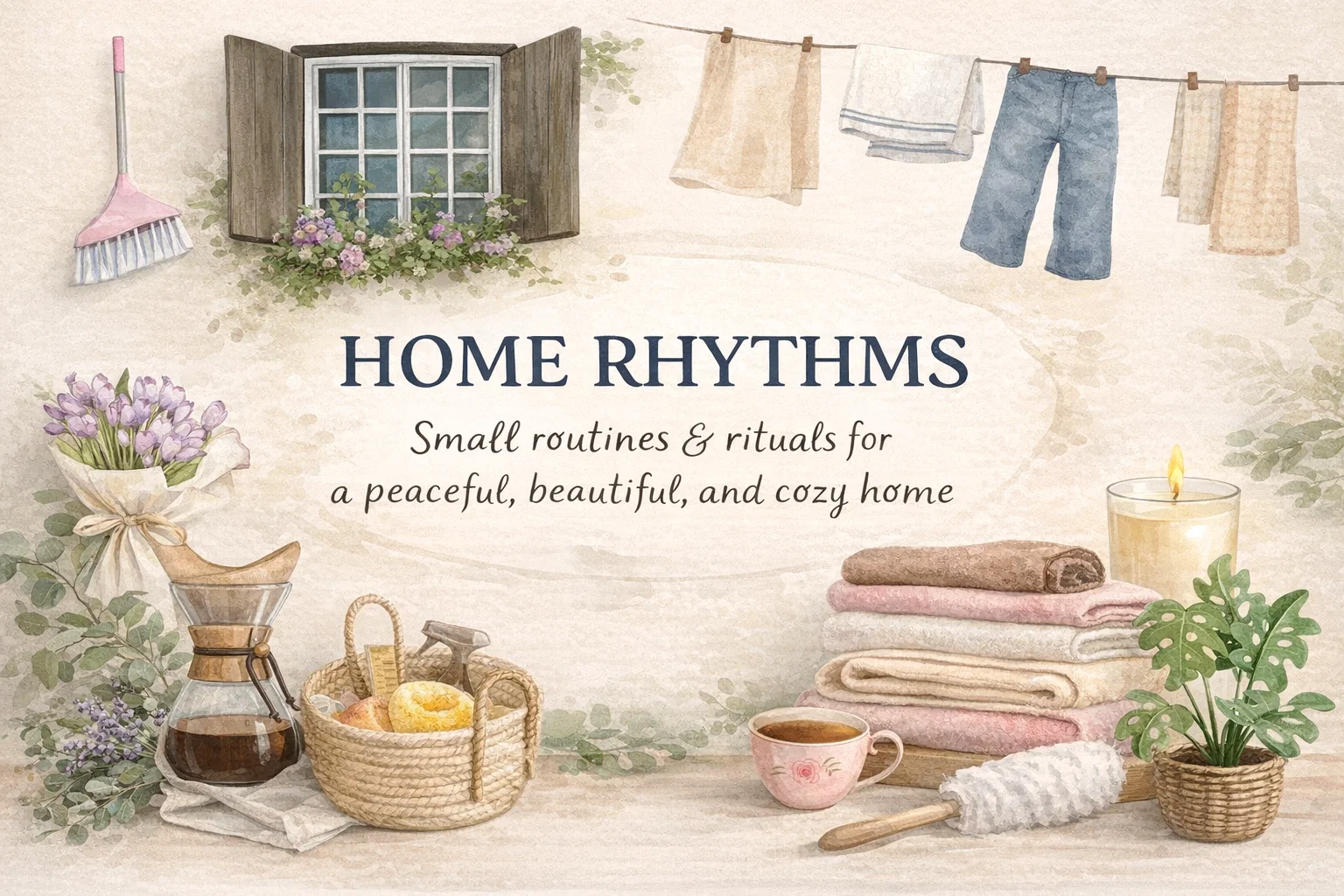
The watercolor art piece titled “HOME RHYTHMS” captures a crucial and beautiful concept: “small routines and rituals that bring order, beauty, and well-being into our homes.” This is not just a cleaning checklist; it’s a holistic approach to home care that values both the function and the feeling of your space. Embracing this concept means moving away from chaotic, last-minute fixes and towards a sustainable, mindful flow that feels nourishing, not draining.
What exactly are “Home Rhythms” anyway?
The term “rhythms” is chosen deliberately. It implies a natural, repeating pattern, much like the changing seasons, the tide, or your own heartbeat. Home rhythms are the small, daily, weekly, and seasonal routines you establish to keep your home running smoothly. Unlike a rigid “routine” that can feel restrictive, a rhythm is adaptable. It works with your natural energy levels and the specific needs of your household, rather than imposing a one-size-fits-all set of rules.
This approach isn’t about achieving a picture-perfect home all the time; it’s about establishing a foundation of order that allows you to feel calm and in control. For example, your morning rhythm might include making coffee, opening the curtains, and doing a five-minute tidy. Your evening rhythm could involve preparing for the next day, wiping down the kitchen counters, and lighting a candle to signal the transition to rest.
The Shift from “Must-Do Chores” to Mindful Rituals
The core philosophy behind home rhythms is intentionality. Instead of rushing through tasks just to get them over with, you perform them with presence and care. Any activity can become a ritual when you bring mindfulness to it. The image beautifully illustrates several examples of this:
- The Pour-Over Coffee: The slow, deliberate act of making coffee is a powerful daily ritual. You focus on the aroma, the process of pouring, and the anticipation of that first sip. It can be a moment of genuine presence before the busyness of the day begins.
- Hanging Laundry: Instead of seeing laundry as an endless task, you can find beauty in the tactile experience of the fabric and the simple pleasure of seeing clean items on a line. It’s an act of care for yourself and your belongings.
- Tending to Plants: Caring for an indoor plant, like the Monstera shown, is a connection to nature. It involves watering, pruning, and observing growth. It’s a quiet moment that nurtures both the plant and your own well-being.
- Lighting a Candle: This simple act instantly changes the ambiance. It signals the transition to evening, relaxation, or focus, and is a ritual in itself.
This shift in mindset changes how you feel about your space. A home cared for through thoughtful rituals feels different; it has an energetic imprint of peace and love. It becomes a place that truly supports you and your family.
How to Build Your Own Gentle Home Rhythms
Starting with home rhythms doesn’t mean overhauling your entire life overnight. That’s a surefire path to overwhelm and burnout. The most successful rhythms are built slowly, incrementally, and with kindness toward yourself. Here is a practical, step-by-step approach:
Start Small and Build from There
The temptation is to list every single thing you want to change, but resisting that is key. Think about the most chaotic part of your day or the one thing that consistently makes you feel stressed. Is it waking up to a messy kitchen? Or scramble-making lunches in the morning?
Choose one small thing to change. Maybe your first rhythm is to empty the dishwasher every morning while your coffee is brewing. Just focus on that for a week or two until it becomes an effortless, automatic part of your day. This small win builds confidence and sets you up for success with your next rhythm.
The Magic of the “Anchor” Method
A powerful technique for establishing a new rhythm is to “anchor” it to an existing habit. You are much more likely to remember to wipe down the counters if you do it immediately after you finish your morning coffee, rather than just “sometime in the morning.”
Identify habits you already do without thinking (e.g., brushing your teeth, making coffee, feeding a pet). Then, tack your new rhythm onto that anchor. For example, “After I start the coffee, I will empty the dishwasher.” The existing action reminds you to perform the new one, making the transition much smoother.
Personalize Your Rhythms to Your Life and Energy
Your home rhythms need to fit your unique circumstances. A family with young children will have very different rhythms than a retired couple. A shift worker’s rhythms will be different from a 9-to-5 employee. The point is not to copy anyone else’s system but to create one that authentically serves you.
Consider your natural energy levels throughout the day. Are you a morning person or a night owl? If you’re exhausted in the evenings, trying to enforce a major cleaning session then is a recipe for frustration. Perhaps your evening rhythm should focus on small, peaceful tasks like lighting a candle and setting out clothes for the next day, leaving more energetic chores for when you feel more capable.
Creating Beauty and Finding Calm in Your Space
A central tenet of home rhythms is the idea that order and beauty are connected to well-being. It’s not about being materialistic; it’s about acknowledging that our environment profoundly affects our mood and stress levels. Creating a visually calm space can contribute to a more mentally calm state of mind.
Look at the image of the window with the open shutters and the blooming flower box. It represents a connection to the outside world, natural light, and intentional beauty. Even if you don’t have a garden, bringing in a simple bouquet of flowers, or just opening your curtains, can make a significant difference. It’s about creating moments of visual “breathing space” within your home.
When you take a mindful approach to tidying, you create physical and mental space. Decluttering one small area, like a countertop or a table, can provide an unexpected sense of peace. That empty space acts as a visual rest stop for your eyes, which can be remarkably calming in a busy world.
The Impact on Well-being and Mental Health
The psychological benefits of home rhythms are immense. Living in a constant state of disorganization can lead to a raised baseline of stress. The small, predictable, and manageable routines of home rhythms offer a powerful antidote. They create a reliable sense of order, allowing your mind to rest knowing that things are handled.
The “well-being” part of the tagline is perhaps the most important. Home rhythms aren’t just about a tidy house; they are a form of self-care. By establishing predictable flows, you reduce decision fatigue. You don’t have to wake up every morning wondering what to do; your rhythms guide you. This freeing of mental space can be a huge relief, reducing overall stress and allowing you to be more present in other areas of your life.
Embracing Imperfection and Living the Rhythm
The biggest challenge when starting home rhythms is often perfectionism. We have this idea of what the “ideal” home should look like, and when reality inevitably doesn’t match, we feel like we’ve failed. This leads to abandoning the effort altogether.
The true heart of the home rhythms philosophy is to completely and totally release the expectation of perfection. Some days, your rhythms will work beautifully. You’ll glide through your small tasks and your home will feel like a calm oasis. Other days, you’ll be tired, your family will be chaotic, and your carefully planned rhythms will be the last thing you’re thinking about. This is perfectly normal and okay.
The goal is a sustainable rhythm, not an unbroken streak. The key is simply to return to the practice when you can, with kindness and without judgment. Home is where life happens, and life is often messy. Rhythms provide the gentle structure that helps you reset when things get chaotic, but they aren’t meant to eliminate the beautiful, real messiness of being human.
Your Invitation to Create a More Mindful Home Life
Your home is a physical space, yes, but it’s also a powerful reflector and a container for your daily experience. It has the potential to be either a source of stress or your greatest sanctuary. If you’ve been searching for a more peaceful and fulfilling relationship with your living space, let this beautifully illustrated “Home Rhythms” guide be your inspiration.
By starting with one small routine and approaching it as a mindful ritual, you can begin to transform not just the condition of your home, but the way you feel inside it. You’ll discover that a little bit of intentional order can pave the way for a whole lot of peace, beauty, and well-being in your everyday life. This is your invitation to build your own sustainable, beautiful rhythms that resonate with you, and to truly enjoy the well-being that comes with a mindfully cared-for home.