Table Puppy Pose for Upper Back Pain Relief Easy Stretches to Improve Posture Energy
Finding a simple way to reset your body during a busy day can feel like a challenge, especially when back tension starts to set in. Many of us spend hours hunched over desks or looking down at phones, which leads to that all too familiar tightness in the upper back and shoulders. The good news is that you do not need an hour long yoga session or expensive equipment to find relief. One of the most effective ways to open up your chest and realign your spine is through a modified version of a classic stretch: the table supported puppy pose. This gentle movement acts as a direct antidote to the stresses of modern life, helping to improve your posture and boost your energy levels in as little as sixty seconds.
The Anatomy of the Table Supported Puppy Pose
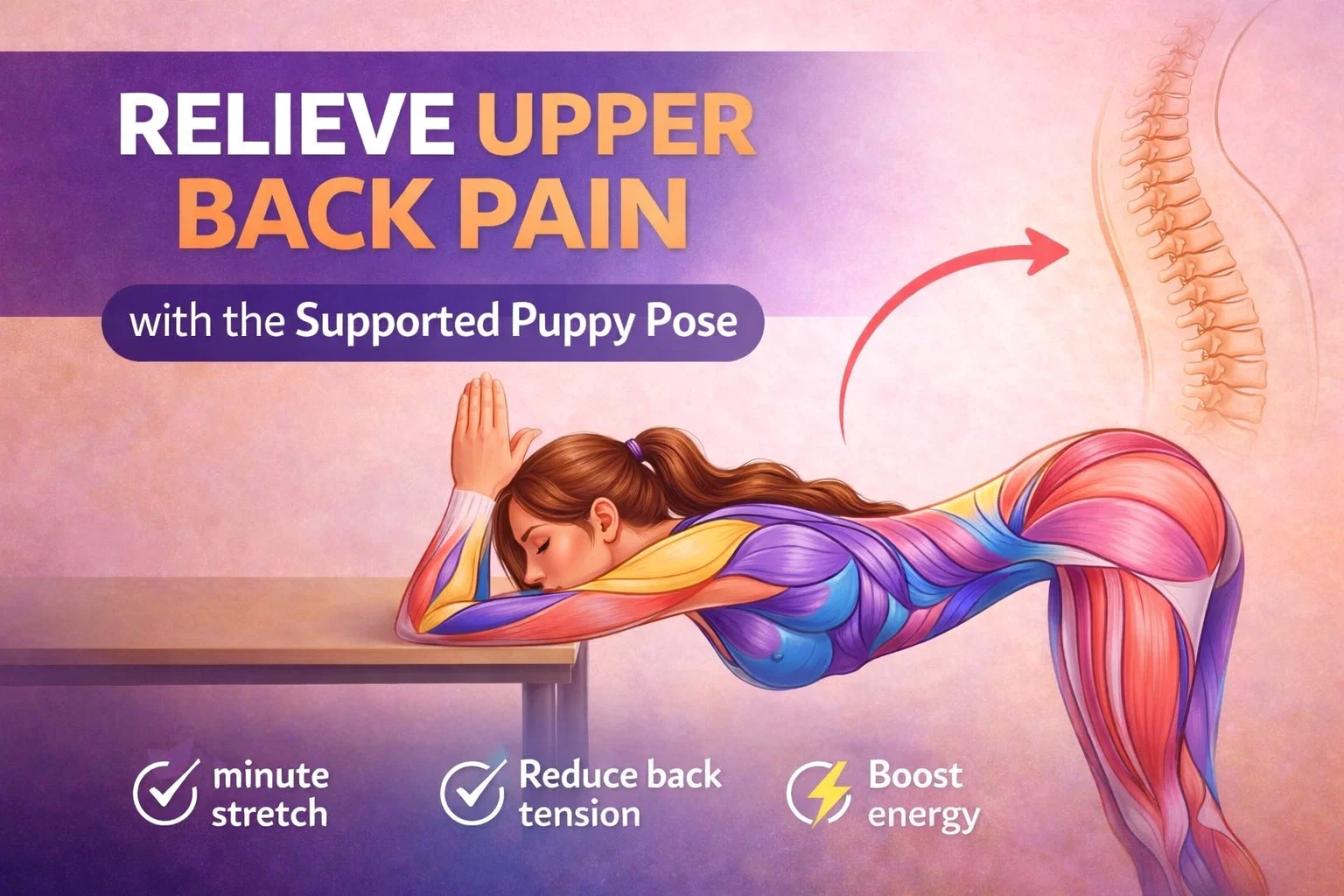
To understand why this stretch is so effective, it helps to look at what is happening beneath the surface. When you perform the puppy pose using a table for support, you are targeting the thoracic spine, which is the middle and upper part of your back. This area is notoriously stiff for most people because it is designed for stability rather than the high mobility seen in the neck or lower back. By placing your elbows on a elevated surface and allowing your chest to melt toward the floor, you create a beautiful opening through the lats, the triceps, and the pectoral muscles.
This pose is unique because it combines the benefits of a heart opener with the spinal decompression of a forward fold. Unlike the traditional version done on the floor, using a table allows for a deeper range of motion for the shoulders and takes the pressure off your knees. It creates a traction like effect on the spine, allowing the vertebrae to find space and the surrounding muscles to finally let go of the grip they have been holding all day.
Immediate Benefits for Your Posture and Spine
The most immediate change you will notice when practicing this stretch is a significant improvement in your posture. We often fall into a pattern called upper cross syndrome, where the shoulders round forward and the head moves ahead of the spine. This stretch works to pull the shoulders back into their natural sockets and encourages the chest to broaden. Over time, consistent practice can help retrain your body to sit and stand taller without constant conscious effort.
Beyond the visual aspect of posture, this pose addresses the physical discomfort associated with a sedentary lifestyle. It targets the following areas:
- The Thoracic Spine: Increases mobility and reduces that heavy feeling in the upper back.
- The Shoulders: Releases tension in the deltoids and rotator cuff area.
- The Chest: Stretches the pectoralis major and minor, which are often tight from typing.
- The Neck: By relaxing the upper back, you take the strain off the muscles that support your head.
How to Perform the Stretch Correctly
Getting the most out of this movement requires proper form to ensure you are protecting your joints while maximizing the stretch. Find a sturdy table or a high counter that is roughly waist height. Stand about two to three feet away from the table, facing toward it. Place your elbows on the edge of the surface, roughly shoulder width apart. Bring your palms together in a prayer position above your head, pointing toward the ceiling.
Slowly begin to walk your feet back until your torso is parallel to the floor. As you do this, let your head drop between your arms and allow your chest to sink toward the ground. You should feel a deep, satisfying stretch along your triceps and into your armpits. It is important to keep your core slightly engaged so that your lower back does not sag too much. Hold this position for at least thirty to sixty seconds, breathing deeply into the back of your ribcage. When you are finished, walk your feet back toward the table and slowly roll your spine up to a standing position.
Common Mistakes to Avoid
While this is a beginner friendly stretch, there are a few things to keep in mind to prevent injury. First, do not force your chest down. Gravity should do most of the work here. If you feel any sharp pain in your shoulder joints, back off slightly or widen the distance between your elbows. Second, avoid tensing your neck. Let your head hang naturally so that the back of your neck stays long and relaxed. Lastly, make sure your feet are firmly planted on the ground to provide a stable base for the stretch.
Boosting Energy Levels Naturally
One of the most surprising benefits of the puppy pose is its ability to increase your energy levels. When we are slumped over, our lung capacity is actually restricted. The lungs cannot fully expand because the ribcage is compressed. By opening the chest and improving the mobility of the thoracic spine, you allow for deeper, more efficient breathing. This increase in oxygen flow to the brain and body provides a natural wake up call that is often more effective than a second cup of coffee.
Furthermore, stretching helps to stimulate the nervous system. Holding a deep stretch for a minute encourages the body to move from a stressed, sympathetic state into a more relaxed, parasympathetic state. This shift reduces the production of stress hormones like cortisol, which can often make us feel fatigued and sluggish. A quick minute of movement breaks the cycle of stagnation and gets your blood circulating, which is essential for mental clarity and focus.
Integrating Stretching into Your Daily Routine
The beauty of the table supported puppy pose is its accessibility. You do not need a gym or a change of clothes to do it. It can be performed in an office, a kitchen, or even while waiting for your lunch to heat up. To make this a lasting habit, try to link it to an existing part of your schedule. You might decide to do this stretch every time you get up to refill your water bottle or immediately after finishing a long video call. These small, consistent blocks of movement add up to significant changes in how your body feels by the end of the week.
Creating a Holistic Wellness Environment
While stretching is a vital piece of the puzzle, it works best when combined with other healthy habits. Pay attention to the ergonomics of your workspace. Ensure your monitor is at eye level and your chair provides adequate support. Additionally, staying hydrated is crucial for muscle health. Dehydrated muscles are more prone to stiffness and cramping, making stretches feel more difficult than they should be. By taking a holistic approach to your physical well being, you create a foundation for long term health and vitality.
Maximizing the Effects of Deep Breathing
To take this stretch to the next level, focus intently on your breath while in the pose. Aim for diaphragmatic breathing, where you feel your belly expand on the inhale and contract on the exhale. Visualize the breath moving into the tightest spots of your upper back. As you exhale, imagine the tension melting away and your chest sinking just a fraction of an inch deeper. This mindful approach turns a simple physical movement into a restorative practice for both the mind and the body.
Conclusion: A Simple Tool for a Better Life
In a world that constantly pulls us forward into a hunched and stressed position, the table supported puppy pose is a powerful way to reclaim your space and your health. It is a reminder that wellness does not have to be complicated or time consuming. By dedicating just sixty seconds of your day to this simple stretch, you are investing in a future with less pain, better posture, and higher energy levels. Whether you are a busy professional, a dedicated student, or someone simply looking to feel better in their own skin, this pose is a tool you can use anytime and anywhere. Start today, and feel the incredible difference that a little bit of space in your spine can make.