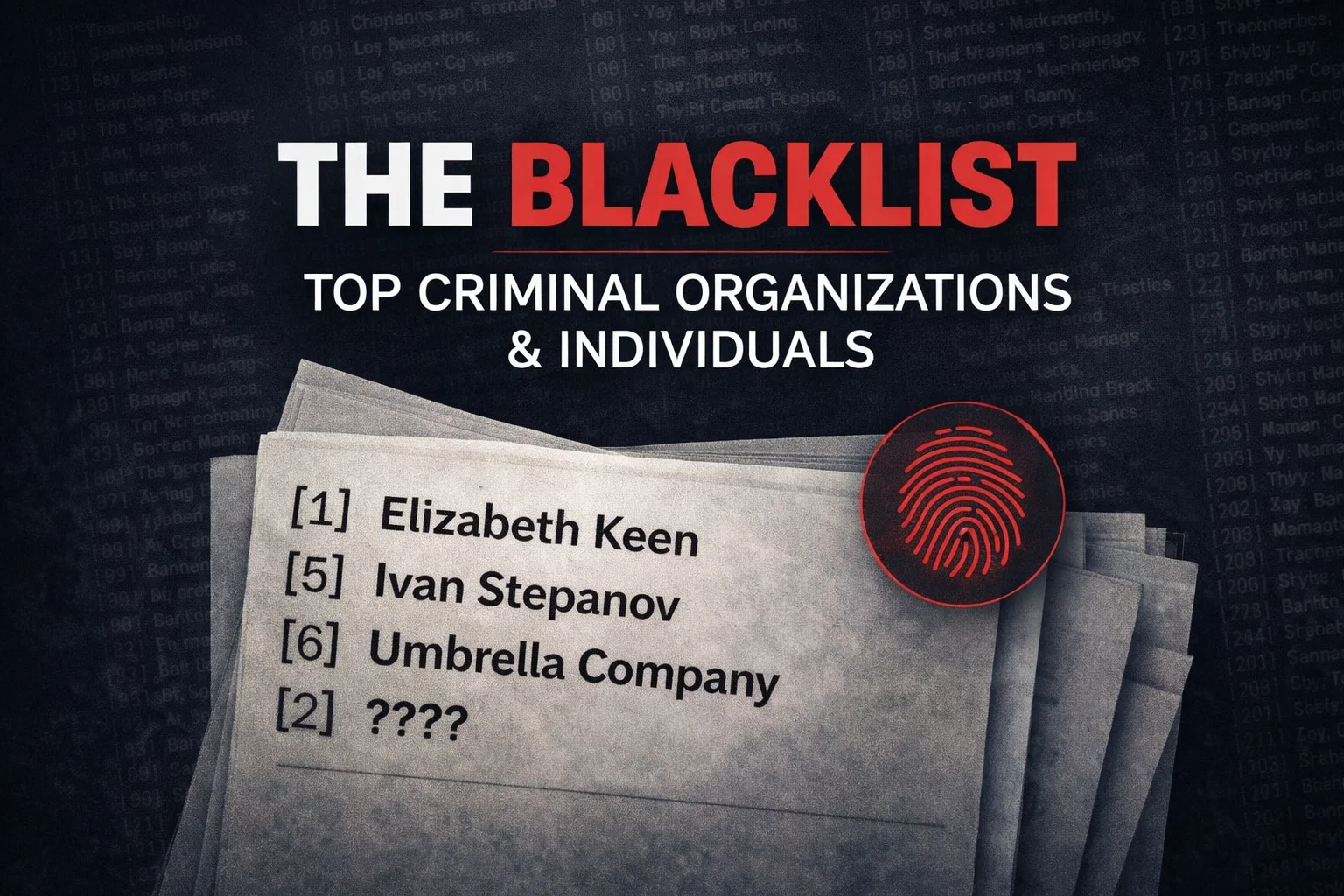
The Blacklist Full Blacklist Names and Numbers List Infographic
If you have ever spent a Friday night gripped by the high-stakes world of Raymond Reddington, you know that the most intriguing part of the show is not just the crimes themselves, but the mysterious numbers assigned to each criminal. The Blacklist is more than just a procedural drama; it is a complex puzzle where every name and every number carries a specific weight in the grand design of Red’s endgame. From the very first episode, fans have been obsessed with tracking these names, trying to fill in the gaps and understand the hierarchy of the criminal underworld. The image we are looking at today is a treasure trove for any dedicated fan, offering a comprehensive breakdown of the names that have defined over a decade of television suspense.
The Methodology of Reddington’s List
One of the most common questions among new viewers is how the numbers are actually assigned. While it might seem like a simple ranking of how dangerous a person is, the reality is far more nuanced. Raymond Reddington does not just rank people based on their kill count or their net worth. Instead, the numbers often reflect the level of threat they pose to his specific interests or the importance they hold in the mystery surrounding Elizabeth Keen. A lower number, like No. 1 or No. 3, usually indicates someone with a deep, personal connection to Red’s past or someone who can dismantle his entire empire.
The Top Tier: Why the Low Numbers Matter
When you look at the top of the list, you see names like Elizabeth Keen (No. 1) and Katarina Rostova (No. 3). This immediately tells the audience that the list is not just about catching “bad guys” for the FBI. It is a roadmap of Red’s life. Elizabeth being at the top signifies that she is the central figure around which all other names revolve. These top tier entries are often the ones that span multiple seasons, providing the overarching narrative arcs that keep us guessing. They represent the emotional core of the show, proving that the greatest threats are often the ones we are closest to.
The Specialists and the Oddities
As we move into the middle and higher numbers, we encounter the true “Blacklisters” that gave the show its unique flavor. These are the specialists. Think of characters like The Stewmaker (No. 161), who specialized in making bodies disappear, or The Apothecary (No. 59), who used unique toxins to incapacitate his victims. These numbers represent the diversity of the criminal world Red inhabits. They are the tools, the fixers, and the scientists who operate in the shadows. By cataloging them, Red isn’t just cleaning up the streets; he is systematically removing the competition and the assets used by his enemies.
Decoding the Gaps and the Mystery Entries
For many fans, the most exciting part of looking at a complete list like this one is spotting the “???” entries. These gaps in the list are intentional breadcrumbs left by the show’s creators. They represent the unknown variables that kept the community theorizing for years. When a gap is finally filled, it often serves as a massive plot twist. For example, for a long time, the identity of number two was a closely guarded secret, creating a vacuum of speculation. These missing pieces remind us that in Red’s world, what you don’t know is often more dangerous than what you do.
The Significance of the Names We Know
Looking through the list, names like Berlin (No. 8) and Dembe Zuma (No. 10) stand out. Dembe’s inclusion on the list was a heartbreaking moment for many fans, as it highlighted the complexity of his relationship with Red. It showed that even those within the inner circle are part of the grand calculation. Similarly, villains like Berlin represented a time when the show shifted from a “villain of the week” format to a serialized epic. Each name on this list represents a specific era of the show, a specific struggle for Liz, and a specific sacrifice made by Reddington.
The Impact of The Blacklist on Modern Television
The Blacklist changed the way we consume crime dramas. By introducing a serialized element to a procedural format, it encouraged a level of engagement that was rare at the time. Fans didn’t just watch the show; they studied it. They kept lists exactly like the one in our image, checking off names and debating the significance of the numbers. This interactive element helped build a massive, loyal community. The show taught us to look for patterns, to question motives, and to understand that nobody is ever truly “good” or “evil” in the world of international espionage.
Reddington as the Ultimate Anti-Hero
At the center of this list is, of course, Raymond Reddington. James Spader’s portrayal of the character turned a brilliant criminal into a beloved icon. Red is the curator of this list, and through it, we see his brilliance. He uses the FBI as his personal cleanup crew, strategically feeding them names that benefit his agenda. This dynamic created a fascinating tension throughout the series. The FBI knew they were being used, but the results were too good to ignore. This list is a physical manifestation of Red’s intellect and his ability to stay ten steps ahead of everyone else.
A Detailed Look at the List Categories
To truly appreciate the scope of the Blacklist, it helps to categorize the types of individuals Red tracked down. While they are all criminals, their “industries” varied wildly, showing just how deep the rot of the criminal world goes.
- The Corporate Saboteurs: Characters like The Director and members of the Cabal who used legitimate businesses and government positions to manipulate global events.
- The Scientific Anomalies: Doctors and researchers who pushed the boundaries of ethics, such as Dr. Hans Koehler, the master of plastic surgery for criminals.
- The Ghost Fixers: Individuals like Mr. Kaplan, who ensured that the tracks of the world’s most dangerous people remained hidden.
- The Pure Chaos Agents: Violent extremists and assassins who worked for the highest bidder, regardless of the political fallout.
The Evolution of Elizabeth Keen
We cannot talk about the Blacklist without discussing the journey of Elizabeth Keen. Her name at No. 1 is the ultimate spoiler and the ultimate truth of the series. Her transition from an innocent profiler to a woman who eventually earned the top spot on her mentor’s list is one of the most polarizing and fascinating character arcs in TV history. The list serves as a timeline of her descent into the world Red tried to protect her from, and eventually, the world she sought to rule.
Why Fans Still Obsess Over the Numbers
Even though the show has concluded its run, the fascination with the numbers remains. This is because the list represents a complete world. It feels like a historical document of a secret history. When fans look at a graphic like this, they remember the shock of the “The Director” finale or the emotional weight of “Mr. Kaplan’s” betrayal. The numbers are a shorthand for the memories we have of the show. They allow us to categorize the chaos of ten seasons into something tangible.
The Legacy of the Blacklist Community
The community that grew around the show is a testament to its writing. Online forums are still filled with people debating the “what ifs” and the “whys” of the list. Why was one person No. 24 while another was No. 104? Was it based on the date Red met them, or the date they became a threat? The fact that we are still asking these questions years later shows the depth of the world-building. This list is the ultimate “cheat sheet” for those discussions, providing a quick reference for the names that kept us awake at night.
How to Use This List for a Rewatch
If you are planning to dive back into the series, having a list like this by your side is essential. It changes the viewing experience. Instead of just watching an episode, you can see where that character fits in the grander scheme. You can track how many names are checked off in a single season and see how the numbers slowly converge toward the top. It turns a rewatch into a forensic investigation, allowing you to see the foreshadowing you might have missed the first time around.
Spotting the Foreshadowing
One of the joys of The Blacklist is seeing how early names mentioned in passing often show up much later as major players. By keeping the list handy, you can spot these references. Red often mentions “associates” or “enemies” in season one that don’t get an official number until season five or six. This level of planning is what made the show a masterpiece of long-form storytelling. The list is the map that proves the writers knew exactly where they were going, even when the audience felt lost in the fog of war.
Conclusion: The Final Entry
In the end, The Blacklist was never just about catching criminals. It was a story about identity, family, and the lengths one man would go to to protect the person he loved. This list of names, from the lowliest thief to the most powerful world leader, is a testament to that journey. It is a legacy of a show that challenged us to look beneath the surface and to realize that everyone has a number, and everyone has a story. Whether you are a casual viewer or a die-hard “Blacklister,” this collection of names is a reminder of the thrilling, confusing, and ultimately beautiful ride that Raymond Reddington took us on. Keep this list close, because in the world of Red, you never know when a name from the past might become the key to the future.