The Truth About Water Intake Hydration Myths and a Natural Diet Explained
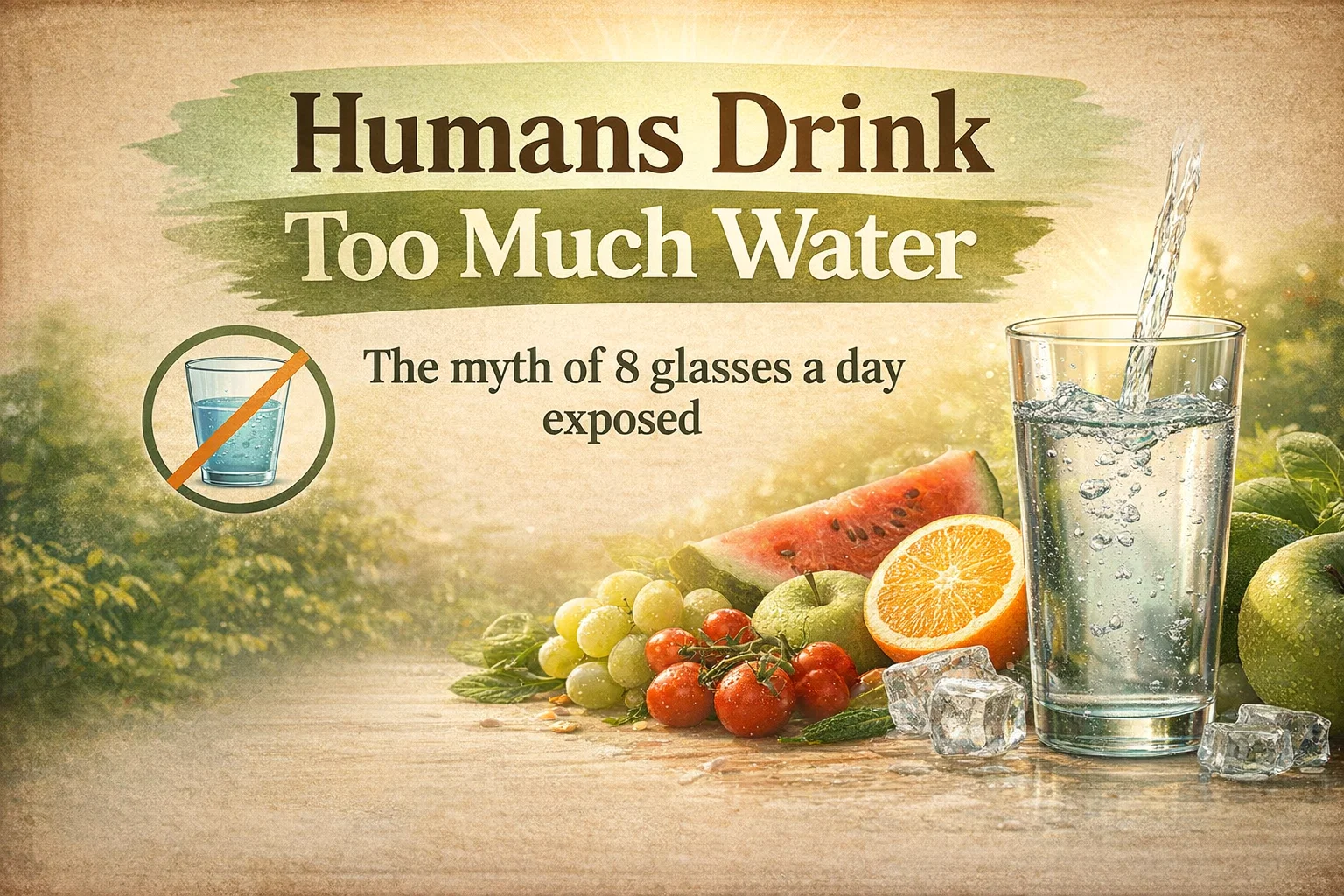
Have you ever found yourself clutching a gallon-sized water jug, desperately trying to hit that magical eight-glass mark before the sun goes down? We have been told for decades that constant hydration is the holy grail of health. From glowing skin to peak kidney function, the advice is always the same: drink more. But what if we told you that the narrative might be slightly skewed? The image we are looking at today challenges the status quo, suggesting that humans might actually be drinking way too much water because of our modern diets. It is a provocative thought that forces us to look at nature, our biological history, and the foods on our plates.
The Great Hydration Myth: Where Did Eight Glasses Come From?
For years, the “8×8 rule” (eight ounces, eight times a day) has been the gold standard for hydration. However, if you try to find the rigorous scientific study that birthed this specific number, you might come up empty-handed. Many researchers believe this recommendation originated from a 1945 Food and Nutrition Board report which stated that adults need about 2.5 liters of water daily. The crucial part that everyone seems to forget is the very next sentence: “Most of this quantity is contained in prepared foods.”
Because we often ignore the water content in our meals, we overcompensate by chugging plain water. This creates a cycle where we are constantly flushing our systems, sometimes to our own detriment. When we drink excessive amounts of water without the necessary electrolytes found in food, we risk diluting our body’s internal balance. It is time to move past the rigid mathematical formulas and start looking at hydration as a holistic process integrated with our nutrition.
Looking to Nature: Do Animals Chug Water?
If you observe a leopard in the wild or a primate in the jungle, you rarely see them standing over a stream for thirty minutes trying to hit a daily quota. As the image suggests, animals in their natural habitats sip water occasionally. A significant portion of their hydration comes directly from their “wet” diet. Carnivores get moisture from raw meat, while herbivores and frugivores get a massive influx of structured water from grass, leaves, and fruits.
Humans are the only species that carries around plastic containers of processed water to ensure we don’t shrivel up by noon. While our modern lifestyles are certainly different from those of wild animals, our biological blueprints remain very similar. Our bodies are designed to extract moisture from the things we consume, not just from the liquids we swallow. By returning to a more natural way of eating, we might find that our desperate need for constant water intake begins to diminish.
The Dehydrating Impact of the Modern Diet
Why do we feel so thirsty all the time? The answer is often sitting right on our dinner table. The modern “Standard American Diet” is packed with dehydrating elements. Think about the foods that dominate the grocery store aisles:
- High Sodium Content: Processed snacks and canned goods are loaded with salt, which pulls water out of your cells and triggers intense thirst.
- Refined Sugars: High glucose levels require more water for the body to process and eliminate, leading to a dehydrated state.
- Caffeine and Alcohol: These act as diuretics, encouraging the body to expel water faster than it can be absorbed.
- Dry, Cooked Foods: Unlike raw fruits, bread, crackers, and fried meats have had almost all their natural moisture cooked out of them.
When you eat a meal consisting of a dry burger, salty fries, and a sugary soda, your body sends out an emergency signal for water. This is not “natural” thirst; it is a rescue mission to help your organs process the heavy, dry load you just consumed. If we shift our focus toward moisture-rich foods, that frantic need for a water bottle starts to fade away.
Eating Your Water: The Power of Raw Fruits and Vegetables
The most profound point made in the visual is the concept of a “natural diet” consisting of fruits and vegetables. These foods are not just containers for vitamins; they are containers for structured water. Structured water, or gel water, is H2O that is molecules deep and bound to the fibers and nutrients of the plant. Research suggests that this type of water is absorbed more efficiently by the human body than plain tap water.
Top Hydrating Foods to Add to Your Plate
If you want to reduce your reliance on the water jug, try incorporating these high-moisture powerhouses into your daily routine:
- Cucumber (96% water): Essentially a refreshing snack that provides silica for skin health.
- Watermelon (92% water): Packed with lycopene and hydrating salts.
- Strawberries (91% water): High in fiber and vitamin C while keeping you hydrated.
- Lettuce and Spinach: These leafy greens are nearly all water and provide essential minerals.
- Zucchini: A great base for meals that adds significant moisture without bloating.
When you eat a large salad or a bowl of fruit, you are hydrating on a cellular level. The water is released slowly as you digest, providing a steady stream of moisture rather than the “flush” effect caused by drinking a liter of water in one sitting.
The Science of Over-Hydration: Hyponatremia
While we are often warned about the dangers of dehydration, we rarely hear about the flip side: hyponatremia. This occurs when you drink so much water that the sodium levels in your blood become dangerously low. This can lead to swelling in the brain, confusion, seizures, and in extreme cases, it can be fatal. While this usually happens to marathon runners or extreme athletes, it highlights a vital truth: more is not always better.
Our kidneys are incredibly efficient at filtering our blood, but they have a limit. Forcing them to process gallons of water every day can put unnecessary stress on your renal system. By focusing on a diet rich in watery plants, you provide your kidneys with the fluid they need alongside the minerals required to process that fluid effectively. It is about quality over quantity.
Listening to Your Body Instead of the Clock
One of the biggest issues with the “eight glasses a day” rule is that it encourages us to ignore our internal bio-feedback. We drink because the clock says it is time, or because we have a goal on our fitness app, rather than drinking because we are actually thirsty. True thirst is a subtle signal from the brain that your blood concentration is shifting. However, many of us have lost touch with this signal because we are constantly sipping or constantly eating dehydrating foods.
To reconnect with your body’s needs, try these steps:
1. Evaluate Your Meal
Before reaching for a second glass of water, look at what you just ate. Was it heavy in salt? Was it a dry, processed snack? If so, realize that your thirst is a reaction to your food choice. Adding a side of cucumber or an orange to your meal can help mitigate this.
2. Check Your Energy Levels
Sometimes we mistake fatigue for dehydration. While a glass of water can help, a piece of fruit provides the water and the natural sugars for a real energy boost.
3. Observe Your Urine
The old advice says your urine should be clear. In reality, a pale yellow color is often a sign of a perfectly functioning system. If it is completely clear, you might actually be over-hydrating and flushing out necessary electrolytes.
A Balanced Approach to Hydration
Does this mean you should throw away your water bottle and never drink again? Of course not. Water is essential for life. However, we should stop treating it like a chore or a medicine we must take in massive doses. The goal is to find a balance between the liquids we drink and the moisture we consume through our diet.
For someone living in a hot climate or someone with a very active lifestyle, drinking extra water is absolutely necessary. But for the average person sitting in an air-conditioned office, the “need” for constant chugging is likely a byproduct of a dry, salty diet. If you shift toward a diet of 70% moisture-rich foods, you will likely find that you feel more hydrated, more energetic, and less bloated than you ever did while trying to force down two liters of plain water.
Conclusion: Returning to Our Roots
The message in the image serves as a powerful reminder that we are biological beings designed to thrive on a specific type of fuel. Nature doesn’t make mistakes, and no other creature on Earth struggles with the concept of hydration as much as we do. By moving away from dehydrating, processed “non-foods” and embracing the vibrant, water-rich bounty of the earth, we can simplify our health journey.
Hydration is not just about what you drink; it is about how you live and what you eat. Let’s stop the chugging and start the nourishing. Focus on the quality of your food, listen to your body’s genuine thirst signals, and trust that you don’t need a math equation to stay healthy. Your body knows exactly what it needs if you give it the right environment to thrive.
Next time you reach for that massive jug, ask yourself: could I get this hydration from a juicy pear or a crisp salad instead? Your cells might just thank you for the upgrade.