Ultimate Cleaning Schedule Checklist for an Overwhelmed Brain Clutter-Free Home Guide
Ever felt that heavy, suffocating weight in your chest when you walk into a room filled with unfinished chores and scattered belongings? You are not alone. For many of us, a cluttered home is not just a physical problem; it is a mental one. The visual noise of a messy kitchen or an unmade bed can trigger a stress response that makes it nearly impossible to focus, relax, or feel at peace. This is where the magic of a structured cleaning schedule comes into play. It is not about achieving perfection or living in a sterile museum; it is about creating a predictable rhythm that quieted the chaos in your brain.
The Connection Between Your Environment and Mental Clarity
There is a profound psychological link between our physical surroundings and our internal state of mind. When your environment is chaotic, your brain feels forced to process too much information at once. Every stray sock, dusty shelf, and pile of mail represents a micro-decision that your brain has to make: Should I deal with this now? Where does it go? Why am I so behind? This constant internal monologue leads to decision fatigue and eventually a total sense of overwhelm.
By implementing a visual cleaning checklist, you are effectively outsourcing that mental labor. Instead of wondering what needs to be done, you simply look at the paper and follow the instructions. This shifts your brain from a state of high-alert scanning to a state of focused execution. The simple act of ticking a box provides a hit of dopamine that reinforces a sense of accomplishment and control.
Breaking Down the Daily Essentials
The secret to a home that stays clean without a weekend-long scrubbing marathon is the daily reset. These are the non-negotiables that keep the baseline of your home functional. If you can commit to just fifteen to twenty minutes a day on these core tasks, you will prevent the mountain of clutter from ever forming in the first place.
The Morning Momentum
Start your day by making the bed. It takes less than two minutes, but it provides an immediate visual win. It signals to your brain that the day has begun and that you are a person who maintains order. Follow this by a quick kitchen reset: empty the dishwasher so it is ready to receive dirty dishes throughout the day, and wipe down the primary countertop surfaces.
The Evening Wind-Down
Before you head to bed, spend ten minutes doing a whole-house sweep. This does not mean deep cleaning; it means putting things back in their homes. Toss the remote on the stand, put the shoes in the closet, and ensure the sink is clear of dishes. Waking up to a clean slate is the greatest gift you can give your future self.
Weekly Focus Areas to Prevent Deep-Clean Burnout
Trying to clean the entire house in one day is a recipe for resentment. Instead, the most successful systems use a rotating weekly focus. By assigning specific rooms or categories to different days of the week, you ensure that every corner of your home gets attention without you feeling like a full-time housekeeper.
- Monday: The Kitchen Hub. Focus on the fridge, microwave, and stovetop. Since the kitchen is the heart of the home, starting here sets a high standard for the week.
- Tuesday: Living Areas. Dust the electronics, fluff the pillows, and vacuum the high-traffic zones. This is about making your relaxation space actually relaxing.
- Wednesday: The Bedrooms. Change the linens and clear off the nightstands. A fresh bed is essential for high-quality sleep.
- Thursday: Bathrooms. Scrub the toilets, wipe the mirrors, and replace the towels. Handling this mid-week prevents the grime from building up.
- Friday: Floors and Entrances. Do a thorough vacuum and mop of the entire house and clear out the entryway clutter from the week.
The Power of the Monthly Deep Dive
There are tasks that do not need to happen every week but will cause major issues if neglected for too long. These are your monthly maintenance items. Think of these as the preventative medicine for your home. When you include these on your master checklist, you avoid those moments of panic when you realize your baseboards are grey or your oven is smoking from spilled grease.
Kitchen and Pantry Maintenance
Once a month, go through your pantry and fridge to check for expired items. Wipe down the interior shelves of the fridge and run a cleaning cycle on your dishwasher and washing machine. These small acts of maintenance extend the life of your appliances and keep your food storage areas hygienic.
Dusting the Forgotten Zones
We often forget to look up. Use your monthly sessions to dust ceiling fans, light fixtures, and the tops of tall cabinets. This significantly reduces the allergens in your home, which can improve your respiratory health and overall energy levels.
Strategic Decluttering for the Overwhelmed Mind
You cannot clean clutter; you can only move it around. If your cleaning schedule feels like a constant struggle, it is likely because you have too much stuff for the space you inhabit. Decluttering is the prerequisite for an easy cleaning routine. However, for a brain already feeling overwhelmed, the idea of decluttering a whole house is terrifying.
Use the 5-minute rule. Pick one drawer, one shelf, or even just one junk bin. Set a timer. When the timer goes off, you are done. The goal is not to finish the house in a day but to build the muscle of letting go. Over time, these small sessions add up to a significantly lighter home and a much quieter mind.
Seasonal and Annual Tasks: The Big Picture
Finally, there are the big-ticket items that only need to happen once or twice a year. These are often the tasks that involve the exterior of the home or deep mechanical maintenance. By scheduling these into your annual calendar, you prevent expensive repairs and keep your home looking its best from the curb to the closet.
Spring and Fall Resets
Spring is the traditional time for a deep refresh, focusing on washing windows, cleaning carpets, and organizing the garage. Fall is the time to prep for the colder months, checking the heater filters, cleaning out gutters, and swapping your wardrobe. Having these mapped out ensures they never catch you by surprise.
Outdoor Maintenance
Do not forget the shed, the patio, and the garden. A cluttered yard can be just as stressful as a cluttered living room. Make a point to sweep the porch and organize outdoor tools at least once a quarter to keep your transition spaces clear and welcoming.
Creating Your Own Visual System
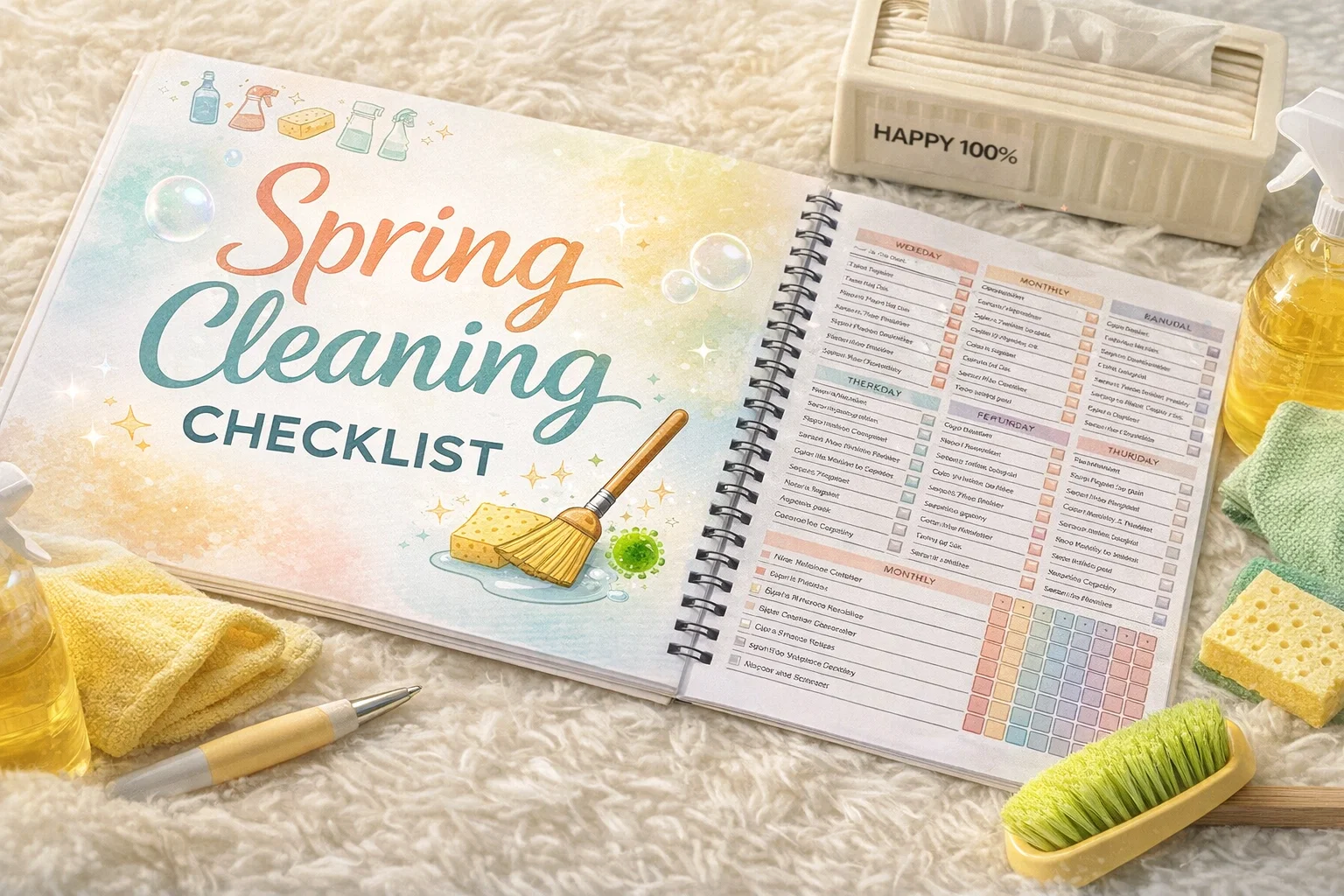
The image of a beautiful, spiral-bound planner is inspiring because it represents a tangible plan. If you want to create your own system, keep it visual and keep it accessible. Whether you use a physical planner, a dry-erase board on the fridge, or a digital app, the key is consistency. Make your checklist pretty! Use colors, stickers, or high-quality paper. When the tool you use to stay organized feels like a treat rather than a chore, you are much more likely to stick with it.
Personalizing the Routine
Every household is different. If you have kids, your daily list might include a 5-minute toy pickup. If you have pets, hair removal might be a daily necessity. Don’t be afraid to cross off things that don’t apply to you and add the specific tasks that weigh on your mind. A schedule is a tool that should serve you, not a master that you serve.
Finding Peace in the Process
Ultimately, a cleaning schedule is a form of self-care. It is a way of saying that you deserve to live in a space that supports your well-being. When you follow a guide, you are removing the friction between your current state and a peaceful home. You are giving your brain permission to stop worrying about what needs to be done and allowing it to simply exist in the present moment.
Remember that some days, life happens. There will be days when the list goes untouched, and that is okay. The beauty of a structured schedule is that it is always there for you to return to. You don’t have to reinvent the wheel; you just pick up where you left off. This resilience is what leads to long-term success and a home that truly feels like a sanctuary.
Conclusion: Your Path to a Tidy Sanctuary
Transforming a cluttered home into a peaceful retreat does not happen overnight, but it does happen one checkmark at a time. By breaking your responsibilities down into daily, weekly, and monthly tasks, you strip away the power that overwhelm has over your life. You reclaim your time, your energy, and your mental clarity. Start small today. Choose just one task from the daily list and complete it. Feel that small spark of victory and let it carry you into tomorrow. You have the tools, you have the plan, and you deserve a home that breathes as deeply as you do. It is time to turn the page on the chaos and start your journey toward a calmer, cleaner, and more intentional life.
Would you like me to create a custom 30-day decluttering challenge to go along with this schedule?