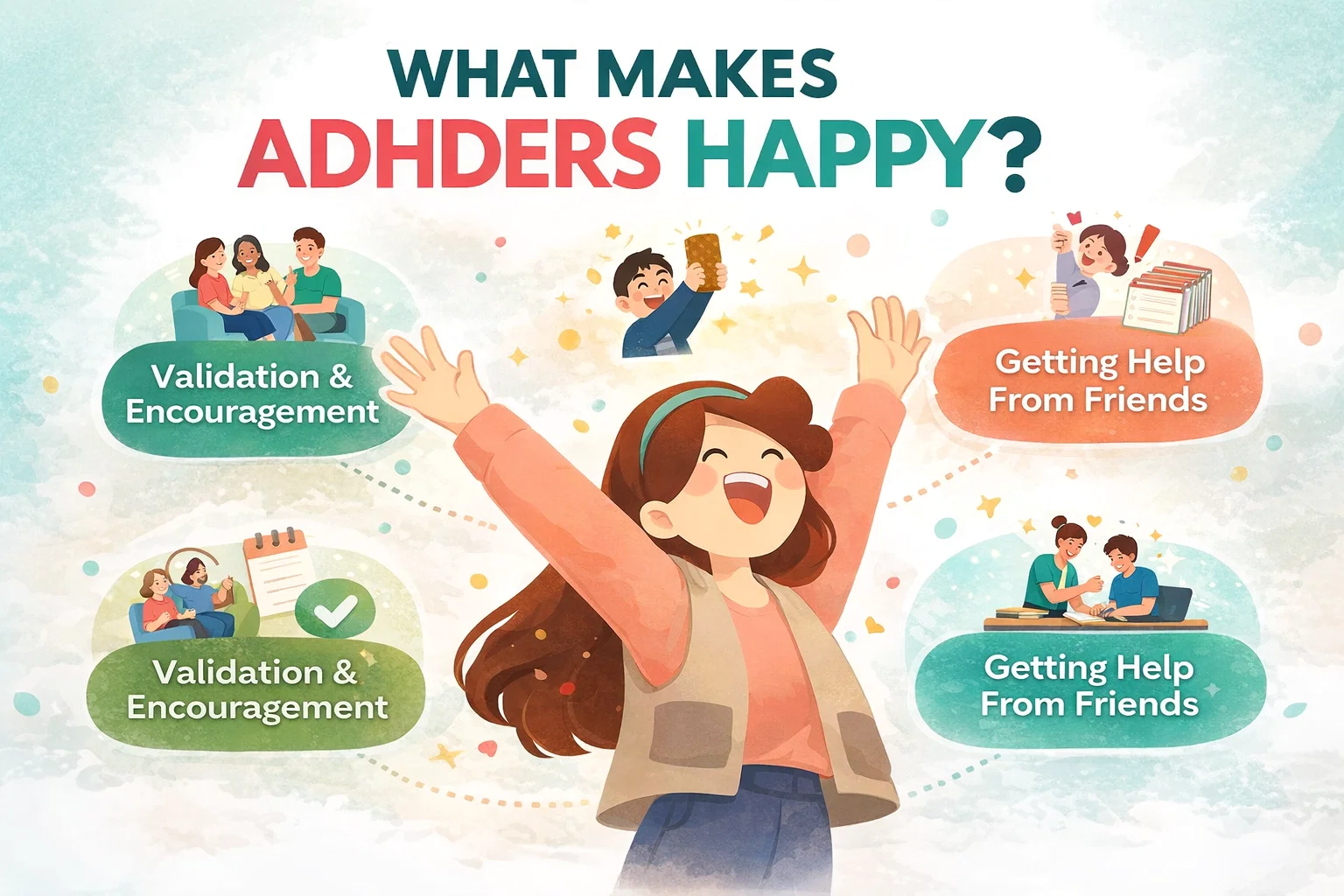
Understanding ADHD Joy Validation, Productivity, and Supportive Relationships Without Shame
Understanding the unique ways that joy manifests in the lives of neurodivergent individuals is more than just a trending topic. It is a vital shift in how we approach mental health and personal development. When we look at what truly makes those with ADHD happiest, we often find that it is not the massive life milestones that carry the most weight. Instead, it is the quiet relief of a day without cognitive friction, the warmth of a non-judgmental friend, and the sudden, exhilarating spark of remembering a task without needing an alarm to go off. These moments represent a sense of alignment with a world that often feels like it was built for a different operating system.
The journey of ADHD awareness has moved past simply identifying struggles. Today, we are looking at the specific emotional triggers that lead to genuine contentment and success. By analyzing the unique “happiness hits” that resonate with the ADHD brain, we can build environments that foster growth rather than shame. From the magic of finding a lost item to the profound impact of validation, let us dive deep into the elements that create a fulfilling and happy life for the neurodivergent community.
The Power of Unsolicited Validation
One of the most profound sources of happiness for someone with ADHD is receiving validation before they even have to ask for it. Because many neurodivergent people grow up with a high volume of corrective feedback, they often develop a heightened sensitivity to how they are perceived. This can lead to a constant internal dialogue wondering if they are doing enough or if they are “doing it right.”
When a friend, partner, or colleague notices the effort behind a task and offers a genuine compliment, it bypasses the need for the individual to justify their process. It provides an immediate dopamine boost and reinforces a sense of belonging. This type of validation acts as a powerful counter-narrative to the “shame spirals” that can occur when tasks take longer than expected. It tells the person that their worth is seen, even when their methods are unconventional.
The Mystery of the Found Object
There is a very specific type of adrenaline rush that comes from finding something you thought was lost forever, especially when you manage to find it without losing your mind in the process. For the ADHD brain, object permanence and organization can be daily hurdles. Keys, wallets, and phones seem to have a life of their own, disappearing into thin air at the most inconvenient times.
When that missing item reappears, it feels like a small miracle. It is not just about the utility of the object; it is the relief of avoiding the self-criticism that usually follows a lost item. Finding it “without losing your mind” means the frustration did not boil over. It signifies a moment where the brain stayed calm and the environment finally cooperated, leading to a sense of mastery over one’s surroundings.
Finding Your Tribe of Multi-Tab Thinkers
In a world that prizes linear thinking and “one thing at a time” focus, seeing someone else with ten browser tabs open can be a deeply comforting sight. It is a visual representation of how the ADHD brain works: fast-paced, curious, and interconnected. When you find someone who operates this way and isn’t ashamed of it, it creates an instant bond of understanding.
The Comfort of Shared Reality
There is an unspoken language between people who understand that a cluttered screen or a cluttered desk does not mean a cluttered mind. It means a mind that is actively engaged with multiple ideas at once. Being around people who don’t demand that you “simplify” or “clean up” allows for a relaxation of the nervous system. This shared reality is a cornerstone of ADHD happiness because it eliminates the need for masking.
The End of Intellectual Shame
Shame is often the biggest barrier to happiness for neurodivergent individuals. By normalizing the “messy” parts of the creative process, such as having multiple projects going at once, we move toward a culture of acceptance. Seeing someone else thrive in their own beautiful chaos gives others permission to do the same.
The Sanctity of Safe Social Spaces
Happiness is often found in the people we can relax and be our genuine selves around. For many with ADHD, social interaction requires a significant amount of energy used for “masking” symptoms like fidgeting, interrupting, or losing track of the conversation. Finding a group or a friend where this mask can be dropped is life-changing.
These safe spaces allow for “body doubling” or simply existing in the same room without the pressure to perform. When you are around people who understand that your silence isn’t anger and your excitement isn’t “too much,” your brain can finally rest. This social safety is the foundation upon which self-esteem is built.
The Superhero Feeling of Natural Recall
Remembering something without a reminder might seem like a small feat to some, but for those with ADHD, it feels like a literal superpower. Because working memory can be inconsistent, relying on external tools like calendars, alarms, and sticky notes becomes a survival strategy. However, when the brain manages to pull a fact or a task forward on its own, it is a moment of pure triumph.
This “superhero” feeling comes from the rare alignment of focus and memory. It provides a brief window of feeling “neurotypical” in a way that feels effortless and empowering. Celebrating these moments rather than dismissing them as “what everyone else does” is crucial for maintaining a positive self-image.
Productivity Without the Weight of Shame
The relationship between ADHD and productivity is complicated. Traditional “to-do” lists can often feel like a list of failures waiting to happen. However, a good, clear list that doesn’t shame the user is a source of immense satisfaction. This means a list that accounts for energy levels, breaks tasks into tiny steps, and acknowledges that “late” is better than “never.”
The Beauty of Finishing
Being seen for the quality of work and the effort put into finishing something, even if the timeline was unconventional, is a major happiness factor. The ADHD brain often works in “sprints” of hyperfocus. While the start might be delayed, the end result is often highly creative and thorough. When an employer or friend focuses on the result rather than the clock, it fosters a sense of professional and personal pride.
The Dream of the Single-Task Day
Imagine an entire day without switching tasks mid-thought. For many, this is the ultimate dream. Task-switching is one of the most cognitively expensive things an ADHD brain can do. A day where focus remains steady and the “internal channel surfer” stays quiet is incredibly peaceful. It allows for a level of productivity that feels calm rather than frantic.
The Role of Supportive Friendships
We all have that one task we have been avoiding for six days. For someone with ADHD, this “wall of awful” can feel insurmountable. It might be something as simple as making a phone call, folding the laundry, or answering an email. Happiness is having a friend who jumps in to help with that one specific task without judgment.
This type of support is often called “body doubling” or “collaborative momentum.” Having someone sit with you while you do the hard thing, or having them take over the first five minutes of the task to get you started, can break the cycle of avoidance. This help is a tangible expression of love and understanding that directly impacts the individual’s quality of life.
Strategies for Cultivating ADHD Joy
While we cannot always control our environments, we can implement strategies to invite more of these “happy moments” into our lives. It starts with self-compassion and moves toward building systems that work with the brain rather than against it. Identifying your personal “happiness hits” allows you to advocate for what you need in your relationships and your workplace.
Focus on “micro-wins.” Instead of looking at a project as one giant mountain, celebrate every time you find a tool you need, every time you stay on task for twenty minutes, and every time you ask for help. By shifting the focus from “fixing” symptoms to “finding” joy, the narrative of ADHD changes from one of deficit to one of unique perspective and resilience.
Conclusion: Redefining Success Through the Lens of Joy
The pursuit of happiness for the ADHD community is not about conforming to standard expectations of order and timing. It is about embracing the specific, often quirky, moments that bring light to the neurodivergent experience. Whether it is the relief of a clear list, the thrill of a found object, or the warmth of a supportive friend who helps tackle a lingering chore, these experiences are the building blocks of a life well-lived.
As we continue to raise awareness and foster understanding, we must remember that validation and acceptance are the most powerful tools we have. By celebrating the “superhero” moments and normalizing the “ten-tab” brains, we create a world where everyone has the opportunity to feel happiest. Let us prioritize connection over perfection and effort over the clock, ensuring that joy remains at the heart of the ADHD journey.