Vayu Mudra for Anxiety Pain Relief Benefits, Meaning How to Do It Yoga
Have you ever felt like your body was internally chaotic, filled with restless energy, or plagued by persistent bloating and joint stiffness? In the ancient wisdom of Ayurveda, these symptoms are often attributed to an excess of the Vayu or air element. Fortunately, the solution might be quite literally in the hands of the practitioner. Vayu Mudra is a powerful, sacred hand gesture used for centuries to bring the internal winds back into balance. This simple yet profound practice offers a natural bridge between physical health and mental clarity, making it a cornerstone for anyone seeking holistic wellness in a fast paced world.
Understanding the Essence of Vayu Mudra
The term Mudra translates from Sanskrit as a seal, gesture, or mark. In the context of Yoga and Ayurveda, mudras are energetic circuits that redirect the flow of Prana, or life force, throughout the body. Vayu Mudra specifically targets the Vayu element. According to Vedic philosophy, the human body is composed of five elements: Earth, Water, Fire, Air, and Ether. When the Air element becomes aggravated, it leads to various ailments ranging from nervous system disorders to digestive distress.
By practicing Vayu Mudra, you are essentially performing a form of energetic alchemy. You use the fire of the thumb to suppress or regulate the air represented by the index finger. This creates a grounding effect that is almost immediate, helping to settle the erratic movements of both the body and the mind. It is a tool of self-regulation that requires no equipment, only a few minutes of your time and a quiet space to focus.
The Incredible Health Benefits of Vayu Mudra
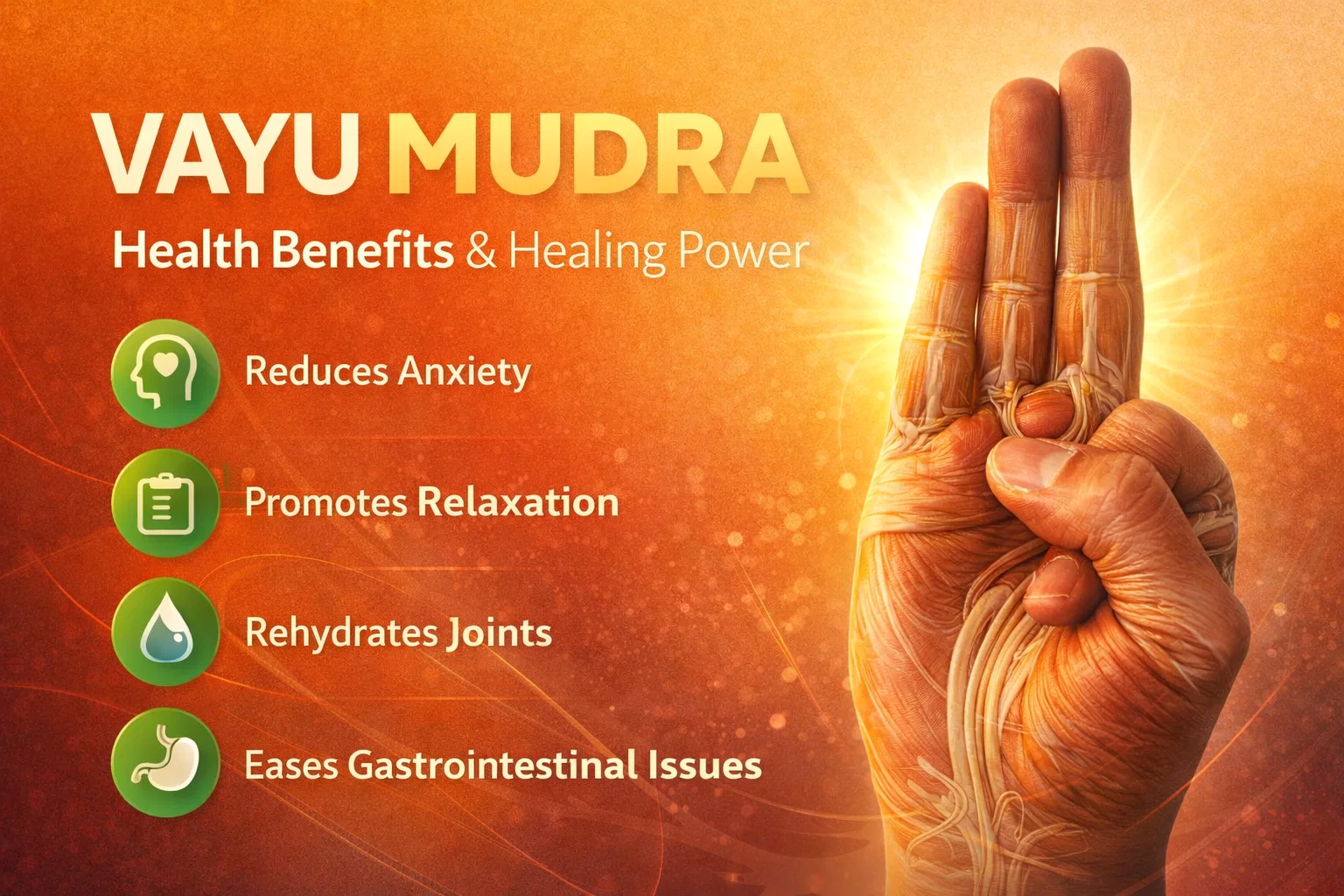
The visual guide provided illustrates a comprehensive list of benefits that this mudra offers. It is not just about relaxation; it is a targeted therapeutic practice. Here is a deeper look into how Vayu Mudra can transform your health and well-being.
Easing Anxiety and Restlessness
In our modern era, many of us live in a state of constant high alert. This chronic stress manifests as anxiety and a physical inability to sit still. Because Vayu Mudra directly impacts the nervous system, it helps to lower the levels of cortisol and soothe the fight or flight response. Practitioners often report a sense of being anchored or centered shortly after beginning the practice.
Soothing Nerves and Controlling Excitement
While excitement is generally seen as a positive emotion, an excess of it can lead to burnout or insomnia. Vayu Mudra helps in modulating emotional peaks, ensuring that your nervous system stays within a healthy range. It is particularly beneficial for those who struggle with overthinking or a racing heart during times of social or professional pressure.
Rehydrating Joints and Improving Mobility
One of the most physical applications of this mudra is its effect on the joints. In Ayurveda, joint pain is often seen as a buildup of air in the spaces between the bones. By decreasing the Vayu element, this mudra helps to alleviate the dryness and cracking sounds in joints. This promotes better lubrication and long term mobility, making it a favorite among those dealing with age related stiffness.
Balancing Endocrine Glands
The endocrine system is responsible for our hormonal balance, which dictates everything from our mood to our metabolism. Vayu Mudra supports the healthy functioning of these glands, ensuring that hormones are secreted in the correct amounts. This systemic balance leads to better energy levels and a more resilient immune system.
Improving Speech and Relieving Voice Problems
The throat chakra is closely associated with the element of air and ether. Problems with speech or a strained voice can often be traced back to an imbalance in these elements. Practicing Vayu Mudra helps to clear the energetic pathways in the throat area, leading to clearer communication and relief from vocal fatigue.
Vayu Mudra and Digestive Health
If you suffer from gas, bloating, or general gastric troubles, Vayu Mudra might become your new best friend. The air element is directly tied to the movement of food through the digestive tract. When there is too much air, the process becomes erratic, leading to painful pressure and discomfort. This mudra is widely recognized for its ability to alleviate flatulence and acidity within minutes of practice. It works by calming the digestive fire and ensuring that the downward flow of energy is unobstructed.
Support for Chronic Conditions
Beyond daily wellness, Vayu Mudra is often recommended as a complementary practice for more serious conditions. The image highlights its role in supporting treatments for Parkinson’s disease. While it is not a cure, the grounding nature of the mudra can help manage tremors and the rigidity often associated with neurological imbalances. It provides a sense of control and calm that can significantly improve the quality of life for those managing chronic illness. Always remember to consult with a healthcare professional when using mudras alongside medical treatments.
How to Practice Vayu Mudra Correctly
To reap the full rewards of this practice, precision is key. Follow these steps to ensure you are performing Vayu Mudra correctly:
- Find a Comfortable Position: Sit in a cross legged position like Padmasana or Sukhasana. If you cannot sit on the floor, a chair with a straight back works perfectly fine. Keep your spine erect and your shoulders relaxed.
- Position Your Hands: Place your hands on your knees with the palms facing upward. This is known as the receiving position.
- The Finger Placement: Fold your index finger and place the tip of it at the base of your thumb.
- Apply Gentle Pressure: Gently press the back of your index finger with your thumb. Keep the other three fingers (middle, ring, and pinky) as straight as possible without straining them.
- Focus on Breathing: Close your eyes and take slow, deep breaths. Visualize the excess air leaving your body and being replaced by a calm, grounding energy.
When and How Long to Practice
For therapeutic results, it is recommended to practice Vayu Mudra for about 30 to 45 minutes a day. You do not have to do this all at once; you can break it into three sessions of 15 minutes each. The best time for practice is in the early morning or during a quiet evening session. However, because it is so discreet, you can even practice it while traveling or during a break at work.
The Science Behind the Gesture
While the spiritual explanation involves the five elements, there is also a biological perspective to consider. Our fingertips are densely packed with nerve endings. When we apply specific pressure to these points, we send signals to the brain that can alter our physiological state. This is similar to the principles found in reflexology and acupressure. By connecting the thumb (associated with the brain and willpower) to the index finger (associated with the ego and nervous system), we create a physical circuit that encourages the body to enter a parasympathetic state, also known as rest and digest.
Integrating Vayu Mudra into Your Daily Routine
Consistency is the secret to success with any holistic practice. Integrating Vayu Mudra into your life doesn’t have to be a chore. Here are a few ways to make it a habit:
- Morning Meditation: Start your day with 10 minutes of Vayu Mudra to set a calm tone for the hours ahead.
- During Commutes: If you are a passenger in a car or on a train, use that time to practice the mudra and reduce travel related stress.
- Before Bed: Practice for 15 minutes while lying in bed to signal to your body that it is time to wind down and prepare for deep sleep.
- Post Meal Relief: If you tend to feel bloated after eating, try sitting quietly for a few minutes in Vayu Mudra to assist your digestion.
Common Questions About Vayu Mudra
Can anyone practice Vayu Mudra?
Yes, this mudra is safe for people of all ages. It is especially beneficial for the elderly who may experience more joint issues and for students who deal with high levels of academic stress.
Do I need to be a yoga expert?
Not at all. Mudras are an accessible entry point into the world of yoga. You don’t need flexibility or strength to perform them, making them an inclusive practice for everyone.
How soon will I see results?
For acute issues like gas or nervousness, you might feel a difference within 10 to 15 minutes. For chronic conditions like joint pain or endocrine balance, consistent daily practice for several weeks is usually required to see significant changes.
Cultivating a Holistic Lifestyle
While Vayu Mudra is incredibly effective, it works best when supported by a balanced lifestyle. Managing the air element also involves paying attention to your diet and environment. Reducing the intake of raw, cold foods and opting for warm, cooked meals can help keep Vayu in check. Additionally, staying hydrated and ensuring you have a regular sleep schedule will amplify the benefits of your mudra practice. Think of Vayu Mudra as a key that unlocks a larger door to health and harmony.
Conclusion: The Path to Inner Stillness
Vayu Mudra is more than just a hand gesture; it is a profound testament to the body’s innate ability to heal itself. By simply repositioning our fingers, we can tap into ancient biological and energetic pathways that restore balance to our most fundamental systems. Whether you are looking to quiet a restless mind, soothe aching joints, or find relief from digestive discomfort, this practice offers a gentle and effective solution. As you incorporate Vayu Mudra into your daily life, you will likely find that the internal storms begin to subside, leaving behind a clear, calm, and grounded version of yourself. Start today, and let the healing power of your own hands guide you toward a life of greater ease and vitality.