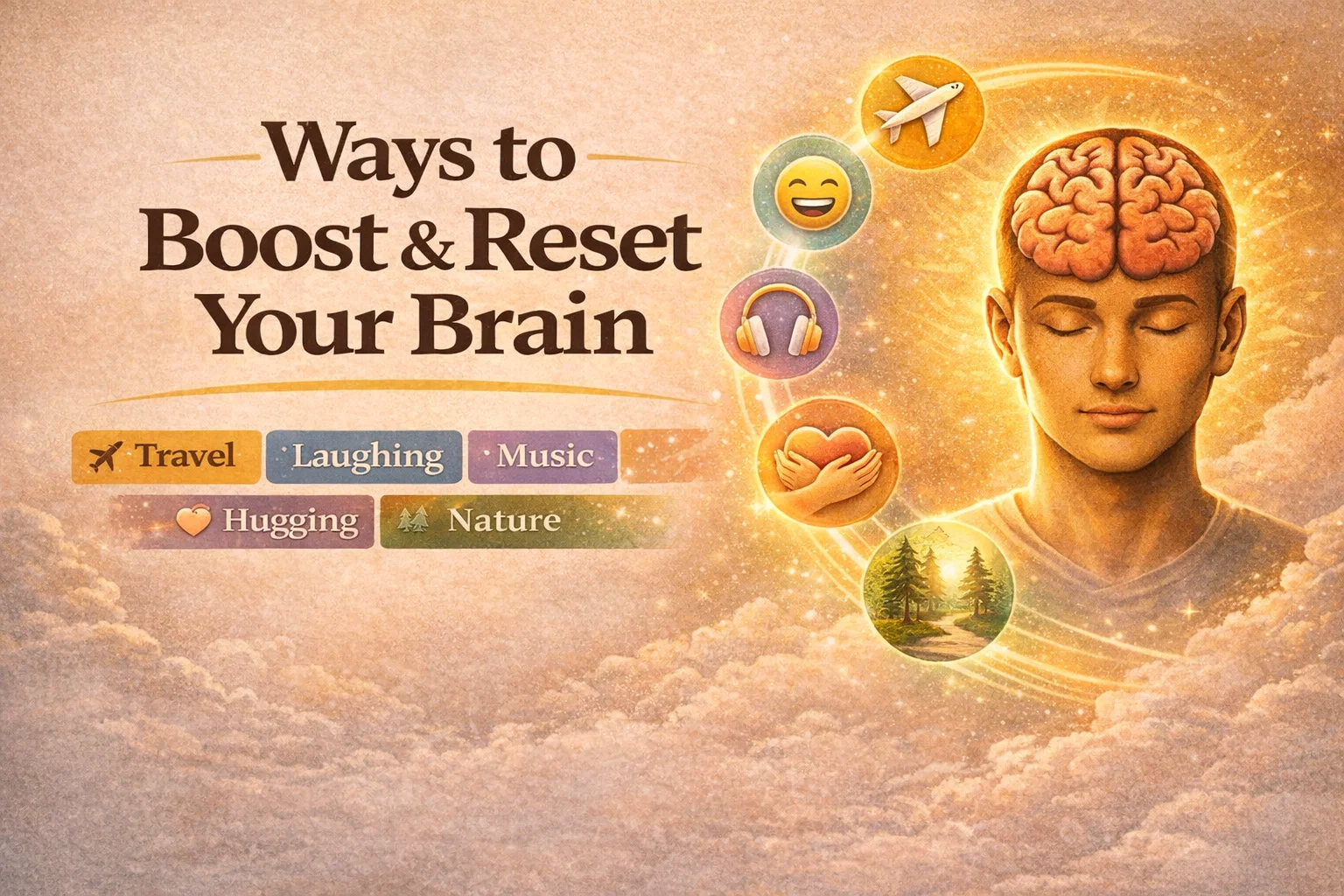
Ways to Reset Your Brain 18 Daily Habits to Boost Mental Health Energy Wellness Tips
In a world that never seems to stop, our minds are often the first things to pay the price. We juggle endless notifications, back to back meetings, and the constant pressure to be productive, often forgetting that the human brain is not a machine. It requires intentional maintenance to function at its peak. If you have been feeling a sense of mental fog or find yourself reaching for a third cup of coffee just to get through the afternoon, it is time for a systemic reset. Learning how to boost and reset your brain is not just a luxury for the weekend; it is a fundamental skill for long term health and happiness.
The Science of a Mental Reset
To understand why we need a reset, we have to look at how our internal biology handles stress. When we are constantly “on,” our brains stay in a state of high beta wave activity. This is great for short term problem solving but exhausting for long term sustainability. By integrating specific lifestyle habits, we can shift our brain into alpha or theta states, where healing and creativity happen. This transition is what people often refer to as a “reset.” It is the process of clearing out the neurochemical clutter and allowing our nervous system to return to a state of equilibrium.
The Power of Travel and New Environments
One of the most effective ways to expand your brain is through travel. When you step into a new environment, your brain is forced to create new neural pathways to process unfamiliar sights, sounds, and social cues. This concept, known as neuroplasticity, is the brain’s ability to reorganize itself. Travel breaks the monotony of your daily routine and forces you out of autopilot mode. Whether it is a trip to a foreign country or a weekend drive to a nearby town you have never explored, the act of navigating a new space keeps your mind sharp and adaptable.
Simple Daily Habits for Immediate Clarity
You do not always need a grand vacation to find mental peace. Some of the most profound resets happen in the small moments of your daily life. Incorporating these simple habits can act as a “soft reset” throughout your day, preventing the buildup of chronic fatigue.
- Laughing: It might sound simple, but laughter is a powerful clinical tool. It reduces cortisol levels and releases endorphins, which act as natural stress fighters. A good laugh literally uplifts your mood and resets your emotional baseline.
- Music: Sound frequencies have a direct influence on brain activity. Upbeat music can stimulate dopamine, while lo-fi or classical tracks can help you focus. Music is a bridge to our emotions and a quick way to shift our mental state.
- Hugging: Physical touch triggers the release of oxytocin, often called the cuddle hormone. This chemical helps lower blood pressure and heart rate, providing a physical sensation of safety that soothes the brain.
Connecting with Nature: The Forest Walking Effect
Nature is perhaps the most potent “recharge station” available to us. The Japanese practice of Shinrin-yoku, or forest bathing, has gained global recognition for its health benefits. When you walk through a forest, you are not just exercising; you are inhaling phytoncides, which are natural oils wood produces to protect itself from insects. These oils have been shown to improve immune function and reduce stress in humans.
Nature resets your brain by providing “soft fascination.” Unlike the “hard fascination” of a computer screen that demands intense focus, nature allows your attention to drift. This gives your prefrontal cortex a much-needed break, allowing you to return to your tasks with renewed vigor and a clearer perspective.
The Vital Role of Sunlight and Hydration
Our brains are highly sensitive to our physical environment and internal chemistry. Sunlight is the primary regulator of our circadian rhythm. Exposure to natural light in the morning helps set your internal clock, ensuring that you feel alert during the day and sleepy at night. It nourishes the brain by aiding in the production of Vitamin D and serotonin.
Similarly, hydration is a non-negotiable for brain health. Since the brain is about 75 percent water, even mild dehydration can lead to headaches, memory lapses, and fatigue. If you feel a mid-day slump coming on, drinking a large glass of water is often more effective than a sugary snack. It literally flushes out toxins and ensures that your neurons can communicate effectively.
Digital Detox: Reclaiming Your Attention
We live in a digital age where our attention is the most valuable commodity. Constant scrolling and “phone addiction” keep our brains in a state of hyper-arousal. A digital detox or a scheduled phone break is essential to clear the mental clutter. When you step away from the screen, you stop the constant influx of dopamine hits that social media provides. This allows your brain to reset its reward system, making it easier to find joy in simple, real-world activities.
Silence and Meditation
In our noisy world, silence has become a rare commodity. However, silence is where the brain does its best processing. Studies have shown that even two minutes of silence can be more relaxing than listening to “relaxing” music. It allows the brain to enter the “default mode network,” where we integrate information and develop a sense of self.
Meditation takes this a step further by training the brain to observe thoughts without being swept away by them. It calms the amygdala, the part of the brain responsible for the fight or flight response. Regular meditation practice leads to a more resilient mind that can handle stress without spiraling into anxiety.
The Pillars of Restoration: Sleep and Reading
Restoration is not just about stopping; it is about active recovery. Deep sleep is the only time the brain’s glymphatic system can truly “wash” the brain of metabolic waste products that accumulate during the day. Without restorative sleep, your brain is essentially trying to function in a cluttered, dirty environment. Prioritizing seven to nine hours of quality sleep is the single most important thing you can do for your cognitive health.
Reading, on the other hand, is like a workout for your mind. It strengthens the brain by engaging multiple cognitive functions, including visual and auditory processing, phonemic awareness, and fluency. Unlike the passive consumption of video content, reading requires active participation, which builds mental stamina and empathy.
Journaling and Breathing: Tools for Emotional Regulation
Sometimes the brain needs a reset because it is overloaded with unprocessed emotions. Journaling provides a safe outlet for these thoughts. By putting pen to paper, you move thoughts from the swirling vortex of your mind into a physical space where they can be analyzed and organized. This “brain dump” is incredibly effective at reducing evening anxiety.
Breathing is the manual override for your nervous system. By consciously slowing down your breath, you send a signal to your brain that you are safe. Techniques like box breathing or the 4-7-8 method can shift you from a state of panic to a state of calm in less than sixty seconds. It is the most portable reset tool you own.
Community and Social Support
Human beings are social creatures. Isolation is a significant stressor for the brain. Community supports your brain by providing a sense of belonging and reducing the feeling of being overwhelmed. Whether it is a quick chat with a neighbor or a deep conversation with a close friend, social interaction stimulates cognitive processes and provides emotional buffers against life’s challenges.
Creating Your Personal Brain Reset Routine
You do not have to implement all eighteen habits at once to see a difference. The key is consistency and finding what works for your specific lifestyle. You might start with a morning stretch to get the blood flowing and a ten minute digital break during your lunch hour. By layering these habits, you create a lifestyle that supports brain health rather than one that constantly depletes it.
Stretching is an often overlooked reset. It releases physical tension stored in the muscles, which in turn signals the brain to relax. It improves circulation, ensuring that oxygen rich blood reaches your brain cells. Even a few simple neck rolls or a standing stretch can break the cycle of physical and mental stagnation.
Final Thoughts on Boosting Your Energy
Resetting your brain is an act of self-respect. It is an acknowledgment that your mental resources are finite and deserving of care. When you take the time to hydrate, breathe, walk in nature, and disconnect from the digital noise, you are not being “unproductive.” You are sharpening the saw so that when you do return to work or your family, you can give them the best version of yourself.
In conclusion, a healthy brain is the foundation of a vibrant life. Use these facts as a printable reminder for your daily routine. Start small, be patient with yourself, and listen to what your mind and body are telling you. Your brain has an incredible capacity to heal and grow, provided you give it the space and the tools it needs to thrive. Whether it is through a quiet moment of meditation or an adventurous trip to a new city, make the choice today to prioritize your mental energy. You deserve to feel clear, focused, and fully alive.
Would you like me to create a checklist or a 7-day challenge plan based on these habits to help your readers implement them?