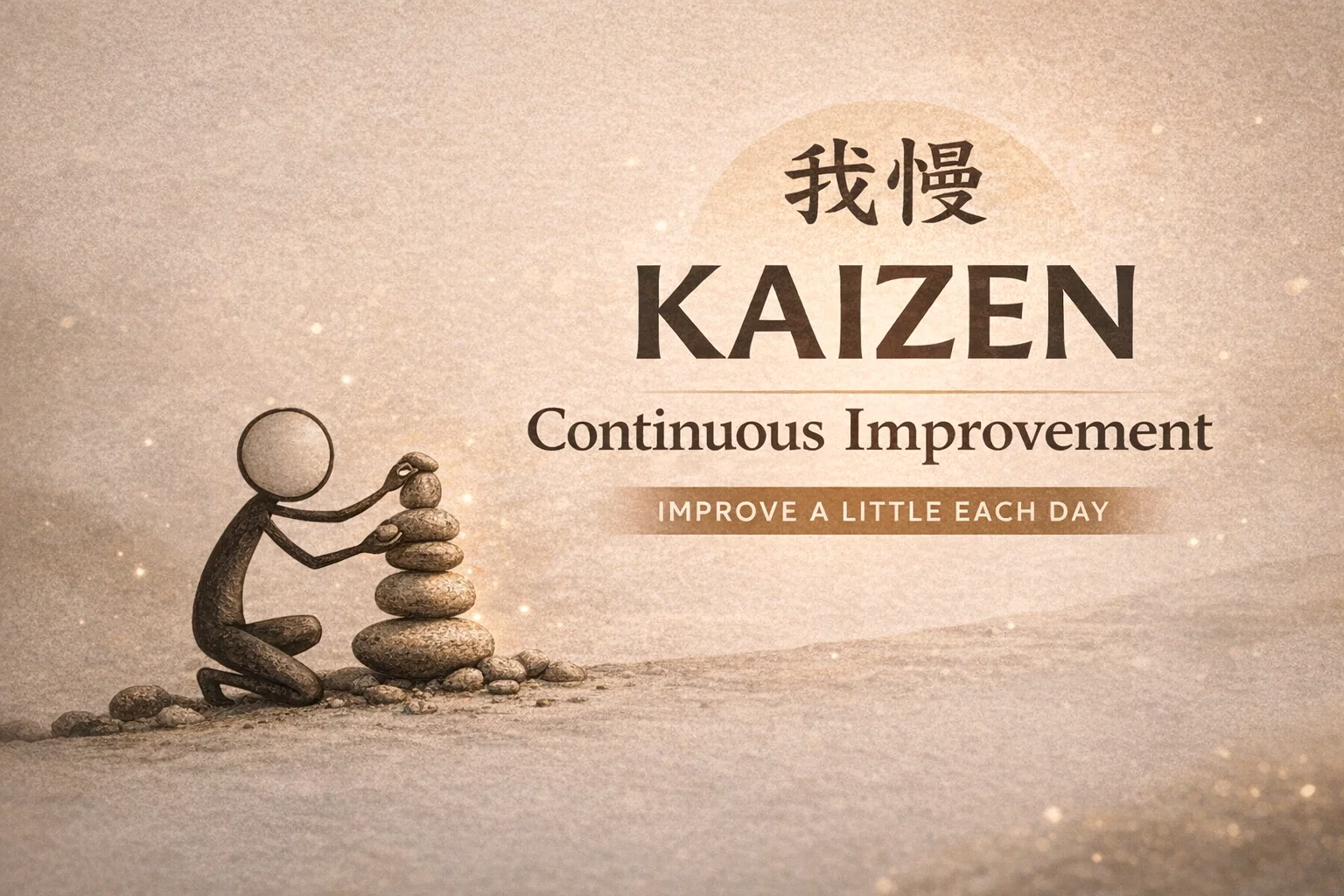
What is Kaizen Japanese Secret to Continuous Improvement and Daily Growth
In a world that often demands instant results and overnight transformations, the Japanese concept of Kaizen offers a refreshing and sustainable alternative. Imagine a life where the pressure to be perfect is replaced by the simple goal of being just one percent better than you were yesterday. This philosophy, rooted in the idea of continuous, incremental improvement, has the power to reshape your habits, your career, and your overall well-being. By focusing on small, consistent steps rather than giant leaps, Kaizen makes even the most daunting goals feel approachable and achievable. It is not about a sudden overhaul; it is about the quiet, steady discipline of showing up for yourself every single day.
The Origins and Meaning of Kaizen
The word Kaizen is derived from two Japanese characters: Kai, meaning change, and Zen, meaning good. Together, they translate to change for the better or continuous improvement. While the term gained global recognition through its application in Japanese manufacturing post-World War II, particularly within the Toyota Production System, its essence is deeply philosophical. It suggests that our lives, much like a complex engine, can always be tuned and refined through careful observation and small adjustments.
Unlike Western approaches to change, which often involve radical innovations or massive “disruptions,” Kaizen is a low-pressure, high-reward strategy. It acknowledges that big changes are often met with internal resistance and fear. By breaking down those changes into tiny, almost effortless actions, we bypass our brain’s natural defense mechanisms and build a foundation of success that is difficult to shake.
The Psychology of Small Steps
Why do we often fail when we try to change our lives? Usually, it is because we take on too much at once. We decide to start a new diet, a new workout routine, and a new wake-up schedule all on a Monday morning. By Wednesday, the sheer magnitude of these changes leads to burnout. This is where Kaizen saves the day. By focusing on the smallest possible unit of progress, you reduce the “activation energy” required to get started.
Bypassing the Brain’s Fear Response
When we face a huge challenge, the amygdala—the part of the brain responsible for the fight-or-flight response—often kicks in. This creates feelings of anxiety and procrastination. Kaizen effectively “tricks” the brain. Because the steps are so small—such as walking for five minutes instead of an hour, or writing one sentence instead of a whole chapter—the amygdala stays quiet. You are able to move forward without the paralyzing weight of expectation.
The Power of the 1 Percent Rule
If you improve by just 1 percent every day, you will be 37 times better by the end of a year. This is the magic of compounding. We often underestimate what we can do in a year but overestimate what we can do in a day. Kaizen flips this script, encouraging you to value the tiny gains that eventually add up to a monumental transformation.
Core Principles of the Kaizen Mindset
To truly adopt Kaizen, one must shift their perspective from destination-oriented to process-oriented. Here are the pillars that support this way of thinking:
- Discard Conventional Fixations: Stop worrying about how things “should” be done or how fast others are moving. Focus on your own steady path.
- Seek Solutions, Not Perfection: Perfectionism is the enemy of progress. Kaizen encourages you to find a “good enough” improvement and implement it immediately.
- Ask “Why” Five Times: To improve a situation, you must find the root cause. This technique helps you dig deeper into why a habit isn’t sticking or why a process is failing.
- Empowerment Through Action: You don’t need a grand plan to start. You just need to take the next smallest step.
Implementing Kaizen in Your Daily Life
How does this look in practice? It starts with looking at the areas of your life where you feel stuck or overwhelmed. Instead of looking for the “big fix,” look for the “micro-fix.”
Health and Wellness
If you want to get fit, don’t start by joining a marathon training group if you haven’t run in years. Start by putting on your running shoes and walking to the end of the block. The goal is to build the habit of showing up. Once the habit is locked in, the intensity can be increased slowly. Similarly, for better nutrition, try adding one serving of vegetables to one meal a day rather than clearing out your entire pantry.
Productivity and Career
In the workplace, Kaizen can be used to streamline your workflow. Identify one small friction point in your day. Perhaps it is an unorganized inbox or a cluttered desk. Spend five minutes each morning addressing just that one area. Over time, these small efficiencies create a significantly more pleasant and productive work environment.
Personal Development and Learning
Want to learn a new language or read more books? Commit to just five minutes a day. It sounds almost too simple to work, but the consistency of those five minutes is far more powerful than a three-hour study session once a month. Consistency builds neural pathways; intensity alone does not.
The Role of Patience and Discipline
Kaizen is not a “quick fix” or a “life hack.” It is a long-term commitment to excellence. This requires a specific type of discipline—the discipline to keep things small. It can be tempting to do more when you feel motivated, but the secret of Kaizen is staying consistent even when the motivation fades. It values the tortoise over the hare.
Patience is also vital because the results of Kaizen are often invisible in the short term. You might not see the physical changes after a week of five-minute walks, or notice a difference in your bank account after saving a few dollars a day. However, like the steady dripping of water that eventually carves through stone, your small actions are creating a deep and lasting impact.
Overcoming the Perfectionism Trap
Many of us are raised to believe that if something isn’t worth doing perfectly, it isn’t worth doing at all. Kaizen argues the opposite: if it is worth doing, it is worth doing poorly at first, as long as you are improving. By lowering the bar for entry, you remove the fear of failure. In the Kaizen world, there is no failure, only data. Every small step that doesn’t work is simply a signpost pointing you toward a better adjustment.
The “Five-Minute” Rule
A great way to fight procrastination using Kaizen is the five-minute rule. Tell yourself you will work on a task for just five minutes. If you want to stop after that, you can. Usually, the hardest part of any task is starting. Once you’ve broken the seal, you’ll often find the momentum to keep going.
Kaizen and the Art of Mindfulness
Practicing Kaizen naturally leads to a more mindful way of living. To improve something by 1 percent, you must first pay close attention to it. You begin to notice the small details of your day, your reactions, and your environment. This heightened awareness allows you to make more intentional choices rather than living on autopilot. You become the architect of your own life, carefully placing one brick at a time with presence and care.
The Ripple Effect of Continuous Improvement
When you start applying Kaizen to one area of your life, you’ll likely find that it spills over into others. Improving your morning routine might give you more energy at work, which in turn makes you more present and patient with your family in the evening. This creates a positive feedback loop. Success in small things breeds the confidence to tackle slightly larger things, and your “comfort zone” begins to expand naturally and without pain.
Conclusion: Start Small, Dream Big
The beauty of Kaizen lies in its simplicity. You do not need a new wardrobe, a gym membership, or a promotion to start. You only need the willingness to look at your life and ask, “What is one tiny thing I can improve today?” Whether it is drinking an extra glass of water, tidying a single drawer, or writing a thank-you note, these actions are the seeds of a future you can be proud of.
Remember that greatness is not a single event; it is a collection of small things done well and repeated over time. Stop waiting for the perfect moment or the grand inspiration. Embrace the power of the small step. Trust the process, have patience with yourself, and watch as your consistent, tiny improvements transform into a life of extraordinary growth and fulfillment. The journey of a thousand miles really does begin with a single, very small step. Why not take yours right now?
Would you like me to create an image or a video summary of these Kaizen principles to include in your post?