Why Healing Feels So Hard Understanding Trauma Responses and Self-Discovery
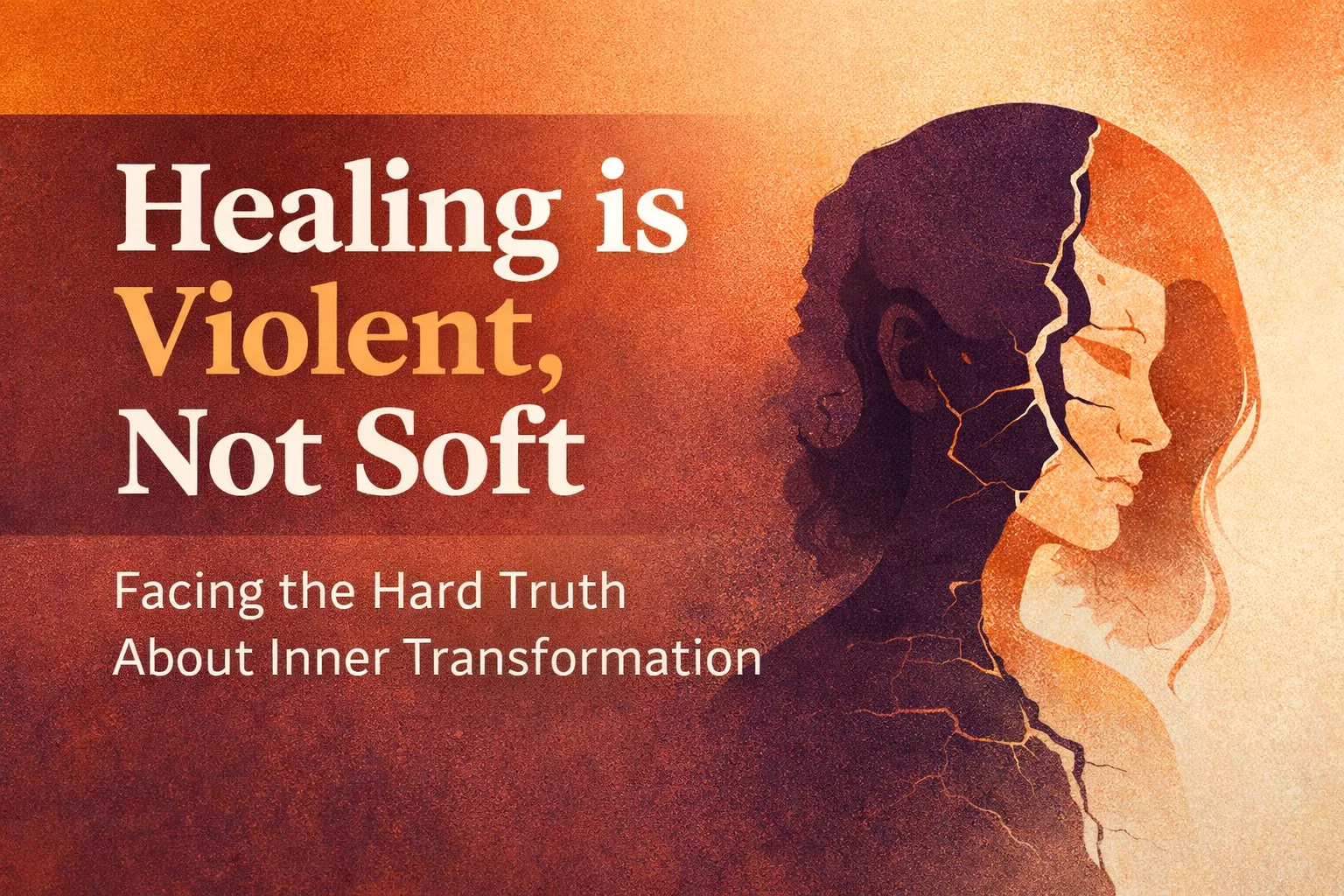
We often hear that healing is a soft, gentle journey filled with bubble baths, affirmations, and quiet meditation. While those things have their place, the reality of deep emotional healing is often much more raw. It is frequently described not as a soft process, but as a violent one because it requires us to fundamentally dismantle the identity we built to survive. When you finally stop running from your past, you have to face the uncomfortable truth that who you thought you were might actually be a collection of protective mechanisms designed to keep you safe when you were vulnerable.
The Truth About Your Survival Personality
Most of us spend years crafting a personality that helps us navigate the world safely. If you grew up in an environment where you could not express emotions freely, you likely learned to suppress them. You might have been praised for being the “calm one” in chaotic situations. However, as an adult, that calm might feel less like peace and more like numbness. It is a defense strategy that served you well as a child but now prevents you from experiencing the full spectrum of your own emotions.
The same logic applies to other traits we often wear as badges of honor. Consider these common survival traits that often mask deeper wounds:
- Extreme Independence: Being hyper-independent is often a sign that you learned early on that you could not rely on others to meet your needs. It is not always true strength; sometimes, it is a wall built to avoid the possibility of abandonment.
- Perfectionism: Many people view perfectionism as a sign of high standards or ambition. In reality, it is frequently fear in disguise. It is a belief that if you can just be perfect enough, you will avoid criticism, rejection, or failure.
Why Healing Feels Violent
The term violent is used here to describe the internal upheaval of shedding these survival skins. You are essentially taking apart your house while you are still living in it. This is why the process feels so destabilizing. When you peel back the layers of a trauma response, you are often left with a sense of emptiness or confusion. You are no longer the person who suppressed everything to get by, but you do not yet know who you are without those defenses.
This is where the grief enters. Healing is not just about moving forward; it is about mourning the versions of yourself that you have outgrown. It is a painful realization that the parts of you that were the most rigid were actually the most hurt. You have to let go of the identity that kept you safe because it is no longer the thing that helps you thrive.
Shutterstock
Reframing the Process of Self-Discovery
How do you navigate this process without falling into despair? The answer lies in shifting how you view your past self. Instead of judging your younger self for being perfectionistic or closed off, try to develop a sense of gratitude for those traits. They were not flaws; they were solutions. They were the absolute best tools you had at the time to ensure your survival.
Practicing Self-Compassion
Self-compassion is the antidote to the violence of healing. When you identify a trauma response, try to meet it with curiosity rather than shame. Ask yourself, what was this trait trying to protect me from? When you can identify the purpose behind the behavior, it becomes much easier to release it. You are not erasing your personality; you are simply making space for the authentic version of yourself that was hidden underneath the armor.
Building New Foundations
Once you begin to identify these survival patterns, you can start to intentionally choose how to respond to the world. If you were hyper-independent, start asking for small favors. If you struggle with perfectionism, practice doing one thing in your day that is purposefully messy or imperfect. These small, consistent actions help rewire your brain to understand that the threats from the past are no longer present in your current reality.
Embracing the Journey
The most important thing to remember is that this process does not have a deadline. You do not have to “solve” your personality overnight. There will be days when your survival responses feel very comfortable and necessary, and that is okay. You are allowed to fall back into old patterns as long as you continue to look at them with awareness.
Letting go of the version of you who had to sacrifice her own needs for safety is arguably the hardest part of the entire healing journey. It involves acknowledging that you were hurt, and it involves releasing the control you thought you had. But on the other side of that grief is an incredible sense of freedom. You are finally stepping into a version of yourself that acts not out of fear or defense, but out of genuine choice and self-love. Stay patient, stay curious, and give yourself the grace you deserve.