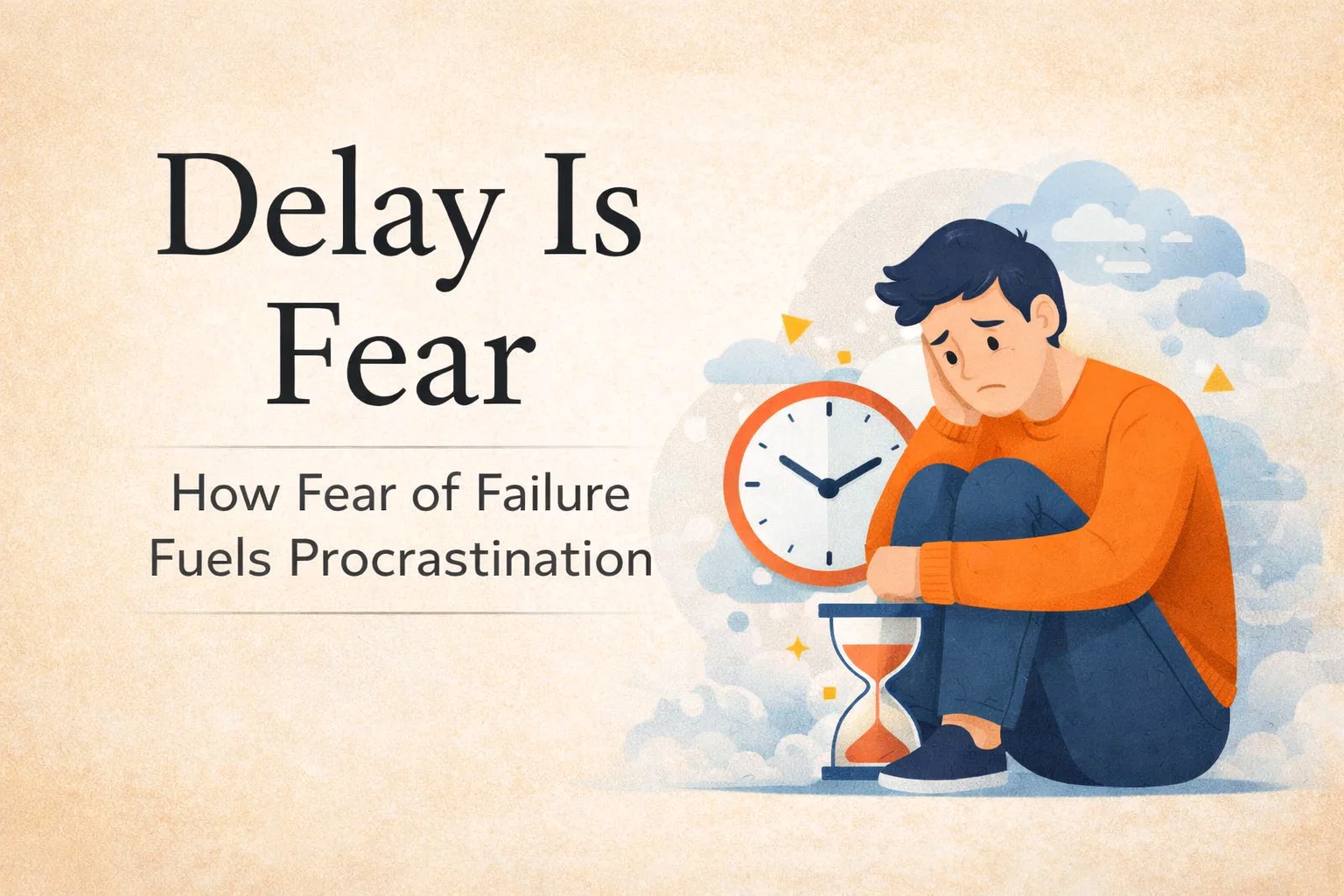
Why Procrastination Is Actually Fear How to Stop Delaying Your Success and Take Action
We have all been there. You have a massive project sitting on your desk, a dream business you want to launch, or even just a simple habit you want to start, but instead of taking that first step, you find yourself scrolling through social media or cleaning the kitchen for the third time today. It feels like simple laziness, but as the powerful words of Codie Sanchez remind us, delay is often just a mask for fear. When we procrastinate, we are rarely avoiding the work itself. Instead, we are protecting ourselves from the vulnerability of putting our best effort forward and finding out it might not be enough. This internal defense mechanism keeps us safe in the moment, but it also keeps us stagnant.
The Psychology of Procrastination as a Safety Net
Understanding why we delay is the first step toward breaking the cycle. For a long time, productivity experts treated procrastination as a time management problem. They suggested better calendars, tighter schedules, and more discipline. However, modern psychology suggests that procrastination is actually an emotion regulation problem. It is a way of coping with the anxiety or self doubt that a particular task triggers. When you look at a daunting goal, your brain perceives a threat to your ego. If you try and fail, that failure feels like a reflection of your worth. If you never try, you can always tell yourself that you would have succeeded if you had only started.
The Fear of Not Being Good Enough
At the heart of most delays is a nagging whisper that says you are not ready or capable. This is known as the imposter syndrome, and it is a universal experience for anyone trying to do something meaningful. By putting things off, you create a buffer. You are essentially choosing the certainty of staying where you are over the uncertainty of what might happen if you actually give it your all. Recognizing that your procrastination is a form of self protection allows you to meet yourself with compassion rather than frustration. You are not lazy, you are just trying to keep yourself safe from potential disappointment.
Breaking the Illusion of Perfect Timing
One of the biggest traps we fall into is waiting for the perfect moment. We tell ourselves we will start when we have more money, more experience, or more energy. But the truth is that the perfect moment is a myth designed to keep us in our comfort zones. Action creates clarity, not the other way around. You do not need to see the whole staircase to take the first step. In fact, most of the successful people you admire started long before they felt ready. They understood that the messy middle is where the real learning happens and that waiting for perfection is just another way of saying you are afraid to be seen as a beginner.
The Real Definition of Failure
We often think of failure as a negative outcome, such as a business that does not take off or a manuscript that gets rejected. But as the image suggests, the real failure is the act of not trying at all. When you fail at an attempt, you gain data, experience, and resilience. You are better equipped for the next try than you were before. However, when you fail by default through inaction, you gain nothing but regret. Regret is a much heavier burden to carry than the temporary sting of a setback. By reframing failure as a lack of effort rather than a lack of results, you can lower the stakes and make it easier to start.
Practical Strategies to Move From Delay to Action
Once you recognize that fear is the root cause of your delay, you can start using tools to bypass those emotional hurdles. You do not need a complete personality overhaul to become a person of action. You just need a few reliable systems to help you navigate the moments when fear feels overwhelming.
- The Five Minute Rule: Tell yourself you will only work on the task for five minutes. Often, the hardest part is the transition from rest to motion. Once you start, the momentum usually carries you forward.
- Break It Down Into Micro Tasks: A large goal feels threatening. A tiny task feels manageable. Instead of “Write a blog post,” make the task “Open a blank document and write one sentence.”
- Focus on the Next Right Step: Do not worry about the tenth step or the final result. Just focus on what needs to happen right now.
- Practice Self Compassion: Forgive yourself for past procrastination. Research shows that people who forgive themselves for delaying are more likely to take action in the future because they aren’t bogged down by guilt.
Creating a Low Stakes Environment
If the fear of being “not good enough” is stopping you, try lowering the bar for your first draft or your first attempt. Give yourself permission to do a mediocre job just to get the gears turning. You can always edit a bad page, but you cannot edit a blank one. By lowering the stakes, you take the power away from the fear. You are no longer performing for an audience or testing your worth; you are just practicing. This mindset shift is essential for anyone in a creative or entrepreneurial field where the pressure to perform can be paralyzing.
Building Momentum Through Consistency
Success is rarely the result of one giant leap. It is almost always the result of small, consistent actions taken over a long period. When you show up every day, even when you are scared, you build a new identity. You stop seeing yourself as someone who “wants to do things” and start seeing yourself as someone who “does things.” This shift in identity is the most powerful antidote to procrastination. As you stack small wins, your confidence grows, and the fear that once felt like a mountain begins to look like a molehill.
The Power of “Done Over Perfect”
In many ways, perfectionism is just procrastination in a fancy suit. It allows us to feel productive while we obsess over tiny details that do not actually move the needle. Embracing the mantra of “done is better than perfect” allows you to release your work into the world and move on to the next challenge. Every finished project is a lesson learned. The more you finish, the faster you grow. Perfectionism keeps you small, while completion sets you free.
Tuning Out the Noise of Comparison
A major driver of the fear of failure is the constant comparison to others. When we see someone else’s “Chapter 20” while we are still on our “Chapter 1,” it is easy to feel like we are behind or inadequate. But social media is a curated highlight reel. It does not show the late nights, the failed attempts, or the moments of deep doubt that every successful person experiences. Your journey is unique to you. Focus on your own progress and celebrate your own milestones. The only person you should be trying to be better than is the person you were yesterday.
Reframing Your Inner Dialogue
Pay attention to the way you talk to yourself when you are avoiding a task. Are you calling yourself lazy or incapable? Instead, try acknowledging the feeling. Tell yourself, “I am feeling anxious about this because I care about it, and that is okay.” Turning your inner critic into an inner coach can change your entire approach to work. When you treat yourself with the same kindness you would offer a friend, you create the psychological safety necessary to take risks and try new things.
Conclusion: Your Future Self Will Thank You
Every time you choose action over delay, you are casting a vote for the person you want to become. It is okay to be scared. It is okay to feel like you might not be good enough yet. The secret is that everyone feels that way. The difference between those who achieve their dreams and those who stay stuck is simply the willingness to move forward in spite of the fear. Don’t let your potential wither away in the shadows of “someday.”
The next time you feel that familiar urge to put something off, remember that you are at a crossroads. You can choose the temporary comfort of delay, or you can choose the growth that comes with action. Take the leap, do the work, and trust that you are more than capable of handling whatever comes next. The world is waiting for what you have to offer, and the only way to find out how good you can truly be is to stop waiting and start doing.