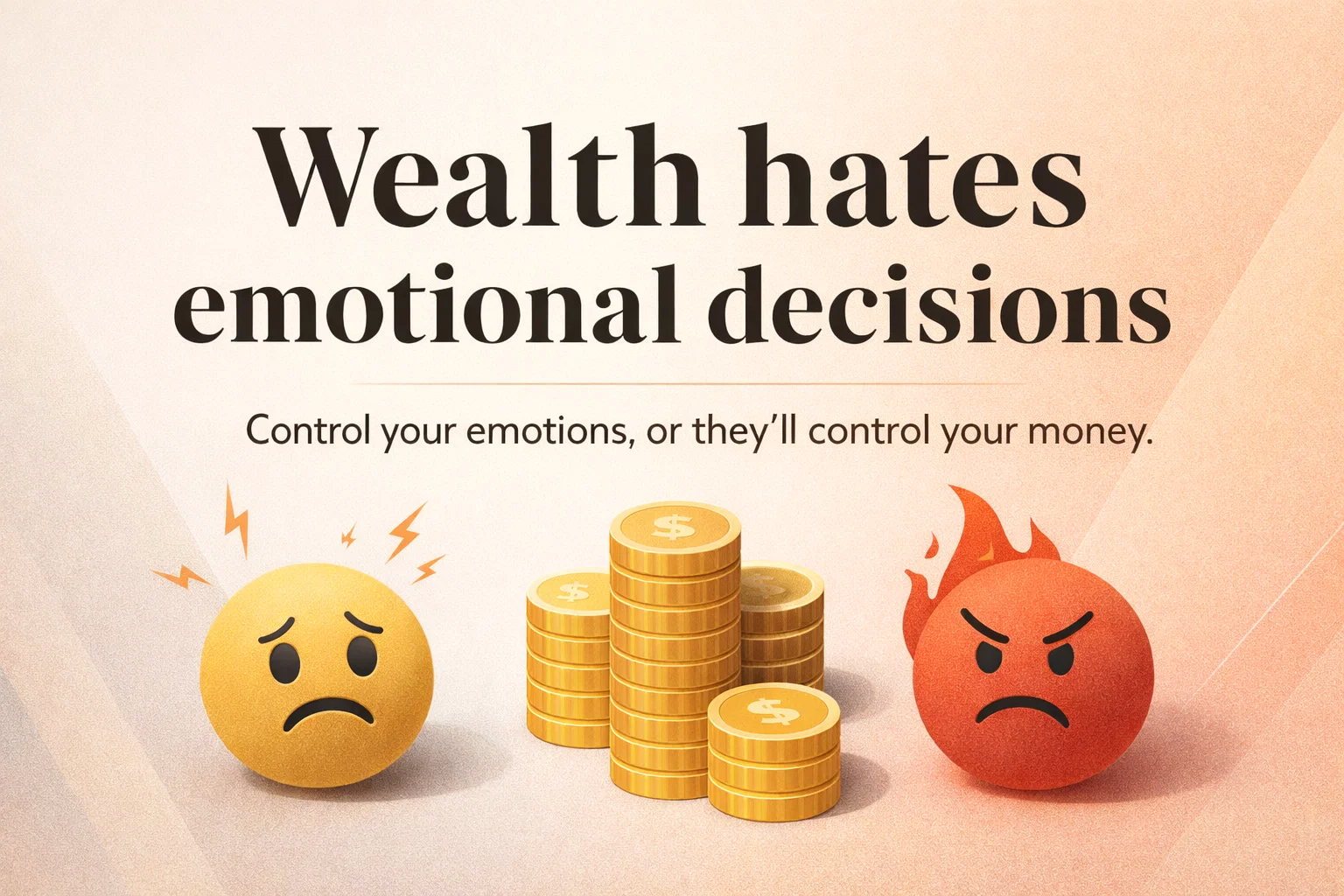
Why Wealth Hates Emotional Decisions Master Your Money Discipline Mindset
Making financial decisions based on how you feel in the moment is one of the fastest ways to watch your hard earned savings disappear. We live in a world designed to trigger our impulses, from limited time offers that spark anxiety to social media trends that make us feel like we are falling behind. However, true wealth is not built on the highs and lows of our daily moods. It is built on the quiet, steady foundation of logic and consistency. When emotions take the driver seat, strategy is pushed out of the window, and that is where most people lose their grip on financial freedom.
Why Your Brain Is Hardwired to Make Poor Money Choices
To understand why wealth hates emotional decisions, we first have to look at how our brains are wired. Human beings evolved to respond to immediate threats and rewards. Thousands of years ago, if you saw a berry bush, you ate as much as you could because you did not know when you would find food again. This survival instinct is still present today, but it manifests as overspending during a sale or FOMO (fear of missing out) when a friend shows off a new car.
When you feel a strong emotion like excitement or fear, your amygdala—the emotional center of the brain—takes over. This effectively bypasses the prefrontal cortex, which is the part of your brain responsible for long term planning and rational thought. In that moment, you are not a sophisticated investor or a disciplined saver; you are a biological entity reacting to a stimulus. Building wealth requires you to recognize this biological hijack and step back before you hit the buy button or sell your stocks in a panic.
The Expensive Cost of Panic and Urgency
Panic is perhaps the most destructive emotion in the world of finance. It creates a sense of urgency that forces you to rush. When you rush, you do not look at the fine print. You do not compare prices, and you certainly do not consider the long term implications of your actions. In the stock market, panic leads to selling at the bottom. In everyday life, panic leads to emergency purchases that are often overpriced and unnecessary.
Money needs calm to grow. Think of your finances like a garden. If you keep digging up the seeds every time there is a light rain because you are worried they won’t grow, you will never have a harvest. You must be able to sit through the storms of market volatility or personal setbacks without tearing down the progress you have already made. Logic allows you to see the storm for what it is: a temporary event, not a permanent reality.
Recognizing the Insecurity Trap
Another major emotional driver is insecurity. Many people use money as a tool to fix their internal feelings of inadequacy. This is where the phrase keeping up with the Joneses comes from. If you feel like you are not successful enough, you might be tempted to buy a luxury item to prove to the world (and yourself) that you have made it. The problem is that wealth is what you do not see. It is the money in the bank and the investments that are growing, not the depreciating assets parked in your driveway.
When you try to look rich, you often prevent yourself from ever actually becoming stable. Financial stability requires a level of humility. It requires the ability to say no to things that would make you look good today so that you can have actual security tomorrow. A disciplined mindset recognizes that your self worth is not tied to your net worth, which ironically makes it much easier to grow your net worth over time.
The Three Pillars of a Money Discipline Mindset
Shifting from an emotional spender to a disciplined builder requires a change in your core philosophy. You have to treat your money with the same respect a scientist treats an experiment. It is about data, results, and adjustments, not feelings. Here are the three pillars that support a disciplined financial life:
- Consistency over Intensity: It is better to save a small amount every month for ten years than to try and save a massive amount once and then give up because it was too hard. Consistency builds habits, and habits build wealth.
- The 24 Hour Rule: Never make a non essential purchase the moment you see it. Giving yourself one full day allows the initial spike of dopamine to fade, letting your rational brain take back control.
- Defined Goals: If you do not have a clear plan for your money, your emotions will find a way to spend it for you. Having a written goal gives every dollar a purpose.
The Danger of Positive Emotions: Excitement and Greed
We often talk about the dangers of negative emotions, but positive emotions can be just as risky. Excitement can lead to overspending because you feel like you deserve a treat or because you are caught up in the thrill of a new hobby. Greed, on the other hand, can lead you to take unnecessary risks with your investments because you want to get rich quick.
A disciplined mindset treats excitement with caution. Just because an investment is exciting does not mean it is a good one. In fact, most successful long term investing is incredibly boring. It involves buying reliable assets and waiting for years. If your financial strategy feels like a roller coaster, you are likely making emotional decisions. If it feels like watching grass grow, you are probably on the right track.
How to Separate Your Moods from Your Money
Separating your feelings from your finances is a skill that takes practice. It is like a muscle that you have to train every day. Start by tracking your spending and noting how you felt when you made each purchase. Were you stressed? Bored? Happy? Over time, you will start to see patterns. You might realize that you order takeout every time you have a bad day at work, or that you browse online shops when you feel lonely.
Once you identify these triggers, you can create barriers. For example, if you know you are a stress spender, remove your credit card information from your favorite websites. If you are an impulsive shopper, commit to only shopping with a list. These small physical barriers give your brain the time it needs to switch from emotional mode to logical mode.
Building a Buffer Against Emotional Stress
One of the best ways to keep emotions out of your money is to have a solid emergency fund. When you have three to six months of expenses tucked away, a car repair or a medical bill is no longer a financial catastrophe; it is just an inconvenience. This buffer reduces the overall level of stress in your life, which in turn reduces the likelihood of you making a panicked, emotional decision. Stability breeds more stability.
The Long Term Rewards of Financial Logic
When you finally master the art of the disciplined mindset, the rewards are far greater than just a higher balance in your bank account. You gain a sense of peace that emotional spenders never experience. You are no longer at the mercy of the next sale or the next market dip. You know that you have a plan, and you have the discipline to follow it.
Logic allows for compound interest to do its magic. Every time you choose not to make an emotional purchase, you are essentially buying your future freedom. You are choosing the person you will be in ten years over the person you are for ten minutes today. That is the ultimate form of self care and the only true way to build a legacy that lasts.
Cultivating Patience in a World of Instant Gratification
We live in an era of one click ordering and instant downloads. This culture of immediacy is the natural enemy of wealth. Discipline is essentially the ability to delay gratification. It is the understanding that a better version of your life exists in the future if you are willing to make small sacrifices today. People who build significant wealth understand that time is their greatest asset, and they are willing to let time work in their favor rather than trying to force results through risky, emotional bets.
Logic as Your Financial Compass
Whenever you are faced with a financial choice, ask yourself: Am I doing this because it fits my plan, or because of how I feel right now? If the answer is the latter, stop. Take a breath. Walk away. Your future self will thank you for the moments you chose logic over impulse. Wealth does not just happen to people; it is the result of thousands of small, logical decisions made over a lifetime.
Conclusion: Mastering the Mind to Master the Money
At the end of the day, money is just a tool. It is a neutral resource that responds to how it is handled. If you handle it with a volatile heart, it will slip through your fingers. If you handle it with a steady hand and a clear mind, it will grow and provide for you for years to come. Wealth truly does hate emotional decisions because emotions are temporary and wealth is built on the permanent. By choosing to cultivate a money discipline mindset, you are taking the first and most important step toward true financial independence. Control your emotions today, or they will keep controlling your money tomorrow. Start small, stay consistent, and watch as your logical choices pave the way to a much brighter and more stable future.
I can also help you format this into a WordPress-ready XML file or suggest some royalty-free images to accompany these sections. Would you like me to do that?