Why You Always Quit After 2 Weeks The Neuroscience of Habit Success
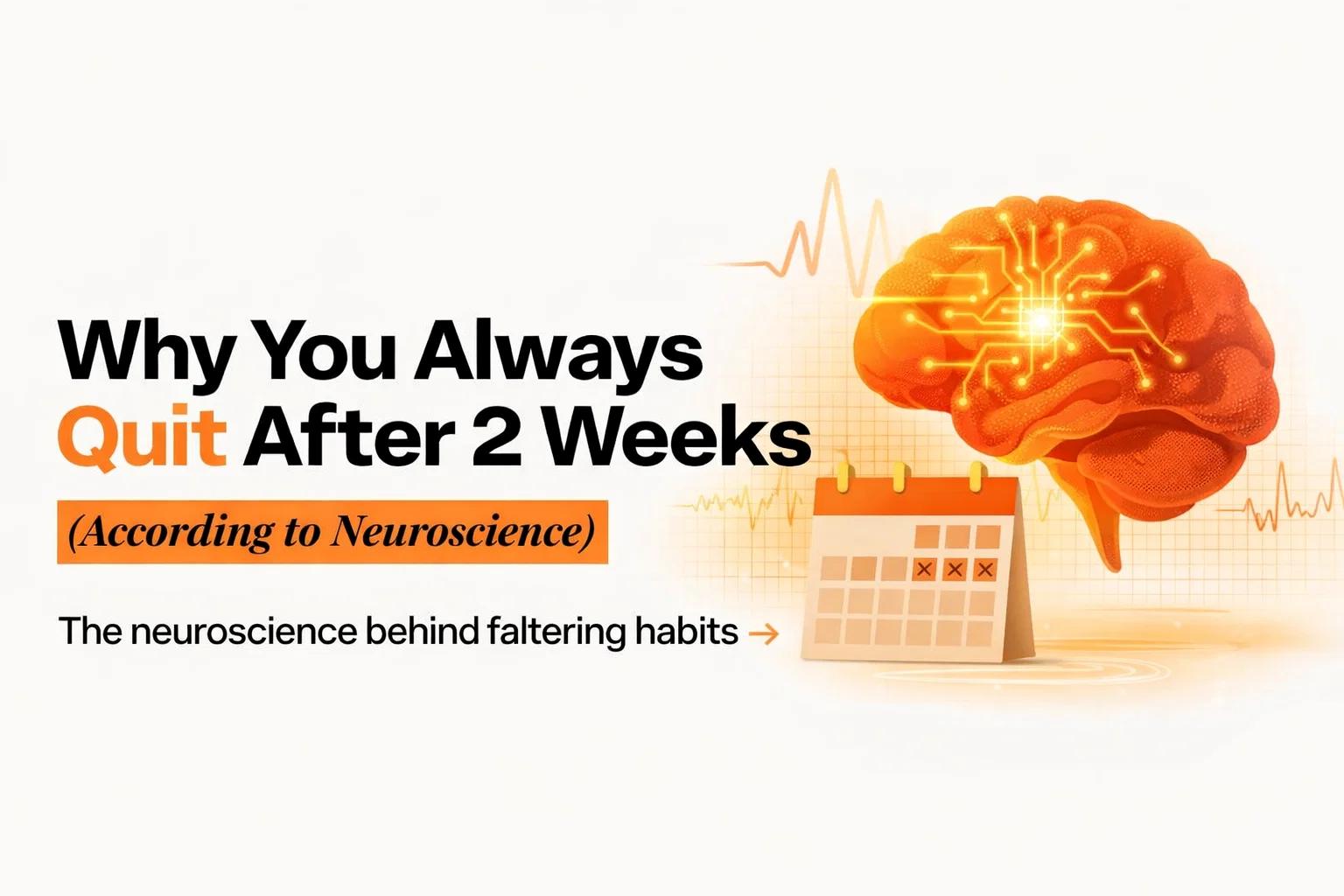
We have all been there. You start a new habit with a surge of inspiration. Maybe it is a new morning workout, a commitment to clean eating, or a daily meditation practice. For the first few days, you are unstoppable. You feel the momentum building and you are convinced that this time, it is going to stick. Then, around the ten or fourteen-day mark, something shifts. The excitement fades, resistance sets in, and suddenly, you find yourself back at square one. This is not a failure of character or a lack of discipline. It is actually a very specific neurological phenomenon. Understanding why your brain is wired to quit after two weeks is the first step toward finally breaking the cycle and achieving long-term success.
The Two-Week Wall: What Is Happening in Your Brain?
In the world of neuroscience, the two-week mark is a critical transition period. When you start something new, your brain relies heavily on the prefrontal cortex. This is the area responsible for executive function, decision-making, and conscious effort. It is the part of you that says, I want to be healthier, so I will go for a run today. Because this is a conscious choice, it requires a significant amount of mental energy. In those early days, the novelty of the goal provides a natural dopamine spike, which helps fuel that energy expenditure.
However, the brain is an organ designed for efficiency. It does not want to spend high levels of energy on conscious decisions forever. Its ultimate goal is to move those behaviors into the basal ganglia, the part of the brain where habits and automatic patterns are stored. Around the two-week point, the initial novelty wears off, and the dopamine rewards begin to dip. Your prefrontal cortex starts to tire of the constant effort, but the basal ganglia has not yet fully taken over the routine. This creates a neurological gap where resistance is at its peak.
The Role of the Basal Ganglia
The basal ganglia is like the autopilot system of your mind. It handles things you do without thinking, such as brushing your teeth or driving a familiar route. For a new behavior to become a habit, it must be etched into this region. The problem is that the basal ganglia is incredibly stubborn. It prefers the old, established patterns because they are safe and energy-efficient. When you try to introduce something new, the basal ganglia actively resists the change until it is proven that the new behavior is consistent and necessary.
Why Willpower Is a Finite Resource
Many people believe that if they just had more willpower, they could push through that two-week slump. The reality is that willpower is like a battery. Every decision you make throughout the day drains a little bit of that charge. By the time you reach the second week of a new habit, the mental fatigue of constantly choosing the new behavior over the old one has depleted your reserves. If you rely solely on willpower to bridge the gap between the prefrontal cortex and the basal ganglia, you are likely to fail when your energy levels are low or your stress levels are high.
Decision Fatigue and Habit Decay
Decision fatigue is the primary enemy of the two-week mark. When you have to decide to work out every single morning, you are using up precious cognitive resources. Eventually, your brain will take the path of least resistance to save energy. This is why successful habit builders focus on reducing the number of decisions they have to make. They prep their clothes the night before or automate their schedules so that the behavior becomes the default choice rather than a conscious struggle.
The Neurological Timeline of Change
While the popular myth suggests it takes twenty-one days to form a habit, modern neuroscience shows that the timeline is actually much more variable. On average, it takes about sixty-six days for a behavior to become truly automatic. However, the first fourteen to twenty-one days are the most volatile. During this window, your brain is actively testing the validity of the new routine. It is looking for reasons to return to the old ways because those ways are neurologically cheaper to maintain.
Phase One: The Honeymoon Period
This lasts for about the first seven days. You are driven by motivation and the excitement of a new beginning. Your brain is flooded with dopamine, making the hard work feel rewarding. You feel like a new person, and the goal seems easily within reach.
Phase Two: The Resistance Phase
This is the danger zone that occurs between day ten and day twenty. The dopamine has leveled off, and the physical or mental effort required for the habit feels much heavier. This is where most people quit because they mistake this neurological resistance for a lack of passion or ability. In reality, this is simply the brain attempting to revert to its energy-saving defaults.
Phase Three: The Integration Phase
If you can push past the twenty-day mark, you enter the integration phase. The behavior starts to feel slightly more natural. You no longer have to debate with yourself as much about whether or not to do it. You are starting to build the physical neural pathways that make the action part of your identity.
The System That Overrides the Quitting Instinct
To beat the two-week slump, you need a system that overrides the neurological urge to quit. This involves moving away from motivation and toward environmental design and identity-based habits. Here are the most effective strategies to keep your brain on track when the resistance hits.
1. Implementation Intentions
An implementation intention is a simple formula: If situation X happens, then I will perform response Y. For example, instead of saying I will meditate more, you say, If I finish my morning coffee, then I will sit for five minutes of meditation. This takes the decision-making out of the hands of the prefrontal cortex and gives a direct cue to the basal ganglia. You are essentially pre-programming your brain to act without needing a surge of willpower.
2. Reducing Friction
The brain loves the easiest path. If you want to stick to a habit, you must make it the path of least resistance. If you want to go to the gym, put your shoes right by the bed. If you want to eat healthier, chop your vegetables as soon as you get home from the store. By reducing the physical and mental friction associated with the task, you make it much harder for your brain to justify quitting during the two-week resistance phase.
3. The Two-Minute Rule
When you feel like quitting, it is usually because the entire task feels overwhelming. The two-minute rule states that you should scale down your habit until it takes less than two minutes to do. Instead of a thirty-minute workout, just put on your gym clothes and do one pushup. The goal is not the workout itself, but the act of showing up. This reinforces the neural pathway of the habit without triggering the brain’s energy-preservation alarms.
The Power of Small Wins and Dopamine Hits
Since the dip in dopamine is what causes the two-week slump, you need to find ways to artificially boost your reward system. Tracking your progress is one of the most effective ways to do this. Every time you cross a day off a calendar or check a box in an app, your brain receives a small hit of dopamine. This positive reinforcement tells your brain that the effort is worth it, helping to sustain you until the behavior becomes automatic.
Focus on Process, Not Results
Results often take time to manifest, which can be discouraging during the first few weeks. If your goal is weight loss or learning a new language, you might not see much change in fourteen days. This lack of visible progress can trigger the quitting instinct. To override this, focus on the process. Celebrate the fact that you showed up for fourteen days straight, regardless of the outcome. The win is the habit, not the result.
Building a Sustainable Environment
Your environment is often a stronger driver of behavior than your intentions. If your surroundings are filled with cues for your old habits, your basal ganglia will constantly be pulled back to those patterns. To support your new neurological pathways, you must curate your space. Surround yourself with visual reminders of your new goals and remove the triggers that lead to the behaviors you are trying to change. A supportive environment acts as a safety net for those days when your mental energy is at its lowest.
Social Accountability
Humans are social creatures, and our brains are highly sensitive to social standing and accountability. When you share your goals with others or join a community, you engage the social processing centers of your brain. The desire to remain consistent in the eyes of others can provide the extra push needed to get through the two-week wall. It adds an extra layer of motivation that goes beyond your internal willpower.
Conclusion: Mastering Your Mind
Quitting after two weeks is not a sign of weakness; it is a sign that your brain is functioning exactly how it was designed to. It is trying to save energy and protect you from unnecessary effort. By understanding this neurological timeline, you can stop blaming yourself and start using systems that work with your biology rather than against it. The resistance you feel at day fourteen is actually a sign that you are on the verge of a breakthrough. It means your brain is starting the hard work of rewiring itself. If you can use these tools to bridge the gap and stay consistent, you will eventually reach the point where the new habit is just as easy as the old one. Keep going, because the version of you that persists past the two-week mark is the version that finally changes for good.