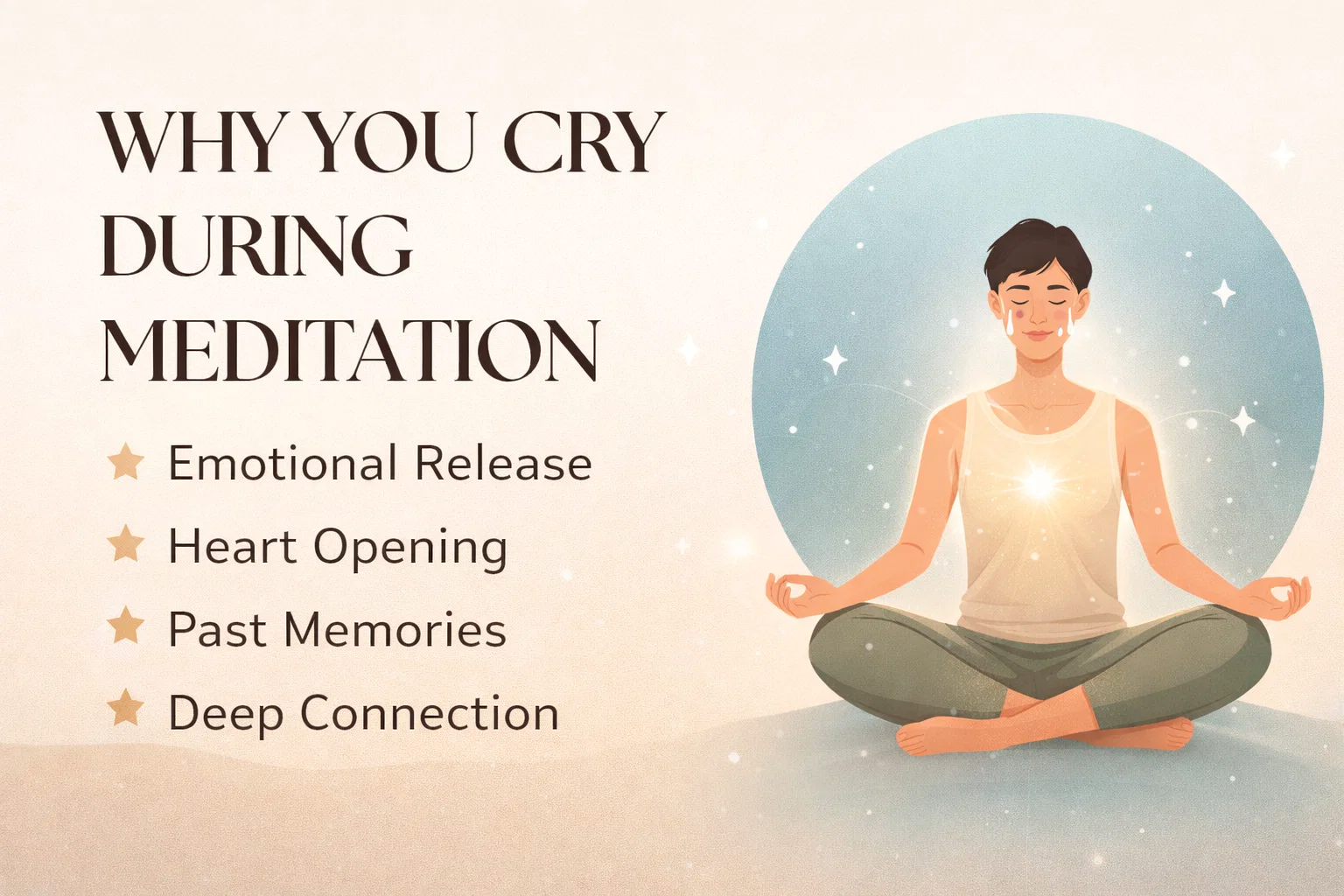
Why You Cry During Meditation Emotional Release Spiritual Healing Guide
Have you ever settled into your meditation practice, focused on your breath, and suddenly felt a warm tear rolling down your cheek? It can be a startling experience. One moment you are seeking inner peace, and the next, you are overwhelmed by a wave of emotion that seems to come out of nowhere. If this has happened to you, the first thing you should know is that you are not alone, and you are certainly not doing anything wrong. In fact, crying during meditation is a profound sign of progress and healing.
The Science of the Sigh: Why Your Nervous System Releases
To understand why we cry when we are silent, we have to look at how our bodies process stress. Most of us spend our days in a state of high alert, governed by the sympathetic nervous system. This is the fight or flight mode that keeps us productive but also keeps us tense. When you sit down to meditate, you are intentionally signaling to your body that it is safe to move into the parasympathetic nervous system, also known as the rest and digest state.
As the body finally relaxes, the physical tension we have been holding in our muscles, jaw, and chest begins to soften. This physiological shift often acts like opening a floodgate. When the nervous system finally feels safe enough to let its guard down, the pent-up energy of the day, or even the year, finds its way out through tears. It is a biological reset button that allows your body to return to a state of equilibrium.
Old Emotions Clearing and the Path to Healing
We often think of our minds and bodies as separate, but they are deeply interconnected. Traumatic events or even small, daily stresses can become stored in our physical tissues. This is what many practitioners call somatic memory. When you enter a deep state of meditative stillness, you are essentially scanning these stored areas of tension.
Crying serves as a vacuum for the soul. It is a way of clearing out old emotions that no longer serve you. You might not even know why you are crying, and that is perfectly okay. You do not need a logical reason or a specific memory to justify the release. The act of crying is the healing itself. It is your psyche’s way of decluttering, making room for new insights and a lighter sense of being.
When Repressed Memories Resurface
In the busyness of modern life, we often push uncomfortable thoughts and memories into the basement of our consciousness just to get through the day. Meditation shines a gentle light into that basement. Because you have removed the distractions of your phone, your work, and your social interactions, those repressed memories finally have the space to rise to the surface.
Seeing a repressed memory during meditation can be intense. However, the crying that accompanies it is a form of processing. By allowing yourself to feel the grief or pain associated with that memory in a controlled, safe environment, you are finally integrating that experience rather than running from it. This is a vital step in long term emotional maturity and mental health.
The Role of the Heart Chakra
For those who follow spiritual or energetic traditions, crying is often associated with the Anahata, or the Heart Chakra. This energy center is the bridge between our physical and spiritual selves. When we meditate, we often direct energy toward the heart, seeking compassion for ourselves and others.
An opening heart chakra can feel like a sudden expansion in the chest. This expansion can be so powerful that it manifests as weeping. This is not necessarily a cry of sadness; it can be a cry of relief or the overwhelming sensation of finally feeling connected to the world around you. It is the sound of the walls around your heart finally coming down.
Experiencing Awe and the Concept of Oneness
Not all meditation tears are born from pain. Some of the most profound experiences of crying in silence come from a place of absolute beauty. As you deepen your practice, you may catch glimpses of what spiritual teachers call Oneness or non-duality. This is the realization that the boundaries between you and the rest of the universe are thinner than you imagined.
When you truly feel the vastness of existence or a deep sense of gratitude for being alive, the ego can feel overwhelmed. In these moments, tears are a natural response to awe. It is a physical reaction to a spiritual truth that is too big for words to contain. If you find yourself crying because you feel a sudden, intense love for humanity or nature, cherish it. These are the tears of awakening.
How to Handle the Tears When They Arrive
So, what should you actually do when the waterworks start? The most important piece of advice is to let yourself cry. Many people try to swallow the lumps in their throats or wipe their eyes quickly so they can get back to their focus. This actually interrupts the meditation and stops the healing process in its tracks.
- Acknowledge the feeling: Notice the sensation of the tear, the tightness in the chest, or the shakiness of the breath.
- Drop the judgment: Stop telling yourself that you are being weak or that you are failing at meditation because you aren’t perfectly calm.
- Breathe into it: Don’t try to stop the breath. Let it be ragged if it needs to be.
- Stay present: Instead of drifting off into a story about why you are sad, stay with the physical sensation of the release.
Physical and Health Considerations
While most crying in meditation is emotional or spiritual, it is always wise to rule out physical causes. Sometimes, dry eyes or strain from staring at a single point (if practicing open eyed meditation) can cause tearing. Additionally, if you find that your crying is accompanied by severe depression or thoughts of self harm outside of your practice, it is important to consult with a healthcare professional or a therapist.
Meditation is a powerful tool, but it works best when supported by a holistic approach to health. If you are going through a particularly heavy season of life, your meditation practice might become a nightly release valve. This is healthy, but ensure you are also getting enough sleep and nutrition to support your nervous system through this transformative time.
Integrating the Experience Post-Meditation
What you do after you get up from your cushion is just as important as what happens while you are sitting. If you have had a significant emotional release, give yourself a few minutes to transition back into the world. Drinking a glass of water, grounding your feet on the floor, or journaling about any images that came up can help you integrate the experience.
Don’t feel pressured to analyze the source of the tears immediately. Sometimes the why becomes clear days later, and sometimes it doesn’t matter at all. The fact that the energy has moved out of your body is the victory.
A Journey Toward Inner Freedom
Crying during meditation is a sign that you are doing the work. It means you are brave enough to sit with yourself in total honesty. It means you are peeling back the layers of social conditioning and daily armor to find the soft, authentic core underneath. It is a sacred process that deserves your respect and your patience.
Next time you feel that familiar sting in your eyes during a session, welcome it. View it as a guest that has come to help you clean house. You are moving toward a version of yourself that is more open, more resilient, and more deeply connected to the essence of life. Each tear is a step forward on that path.
Conclusion: Embracing Your Emotional Evolution
In a world that often demands we stay stoic and productive, meditation offers a rare sanctuary where we can be fully, vulnerably human. Crying isn’t a distraction from your practice; it is a vital part of it. Whether you are clearing out the shadows of the past or weeping at the sheer beauty of the present moment, you are engaging in a deep form of self care. Trust the process, trust your body, and most importantly, trust your heart. You are exactly where you need to be, and every tear is a testament to your growth. Keep sitting, keep breathing, and keep letting go.