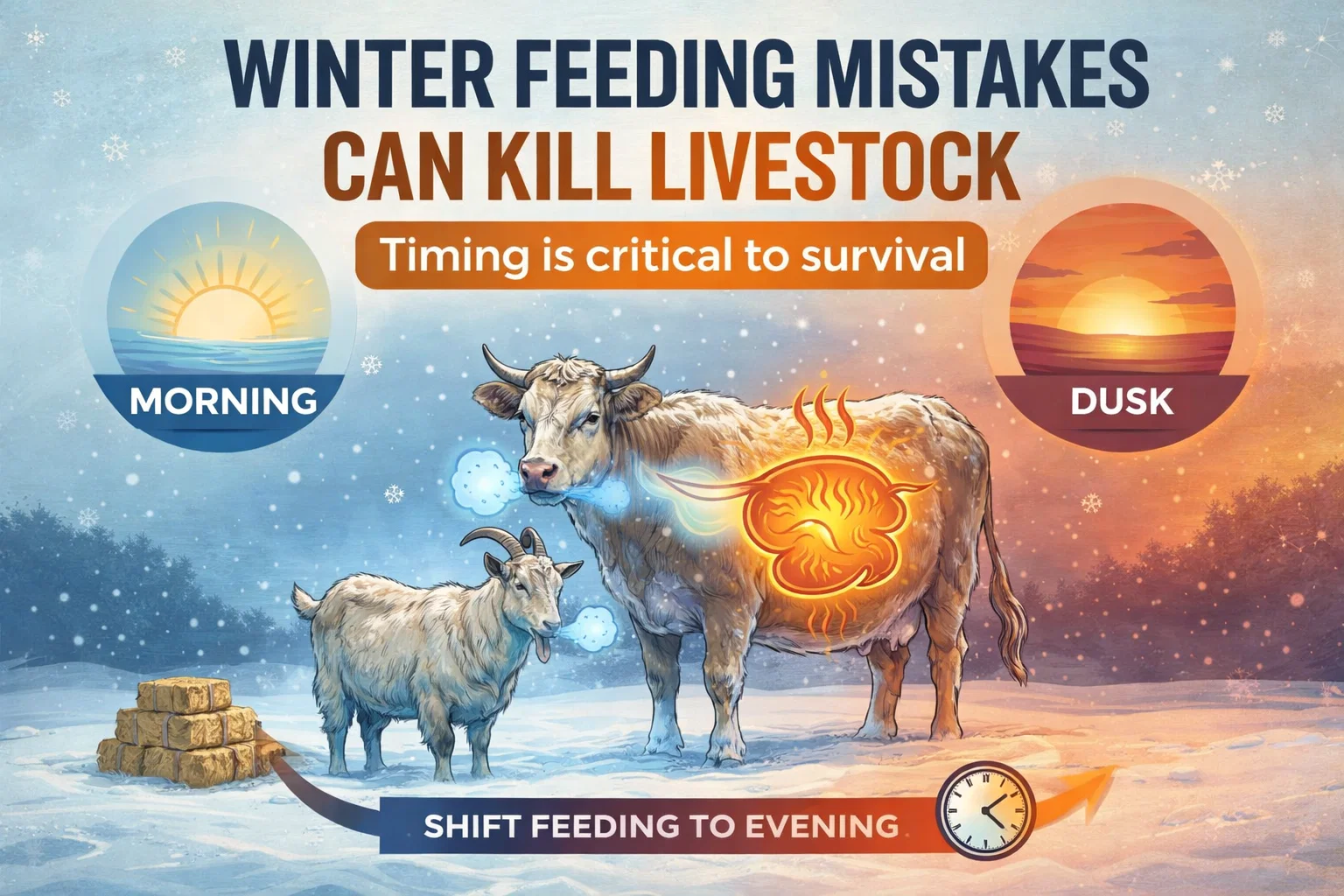
Winter Feeding Mistake Why Feeding at Dusk Saves Livestock in Freezing Weather
When the temperature drops and the snow begins to pile up, every livestock owner focuses on one thing: keeping their animals alive and healthy. Most of us head out to the barn with extra flakes of hay, thinking that more calories automatically equals more warmth. However, there is a hidden science to winter survival that many seasoned farmers overlook. It is not just about what you feed, but exactly when that feed hits the rumen. Understanding the internal mechanics of a cow or a goat during a freeze can be the difference between a thriving herd and a tragic morning discovery. This guide dives deep into the biology of winter feeding and why shifting your schedule might be the most important management decision you make this season.
The Science of the Internal Furnace
Livestock like cattle and goats are essentially walking fermentation vats. Their digestive systems, specifically the rumen, rely on microbial action to break down fibrous materials like hay and forage. This process of fermentation does more than just provide nutrition; it produces a significant amount of metabolic heat. In the world of animal husbandry, we often refer to this as the internal furnace. When an animal consumes a large portion of dry forage, the microbes go to work, and the byproduct of their labor is heat that radiates from the inside out.
The mistake many handlers make is feeding a large meal first thing in the morning. While this seems logical to us as humans who want a big breakfast to start the day, it creates a heat peak during the warmest part of the daylight hours. By the time the sun goes down and the true life threatening cold sets in, the fermentation process has slowed down, leaving the animal with a cooling core exactly when they need a boost the most.
Why Morning Feeding Can Be a Fatal Mistake
During a polar vortex or a standard winter cold snap, the midday sun often provides just enough ambient heat to keep livestock comfortable. If you provide the bulk of their ration at 7 AM, the heat generated by digestion peaks around noon or 1 PM. This is heat at the wrong time. The animal is already dealing with the warmest part of the twenty-four hour cycle, so that extra metabolic warmth is essentially wasted.
As evening approaches and the temperature plummeting below zero, the morning meal has already been processed. The rumen activity begins to quiet down, and the internal furnace flickers out. Without that internal heat source, the animal must rely entirely on its body fat reserves and external coat to maintain a safe core temperature. For young, old, or thin animals, this drop in core temperature can lead to hypothermia and death before the sun rises again.
The Danger of Core Temperature Drops
Once an animal’s core temperature begins to slide, its metabolic rate slows down. They become lethargic and less likely to stand up or seek out water. In extreme cold, if they aren’t generating heat from the inside, they start burning through their fat stores at an unsustainable rate. This is why you can see an animal with a full belly of hay still shivering or huddling in a way that suggests distress. They have the fuel in their system, but the timing of the burn was off.
Introducing the Cold Night Protocol Strip
To combat the risks of nocturnal freezing, many experts recommend a strategy known as the Cold Night Protocol. The concept is simple but incredibly effective: shift 60 to 70 percent of the daily feed ration to the dusk hours. Instead of a balanced split between morning and night, you are intentionally back loading the calories to coincide with the most dangerous part of the day.
By offering the majority of the hay between 5 PM and 7 PM, you are timing the digestive peak to hit right around 11 PM or midnight. This is typically when the ambient temperature reaches its lowest point. As the frost thickens outside, the animal’s rumen is roaring with activity, keeping their internal temperature steady and high. This allows them to sleep comfortably and reduces the physical stress on their heart and lungs.
Implementing the 5 PM to 7 PM Window
Consistency is key when making this shift. Rumen microbes are sensitive to sudden changes, so if you currently feed a heavy morning meal, transition to the dusk protocol over a few days. Start by moving 10 percent of the morning hay to the evening pile each day until you reach the desired 70 percent evening ratio. This ensures the microbes adapt and the animal doesn’t experience digestive upset during an already stressful weather event.
Managing Different Types of Forage
Not all hay is created equal when it comes to heat production. While high quality alfalfa is great for protein and milk production, it is actually the lower quality, stemmy grass hay that often does a better job of keeping an animal warm. This sounds counterintuitive, but the reason lies in the effort required for digestion. Coarse, fibrous material stays in the rumen longer and requires more microbial work to break down. This extended fermentation period results in a longer, more sustained heat release.
The Role of Straw and Bedding
While we are focusing on feeding, it is worth noting that providing extra straw during these dusk feedings serves a dual purpose. Animals will often pick through the straw for extra roughage, further fueling that internal furnace, while the remaining stalks provide a literal barrier between their bodies and the frozen ground. A well fed animal on a thick bed of straw is significantly more resilient than one standing on bare ground with a belly full of rapidly processed grain.
The Impact on Body Condition and Fat Reserves
One of the greatest benefits of the dusk feeding strategy is the preservation of body condition. When livestock have to use their own body fat to stay warm, they lose weight rapidly. This is particularly problematic for pregnant cows or goats who need those reserves for the upcoming kidding or calving season. By providing heat through fermentation, you are essentially providing a cheap, renewable energy source that protects their fat layers.
Farmers who utilize the dusk feeding protocol often report that their herds come out of winter in much better physical shape. They require less “catch up” feeding in the spring, and the offspring are often born stronger because the mother’s body wasn’t under constant thermal stress for months on end. It is a win-win situation that costs nothing but a change in your daily chores schedule.
Practical Tips for Nighttime Farm Management
Moving your primary feeding time to the evening does come with some logistical challenges. You might be feeding in the dark or in biting wind. However, the results are worth the extra effort. Make sure your feeding areas are well lit and accessible. If you use round bales, consider unrolling them shortly before dusk so every animal has equal access to the forage without having to fight for a spot at the feeder. Social stress can prevent submissive animals from getting their share of the “heat,” which puts them at higher risk of freezing.
Hydration is the Secret Ingredient
You cannot have effective fermentation without water. If an animal is dehydrated, their rumen slows down significantly, and the internal furnace will stall. Ensure that your water troughs are kept ice free during the night. Some producers even offer warm water during the dusk feeding to encourage maximum intake. If they don’t drink, they won’t eat, and if they don’t eat, they won’t stay warm.
The Different Outcomes: A Tale of Two Herds
Imagine two identical farms side by side. Both have the same breed of cattle, the same quality of hay, and the same windbreaks. Farm A feeds a massive breakfast at 6 AM and a small snack at 4 PM. Farm B feeds a light snack in the morning and a massive pile of hay at 6 PM. During a night where the temperature hits twenty below, the cattle on Farm A will be shivering, tucked into corners, and burning through expensive fat. The cattle on Farm B will be standing calmly, chewing their cud, with steam rising off their backs because their internal temperature is being maintained by the natural process of digestion.
The difference in survival and health isn’t about the amount of money spent on feed. It is entirely about the strategy of timing. This “mini insight” is what separates the masters of livestock management from those who struggle every winter. Survival is decided by the clock.
Conclusion: Small Changes, Big Results
Winter livestock management is often a game of inches. We look for every possible way to give our animals an edge against the elements. While windbreaks, barns, and heated waterers are all fantastic tools, the most powerful tool you have is the one inside the animal itself. By respecting the biology of the rumen and aligning your feeding schedule with the coldest hours of the night, you turn a simple bale of hay into a life saving heater.
This winter, don’t just work harder by hauling more hay. Work smarter by checking your watch. Shift that 60 to 70 percent of your forage to the dusk hours and watch how much more comfortably your herd handles the frost. It is a simple, effective, and scientifically proven method to ensure that every animal on your property makes it through to the green grass of spring. Your livestock depend on your timing, so make sure your protocol is ready for the next cold snap.