DIY Homemade Herbal Air Cleaner Natural Odor Absorber
Have you ever walked into a room and noticed a lingering, unpleasant smell that just will not go away? Many of us immediately reach for commercial room sprays, scented candles, or plug-in deodorizers to quickly mask the issue. However, those store-bought products are often packed with synthetic chemicals, volatile organic compounds, and artificial fragrances that simply cover up the problem rather than truly solving it. If you are passionate about natural remedies and creating a non-toxic environment in your living space, it is time to explore the practical power of home herbalism. Today, we are going to dive deep into a fantastic, entirely natural solution: the homemade herbal air cleaner utilizing the wonderfully simple cotton bowl method. This easy DIY project acts as a highly effective natural odor absorber, neutralizing bad smells at their source while infusing your home with a crisp, refreshing botanical scent.
Why You Should Ditch Synthetic Air Fresheners
Before we get into the exact recipe and method, it is important to understand why making the switch to natural odor absorbers is such a beneficial choice for your household. Most conventional air fresheners do not actually clean the air. Instead, they release a heavy blanket of synthetic perfume designed to overwhelm your olfactory senses, making you temporarily “smell blind” to the underlying odors. This process often introduces unwanted chemicals into your indoor air quality.
By shifting to natural remedies and herbal solutions, you are taking a proactive step toward a healthier home environment. Natural odor absorbers rely on the inherent chemical properties of simple, earth-derived ingredients to physically trap and neutralize odor molecules. You get the peace of mind knowing exactly what is evaporating into the air you breathe, all while enjoying the therapeutic, subtle aromas of pure essential oils and whole botanicals.
The Magic of the Cotton Bowl Method
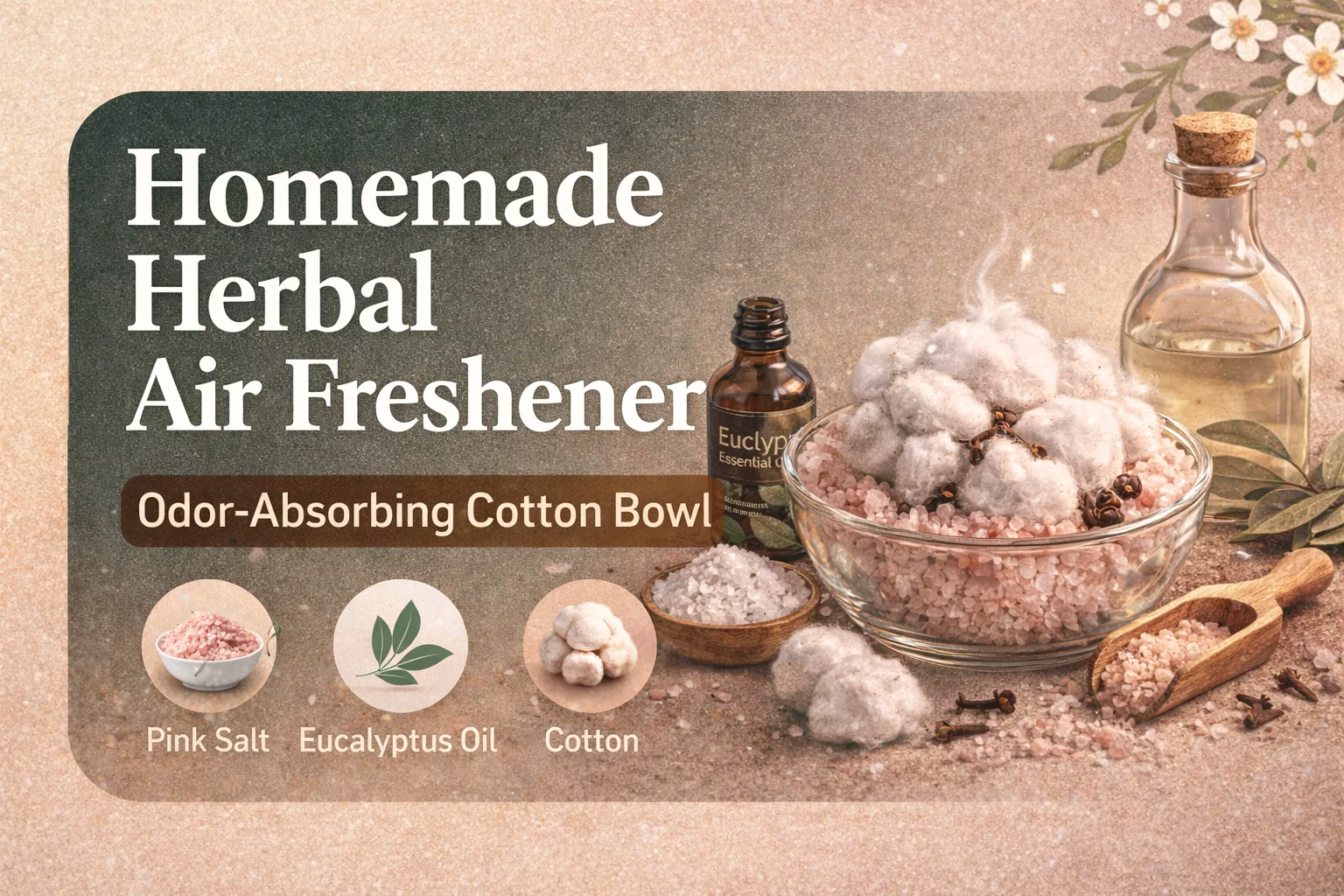
The cotton bowl method is a cornerstone of DIY home fragrance and natural deodorizing. It is incredibly budget-friendly, requires zero electricity, and utilizes items you likely already have tucked away in your kitchen pantry or bathroom cabinets. The concept is brilliantly simple: you create a highly absorbent base using porous materials and natural neutralizers, then use cotton balls as a diffusion mechanism for your chosen essential oils. The cotton holds the oils at the surface, allowing the scent to slowly and steadily evaporate into the room, while the base layer works continuously to pull impurities and odors out of the air.
Breaking Down Your Herbal Air Cleaner Ingredients
This specific recipe is a powerhouse of natural deodorizing. Let us look closely at each ingredient to understand exactly how this beautiful, natural mixture cleans the air in your home.
Pink Himalayan Salt: The Moisture Trap
Pink Himalayan salt serves as much more than just a culinary seasoning or a pretty pink aesthetic element. Salt is naturally hygroscopic. This means it has the ability to attract and hold onto water molecules from the surrounding environment. Odors often travel and linger in humid air. By pulling in microscopic moisture from the environment, the salt also traps the odor-causing particles suspended within that humidity. Two tablespoons of coarse pink salt form the perfect, structurally sound base for our deodorizing bowl.
Baking Soda: The Ultimate Odor Neutralizer
Sodium bicarbonate, commonly known as baking soda, is the undisputed champion of household cleaning and deodorizing. Baking soda works on a molecular level to bring both acidic and basic odor molecules into a more neutral state. Instead of just layering a flowery scent over the smell of last night’s dinner or funky gym shoes, baking soda alters the chemical structure of the odors, eliminating them completely. We use one tablespoon in this recipe to give the mixture serious odor-fighting power.
White Vinegar: The Fizzing Powerhouse
White vinegar is renowned in the natural cleaning world for its acidic properties, making it fantastic at breaking down alkaline odors. When you combine one to two tablespoons of white vinegar with the baking soda in this recipe, you will get a satisfying fizzing reaction. This gentle chemical reaction helps to activate the ingredients, expanding their surface area slightly and creating a dynamic mixture ready to tackle stale air.
Whole Cloves: Spicy Aroma and Purification
Adding five to six whole cloves to the bowl introduces a wonderful, warm, and spicy aromatic undertone. Cloves have been used for centuries in herbalism and natural home care for their purifying properties. They contain eugenol, a natural compound that provides that distinct, sharp scent, which pairs beautifully with the cleaner, more medicinal scents of the essential oils, creating a balanced and inviting room fragrance.
Eucalyptus Essential Oil: A Breath of Fresh Air
The star of the aromatic show is eucalyptus essential oil. You will need about eight to ten drops for this recipe. Eucalyptus is famous for its crisp, clean, and camphorous aroma that immediately makes a room feel fresher and more breathable. In traditional herbalism, eucalyptus is highly valued for its clarifying properties. When dropped onto the cotton balls, the oil slowly diffuses, replacing stale indoor air with a vibrant, uplifting botanical scent.
Step-by-Step Guide: How to Prepare Your Air Cleaner
Creating your homemade herbal air cleaner takes less than five minutes. Here is the step-by-step process to put this natural remedy together perfectly.
- Step 1: Choose Your Vessel. Find a small, open bowl or a shallow glass jar. Something wide and relatively shallow works best as it allows for maximum surface area exposure to the air.
- Step 2: Create the Base. Add two tablespoons of pink Himalayan salt and one tablespoon of baking soda into your chosen bowl. Mix them together gently until they are well combined.
- Step 3: Activate the Mixture. Slowly pour in one to two tablespoons of white vinegar. Pour carefully, as the mixture will fizz and bubble up slightly when the vinegar hits the baking soda. This is completely normal and exactly what you want to happen.
- Step 4: Add the Botanicals. Drop your five to six whole cloves directly into the salt and vinegar mixture.
- Step 5: Prepare the Cotton Diffusers. Take a few soft cotton balls and gently rest them right on top of the wet salt mixture.
- Step 6: Scent the Cotton. Carefully drop eight to ten drops of eucalyptus essential oil directly onto the dry tops of the cotton balls.
- Step 7: Position the Bowl. Place your finished herbal air cleaner in a strategic location where it can begin working its magic.
The Best Places to Use Your Natural Odor Absorber
Because this air cleaner is completely natural and does not require a plug-in or an open flame, it is incredibly versatile. You can place these little bowls almost anywhere in your home that needs a quick refresh.
The Bathroom: This is a classic location for odor absorbers. The eucalyptus scent provides a spa-like atmosphere, while the salt and baking soda work hard to neutralize damp, musty smells.
The Kitchen Corner: Keep a bowl near your trash can or compost bin to catch lingering food odors before they spread through the rest of the house.
The Shoe Rack or Mudroom: A notorious spot for tough smells. Placing a bowl right on or next to your shoe rack can significantly cut down on the odor of well-loved sneakers and work boots.
Closed Rooms and Closets: Rooms that do not get a lot of airflow, such as guest bedrooms, large storage closets, or laundry rooms, can quickly smell stale. This cotton bowl method is perfect for keeping these enclosed spaces smelling fresh and clean.
Maintenance and Longevity: How Long Does It Work?
One of the best things about this natural remedy is how low-maintenance it is. Once mixed, your homemade herbal air cleaner will remain highly effective for about five to seven days. During this time, the baking soda and salt will continuously pull odors from the air, and the cotton balls will steadily release the eucalyptus scent.
You will know it is time to replace the mixture when the eucalyptus smell completely fades away and you no longer notice that crisp freshness in the room. When that happens, simply toss the old mixture into the trash, quickly wash the bowl, and whip up a fresh batch in minutes. It is a wonderfully sustainable and affordable weekly routine to incorporate into your home care schedule.
Important Safety Tips for Natural Home Fragrances
While this recipe utilizes natural ingredients, it is always important to practice safe home herbalism. Please keep the following safety tips in mind when using your new air cleaner.
- Not a Medical Device: It is crucial to note that this is a natural odor absorber, not a medical-grade air purifier. It will not remove allergens, dust, or volatile organic compounds from the air in the way a true HEPA filter would. It is designed strictly for scent management and natural deodorizing.
- Keep Away from Pets: Many essential oils, including eucalyptus, can be toxic to cats and dogs if ingested or if the concentration in the air is too high. Always keep the bowl covered with a breathable mesh if necessary, or place it high up on a shelf where curious pets absolutely cannot reach it.
- Avoid Direct Skin Contact: Pure essential oils are highly concentrated. When dropping the oil onto the cotton balls, be careful not to get the undiluted oil directly on your skin, as it can cause irritation. If you do, wash the area thoroughly with soap and water.
- Use Oils Sparingly: Eight to ten drops is plenty for a small room. Using too much essential oil can overwhelm the space and potentially cause headaches, even if the oil is entirely natural. Start with less, and you can always add a drop or two more if you prefer a stronger scent.
Embrace Natural Herbalism in Your Home
Creating your own homemade herbal air cleaner is a deeply rewarding process. It is a small but impactful way to reduce your reliance on synthetic chemicals while actively engaging with the practical benefits of natural remedies and everyday herbalism. By utilizing the simple, natural science of baking soda, salt, and pure essential oils, you can easily maintain a home that smells as fresh and vibrant as a botanical garden. Give this cotton bowl method a try this weekend, experiment with different essential oil blends once you master the eucalyptus recipe, and enjoy the clean, natural atmosphere you have created in your own living space.