10 Best Drinks for Period Cramps Natural Remedies for Menstrual Pain
Period cramps, bloating, fatigue, and mood changes can make those days of the month feel more challenging. Fortunately, a few simple self-care habits, including choosing comforting drinks, staying hydrated, and getting enough rest, may help you feel more comfortable throughout your menstrual cycle. From warm ginger tea and refreshing mint tea to creamy banana shakes and soothing warm lemon honey water, there are plenty of easy drinks to enjoy during your period.
While no drink can guarantee relief from menstrual cramps, certain beverages can support hydration, provide nutrients, and offer warmth and comfort when you need it most. The key is to choose drinks that suit your body, fit your routine, and complement other effective period care strategies.
Key Takeaways
- Warm herbal drinks, such as ginger tea and mint tea, can be comforting during your period.
- Water and coconut water help maintain hydration, especially when you feel tired or unwell.
- Nutrient-rich drinks, including banana shakes and sattu drinks, can provide energy between meals.
- Ginger may help ease some menstrual discomfort, although evidence varies and more research is needed.
- Pair drinks with rest, gentle movement, balanced meals, and a heating pad for a more complete self-care routine.
- Severe or unusual menstrual pain deserves medical attention rather than relying on home remedies alone.
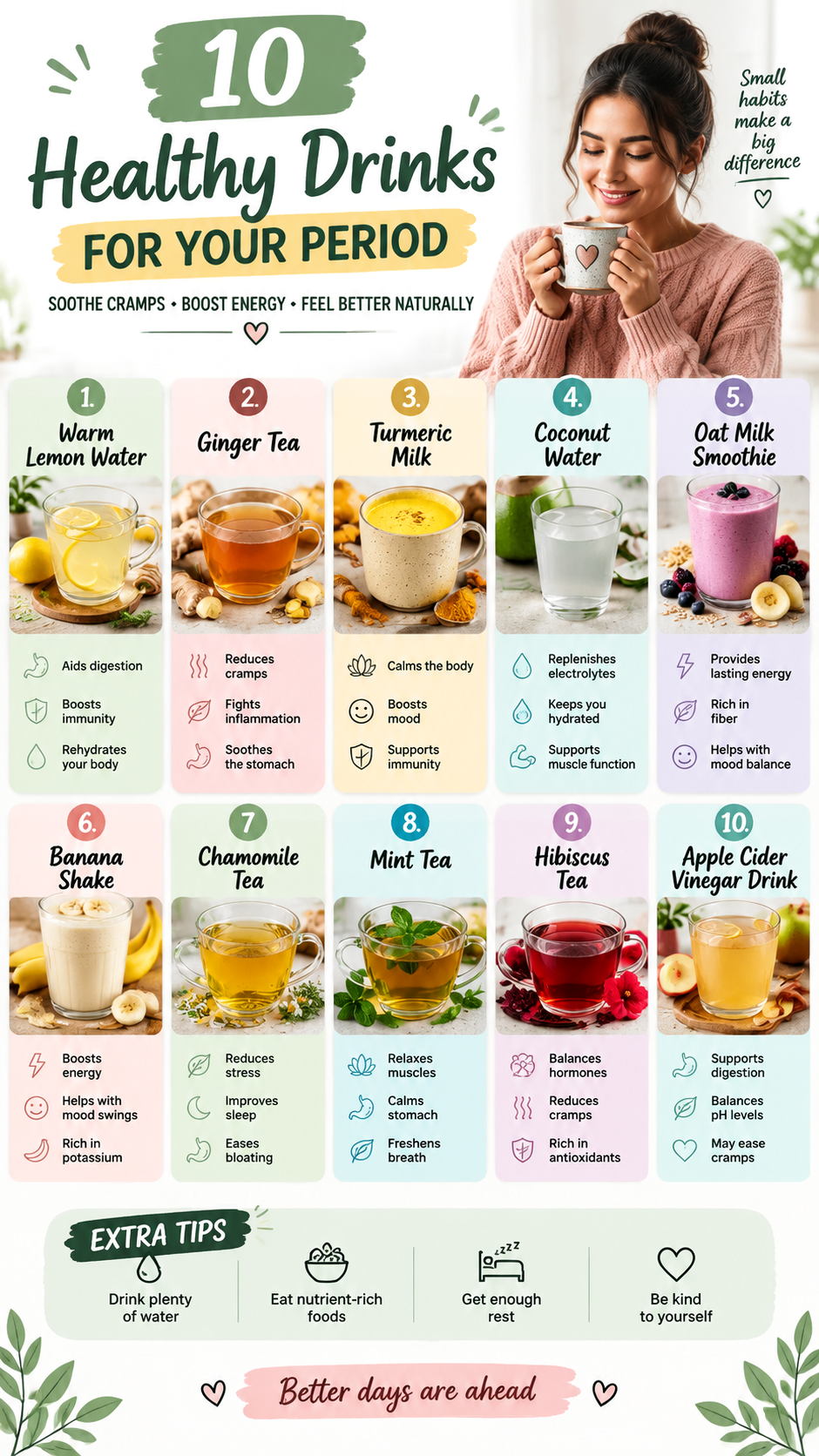
10 Best Drinks for Period Relief and Natural Comfort
If you are looking for drinks for period cramps, the options below offer a variety of flavors, ingredients, and nutritional benefits. Some are traditionally used to soothe digestive discomfort, while others provide fluids and energy. Try them individually and pay attention to how your body responds.
1. Warm Jeera Water for Bloating and Digestive Comfort
Jeera water, also known as cumin water, is a traditional beverage made by soaking or simmering cumin seeds in water. It has a mild, earthy flavor and is often enjoyed after meals as part of everyday digestive care.
Some people find warm jeera water soothing when period-related bloating or digestive discomfort makes them feel uncomfortable. Drinking it warm may also feel relaxing, especially when you prefer a gentle beverage instead of a cold drink.
How to Make Warm Jeera Water
- Add half a teaspoon of cumin seeds to one cup of water.
- Bring the mixture to a gentle simmer for approximately five minutes.
- Allow it to cool slightly, strain, and sip while comfortably warm.
Enjoy it plain, without adding excessive sugar. Although cumin water is a popular traditional remedy, strong clinical evidence that it directly relieves menstrual cramps is limited. Treat it as a comforting drink rather than a proven treatment.
2. Ginger Tea for Menstrual Cramp Relief
Ginger tea is one of the most popular drinks to try when period cramps leave you feeling uncomfortable. Made from fresh ginger or dried ginger, this warming beverage has a spicy flavor and can be enjoyed with or without lemon.
Ginger contains natural compounds called gingerols and shogaols. Research suggests that ginger may help reduce the severity of primary menstrual cramps for some people, although study quality and results vary. It may also be useful when nausea accompanies your period.
Easy Ginger Tea Recipe
- Slice a small piece of fresh ginger.
- Add it to one cup of water and simmer for five to ten minutes.
- Strain into a mug and add lemon or a little honey if desired.
Important: Ginger tea may offer comfort, and ginger has some promising evidence for menstrual pain, but it does not work for everyone. Concentrated ginger supplements can interact with medications and may not be suitable for everyone. If you take blood-thinning medication or have a relevant medical condition, ask a healthcare professional before using high-dose ginger products.
3. Haldi Milk for a Cozy Period Self-Care Routine
Haldi milk, commonly called turmeric milk or golden milk, is a warm beverage made with milk and turmeric. Some recipes also include cinnamon, ginger, or a small amount of honey.
Turmeric contains curcumin, a compound studied for its anti-inflammatory properties. However, research on turmeric specifically for menstrual cramps remains limited, and drinking turmeric milk should not be considered a proven way to stop period pain.
Milk can contribute protein and calcium, while fortified dairy alternatives may provide similar nutrients depending on the product. A warm mug can also become a relaxing part of your evening routine when fatigue or discomfort makes it difficult to unwind.
Simple Golden Milk Recipe
- Warm one cup of dairy milk or an unsweetened fortified alternative.
- Whisk in approximately a quarter teaspoon of turmeric.
- Add a pinch of cinnamon for flavor, if desired.
- Let the drink cool to a comfortable temperature before sipping.
Keep the recipe simple and avoid assuming that more turmeric means better results. Concentrated curcumin supplements can cause side effects and interact with some medications. Ordinary culinary amounts are a more practical choice for a comforting homemade drink.
4. Coconut Water for Hydration and Electrolytes
When you feel sluggish during your period, reaching for a refreshing drink can make it easier to maintain your fluid intake. Coconut water provides water and naturally occurring electrolytes, including potassium.
It is a convenient alternative to sugary soft drinks and may be especially appealing if you prefer a light, mildly sweet beverage. However, it is not a specific treatment for menstrual cramps, and most people can meet their hydration needs with ordinary drinking water.
Choose unsweetened coconut water when possible, and check the nutrition label for added sugars. Coconut water also contains potassium, so people who need to limit potassium because of kidney problems or certain medications should follow their healthcare professional’s advice.
5. Sattu Drink for Sustained Energy
Sattu is a roasted gram flour commonly used in South Asian cuisine. Mixed with water, it creates a filling drink that can be prepared in a sweet or savory style.
Because sattu is made from roasted legumes, it can provide plant-based protein, carbohydrates, and fiber. These nutrients can help make a snack or light meal more satisfying, which may be useful when your appetite changes or you feel hungry between meals during your period.
How to Prepare a Simple Sattu Drink
- Add one to two tablespoons of sattu to a glass of water.
- Whisk thoroughly until the mixture is smooth.
- For a savory version, add lemon juice, a pinch of cumin, and a little salt.
- For a sweet version, add a small amount of honey or another preferred sweetener.
Sattu can be a useful part of a balanced diet, but it does not directly prevent menstrual fatigue or weakness. Its nutritional value depends on the serving size and any additional ingredients. If legumes make you feel bloated, start with a small serving and see how you tolerate it.
6. Banana Shake for Energy and Nutrients
A banana shake is an easy option when you want something creamy, satisfying, and simple to prepare. Bananas provide carbohydrates, potassium, and vitamin B6, while milk or fortified alternatives can contribute protein and calcium.
Period-related fatigue may be more noticeable when you have not eaten enough, slept poorly, or experienced heavy menstrual bleeding. A banana shake can provide convenient nourishment when preparing a full meal feels like too much effort.
Quick Banana Shake Recipe
- Place one ripe banana in a blender.
- Add one cup of milk or an unsweetened fortified alternative.
- Blend until smooth.
- Add plain yogurt or a spoonful of nut butter if you want a more filling drink and tolerate those ingredients.
For a balanced option, avoid adding large amounts of sugar or sweetened syrups. Remember that a banana shake is a nutritious snack, not a cure for cramps. If heavy periods regularly leave you exhausted, speak with a healthcare professional about possible iron deficiency or anemia.
7. Saunf Water for a Gentle After-Meal Drink
Saunf water, or fennel seed water, is a traditional beverage made by steeping fennel seeds in hot water. Fennel has a lightly sweet, aromatic flavor that makes it an appealing alternative to stronger herbal teas.
Fennel has been studied for potential effects on menstrual pain, and some small studies suggest possible benefits. However, the evidence remains limited, and findings from studies using particular preparations cannot automatically be applied to a homemade cup of fennel water.
How to Make Saunf Water
- Add half a teaspoon of fennel seeds to a cup of hot water.
- Cover and steep for five to ten minutes.
- Strain the seeds and let the drink cool slightly before drinking.
Enjoy it in moderation as part of your regular routine. If you have a known allergy to fennel or related plants, or if you are pregnant or taking medication and considering concentrated fennel products, seek appropriate professional guidance.
8. Mint Tea to Support Relaxation and Digestive Comfort
Mint tea is refreshing, fragrant, and easy to make with fresh mint leaves or a tea bag. It can be enjoyed warm when you want something soothing or cooled for a refreshing alternative.
Some people find mint tea helpful for digestive discomfort, although evidence for peppermint is stronger for certain digestive conditions than for menstrual cramps themselves. The relaxing experience of sipping a warm drink may also help you slow down when period symptoms leave you feeling tense.
Fresh Mint Tea Recipe
- Rinse a small handful of fresh mint leaves.
- Add the leaves to a mug of hot water.
- Steep for five to seven minutes, then strain if preferred.
- Add lemon for extra flavor if desired.
One important consideration is that peppermint can worsen heartburn or acid reflux in some people. If you are prone to reflux, try a different drink if mint tea makes your symptoms worse.
9. Ajwain Water for Traditional Digestive Comfort
Ajwain, also known as carom seed, has a strong, distinctive flavor and is commonly used in South Asian cooking. Ajwain water is traditionally consumed after meals and is often associated with digestive comfort.
Some people choose it when they experience gas or a heavy feeling around their period. However, there is not enough strong clinical evidence to establish homemade ajwain water as a reliable treatment for severe menstrual cramps or other period symptoms.
Simple Ajwain Water Method
- Add a small pinch or approximately a quarter teaspoon of ajwain seeds to a cup of water.
- Simmer gently for several minutes.
- Strain and allow the drink to cool to a comfortable temperature.
Ajwain has a strong taste, so a small amount is a sensible starting point. Avoid concentrated preparations or large medicinal doses without professional advice, particularly if you take medication or have an existing health condition.
10. Warm Lemon Honey Water for a Comforting Start
Warm lemon honey water is a simple drink made with warm water, fresh lemon juice, and a little honey. It offers a pleasant balance of citrus flavor and gentle sweetness, making it an easy choice when you want something soothing without preparing a complicated recipe.
Water supports hydration, and lemon adds flavor along with a small amount of vitamin C. Honey can make the drink more enjoyable, but it is still an added sugar. Neither lemon nor honey has been established as a direct treatment for menstrual cramps.
How to Make Lemon Honey Water
- Pour one cup of warm, not boiling, water into a mug.
- Add a squeeze of fresh lemon juice.
- Stir in a small teaspoon of honey, or leave it out if you prefer.
- Sip slowly and adjust the flavor to your liking.
For sensitive teeth or frequent acid reflux, be mindful that lemon juice is acidic and may aggravate symptoms. Plain water is an equally good choice for hydration if citrus does not suit you.
Which Drinks Are Best for Different Period Symptoms?
Not every menstrual symptom responds to the same approach. Choosing a drink based on what you need can make your period self-care routine more practical.
- For a warm, soothing drink: Try ginger tea, mint tea, or warm lemon water.
- For hydration: Choose plain water or unsweetened coconut water.
- For a filling snack: Try a banana shake or a sattu drink.
- For an after-meal herbal drink: Consider mild jeera water or fennel water if you enjoy their flavors.
- For an evening comfort routine: Enjoy a warm cup of turmeric milk as part of a relaxing wind-down ritual.
Why This Matters
A drink can support comfort, hydration, and nutrition, but no beverage reliably treats every period symptom. Herbal remedies also vary in strength, and traditional use does not automatically prove effectiveness. Choose drinks you enjoy, maintain a balanced diet, and combine them with treatments that have better evidence when necessary.
Other Natural Ways to Ease Period Cramps
Drinks can be one part of menstrual self-care, but combining several supportive habits may be more helpful than relying on a single home remedy.
Use a Heating Pad
Applying gentle heat to your lower abdomen or lower back is a well-established self-care option for menstrual cramps. A heating pad or warm water bottle wrapped in a towel can help relax tense muscles and reduce discomfort. Avoid placing very hot objects directly against your skin, and do not fall asleep with an electric heating pad unless the product is specifically designed for safe overnight use.
Stay Hydrated Throughout the Day
Keep water nearby and drink regularly, especially if you are active, the weather is hot, or you have been vomiting. You do not need to force excessive amounts of water. Let thirst, activity level, and your individual health needs guide your intake.
Eat Balanced, Regular Meals
Try to include a combination of carbohydrates, protein, healthy fats, fruits, and vegetables. If your periods are heavy, foods containing iron, such as beans, lentils, leafy greens, and meat, can contribute to your dietary iron intake. Pairing plant sources of iron with vitamin C-rich foods may help your body absorb the iron.
Food and drinks alone may not correct iron deficiency. If you experience persistent tiredness, dizziness, shortness of breath, or unusually heavy bleeding, seek medical advice rather than starting high-dose iron supplements without guidance.
Try Gentle Movement
Light walking, stretching, gentle yoga, or other comfortable movement may ease cramps for some people. You do not need to push through significant pain or complete a demanding workout. Choose an activity that feels manageable, and rest when your body needs it.
Prioritize Rest and Stress Management
Menstrual discomfort can make sleep and concentration more difficult. Create a calm bedtime routine, take breaks when possible, and try slow breathing or another relaxation technique you enjoy. Reducing stress will not necessarily stop cramps, but feeling rested and supported can make difficult days easier to manage.
Pro Tip: If menstrual cramps interfere with your daily activities, ask a healthcare professional about evidence-based treatments. Anti-inflammatory medicines such as ibuprofen or naproxen can help many people with period pain, but they are not suitable for everyone. A clinician or pharmacist can help you determine whether these medicines are safe for you.
Drinks and Habits to Limit During Your Period
You do not need to follow strict food rules during menstruation. However, a few thoughtful choices may help you feel more comfortable.
- Excessive caffeine: Coffee and energy drinks may interfere with sleep or worsen anxiety and palpitations in sensitive individuals. You do not necessarily need to eliminate caffeine, but consider reducing it if you notice these effects.
- Very sugary drinks: Frequent consumption of sweetened beverages can displace more nutritious choices. Try water, unsweetened tea, or lightly flavored water more often.
- Alcohol: Alcohol can affect sleep and hydration and may worsen how you feel. Limiting or avoiding it can be a useful self-care choice.
- Drinks that trigger digestive symptoms: Milk, citrus, carbonated drinks, or particular herbal ingredients may bother some people. Pay attention to your own tolerance rather than assuming the same foods affect everyone.
- Unverified herbal mixtures: Avoid products that promise instant relief, detoxification, or a guaranteed cure for menstrual pain. Some concentrated herbal products can cause side effects or interact with medicines.
When Should You Seek Medical Advice for Period Pain?
Period cramps are common, but severe pain should not automatically be dismissed as a normal part of menstruation. Conditions such as endometriosis, adenomyosis, fibroids, or pelvic infections can cause significant menstrual or pelvic pain and may require treatment.
Consider arranging a medical appointment if your cramps regularly disrupt school, work, sleep, or everyday activities; become progressively worse; occur outside your period; or do not improve with usual self-care. It is also worth discussing periods that are consistently very heavy or unusually long.
Seek urgent medical care if you experience sudden, severe pelvic pain, fainting, fever with pelvic pain, or very heavy bleeding accompanied by weakness or dizziness. If pregnancy is possible and you develop severe pain or bleeding, seek prompt medical assessment.
Tracking your cycle, symptoms, bleeding, and the remedies you try can help you identify patterns and provide useful information during an appointment.
Quick Points: Your Period Drink Checklist
- Choose ginger tea or mint tea if you enjoy warm herbal drinks.
- Drink water regularly and consider unsweetened coconut water for variety.
- Try a banana shake or sattu drink when you want a more filling option.
- Pair your drink with gentle heat, rest, balanced meals, and comfortable movement.
- Seek medical advice for severe, worsening, or disruptive menstrual pain.
Conclusion: Find the Drinks That Make Your Period Days Easier
The best drinks for period relief are the ones that support your hydration, fit your nutritional needs, and help you feel comfortable. Ginger tea, turmeric milk, coconut water, sattu drinks, banana shakes, mint tea, and warm lemon honey water all offer different flavors and practical benefits. Jeera water, fennel water, and ajwain water are also traditional options for people who enjoy herbal beverages.
Remember that hydration and good nutrition can support your overall well-being, but they cannot guarantee freedom from menstrual cramps. Some ingredients have promising but limited evidence for specific symptoms, while others mainly provide comfort or nutrients. There is no need to drink all ten beverages or follow a complicated routine. Start with one or two that appeal to you and notice how your body responds.
Most importantly, be kind to yourself during your period. Give yourself permission to rest, choose nourishing foods, use heat when needed, and seek effective treatment if the pain is interfering with your life. A few small habits can make your monthly self-care routine feel more manageable, one comforting cup at a time.
Tags
Drinks for Period Cramps
Natural Period Relief
Menstrual Cramp Relief
Ginger Tea Benefits
Period Self-Care
PMS Relief Tips
Healthy Drinks for Women
Menstrual Health