12 Hair Care Tips Before Bed for Healthier, Shinier Hair Overnight
Healthy, beautiful hair starts with the little things you do every day, and your nighttime routine is an excellent place to begin. While you sleep, your hair can experience friction from your pillowcase, tangles from tossing and turning, and breakage caused by tight hairstyles. The good news is that a few simple bedtime hair care habits can help protect your strands, keep your hair manageable, and make your morning routine easier.
Whether you have long, short, straight, wavy, or curly hair, creating a gentle nighttime routine does not have to be complicated. From detangling carefully and using a loose braid to protecting your ends and choosing a smooth pillowcase, small changes can make a noticeable difference in how you care for your hair.
If you want to wake up with smoother, more manageable hair, these 12 hair care tips before bed will help you build a practical routine that fits comfortably into your evening.
Key Takeaways
- Gently detangle your hair before bed to reduce knots and unnecessary pulling.
- Choose loose hairstyles, such as a relaxed braid, to minimize tension and friction.
- Consider a silk or satin pillowcase to help reduce friction while you sleep.
- Avoid going to bed with soaking-wet hair whenever possible.
- Use suitable hair products sparingly, focusing on dry or damaged ends when needed.
- Make your nighttime routine consistent, comfortable, and appropriate for your hair type.
Why Your Nighttime Hair Care Routine Matters
Your hair goes through more than you might realize while you sleep. As you change positions, your strands rub against your pillowcase and one another. This repeated friction can contribute to tangles, frizz, and breakage, particularly if your hair is long, chemically treated, curly, or already damaged.
A bedtime hair care routine helps you prepare your hair for several hours of movement and contact with bedding. It also gives you an opportunity to address dryness, protect delicate ends, and keep your scalp comfortable.
You do not need an expensive collection of products to get started. A gentle brush or wide-tooth comb, a soft hair tie, a suitable pillowcase, and a few minutes of attention can be enough to create a useful routine.
Important: Healthy hair care is about reducing avoidable damage, not following a perfect routine. Genetics, hair texture, styling practices, and overall hair condition all influence your results. Choose habits that protect your hair without creating unnecessary tension or buildup.
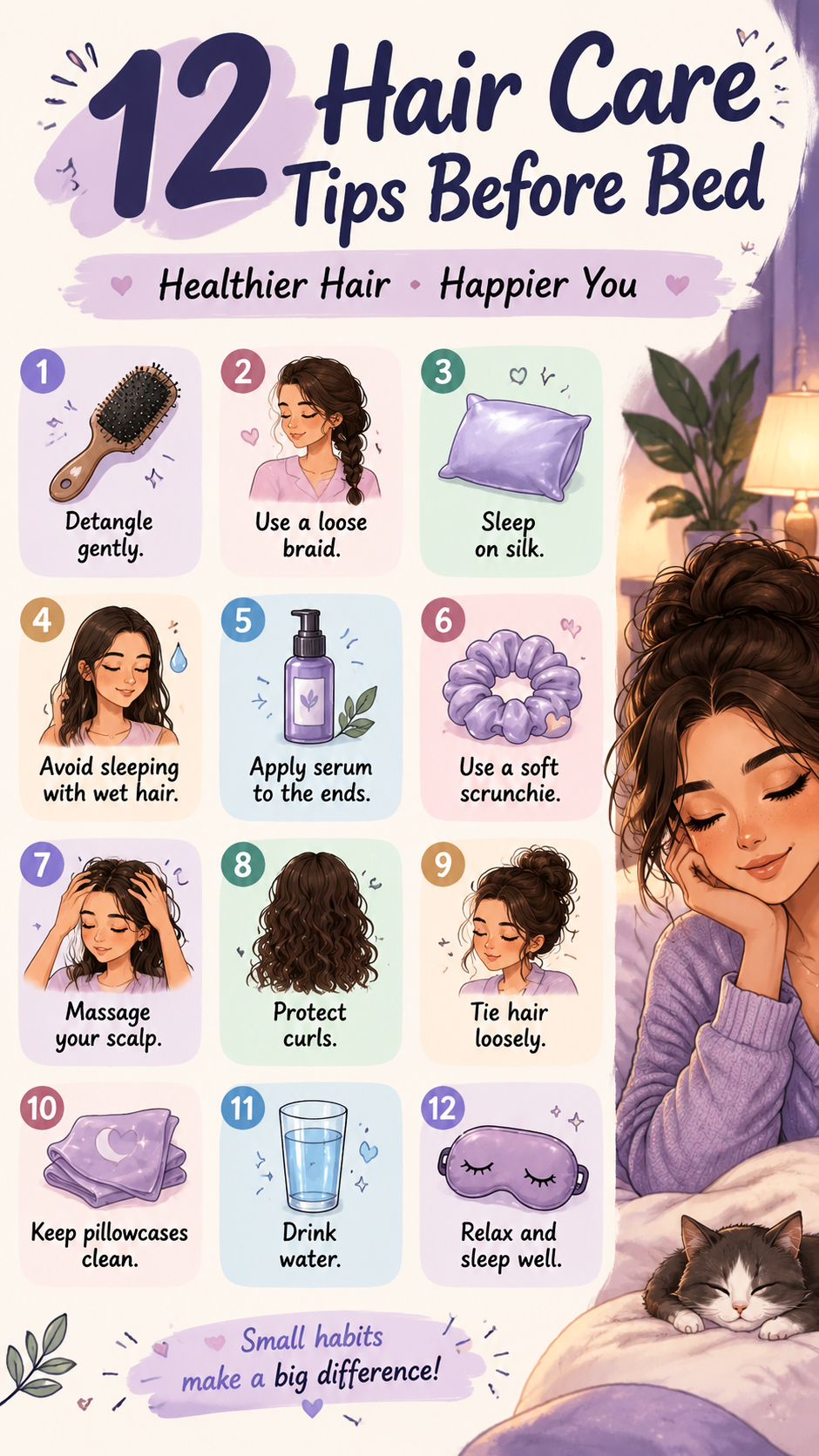
12 Hair Care Tips Before Bed for Healthier Hair
1. Detangle Your Hair Gently
One of the easiest ways to improve your nighttime hair routine is to remove tangles before going to sleep. Knots can become tighter overnight, making them more difficult to remove in the morning. Pulling aggressively through tangled hair can also cause unnecessary breakage.
Start at the ends and gradually work upward toward the roots. This technique allows you to loosen smaller knots before they become caught in larger sections of hair.
- Use a wide-tooth comb or a detangling brush suited to your hair type.
- Hold the section you are working on to reduce pulling at the scalp.
- Work slowly through stubborn knots instead of forcing the brush through them.
- Use a suitable detangling product if your hair tends to knot easily.
If you have curly or coily hair, you may prefer detangling when your hair is damp and conditioned rather than brushing it dry. The best method depends on your natural texture and styling preferences.
2. Put Your Hair in a Loose Braid
A loose braid is a practical bedtime hairstyle for anyone who wants to keep longer hair organized overnight. It helps contain the strands, reduces tangling, and can make morning styling easier.
Before braiding, gently detangle your hair and divide it into three sections. Braid loosely enough that your scalp feels comfortable and the hair around your hairline is not pulled tightly.
You can choose a traditional three-strand braid, a relaxed side braid, or two loose braids if that arrangement works better for your hair length and texture.
Avoid securing the braid too tightly or using an elastic that catches and pulls on your strands. The goal is to keep your hair together without placing unnecessary stress on the roots.
3. Consider Sleeping on a Silk or Satin Pillowcase
Your pillowcase is an often-overlooked part of your nighttime hair care routine. Traditional cotton pillowcases can create friction as your head moves during sleep. A smooth silk or satin surface may help reduce that friction for some hair types.
Less friction can make it easier to manage tangles and may help reduce the appearance of frizz. This can be especially useful for long hair, curls, waves, and strands that are prone to breakage.
Silk and satin are not identical materials. Silk is a natural fiber, while satin describes a type of weave that can be made from different fibers, including polyester. Both can provide a smooth sleeping surface when the fabric is well made.
You do not need to replace every item in your bedroom to benefit from a smoother pillowcase. Start with one that feels comfortable, washes easily, and suits your budget.
4. Avoid Going to Bed With Soaking-Wet Hair
Wet hair is more vulnerable to stretching and mechanical damage than dry hair. Sleeping with soaking-wet strands can also leave your hair tangled and make your pillow damp for hours.
Whenever possible, wash your hair early enough in the evening to allow it to dry before bedtime. Gently squeeze out excess water with a soft microfiber towel or a clean cotton T-shirt rather than rubbing your hair vigorously.
If you use a hair dryer, choose a suitable temperature and avoid concentrating intense heat on one section for too long. A heat protectant can help reduce styling-related damage when used according to its instructions.
If you must sleep before your hair is completely dry, avoid tight hairstyles and allow as much drying as practical. Make sure your scalp and hair are not trapped in a tightly wrapped, damp style.
5. Apply a Small Amount of Serum to Your Ends
The ends of your hair are generally older than the strands close to your scalp, which means they may have experienced more brushing, heat styling, coloring, and environmental exposure. As a result, they can become dry, rough, or prone to splitting.
A lightweight hair serum or leave-in product can help improve smoothness, reduce friction, and make the ends easier to manage. Depending on its ingredients, a product may also help control frizz and add shine.
Start with a small amount and distribute it through the mid-lengths and ends, following the product instructions. Applying too much can make fine hair look greasy or weigh down curls.
Pro Tip: Focus on what your hair actually needs. Fine hair may respond best to a lightweight serum, while thick, coarse, or curly hair may benefit from a richer leave-in conditioner. No product can permanently repair split ends, so damaged ends may eventually need trimming.
6. Use a Soft Scrunchie
If you prefer to tie your hair back before sleeping, choose a soft scrunchie instead of a tight elastic that grips individual strands. Fabric-covered hair ties can help reduce snagging when used gently.
Look for a scrunchie that holds your hair securely without requiring several tight wraps. Silk, satin, and other smooth fabrics are popular options for bedtime hairstyles.
You can use a scrunchie to secure a loose ponytail, a relaxed bun, or the end of a braid. Avoid tying your hair in the same tight position every night, especially if you notice tension around your hairline.
If a hairstyle causes scalp discomfort, headaches, or pulling, loosen it or leave your hair down. Comfort is an important part of a sustainable hair care routine.
7. Massage Your Scalp Gently
A relaxing scalp massage can be a calming way to end your day. Using the pads of your fingertips, make small circular movements across your scalp for a few minutes.
Work around the sides, crown, and back of your head without scratching or pressing hard. The movement should feel comfortable and soothing rather than painful.
Some people enjoy using a scalp massage as part of their wind-down routine because it encourages them to slow down before bed. However, scalp massage alone is not a proven solution for hair loss or a guarantee of faster hair growth.
If you use scalp oils or treatments, choose products appropriate for your scalp and wash them out as directed. Heavy products may cause buildup or irritation in some people, particularly when used too frequently.
8. Protect Your Natural Curls
Curly and coily hair often needs a different nighttime routine from straight hair. The bends and curves of individual strands can make tangling and dryness more noticeable, so preserving your natural curl pattern may require extra care.
One option is to gather longer curls into a loose high ponytail, sometimes called a pineapple hairstyle. Use a soft scrunchie and avoid pulling the hair tightly at the roots. Depending on your curl pattern, a loose braid or several gentle twists may work better.
A satin or silk bonnet can provide another layer of protection, while a smooth pillowcase offers a simple alternative if you prefer not to wear a covering.
- Detangle using a method suited to your curl pattern.
- Use a leave-in conditioner if your hair benefits from additional moisture.
- Avoid brushing dry curls if it disrupts your preferred curl pattern.
- Choose a protective style that does not flatten or pull your curls excessively.
The right routine should preserve your hair’s natural shape while keeping it comfortable overnight. Experiment with gentle methods and keep the ones that make morning styling easier.
9. Tie Your Hair Loosely
Keeping your hair away from your face can be helpful during sleep, but the way you secure it matters. Tight ponytails, buns, and braids can place repeated tension on the hairline and roots.
Choose a relaxed hairstyle that keeps your hair manageable without pulling. A loose bun secured with a soft scrunchie or a low, relaxed braid may work well for longer hair.
If your hair is short, leaving it down may be the simplest option. You can still reduce friction by using a smooth pillowcase and keeping your bedding clean.
Try changing the position of your hairstyle from night to night rather than repeatedly placing tension on the same areas. If you notice thinning around the temples or hairline, reconsider tight hairstyles and seek professional advice if the problem persists.
10. Keep Your Pillowcases Clean
Clean bedding is an important part of personal care. Pillowcases collect natural skin oils, sweat, dead skin cells, and residue from hair products over time.
Changing your pillowcase regularly helps maintain a clean surface for your hair and skin. How often you need to wash it depends on your routine, skin needs, sweating, and the products you use.
If you apply oils, serums, or styling products before bed, you may find that your pillowcase needs washing more frequently. Follow the fabric’s care instructions to preserve its texture and quality.
Keep a spare pillowcase available so that changing your bedding does not become an inconvenience. A simple laundry habit can make your nighttime routine feel fresher without requiring additional beauty products.
11. Stay Hydrated Throughout the Day
Drinking enough water supports normal body function, and staying hydrated is an important part of general well-being. Keeping a glass of water nearby can be a useful reminder to drink if you feel thirsty in the evening.
However, drinking extra water immediately before bed will not directly make your hair grow faster or repair damaged strands. Hair condition is influenced by several factors, including genetics, nutrition, hair care practices, and overall health.
Instead of trying to compensate for the whole day at night, make hydration a regular habit. Drink water throughout the day according to your needs, and avoid forcing yourself to drink excessive amounts before sleeping.
A balanced diet that supplies adequate protein, vitamins, minerals, and other essential nutrients also contributes to normal hair growth. If you experience unexplained hair shedding, avoid starting supplements without understanding whether you actually have a deficiency.
12. Relax and Get Consistent Sleep
Your final bedtime hair care tip is to make room for relaxation. A comfortable sleep environment and a consistent bedtime routine can support better sleep habits, which contribute to overall well-being.
Try dimming the lights, putting away stimulating activities, and choosing a calming activity before bed. A warm drink without caffeine, gentle stretching, or a few minutes of quiet reading may help you settle down.
Sleep is not a magic treatment for split ends, dryness, or hair loss, but taking care of your general health supports the conditions your body needs to function normally. Pair restful habits with gentle hair handling, a balanced diet, and a routine that fits your lifestyle.
Remember that your hair does not need a complicated ritual every evening. A few consistent habits are often easier to maintain than a long routine filled with products and unnecessary steps.
Expert Insight: Personalize Your Nighttime Routine
The most effective bedtime hair care routine is one that matches your hair texture, condition, and styling habits. You do not need to use all 12 tips every night.
- For fine hair: Choose lightweight products and avoid heavy oils that leave your roots looking greasy.
- For curly or coily hair: Prioritize gentle detangling, moisture when needed, and friction-reducing protection.
- For damaged or color-treated hair: Minimize heat, rough towel drying, tight hairstyles, and unnecessary pulling.
How to Build a Simple Nighttime Hair Care Routine
Now that you know the essential bedtime hair care tips, you can turn them into a routine that takes only a few minutes. The key is to keep the process manageable and avoid adding steps that your hair does not need.
Your Five-Minute Bedtime Hair Routine
- Check your hair: Make sure it is dry enough for your preferred bedtime hairstyle.
- Remove tangles: Use a gentle detangling method that suits your texture.
- Add suitable care: Apply a small amount of leave-in product or serum if your hair needs it.
- Choose a protective style: Braid, twist, or loosely tie your hair without creating tension.
- Prepare your sleeping space: Use clean bedding and a smooth pillowcase if you prefer one.
Some evenings may require additional time, especially if you wash your hair or follow a detailed curly hair routine. On other nights, detangling gently and choosing a comfortable hairstyle may be enough.
Common Nighttime Hair Care Mistakes to Avoid
Even a well-intentioned hair care routine can become counterproductive if it involves too much tension, excessive product use, or unnecessary handling.
- Brushing aggressively: Pulling through knots can cause breakage, especially when hair is fragile.
- Using tight hairstyles: Repeated tension can damage the hairline and contribute to traction-related hair loss.
- Applying too much oil or serum: Excess product may create buildup or leave hair heavy and greasy.
- Sleeping with soaking-wet hair: Wet strands are more vulnerable to mechanical damage, and damp bedding can be uncomfortable.
- Ignoring scalp irritation: Persistent itching, redness, or flaking may require a change in products or advice from a healthcare professional.
- Expecting overnight growth: Hair care habits can help minimize damage, but they cannot transform hair length or density in a single night.
One of the most valuable habits is learning to recognize what your hair responds to. If a product makes your scalp uncomfortable or a hairstyle leaves your roots sore, change your approach instead of pushing through the discomfort.
Choosing the Right Bedtime Hair Care Products
You can create a useful nighttime hair routine with only a few basic items. The right choices depend on your hair type, how often you wash it, and whether you use heat or chemical treatments.
A Gentle Detangling Tool
Look for a brush or comb that moves through your hair without excessive pulling. Wide-tooth combs are often helpful for detangling textured or wet hair when used with care, while some people prefer flexible detangling brushes for dry hair.
A Soft Hair Tie or Scrunchie
Choose a comfortable accessory without rough seams or exposed parts that catch your hair. The ideal scrunchie should hold your hairstyle without requiring excessive tension.
A Lightweight Leave-In Product
A leave-in conditioner or serum may help improve manageability, depending on your hair’s needs. Check the directions and begin with a small amount. If your scalp becomes irritated or your hair feels coated, reduce use or discontinue the product.
A Smooth Pillowcase
Silk and satin pillowcases are popular options for reducing friction. Choose a fabric that feels comfortable against your skin and is practical to clean. A soft bonnet or scarf may be another option if it fits securely without feeling tight.
Remember that no single product is essential for everyone. Your routine should focus on gentle handling, suitable moisture, and avoiding repeated damage rather than collecting as many hair care products as possible.
How Long Does It Take to Notice a Difference?
You may notice that your hair feels easier to manage after just a few nights of gentler detangling or wearing a loose braid. Reduced tangling can make your morning routine less frustrating, while a smooth pillowcase may help some people notice less friction-related frizz.
Longer-term improvements depend on your starting hair condition and how consistently you avoid damaging practices. Hair that is already split, severely damaged, or breaking frequently may need a trim or a more comprehensive change in styling habits.
It is also helpful to distinguish between hair growth and hair retention. Hair growth occurs at the scalp, while retention refers to keeping the length you have by minimizing breakage. A careful bedtime routine primarily supports hair protection and manageability rather than directly accelerating growth.
If you experience sudden, persistent, or patchy hair loss, significant scalp irritation, or unusual changes in your hair, consider speaking with a dermatologist or another qualified healthcare professional. A nighttime routine can support everyday care, but it cannot diagnose or treat every cause of hair loss.
Quick Points: Your Bedtime Hair Care Checklist
At a Glance
- Detangle gently before sleeping.
- Keep braids, buns, and ponytails loose.
- Use a smooth pillowcase to help minimize friction.
- Avoid sleeping with soaking-wet hair when possible.
- Apply only the products your hair needs.
- Make relaxation and consistent sleep part of your evening routine.
Conclusion: Small Nighttime Habits Can Support Healthier Hair
Creating a bedtime hair care routine is a simple way to give your hair a little extra attention without making your evenings feel complicated. Gentle detangling, loose hairstyles, a suitable pillowcase, and thoughtful product use can help reduce unnecessary friction and make your hair easier to manage.
The best routine is the one that works with your natural hair texture and fits comfortably into your life. You might find that a loose braid and a satin pillowcase are enough, or you may prefer adding a lightweight serum and a few minutes of scalp massage. There is no need to follow every tip if it does not suit your hair.
Start with two or three habits that address your biggest concerns, such as tangles, dryness, frizz, or breakage. Give yourself time to discover what works, and adjust your routine as your hair’s needs change.
Beautiful hair care begins with consistency, not perfection. Make your nighttime routine a calming part of your day, treat your strands gently, and enjoy waking up to hair that feels easier to manage. Save these 12 bedtime hair care tips and revisit them whenever you want to refresh your routine.
Tags
Bedtime Hair Care
Healthy Hair Tips
Nighttime Hair Routine
Hair Breakage Prevention
Silk Pillowcase Benefits
Curly Hair Care
Hair Protection Tips
Healthy Hair Routine