15 Wild Herb Recipes for Healthy Cooking, Herbal Remedies Natural Living
Wild edible plants have long been appreciated for their fresh flavors, seasonal appeal, and versatility in the kitchen. One of the most interesting spring greens is ground elder, often called giersch in many parts of Europe. While some gardeners see it as a persistent plant, many home cooks and foraging enthusiasts value its tender young leaves for creating delicious recipes ranging from pesto and soups to herbal drinks and spreads. Learning how to prepare this leafy green opens the door to flavorful meals while making the most of naturally growing ingredients.
Key Takeaways
- Ground elder is a versatile edible herb with many culinary uses.
- Young leaves offer the best texture and mildest flavor.
- It works well in both cooked and fresh recipes.
- Simple homemade preparations maximize freshness.
- Responsible identification and harvesting are essential.
Why Ground Elder Is Becoming Popular Again
Interest in edible wild plants continues to grow as more people explore seasonal cooking, sustainable lifestyles, and natural ingredients. Ground elder has found a place in modern kitchens because it combines convenience with nutrition and fresh herbal flavor.
Its young leaves have a pleasant taste that many people compare to a blend of parsley, celery, and spinach. This balanced flavor makes it suitable for everything from light salads to creamy soups.
Important: Harvest only plants that you can confidently identify. Many wild plants have lookalikes, so proper identification is the most important step before using any foraged ingredient in the kitchen.
Understanding the Best Time to Harvest
The quality of ground elder depends greatly on timing. Fresh spring growth is usually the most tender, making it perfect for raw preparations. As leaves mature, they develop a stronger taste and firmer texture, making them better suited for cooking.
Look for Young Leaves
- Bright green color
- Soft texture
- Fresh aroma
- No visible damage
- Recently emerged shoots
Collecting only what you need also helps preserve healthy growing areas while ensuring the freshest possible ingredients.
Delicious Ways to Use Ground Elder
The greatest strength of this herb is its flexibility. It can become the main ingredient or simply add a fresh herbal note to familiar recipes.
Homemade Pesto
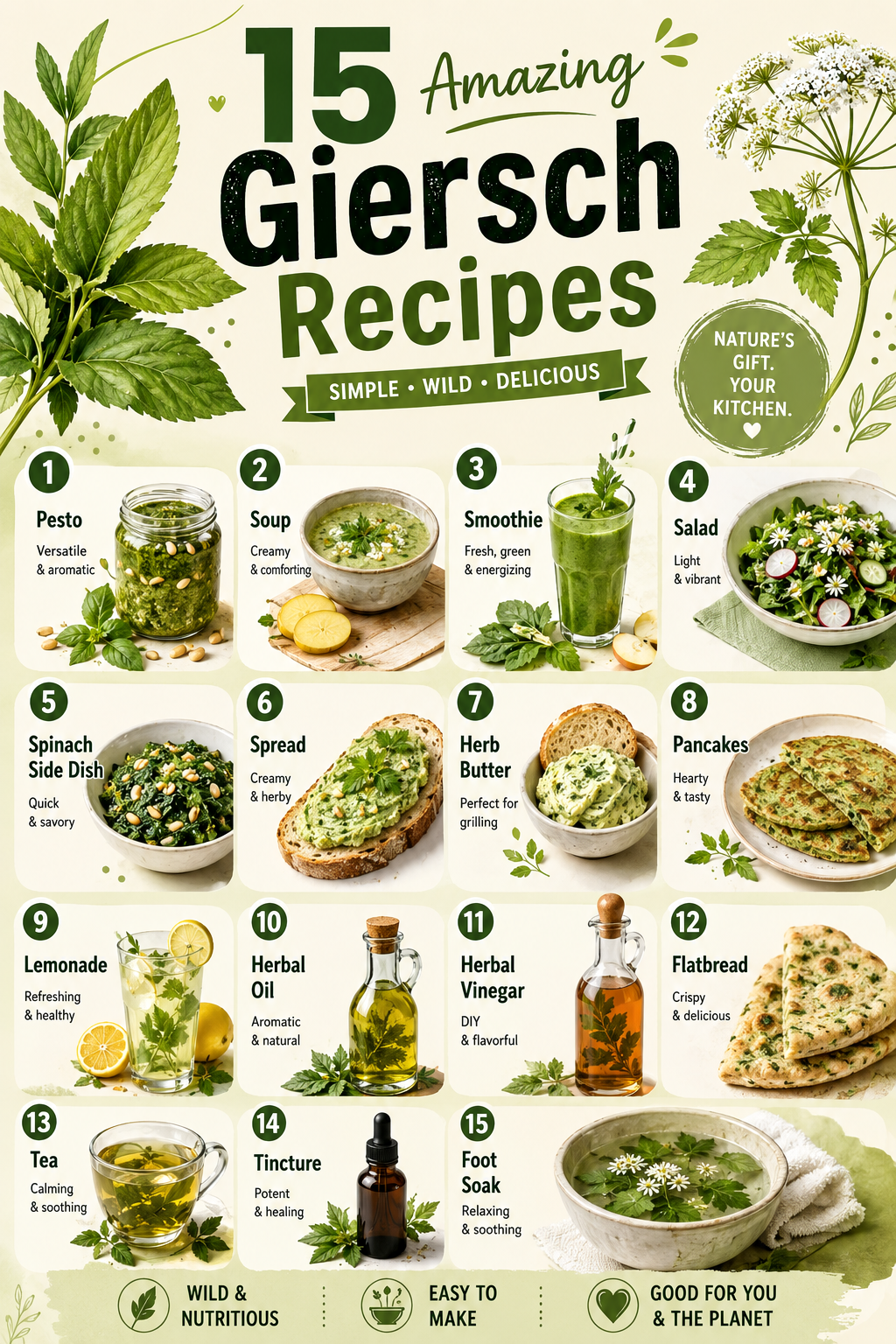
A vibrant pesto is one of the easiest introductions to ground elder. Blend young leaves with olive oil, garlic, nuts or seeds, grated cheese if desired, and lemon juice. The result is a fresh spread for sandwiches, pasta, roasted vegetables, or crackers.
Creamy Soup
Ground elder pairs beautifully with potatoes, onions, vegetable broth, and cream or a dairy-free alternative. Blend everything until smooth for a comforting spring soup.
Refreshing Smoothies
Add a handful of tender leaves to smoothies with banana, apple, cucumber, spinach, or citrus fruit for extra freshness.
Expert Insight
Ground elder works best when treated like a fresh herb rather than a dominant vegetable. Combining it with familiar ingredients creates balanced flavors that appeal to both beginners and experienced home cooks.
Creative Everyday Recipes
Fresh Salads
Mix chopped leaves with lettuce, cucumber, radishes, tomatoes, and a simple vinaigrette for a crisp seasonal salad.
Herb Butter
Blend softened butter with finely chopped leaves, garlic, lemon zest, and black pepper. It is excellent on grilled vegetables, baked potatoes, or fresh bread.
Savory Spread
Combine chopped ground elder with cream cheese, Greek yogurt, or cottage cheese for a quick sandwich filling or vegetable dip.
Cooked Greens
Prepare the leaves similarly to spinach by gently sautéing them with garlic and olive oil. This simple side dish pairs well with grains, roasted vegetables, and eggs.
Pro Tip: If you are new to cooking with wild herbs, start by replacing only a portion of spinach or parsley in your favorite recipes. This makes the flavor approachable while still highlighting the freshness of the herb.
Homemade Herbal Infusions
Ground elder can also be infused into oils and vinegars. These preparations add subtle herbal notes to salad dressings, roasted vegetables, and marinades.
Herb Oil
Infusing quality olive oil with fresh herbs creates an aromatic finishing oil that enhances countless dishes.
Herbal Vinegar
Fresh leaves steeped in vinegar provide a bright ingredient for homemade dressings and sauces.
Baking with Fresh Herbs
Ground elder can also be incorporated into savory pancakes, flatbreads, muffins, and homemade crackers. Chopped leaves distribute evenly throughout the dough while adding color and subtle herbal flavor.
Simple Wellness Inspired Preparations
Many people enjoy preparing herbal teas or relaxing foot soaks using fresh garden herbs as part of a calming self care routine. While herbs have a long history of traditional use, wellness practices should complement, not replace, professional medical advice when health concerns arise.
Important: If you are pregnant, nursing, taking medications, or have underlying medical conditions, consult a qualified healthcare professional before consuming unfamiliar herbs in significant amounts.
Storage Tips
- Wrap fresh leaves in a damp paper towel.
- Store in the refrigerator.
- Wash just before using.
- Freeze pesto for longer storage.
- Dry leaves for culinary seasoning if desired.
Kitchen Pairings
Ground elder pairs wonderfully with potatoes, peas, asparagus, mushrooms, eggs, cream cheese, yogurt, lemon, garlic, walnuts, sunflower seeds, almonds, fresh bread, whole grains, and olive oil. Combining it with these ingredients creates balanced meals that celebrate seasonal flavors.
Tips for Beginners
- Learn accurate plant identification before harvesting.
- Harvest young leaves whenever possible.
- Start with familiar recipes.
- Use fresh herbs the same day for maximum flavor.
- Experiment with small batches before making larger recipes.
Quick Points
- Young leaves provide the best flavor.
- Pesto and soups are excellent beginner recipes.
- Fresh herbs enhance salads and spreads.
- Responsible foraging is always the first priority.
Conclusion
Ground elder demonstrates how everyday wild plants can become exciting kitchen ingredients when used thoughtfully. Whether blended into pesto, stirred into soups, folded into herb butter, infused into oils, or added to fresh salads, its versatility offers countless opportunities to enjoy seasonal cooking. By harvesting responsibly, choosing tender young leaves, and experimenting with simple recipes, you can discover fresh flavors while embracing a more nature inspired approach to home cooking.
Tags
Wild Herbs Ground Elder Foraging Healthy Recipes Herbal Cooking Seasonal Food Natural Living Home Cooking