Weekly Life Admin Checklist Simple Tasks for a More Organized and Stress-Free Week
Life can feel overwhelming when everyday responsibilities pile up. Between paying bills, keeping your home organized, managing work deadlines, planning meals, and finding time for yourself, it is easy to feel like there is always something left to do. A weekly life admin checklist can make these responsibilities feel more manageable by turning scattered tasks into a simple, organized routine.
Instead of waiting until everything becomes urgent, you can set aside a little time each week to review your finances, refresh your living space, prepare for work, and check in with your personal goals. These small actions help you feel more prepared for the days ahead without spending your entire weekend catching up on chores.
The best part is that you do not need a complicated planner or an elaborate productivity system. A straightforward weekly checklist can help you focus on what matters, reduce mental clutter, and create a smoother transition into a new week.
Key Takeaways
- Use a weekly life admin checklist to organize finances, home tasks, work responsibilities, and personal priorities.
- Schedule a short weekly reset instead of letting small responsibilities accumulate.
- Prepare grocery lists, meals, and household essentials before the week begins.
- Review upcoming appointments, deadlines, habits, and personal goals.
- Keep your routine flexible and focus on progress rather than perfection.
- Make self-care and rest part of your plan instead of treating them as optional extras.
What Is a Weekly Life Admin Checklist?
A weekly life admin checklist is a practical list of recurring responsibilities that help you keep your everyday life running smoothly. It brings together the small but important tasks that often get overlooked when your schedule becomes busy.
These responsibilities may not always feel urgent, but taking care of them regularly can prevent unnecessary stress. Checking your bank balance, organizing your calendar, restocking household supplies, and planning meals are all examples of life admin tasks that become easier when you have a consistent routine.
Think of your checklist as a personal reset button. Rather than trying to remember every responsibility throughout the week, you create one place to review what needs attention and decide when to handle it.
Why Everyday Tasks Deserve Their Own Checklist
Life admin often happens in the background. You might remember that a bill needs to be paid while cooking dinner, realize that you are running out of laundry detergent while getting ready for work, or suddenly remember an upcoming appointment when you are already busy.
Keeping these responsibilities in your head takes attention away from the things you would rather focus on. A checklist gives each task a place, allowing you to stop mentally rehearsing everything you need to do.
It also makes progress easier to recognize. When you can see what you have completed, your efforts feel more tangible, even if you only managed a few small tasks that day.
1. Review Your Finances and Weekly Budget
Financial tasks are an important part of a weekly life admin routine. You do not need to spend hours reviewing every transaction. A brief check-in can help you understand where your money is going, identify upcoming expenses, and stay aware of your financial priorities.
Choose a consistent day to review your accounts and make sure your budget still reflects your needs for the coming week.
Your Weekly Finance Checklist
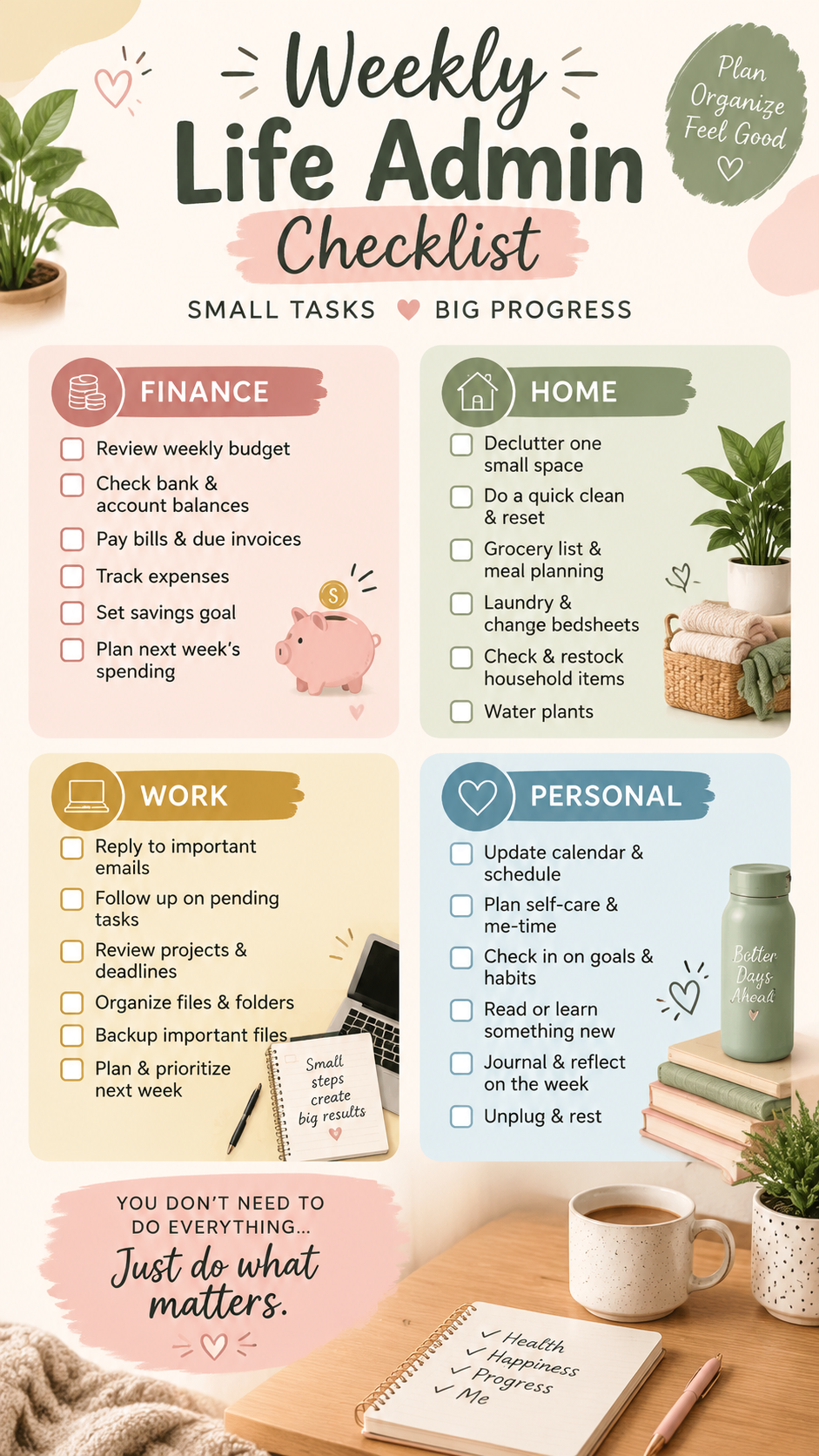
- Review your weekly budget: Check how much you planned to spend and compare it with your actual spending.
- Check bank and account balances: Make sure your available funds align with your upcoming expenses.
- Pay bills and review due dates: Handle payments that are due and note upcoming deadlines.
- Track your expenses: Record purchases so you can identify patterns and unnecessary spending.
- Set or review a savings goal: Choose a realistic amount to save when your budget allows.
- Plan next week’s spending: Account for groceries, transportation, appointments, and other expected costs.
A weekly financial check-in is especially helpful when you are trying to build better spending habits. It gives you an opportunity to notice small changes before they become larger problems.
Make Budgeting Feel Less Overwhelming
You can keep this routine simple by using a notebook, spreadsheet, budgeting app, or printed finance tracker. Choose a method that is easy to maintain rather than one that requires extensive setup.
Start with your current balance, essential expenses, and expected income. Then review any discretionary spending and decide whether adjustments are needed for the next week.
Important: Your weekly budget should help you make informed decisions, not make you feel guilty about every purchase. Focus on awareness, realistic limits, and steady progress toward your financial goals.
2. Reset Your Home for a Fresh Start
A comfortable, organized home can make everyday routines feel easier. You do not need to deep-clean every room each week to enjoy a tidier space. Instead, focus on a few high-impact tasks that help your home function well.
The goal of a weekly home reset is to remove small obstacles before they build up. A clear kitchen counter, clean laundry, and a prepared grocery list can make the beginning of the week feel much more manageable.
Your Weekly Home Checklist
- Declutter one small space: Choose a drawer, countertop, entryway, or shelf rather than tackling the entire house.
- Do a quick clean and reset: Wipe frequently used surfaces, put items away, and refresh shared spaces.
- Create a grocery list: Check your refrigerator, pantry, and freezer before shopping.
- Plan your meals: Choose a few simple meals based on your schedule and available ingredients.
- Wash laundry and change bedsheets: Prioritize the items you need for the coming week.
- Check and restock household essentials: Review cleaning supplies, toiletries, and other frequently used products.
- Water your plants: Check which plants need attention according to their individual care requirements.
Use Small Cleaning Sessions to Stay Consistent
One of the easiest ways to maintain an organized home is to divide larger responsibilities into smaller tasks. Instead of spending several hours cleaning everything on one day, assign a few minutes to the areas that need attention most.
For example, you could organize your desk on Saturday, refresh the kitchen on Sunday, and handle laundry before the workweek begins. Your schedule can change depending on your household, energy level, and commitments.
Pro Tip: Use the one-space rule when you feel overwhelmed. Choose a single small area and finish resetting it before moving on. Completing one manageable task can make it easier to continue without turning your entire day into a cleaning marathon.
3. Organize Work Tasks and Prepare for the Week
A little preparation can make your workweek feel less chaotic. When important emails, unfinished projects, and upcoming deadlines are competing for your attention, it helps to review everything in one place.
Your weekly work reset should focus on clarity. Identify what needs to be completed, determine which tasks are most important, and make sure essential documents are organized and accessible.
Your Weekly Work Checklist
- Reply to important emails: Address messages that require a response or decision.
- Follow up on pending tasks: Check in on outstanding requests and responsibilities.
- Review projects and deadlines: Identify upcoming milestones and any work that needs extra attention.
- Organize files and folders: Put documents in sensible locations and remove unnecessary clutter.
- Back up important files: Make sure essential work is stored securely using an appropriate backup method.
- Plan and prioritize next week’s work: Choose the tasks that deserve your attention first.
Create a Realistic Priority List
Writing down everything you need to do can be useful, but a long list without priorities may leave you feeling overwhelmed. Divide your work into three categories: essential tasks, important tasks, and tasks that can wait.
Essential tasks might include an approaching deadline or a time-sensitive email. Important tasks may contribute to a longer-term project. Tasks that can wait are those that do not require immediate attention.
Once you have sorted your list, choose a few priorities for the next workday. This gives you a clear starting point and reduces the time spent deciding what to do first.
Why This Matters
A weekly work review helps connect your daily activities with your larger goals. Instead of reacting to every new message, you can approach the week with a clearer sense of direction.
- Identify deadlines before they become urgent.
- Reduce time spent searching for documents and information.
- Protect space for focused work instead of filling every available hour with tasks.
4. Prioritize Personal Goals, Self-Care, and Rest
Personal responsibilities deserve a place on your weekly checklist, too. It is easy to spend your time managing bills, completing chores, and meeting work expectations while forgetting about your own needs.
A balanced weekly reset includes opportunities to rest, learn, reflect, and reconnect with the activities that make you feel like yourself. These tasks may not have deadlines, but they still contribute to a satisfying and sustainable routine.
Your Weekly Personal Checklist
- Update your calendar: Review appointments, personal commitments, and important dates.
- Schedule self-care and personal time: Make room for activities that help you recharge.
- Check in on your goals and habits: Notice what is working and what needs adjustment.
- Read or learn something new: Set aside time for a book, a useful skill, or a topic that interests you.
- Journal and reflect: Write down a few thoughts about the week, including challenges and positive moments.
- Unplug and rest: Create space away from screens, notifications, and unfinished tasks.
Make Self-Care Practical
Self-care does not need to involve expensive products, elaborate routines, or a perfectly planned day. It can be as simple as reading for fifteen minutes, taking a relaxing shower, enjoying a quiet cup of tea, spending time outdoors, or going to bed at a reasonable hour.
Consider what you need most in the coming week. If your schedule looks particularly busy, you might prioritize an earlier bedtime and a few quiet breaks. If you have been feeling disconnected from your goals, you might set aside time to journal or review your progress.
The important thing is to treat personal time as a legitimate part of your routine rather than something you can only enjoy after every other responsibility has been completed.
Use Reflection to Build Better Habits
A short weekly reflection can help you recognize patterns without judging yourself. Ask a few simple questions:
- What went well this week?
- Which task caused unnecessary stress?
- What would make next week easier?
- Did I make time for the things that matter to me?
- Is there anything I can simplify, postpone, or stop doing?
You do not need to answer every question in detail. Even a few sentences can help you understand your priorities and make more intentional decisions.
How to Create a Weekly Life Admin Routine That Works
Having a checklist is a helpful starting point, but the real benefit comes from using it consistently. The best routine is one that fits your schedule and feels manageable even during a busy week.
Step 1: Choose a Weekly Reset Day
Pick a day and time when you can review your responsibilities without feeling rushed. Many people prefer Sunday because it creates a natural transition into Monday, but Friday evening or Saturday morning may work better for your schedule.
Try to choose a regular time rather than waiting until you feel motivated. A consistent appointment with yourself makes it easier to turn life admin into a familiar habit.
Step 2: Group Similar Tasks Together
Organize your checklist into categories such as finance, home, work, and personal life. This simple structure makes it easier to identify what needs attention without jumping between unrelated responsibilities.
You can also group similar activities. Review bills and balances together, handle household restocking while preparing your grocery list, and organize your calendar while planning work priorities.
Step 3: Set a Time Limit
Decide how much time you realistically want to spend on your weekly reset. You might start with twenty minutes and extend the session when necessary. Some weeks will require more attention than others, so leave room for flexibility.
Use a timer if it helps you stay focused. When the time is up, finish any genuinely urgent task and move on. You can schedule remaining items for another day rather than allowing the checklist to take over your entire weekend.
Step 4: Choose Your Essential Tasks
Not every item on your checklist needs to be completed every week. Some responsibilities depend on your current circumstances, while others may only need attention once or twice a month.
Identify the tasks that are most important for the upcoming week. Paying a bill before its due date, preparing for a major deadline, and buying essential groceries may take priority over reorganizing a decorative shelf.
Keep the remaining tasks available as optional items. This allows you to adjust your routine without feeling as though you have failed whenever something gets postponed.
Step 5: Prepare for Monday Before You Finish
End your weekly reset by looking at the first day of the upcoming week. Check your calendar, identify your most important task, and prepare anything you will need in advance.
You might set out your work essentials, prepare a lunch, charge your devices, or write a short to-do list. These small preparations can make your morning feel more organized and reduce the number of decisions you need to make.
A Simple Weekly Life Admin Checklist You Can Reuse
If you prefer a ready-to-use routine, start with the checklist below. Copy it into your planner, add it to a notes app, or print it for your home workspace. Adjust the tasks to suit your household, work schedule, and personal goals.
Finance
- Review your weekly budget.
- Check bank balances and account activity.
- Pay bills that are due.
- Track expenses and upcoming purchases.
- Review savings goals.
- Plan next week’s spending.
Home
- Declutter one small space.
- Clean and reset frequently used areas.
- Plan meals and prepare a grocery list.
- Complete essential laundry.
- Change bedsheets when needed.
- Restock household supplies.
- Check which plants need watering.
Work
- Reply to important emails.
- Follow up on outstanding requests.
- Review projects and deadlines.
- Organize digital files.
- Back up important documents.
- Choose priorities for the coming week.
Personal
- Review your calendar and appointments.
- Schedule self-care and personal time.
- Check in on your goals and habits.
- Read, learn, or practice a skill.
- Reflect on the past week.
- Make time to unplug and rest.
Remember that this checklist is a guide, not a strict set of rules. You can remove irrelevant items, add responsibilities specific to your life, and change the order whenever your priorities shift.
Common Weekly Planning Mistakes to Avoid
Even a simple life admin routine can become stressful if you approach it with unrealistic expectations. Keep these common mistakes in mind as you develop a routine that works for you.
Trying to Complete Everything at Once
A long checklist can make you feel productive at first, but it can quickly become overwhelming if every item seems equally important. Start with the tasks that will have the greatest impact on the coming week.
If you finish those priorities and have additional time, move on to optional tasks. If not, you can still end your reset knowing that you addressed the essentials.
Making the System Too Complicated
You do not need multiple planners, complicated tracking methods, or a separate app for every category. A simple checklist that you actually use is more valuable than an elaborate system that becomes another responsibility.
Choose one main place to manage your weekly tasks. If you prefer paper, use a notebook or printable planner. If you prefer digital tools, a basic notes app or calendar may be enough.
Ignoring Rest and Unexpected Changes
Some weeks will be more demanding than others. Work may become busier, family responsibilities may change, or you may simply need more time to recover. Your weekly routine should be flexible enough to accommodate these realities.
When your schedule changes, revisit your priorities instead of forcing yourself to follow the original plan. Essential responsibilities can remain on the list while less urgent tasks move to another day.
Remember: The purpose of a weekly life admin checklist is to make your life easier, not to create another standard you must meet perfectly. A partially completed checklist that supports your well-being is better than a rigid routine that leaves you exhausted.
How to Make Your Weekly Reset More Enjoyable
Your weekly reset does not have to feel like another work session. A few small changes can make the routine more inviting and easier to maintain over time.
Create a Calm Planning Space
Find a comfortable place where you can review your checklist without too many distractions. A tidy desk, a favorite notebook, and a warm drink can help create a pleasant atmosphere.
You can also use a printed weekly planner with separate sections for finances, home, work, and personal goals. Clear categories make your responsibilities easier to review and help you see which areas need attention.
Make Your Progress Visible
Check off each task as you complete it. This simple action provides a visual reminder of the work you have already done and makes it easier to recognize progress that might otherwise go unnoticed.
At the end of your reset, look at what you accomplished rather than focusing only on what remains. Give yourself credit for managing the responsibilities that mattered most.
Celebrate Small Wins
After completing your weekly checklist, reward yourself with something simple and enjoyable. You might watch a favorite show, take a relaxing walk, read a few chapters of a book, or enjoy an uninterrupted evening.
Connecting your weekly reset with a positive experience can make it feel less like a chore and more like a helpful ritual for preparing your life for the days ahead.
Weekly Life Admin at a Glance
Your Quick Reset Guide
- Finance: Review your budget, balances, bills, and spending plans.
- Home: Tidy one area, plan meals, and restock essentials.
- Work: Review deadlines, handle important emails, and choose priorities.
- Personal: Update your calendar, reflect on goals, and schedule self-care.
- Mindset: Keep your expectations realistic and celebrate progress over perfection.
Conclusion: Small Tasks Today, a Smoother Week Ahead
A weekly life admin checklist is a simple way to bring more structure, clarity, and calm into your everyday routine. By reviewing your finances, resetting your home, organizing your work, and making room for personal well-being, you can approach the coming week with greater confidence.
You do not have to overhaul your entire life in one afternoon. Start with a few practical tasks, choose a regular time for your weekly reset, and adjust your checklist as your needs change. Over time, these small habits can help you stay aware of important responsibilities without allowing them to dominate your thoughts.
Most importantly, remember that being organized is not about doing everything perfectly. It is about creating routines that support the life you want to live. Some weeks, that may mean completing every essential task. Other weeks, it may mean paying the most important bills, preparing a few meals, and giving yourself permission to rest.
Use this weekly life admin checklist as a starting point, personalize it to fit your lifestyle, and return to it whenever you need a fresh start. Take one small step today, and give your future self a little more breathing room. Save this checklist for your next weekly reset and make planning a calmer, more intentional week a habit you can look forward to.
Tags
Weekly Life Admin
Weekly Checklist
Weekly Reset
Home Organization
Budget Planning
Productivity Tips
Self-Care Routine
Life Organization