8 Things Making Your Home Smell Bad and Easy Fixes for a Fresher Space
Every home should feel fresh, comfortable, and inviting. However, unpleasant odors can slowly build up from everyday habits and common household areas that often go unnoticed. A strange smell in your living space does not always mean something is seriously wrong. In many cases, it comes from small sources like overflowing bins, forgotten leftovers, damp fabrics, or poor airflow.
Learning what causes bad smells in your home is the first step toward creating a cleaner and healthier environment. With a few simple cleaning habits and regular maintenance, you can eliminate odors before they become a bigger problem and enjoy a naturally fresh-smelling space every day.
Key Takeaways
- Household odors often come from hidden everyday sources.
- Regular cleaning prevents smells from becoming trapped in your home.
- Fresh air and proper drying help reduce moisture-related odors.
- Small daily habits can keep your home smelling pleasant.
- Natural solutions like ventilation and baking soda can help absorb unwanted smells.
Why Homes Develop Unpleasant Odors
A home is a place where cooking, relaxing, cleaning, and daily activities happen. Over time, food particles, moisture, dust, and bacteria can collect in different areas and create unpleasant scents. Some odors are obvious, while others slowly develop until you become aware of them when returning home after being away.
Important: A consistently fresh home is not about using strong fragrances to cover bad smells. The best approach is identifying the source of the odor and removing it through proper cleaning and maintenance.
Understanding the most common causes of bad smells allows you to target problem areas and build a more effective home cleaning routine.
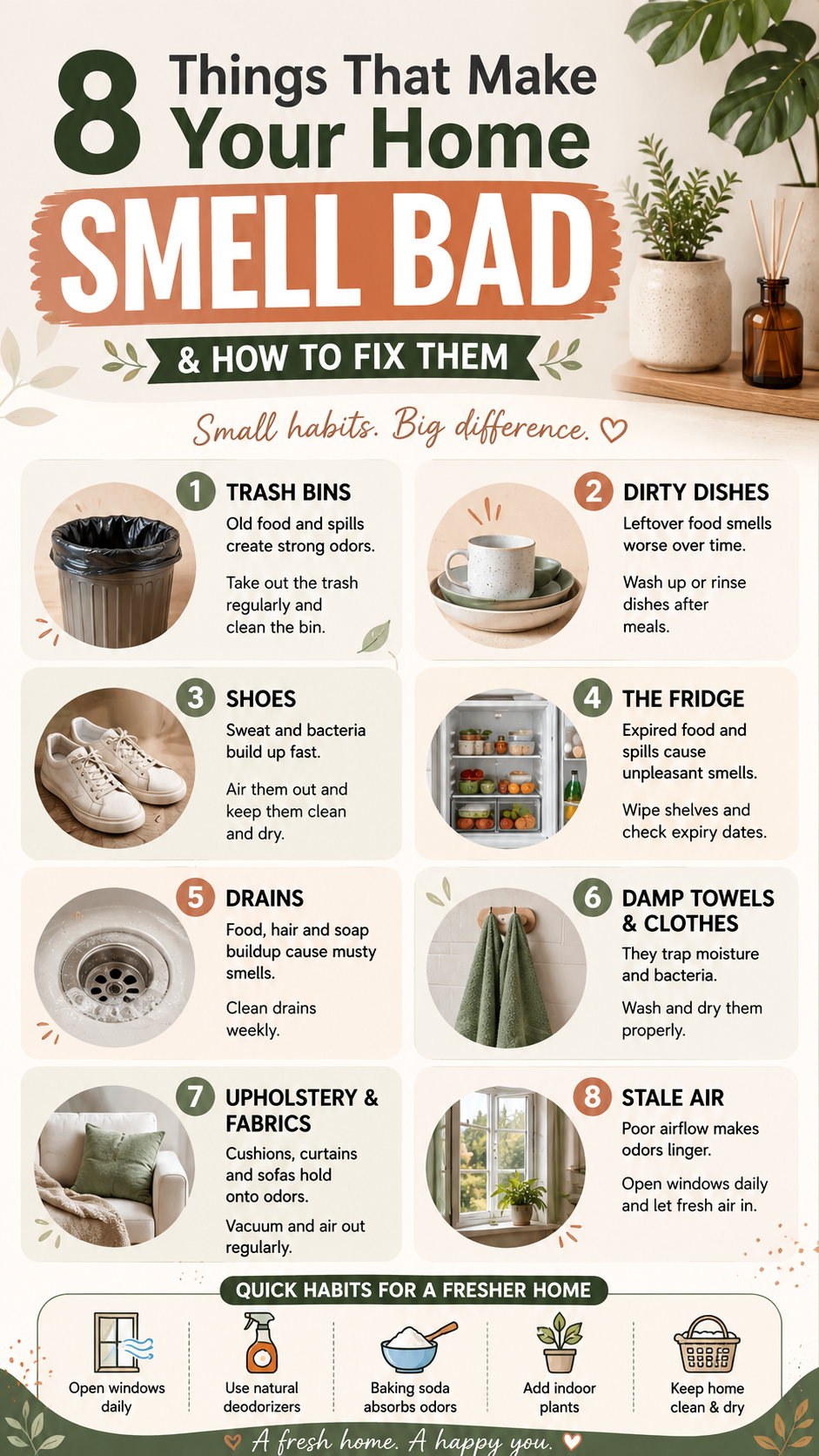
1. Trash Bins and Garbage Areas
Kitchen and household bins are one of the biggest contributors to unpleasant smells. Food scraps, spilled liquids, and old waste create the perfect environment for bacteria and odor buildup.
How to Keep Bins Fresh
- Take out garbage regularly before it begins to smell.
- Wash your bins with warm water and soap frequently.
- Dry bins completely before adding a new bag.
- Sprinkle a small amount of baking soda at the bottom to help absorb odors.
A clean bin area makes a noticeable difference in the overall freshness of your home.
2. Dirty Dishes Left in the Sink
Leaving dishes for long periods allows food residue to break down and create unpleasant smells. This is especially common with dairy products, sauces, and leftover food particles.
Creating a habit of washing dishes after meals or rinsing them immediately prevents strong kitchen odors from developing.
Pro Tip: Keep your kitchen smelling fresh by wiping down the sink, draining area, and counters daily. These small tasks prevent hidden food residue from creating unwanted odors.
3. Shoes and Entryway Odors
Shoes can collect sweat, moisture, and bacteria throughout the day. When stored in enclosed spaces without proper ventilation, they may develop strong smells that spread throughout nearby areas.
Simple Shoe Care Tips
- Allow shoes to air out after wearing them.
- Clean shoes according to their material requirements.
- Use shoe racks that provide proper airflow.
- Avoid storing damp shoes in closed spaces.
4. Forgotten Food in the Refrigerator
The refrigerator keeps food fresh, but expired items, spills, and uncovered leftovers can become sources of unpleasant odors.
Regularly checking expiration dates and wiping shelves helps maintain a cleaner and fresher refrigerator environment.
Expert Insight
- Schedule a quick refrigerator check once a week.
- Store foods in sealed containers to prevent odors from spreading.
- Clean spills immediately before they become difficult to remove.
5. Drains That Hold Hidden Smells
Kitchen and bathroom drains can trap food particles, soap residue, hair, and other materials. These buildups may produce unpleasant smells over time.
Cleaning drains regularly and preventing debris from entering them can help maintain a cleaner smelling home.
6. Damp Towels and Clothes
Wet fabrics that remain folded or piled together can develop musty odors because moisture encourages bacterial growth.
Preventing Fabric Odors
- Hang towels so they can dry completely.
- Wash gym clothes and damp fabrics promptly.
- Ensure laundry areas have proper airflow.
Important: Moisture is one of the most common reasons homes develop stale smells. Keeping fabrics dry significantly improves indoor freshness.
7. Upholstery, Curtains, and Soft Furnishings
Couches, cushions, rugs, and curtains absorb odors from cooking, pets, smoke, and everyday living. Because these fabrics are cleaned less often than other surfaces, smells can remain trapped for a long time.
Vacuuming furniture regularly and washing removable covers helps maintain a cleaner atmosphere.
8. Stale Air and Poor Ventilation
Even a clean home can smell unpleasant when fresh air does not circulate properly. Closed windows and limited airflow allow odors to linger.
Opening windows when weather allows and using fans can refresh indoor spaces naturally and reduce trapped smells.
Easy Ways to Make Your Home Smell Fresh Naturally
You do not need complicated products or expensive solutions to maintain a pleasant-smelling home. Consistent habits often provide the best results.
- Open windows daily for fresh airflow.
- Keep your home clean and dry.
- Use natural odor absorbers such as baking soda.
- Add indoor plants to create a more refreshing atmosphere.
- Wash soft furnishings regularly.
- Maintain a consistent cleaning schedule.
Building a Simple Fresh Home Routine
A few minutes of daily attention can prevent most household odors. Empty the trash, wash dishes, wipe surfaces, and allow fresh air into your rooms whenever possible.
Weekly tasks like cleaning the refrigerator, washing fabrics, and checking drains create a long-term system for a cleaner and more enjoyable home.
Quick Points
- Identify the source of odors instead of masking them.
- Control moisture to prevent musty smells.
- Clean high-risk areas consistently.
- Improve ventilation for healthier indoor air.
Final Thoughts on Keeping Your Home Fresh
A pleasant-smelling home is created through simple everyday habits rather than occasional deep cleaning alone. Paying attention to trash bins, dishes, shoes, drains, fabrics, and airflow can dramatically improve your living environment.
By staying consistent with these easy home cleaning tips, you can prevent unwanted odors, enjoy fresher indoor air, and create a space that feels welcoming every time you walk through the door.
Tags
Home Cleaning Fresh Home Tips Odor Removal Cleaning Routine Household Hacks Healthy Home Natural Cleaning