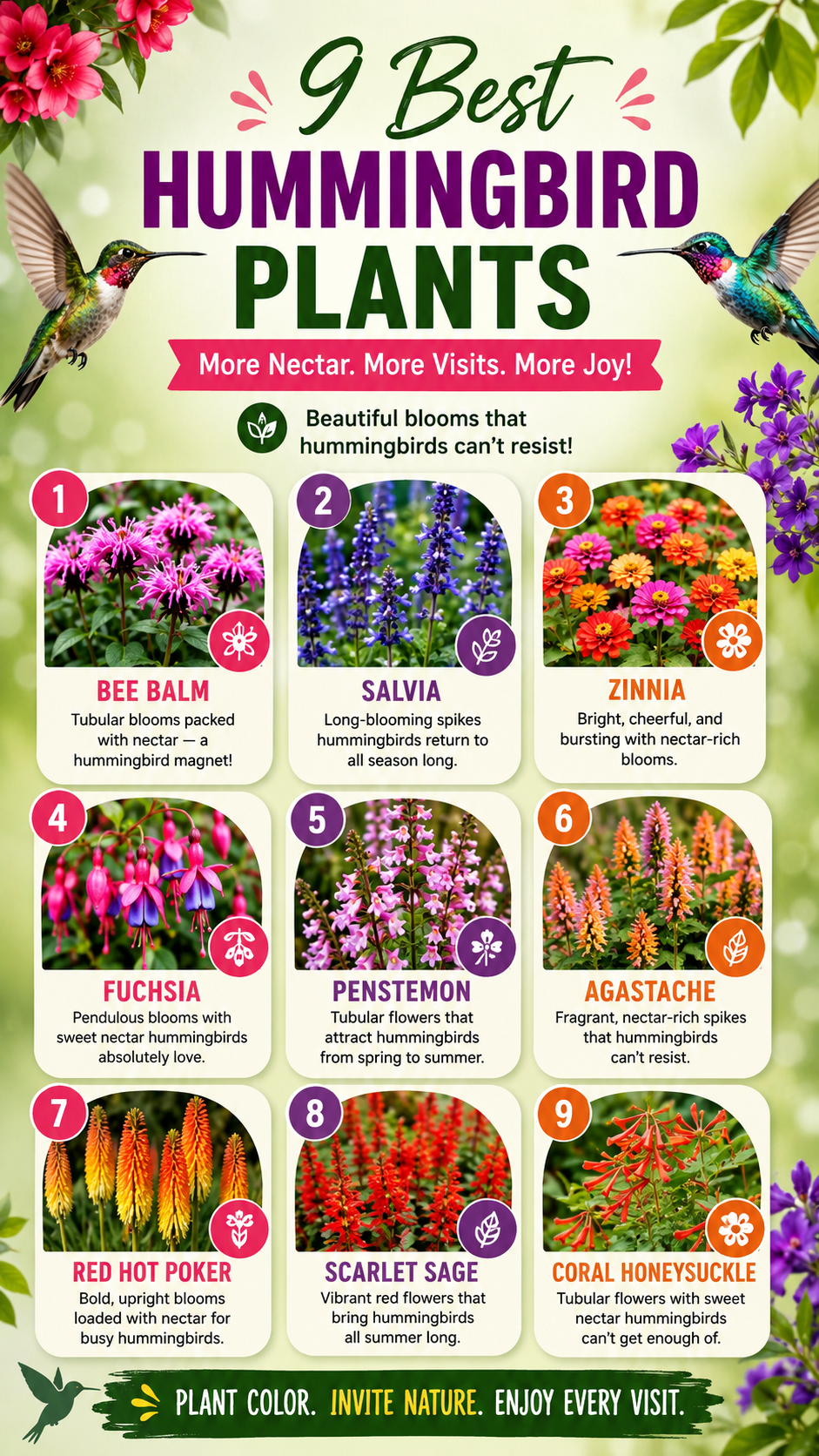
9 Best Hummingbird Plants to Attract More Hummingbirds to Your Garden Naturally
A garden filled with colorful, nectar-rich flowers is more than just a beautiful landscape. It can become a lively destination where hummingbirds dart from bloom to bloom, adding movement, color, and excitement to your outdoor space. These tiny birds are drawn to flowers that provide abundant nectar, especially those with tubular shapes and vibrant colors. By choosing the right plants, you can create a garden that supports local wildlife while enjoying frequent visits from these fascinating pollinators.
Whether you have a spacious backyard, a compact patio, or a collection of containers on a balcony, planting hummingbird-friendly flowers is one of the easiest ways to encourage these energetic birds to stop by throughout the growing season. The key is selecting plants with staggered bloom times, rich nectar supplies, and a variety of colors and heights.
Key Takeaways
- Choose nectar-rich flowers with long blooming seasons.
- Mix different plant heights and colors for continuous attraction.
- Native and perennial flowers often require less maintenance.
- Avoid pesticides that may harm hummingbirds and pollinators.
- Plant groups of flowers instead of single specimens for greater visibility.
- Provide blooms from spring through fall for consistent visits.
Why Certain Flowers Attract Hummingbirds
Hummingbirds have incredibly fast metabolisms, requiring them to feed frequently throughout the day. Flowers rich in nectar provide the energy they need while also supporting the natural pollination process. Bright shades of red, orange, pink, and purple naturally catch their attention, while tubular flowers perfectly match the shape of their slender bills.
Important: A garden designed with continuous flowering plants ensures hummingbirds always have a reliable food source. Selecting species with overlapping bloom periods keeps your landscape attractive for months rather than weeks.
Nine Outstanding Plants for a Hummingbird Garden
1. Bee Balm
Bee Balm is one of the most dependable hummingbird plants thanks to its bright, spiky blooms and generous nectar production. It flowers throughout much of the summer and also attracts butterflies and beneficial bees.
- Excellent nectar source
- Colorful summer flowers
- Thrives in sunny locations
- Suitable for cottage gardens
2. Salvia
Salvia offers tall flower spikes packed with nectar-rich blossoms. Many varieties bloom repeatedly with minimal care, making them one of the easiest additions to pollinator-friendly landscapes.
Its extended flowering season means hummingbirds continue returning as fresh blossoms appear throughout the warmer months.
3. Zinnia
Zinnias are known for their cheerful colors and impressive bloom production. While butterflies love them, hummingbirds frequently visit the nectar-rich flowers, especially when planted in large clusters.
Available in nearly every warm color imaginable, zinnias create vibrant garden displays while requiring very little maintenance.
Expert Insight
Planting several hummingbird-friendly flowers together creates a stronger visual target than scattered individual plants. Large groupings help birds locate nectar sources more quickly and encourage repeat visits.
4. Fuchsia
With elegant hanging blossoms, fuchsia is ideal for containers, baskets, and shaded patios. The pendulous flowers naturally suit hummingbirds, allowing easy access to sweet nectar.
Regular watering and partial shade help these plants produce abundant blooms during the growing season.
5. Penstemon
Penstemon features graceful tubular blossoms that hummingbirds find irresistible. It begins flowering in spring and often continues well into summer, providing an early nectar source when many other plants are just beginning to bloom.
- Drought tolerant once established
- Long flowering period
- Excellent for borders
- Supports native pollinators
6. Agastache
Agastache combines fragrant foliage with colorful flower spikes loaded with nectar. It tolerates heat well and performs beautifully in sunny gardens, making it an excellent choice for regions with warm summers.
Pro Tip: Combine drought-tolerant flowering plants such as Agastache, Salvia, and Penstemon to create a low-maintenance hummingbird garden that remains colorful throughout the season.
7. Red Hot Poker
The striking torch-like flower spikes of Red Hot Poker instantly become focal points in the garden. Their abundant nectar and bold colors make them particularly attractive to hummingbirds while adding dramatic vertical interest.
8. Scarlet Sage
Scarlet Sage produces brilliant red blooms that hummingbirds readily recognize. Its compact growth habit makes it suitable for borders, containers, and mixed flower beds where constant color is desired.
Deadheading spent flowers encourages fresh blooms and extends the flowering season considerably.
9. Coral Honeysuckle
Coral Honeysuckle offers beautiful climbing vines covered with clusters of tubular blossoms. It is ideal for fences, pergolas, trellises, and garden arches, providing both vertical beauty and a valuable nectar source.
Its climbing habit also increases planting diversity, allowing hummingbirds to feed at different heights throughout your landscape.
Designing the Perfect Hummingbird Garden
Creating an inviting hummingbird habitat goes beyond choosing individual flowers. Think about the overall garden design. Plant flowers in generous clusters rather than isolated plants. Large masses of blooms are easier for hummingbirds to spot while flying.
Include flowers of varying heights. Tall flowering spikes create vertical interest, medium-sized plants fill borders, and climbing vines add another layer of nectar sources.
Adding shrubs, small trees, or decorative branches nearby provides convenient resting spots between feeding visits. Hummingbirds often perch while surveying nearby flowers before returning to feed.
Tips for Continuous Blooms
A successful hummingbird garden provides nectar from early spring until late fall.
- Select plants with different bloom periods.
- Deadhead faded flowers regularly.
- Water consistently during dry weather.
- Apply compost to encourage healthy growth.
- Replace declining annuals with fresh seasonal blooms.
This approach creates a steady supply of flowers, ensuring hummingbirds always have fresh nectar available.
Supporting More Than Hummingbirds
Many nectar-rich flowers also benefit butterflies, native bees, and other important pollinators. By planting a diverse collection of flowering species, your garden becomes a thriving ecosystem that supports biodiversity while producing colorful displays throughout the growing season.
Important: Healthy pollinator gardens rely on natural growing practices. Limiting pesticide use and encouraging plant diversity creates a safer environment for hummingbirds and countless beneficial insects.
Simple Maintenance for Long-Term Success
Most hummingbird-friendly gardens are surprisingly easy to maintain once established. Mulching helps conserve moisture, suppress weeds, and improve soil quality. Regular pruning encourages fresh growth, while occasional fertilizing supports vigorous flowering without excessive foliage.
Inspect plants periodically for signs of disease or pests and remove damaged blooms promptly. Healthy plants naturally produce more nectar and remain attractive for longer periods.
At a Glance
- Grow nectar-rich flowers with overlapping bloom seasons.
- Plant colorful flowers in large groupings.
- Provide sunny growing conditions whenever possible.
- Avoid harmful pesticides around pollinator plants.
- Mix annuals, perennials, and climbing vines for variety.
Conclusion
Building a hummingbird-friendly garden is one of the most rewarding ways to combine beautiful landscaping with meaningful wildlife support. By selecting nectar-rich flowers such as Bee Balm, Salvia, Zinnia, Fuchsia, Penstemon, Agastache, Red Hot Poker, Scarlet Sage, and Coral Honeysuckle, you can create a colorful outdoor space filled with constant activity throughout the growing season.
With thoughtful planning, continuous blooms, and simple maintenance, your garden can become a dependable destination for hummingbirds year after year. The result is a landscape bursting with vibrant flowers, beneficial pollinators, and unforgettable moments every time these remarkable birds stop to feed.
Tags
Hummingbird Plants Pollinator Garden Garden Ideas Flower Gardening Nectar Flowers Backyard Wildlife Perennial Flowers Garden Inspiration