10 Best Foods to Give Kids During Vomiting for Gentle Stomach Relief
When your child is vomiting, even simple meals can suddenly become a challenge. You may wonder what foods to offer, which drinks are easiest to tolerate, and how to help your little one feel comfortable while their stomach settles. The good news is that you do not need complicated recipes or a long shopping list. A few gentle food options, small sips of fluid, and plenty of rest can help you care for your child during recovery.
From coconut water and rice congee to toast, mashed potatoes, and clear vegetable soup, there are several familiar options to consider when your child feels ready to eat. However, hydration should come first, especially when vomiting happens repeatedly. Knowing when to offer fluids, when to introduce food, and when to seek medical advice can make sick days less stressful for the whole family.
Key Takeaways
- Prioritize hydration with frequent, small sips of an oral rehydration solution when appropriate.
- Offer small portions of familiar foods when your child feels ready to eat.
- Consider options such as rice congee, toast, mashed potatoes, and soft cooked apples.
- Avoid forcing food or giving large amounts of fluid at once.
- Watch for dehydration and other warning signs that require prompt medical attention.
- Remember that persistent vomiting in babies and young children deserves particular care.
What Should Kids Eat During Vomiting?
There is no single food that stops vomiting in every child. The best choice depends on your child’s age, symptoms, appetite, and ability to keep fluids down. Some children prefer a few bites of plain toast, while others may tolerate soft rice or a small serving of mashed potatoes.
If your child is actively vomiting, do not rush to offer a full meal. Start by allowing the stomach to settle briefly, then offer tiny amounts of fluid. If your child can keep fluids down and begins to feel hungry, introduce small portions of food without pressure.
The most important goal is to prevent dehydration, not to make your child finish a meal. A temporary reduction in appetite is common during a stomach illness. Fluids are usually more important than solid food during the early stages of repeated vomiting.
1. Coconut Water
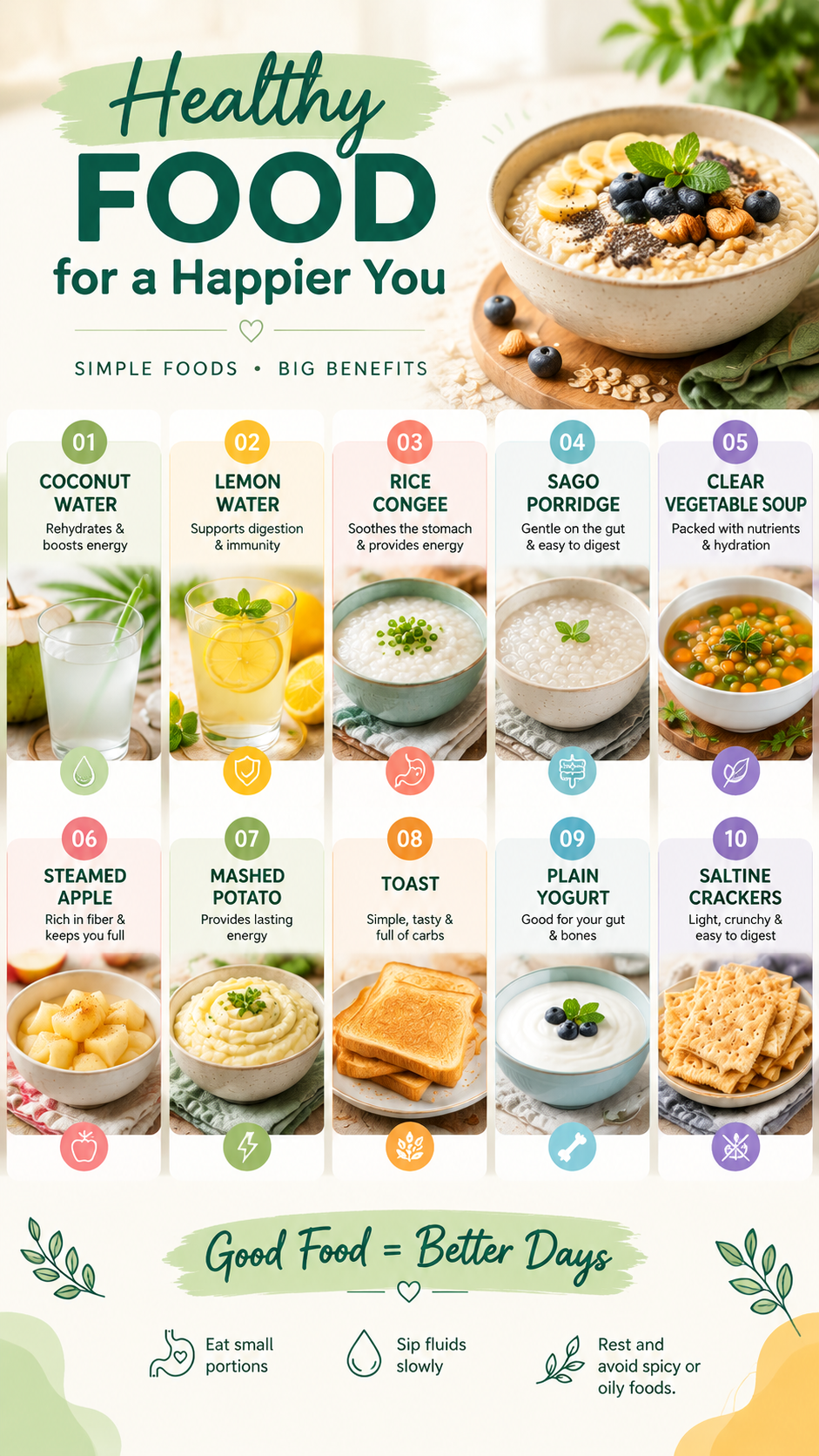
Coconut water is a familiar drink that some children enjoy because of its mild, refreshing taste. The image features coconut water as one possible option for a sick-day menu, but it is important to understand its limitations.
Although coconut water contains fluid and some electrolytes, it does not have the balanced amounts of sugar and salts found in a properly formulated oral rehydration solution. It should not be relied upon as the primary treatment for dehydration caused by repeated vomiting or diarrhea.
- Offer age-appropriate drinks in small amounts if your child is interested.
- Choose a plain, unsweetened product if you offer coconut water.
- Use an oral rehydration solution when dehydration is a concern or your healthcare professional recommends one.
For babies, continue appropriate breast milk or infant formula unless a healthcare professional advises otherwise. Ask your pediatrician before introducing coconut water or other new drinks to an infant.
2. Lemon Water
A glass of lemon water may seem refreshing, but citrus acidity can irritate some children’s stomachs or make nausea feel worse. It is not a proven treatment for vomiting, and adding lemon does not turn ordinary water into an oral rehydration solution.
If your child likes a very mild lemon flavor and tolerates it, a small amount may be acceptable for an older child. However, plain water or an appropriate oral rehydration solution is often a more practical choice during an illness.
Avoid encouraging large drinks, even when your child is thirsty. Small, frequent sips are often easier to tolerate than drinking a whole glass at once.
3. Rice Congee
Rice congee is a soft, watery rice porridge commonly enjoyed in many cultures. Its smooth texture and mild flavor make it a practical food to try when a child begins feeling hungry after vomiting.
Prepare the rice thoroughly with plenty of water until it becomes soft. Keep the seasoning simple and serve a small portion at a comfortable temperature. Avoid adding lots of oil, chili, or rich sauces while your child is recovering.
Rice congee provides carbohydrates for energy, but it is not a substitute for fluids or oral rehydration solution. If your child tolerates it, you can gradually return to a more varied diet as their appetite improves.
4. Sago Porridge
Sago porridge is another soft, mild option that may appeal to children who prefer smooth foods. When prepared until the pearls are fully cooked and soft, it can offer an easy-to-eat source of carbohydrates.
Prepare a simple version with water and avoid making it overly rich with butter, cream, or large amounts of sugar. Offer just a few spoonfuls at first, then see how your child responds.
For younger children, ensure the texture is appropriate for their developmental stage. Whole pearls or other small, slippery pieces can present a choking risk, so adjust the preparation carefully or choose a smoother alternative.
5. Clear Vegetable Soup
Clear vegetable soup can provide fluid and a little nourishment when a child is ready to eat. A simple broth with well-cooked vegetables may be more appealing than a heavy meal, particularly when appetite is low.
Prepare soup with mild ingredients, limited added fat, and a moderate amount of salt. If your child wants some vegetables, cook them until soft and cut them into age-appropriate pieces.
Keep in mind that ordinary soup does not necessarily contain the precise balance of electrolytes needed to treat dehydration. When a child has lost significant fluid through vomiting or diarrhea, use an appropriate oral rehydration solution rather than relying on soup alone.
6. Steamed Apple
Soft, cooked apple can be a gentle option for children who want something slightly sweet. Steaming or simmering apple pieces until tender makes them easier to chew than firm raw apple.
Serve a small amount plain, without heavy toppings or added sugar. Mash the apple if your child prefers a smoother texture, and make sure the consistency is suitable for their age and feeding skills.
Apples contain fiber and natural sugars, so individual tolerance can vary. There is no need to insist on apples if your child dislikes them or feels nauseated. Another familiar food may work just as well.
7. Mashed Potato
Plain mashed potato is a useful option when your child feels ready for a more substantial food. Potatoes provide carbohydrates, and a soft mash is easy to adapt to different appetites.
Boil or steam the potatoes until tender, then mash them with a little water or another suitable liquid. Keep the preparation simple at first, avoiding generous amounts of butter, cream, cheese, or seasoning.
Begin with a few spoonfuls and let your child decide whether they want more. If vomiting returns or nausea increases, pause solid foods and focus on small amounts of fluid.
8. Plain Toast
Plain toast is a familiar food that many children can manage when their appetite starts to return. Its mild taste and simple preparation make it convenient for parents who want to offer a small snack without cooking an elaborate meal.
Use bread that your child already eats and toast it lightly. Cut it into appropriate pieces, especially for younger children, and supervise eating according to their age and feeding abilities.
There is no need to make toast extra dry or insist that your child eat it. If your child prefers rice, potatoes, cereal, or another familiar food, those may also be suitable choices.
9. Plain Yogurt
Plain yogurt appears on the list as a possible food to try during recovery. It contains protein and other nutrients, and some children tolerate it well when they are ready to eat again.
Choose pasteurized, plain yogurt without large amounts of added sugar. Offer a small serving and observe how your child feels afterward.
Yogurt is not essential during a vomiting illness. Some children temporarily tolerate dairy less comfortably, especially when vomiting occurs alongside diarrhea. If dairy seems to worsen symptoms, pause it and try other foods your child normally tolerates.
Babies and young toddlers have specific nutritional needs, so do not replace breast milk or infant formula with yogurt or other foods during an illness without appropriate medical guidance.
10. Saltine Crackers
Plain crackers are convenient to keep on hand and can be useful when an older child wants a small, dry snack. Their mild flavor may be appealing when richer foods seem unpleasant.
Offer a few small pieces rather than a large serving. Crackers can contribute some carbohydrates, but they do not provide enough fluid to prevent dehydration and should not replace an oral rehydration solution when one is needed.
For babies and young children, choose foods that match their developmental stage and ability to chew safely. Hard, dry, or crumbly foods may not be appropriate for every age.
How to Keep Your Child Hydrated During Vomiting
Vomiting causes the body to lose fluid, and repeated episodes can lead to dehydration. Children, especially babies and toddlers, can become dehydrated more quickly than adults. For this reason, hydration deserves more attention than finding the perfect food.
Offer Small, Frequent Sips
Giving a child a large glass of water immediately after vomiting may trigger another episode. Instead, offer small amounts frequently and increase gradually if they stay down. A spoon, small cup, or oral syringe can help you offer manageable amounts to a child who is reluctant to drink.
If vomiting happens again, allow a brief pause and restart more slowly. Follow the instructions on an oral rehydration solution and any dosing advice from your child’s healthcare professional.
Choose an Appropriate Oral Rehydration Solution
An oral rehydration solution, often called ORS, contains water, salts, and glucose in carefully balanced proportions. It is designed to help the body absorb fluid and replace electrolytes lost through vomiting or diarrhea.
For repeated vomiting or signs of dehydration, a commercially prepared pediatric oral rehydration solution is generally a better choice than juice, soda, sports drinks, or coconut water. Prepare it exactly as directed. Do not add extra sugar or salt, and do not dilute it unless the product instructions specifically require that preparation.
Important: If your child cannot keep even small sips down, has significantly fewer wet diapers or trips to the bathroom, or appears unusually sleepy or weak, contact a healthcare professional promptly. Severe symptoms may require emergency care.
Continue Breastfeeding When Appropriate
If your baby is breastfed, continue offering breast milk, usually in smaller and more frequent feeds if needed. For formula-fed babies, seek medical advice if vomiting is repeated or there are concerns about hydration. Do not routinely dilute infant formula or substitute homemade drinks for breast milk or formula.
Babies younger than six months, premature infants, and children with underlying health conditions may need individualized advice sooner than otherwise healthy older children.
When Should You Offer Solid Food Again?
You do not need to wait until every symptom has disappeared before allowing your child to eat. Once your child can tolerate fluids and shows interest in food, you can usually offer small portions of familiar, age-appropriate foods.
Let your child’s appetite guide you. One child may want a little toast, while another may prefer a few spoonfuls of congee or mashed potato. Offer food calmly and stop if your child feels full or nauseated.
Start Small and Increase Gradually
- Begin with a few bites of a familiar food.
- Offer another small portion if your child remains comfortable and wants more.
- Continue offering fluids between meals.
- Gradually return to a normal, balanced diet as your child’s appetite and energy improve.
- Avoid forcing meals or restricting food choices unnecessarily once your child is recovering.
There is no need to rely exclusively on a restrictive diet of toast, rice, and crackers for several days. Children need a variety of nutrients, and returning to their usual age-appropriate foods is generally sensible as they tolerate them.
Foods and Drinks to Limit While Your Child Feels Sick
When a child’s stomach is unsettled, some foods and drinks may be less comfortable to tolerate. The goal is not to create a long list of forbidden foods, but to avoid items that worsen symptoms and prioritize hydration.
- Greasy or fried foods: These may feel heavy and can be harder for some children to tolerate.
- Very spicy foods: Strong seasoning may aggravate discomfort or nausea.
- Large, rich meals: Big portions can be overwhelming when appetite is low.
- Very sugary drinks: Soda, concentrated juice, and other sweet drinks are not ideal substitutes for oral rehydration solution and may worsen diarrhea.
- Foods that trigger symptoms: If a particular food seems to make nausea or diarrhea worse, pause it and try another option.
Do not assume that all dairy products, fruits, or solid foods must be avoided. Tolerance varies from child to child. Offer nutritious foods that your child normally eats and can manage comfortably.
Quick Note for Parents
A child does not need to finish a plate to recover. Focus on keeping fluids going, offering food without pressure, and monitoring how your child behaves.
- Small sips are often easier to tolerate than large drinks.
- Familiar foods are usually a sensible place to start.
- Seek medical advice if vomiting continues or your child is getting worse.
Warning Signs: When to Seek Medical Help
Vomiting can occur for many reasons, including common stomach infections, food-related illness, and other conditions. Although many children improve with appropriate fluids and rest, vomiting can sometimes indicate a more serious problem.
Seek emergency medical care if your child has any of the following symptoms:
- Green vomit or vomit containing blood or material that resembles coffee grounds.
- Severe or worsening abdominal pain, a swollen abdomen, or a rigid belly.
- Difficulty waking, confusion, fainting, or an unusually reduced level of responsiveness.
- Severe headache with a stiff neck or other concerning neurological symptoms.
- Signs of shock or severe dehydration, such as collapse, marked weakness, or cold, mottled skin.
- Vomiting after a significant head injury or possible poisoning.
Contact your child’s healthcare professional promptly if your child cannot keep fluids down, urinates much less than usual, has a dry mouth, produces few tears, has sunken eyes, or becomes increasingly irritable or lethargic.
Babies younger than three months with a temperature of 38°C (100.4°F) or higher need urgent medical assessment. Repeated vomiting in a young infant also deserves prompt professional advice, even if the baby initially appears comfortable.
Seek medical guidance if vomiting persists, symptoms worsen, or you are unsure whether your child is staying hydrated. Children with diabetes, kidney disease, immune problems, or other significant medical conditions may need earlier assessment.
A Simple Sick-Day Routine for Parents
Having a basic plan can make it easier to care for a child who is vomiting. You do not need to prepare every food on the list or follow a strict meal schedule. Keep the routine flexible and adjust it to your child’s symptoms.
Step 1: Let Your Child Rest
Help your child settle somewhere comfortable and keep a container, tissues, and a change of clothing nearby. Avoid pressuring them to eat immediately after vomiting.
Step 2: Begin Gentle Hydration
Offer small, frequent sips of an appropriate fluid. Use an oral rehydration solution when needed, especially if vomiting is repeated or diarrhea is also present. Monitor how much your child drinks and how often they urinate.
Step 3: Offer a Small Snack
When your child feels ready, offer a few spoonfuls of rice congee, soft cooked apple, mashed potato, or another familiar food. Toast and plain crackers may suit older children who prefer dry snacks. Let your child choose from suitable options.
Step 4: Watch for Changes
Pay attention to your child’s energy, comfort, fluid intake, urination, and any new symptoms. Improvement is reassuring, but worsening symptoms or warning signs should never be ignored.
Step 5: Return to Normal Meals Gradually
As vomiting settles and appetite returns, gradually offer a normal range of age-appropriate foods. Continue prioritizing fluids and avoid unnecessary food restrictions. Most importantly, seek medical advice if recovery is not progressing as expected.
At a Glance: Foods to Offer Kids During Vomiting
- Rice congee: Soft, mild, and easy to serve in small portions.
- Sago porridge: A simple carbohydrate option when thoroughly cooked and served in a safe texture.
- Clear vegetable soup: A light option that can contribute fluid, but does not replace ORS.
- Steamed apple: Soft fruit that can be mashed for easier eating.
- Mashed potato: A familiar, soft food that can provide energy.
- Plain toast or crackers: Convenient snacks for children who tolerate dry foods.
- Plain yogurt: An optional choice if dairy is tolerated.
- Oral rehydration solution: A priority when fluid and electrolyte replacement is needed.
Frequently Asked Questions
What Is the Best Food for a Child Who Is Vomiting?
There is no single best food for every child. Once your child can tolerate fluids and feels hungry, try small portions of familiar foods such as rice congee, mashed potatoes, toast, or soft cooked apple. Prioritize hydration if vomiting is ongoing.
Should I Force My Child to Eat After Vomiting?
No. Forcing food can increase distress and make mealtimes more difficult. Offer small portions when your child is ready, and allow them to stop when they have had enough. Maintaining hydration is the immediate priority.
Is Coconut Water Good for Vomiting in Kids?
Coconut water provides fluid, but its electrolyte balance is not the same as that of an oral rehydration solution. It should not be relied upon to treat dehydration. Ask a healthcare professional about the best fluid for your child’s age and symptoms.
Can Kids Drink Milk After Vomiting?
Many children can return to their usual milk and foods as they recover, depending on their age and tolerance. Breastfeeding should generally continue. Babies should receive breast milk or correctly prepared infant formula unless a healthcare professional advises otherwise. If dairy worsens symptoms, ask your pediatrician for guidance.
How Often Should I Give My Child Fluids?
Offer small amounts frequently rather than large drinks at once. The right amount depends on your child’s age, weight, symptoms, and degree of fluid loss. Follow the instructions for pediatric oral rehydration solution and seek medical advice if your child cannot keep fluids down.
When Can My Child Return to Their Usual Diet?
As soon as your child can tolerate fluids and is interested in eating, you can generally begin offering familiar foods and gradually return to a balanced diet. There is usually no need for a prolonged restrictive diet. Follow your healthcare professional’s advice if your child has a specific condition or persistent symptoms.
Conclusion: Gentle Foods, Small Sips, and Plenty of Care
Choosing foods to offer kids during vomiting does not have to be complicated. Rice congee, sago porridge, clear vegetable soup, steamed apple, mashed potatoes, toast, plain yogurt, and crackers are all possible options when a child feels ready to eat and can tolerate them. The best choice is one your child can comfortably manage, served in a small, age-appropriate portion.
Above all, remember that hydration comes first. Offer small, frequent sips, use an appropriate oral rehydration solution when needed, and continue breastfeeding for babies. Avoid forcing meals, watch for signs of dehydration, and seek medical help if symptoms are severe, persistent, or getting worse.
Every child recovers at a different pace. With patient care, suitable fluids, gentle food choices, and attention to warning signs, you can help make sick days a little easier while giving your child the support they need.
Tags
Foods for Kids During Vomiting
Vomiting in Children
Kids Hydration
Oral Rehydration Solution
Gentle Foods for Kids
Toddler Upset Stomach
Child Health Tips
Sick Day Food Ideas