10 DIY Face Scrubs for Glowing Skin Using Natural Kitchen Ingredients
Natural skincare has a timeless appeal because it feels simple, approachable, and personal. A homemade face scrub made with familiar kitchen ingredients can turn an ordinary self-care routine into a calming beauty ritual. From coffee and honey to oatmeal, milk, aloe, rosewater, citrus peel, and coconut oil, DIY face scrubs are popular because they combine gentle exfoliation with ingredients many people already recognize.
The beauty of these ideas is their flexibility. Some scrubs feel rich and moisturizing, while others feel refreshing, soothing, or brightening. The key is choosing the right combination for your skin type, using a gentle touch, and keeping your routine balanced. A face scrub should never feel harsh or irritating. It should help remove dull surface buildup while leaving the skin feeling soft, clean, and cared for.
Key Takeaways
- DIY face scrubs can be made with simple natural ingredients like coffee, honey, oatmeal, aloe, milk, and sugar.
- Gentle exfoliation may help skin look smoother, fresher, and more radiant.
- Different ingredient pairings suit different skincare goals, such as softness, glow, or soothing care.
- Face scrubs should be used carefully and not too often, especially on sensitive or acne-prone skin.
- Always patch test homemade skincare before applying it to your face.
Why DIY Face Scrubs Are So Popular
Homemade face scrubs are especially appealing because they feel natural, budget-friendly, and easy to customize. Instead of relying on complicated formulas, many people enjoy mixing small batches from ingredients they already have in their pantry. This makes DIY skincare feel less intimidating and more connected to everyday wellness.
Another reason these scrubs are loved is the sensory experience. Coffee smells warm and energizing. Honey feels rich and smooth. Rosewater adds a delicate floral touch. Oatmeal has a comforting texture. Coconut oil feels nourishing. These details make a simple exfoliating routine feel more like a mini spa moment at home.
Important: Natural does not always mean suitable for every skin type. Even common kitchen ingredients can irritate the skin if they are too acidic, too gritty, or used too frequently. A gentle approach is always best.
How Face Scrubs Help Refresh the Skin
Face scrubs work by helping lift away dead skin cells and surface buildup. When used correctly, exfoliation can make the skin feel smoother and help skincare products spread more evenly. It can also give the complexion a fresher appearance by reducing the dull look that sometimes comes from dryness, oil, or environmental buildup.
The most important word is gentle. Facial skin is more delicate than body skin, so a scrub should never be rough, sharp, or aggressively rubbed in. Small circular motions, light pressure, and a short application time are usually enough.
A Balanced DIY Skincare Mindset
DIY scrubs are best treated as occasional skincare boosts, not daily treatments. Over-exfoliating can leave the skin feeling tight, dry, or sensitive. Most people who use scrubs prefer doing so once a week or less, depending on their skin type and tolerance.
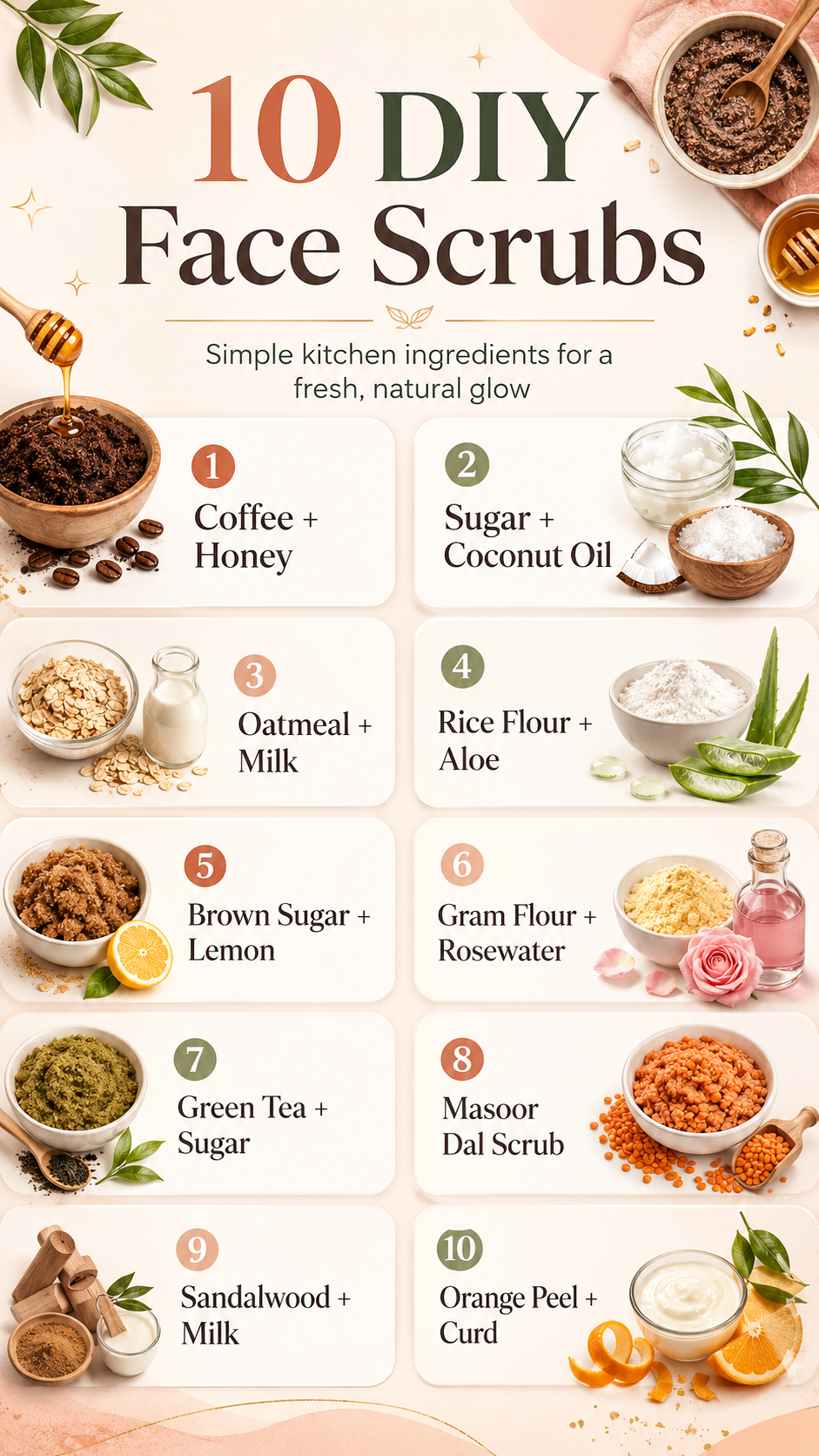
Coffee and Honey Face Scrub
Coffee and honey is one of the most classic homemade face scrub combinations. Coffee grounds provide texture, while honey gives the mixture a smooth, sticky base. The result is a scrub that feels energizing and comforting at the same time.
Coffee is often associated with a refreshed look because of its invigorating aroma and fine granules. Honey is loved in skincare for its soft, cushiony feel. Together, they create a simple scrub that can be ideal for people who enjoy a cozy, spa-like routine.
Best For
This combination is often preferred by those looking for a glow-focused scrub. Make sure the coffee grounds are finely ground and not too coarse. Large, rough particles can feel scratchy on facial skin.
Sugar and Coconut Oil Face Scrub
Sugar and coconut oil is a rich, moisturizing scrub idea. Sugar gives the exfoliating texture, while coconut oil adds slip and softness. This combination is especially popular for dry-feeling skin because it leaves a smooth finish.
However, coconut oil can feel heavy for some people, particularly those with oily or acne-prone skin. If your skin clogs easily, this may be better suited for body care or used very sparingly on the face.
Pro Tip: If using sugar on the face, choose the finest texture possible and apply with very light pressure. The goal is polishing, not scrubbing hard.
Oatmeal and Milk Face Scrub
Oatmeal and milk is a gentle-looking combination that suits the comforting side of homemade skincare. Oatmeal has a soft, calming feel when finely ground, and milk gives the mixture a creamy texture. This pairing is often associated with soothing, mild exfoliation.
For a face-friendly texture, oatmeal should be blended into a fine powder rather than used as large flakes. The smoother the mixture, the more comfortable it feels on delicate skin.
Why Texture Matters
The texture of a DIY face scrub can make or break the experience. Ingredients like oats, rice flour, gram flour, and dal should be finely powdered. Anything too coarse can tug at the skin and cause unnecessary irritation.
Rice Flour and Aloe Face Scrub
Rice flour and aloe create a lightweight scrub idea that feels fresh and simple. Rice flour has a fine powdery texture, while aloe adds a cooling, gel-like base. This combination is often used in natural beauty routines for a clean, refreshed feeling.
Aloe is especially popular in self-care because it feels soothing and hydrating. When combined with a gentle powder like rice flour, it can create a smooth paste that is easy to apply. As with all scrubs, the key is not to press too hard.
Expert Insight
The best DIY face scrub is not the one with the most ingredients. It is the one with the gentlest texture, the right base for your skin type, and a simple formula that your skin tolerates well.
Brown Sugar and Lemon Face Scrub
Brown sugar and lemon is a bright, citrus-inspired scrub idea, but it requires extra caution. Brown sugar is softer than some granulated sugars, yet it still needs to be used gently. Lemon is acidic and can be irritating for many skin types, especially sensitive skin.
If citrus is used in homemade skincare, it should be handled carefully and avoided before sun exposure. Many people prefer using orange peel powder or a mild hydrating base instead of direct lemon juice because strong acidity can disrupt the skin barrier.
Important: Lemon can make skin feel sensitive and may cause irritation. Avoid using lemon on broken, freshly shaved, inflamed, or very sensitive skin. Always patch test first.
Gram Flour and Rosewater Face Scrub
Gram flour and rosewater is a well-loved natural beauty pairing. Gram flour creates a soft paste when mixed with liquid, while rosewater adds a fresh floral quality. This combination feels traditional, simple, and elegant.
Many people enjoy gram flour masks and scrubs because they can be adjusted easily. Add more rosewater for a thinner texture or more flour for a thicker paste. For facial use, the mixture should be smooth rather than grainy.
How to Use It Gently
Apply the paste in a thin layer, let it sit briefly if desired, then soften it with water before massaging lightly. Do not let any flour-based mixture dry too tightly on the face, as this may feel uncomfortable when removed.
Green Tea and Sugar Face Scrub
Green tea and sugar is a refreshing scrub idea with a clean, botanical feel. Brewed green tea can be cooled and mixed with fine sugar to create a simple exfoliating paste. The result feels light and energizing, especially for a morning skincare routine.
Green tea also pairs well with honey or aloe if you want a smoother base. Since sugar dissolves gradually, use the scrub soon after mixing and avoid applying it with heavy pressure.
Masoor Dal Fine Scrub
Masoor dal, also known as red lentil, is often used in powdered form in traditional homemade beauty routines. The word fine is important here. Lentils should be ground into a very soft powder before being used on the face.
This type of scrub may be mixed with milk, yogurt, rosewater, or aloe to create a paste. Because dal can be more textured than some other ingredients, careful grinding and patch testing are essential.
Best Practice
Strain or sift the powder if needed to remove larger particles. A smoother powder gives a more comfortable application and lowers the chance of scratching the skin.
Sandalwood and Milk Face Scrub
Sandalwood and milk suggests a soft, aromatic skincare blend. Sandalwood powder is often used in beauty rituals for its earthy scent and smooth texture. Milk gives it a creamy base, making the mixture easy to spread.
This pairing is ideal for people who enjoy a calming skincare moment. Since sandalwood products can vary in quality and purity, it is best to use a trusted powder and avoid anything with added fragrance if your skin is reactive.
Orange Peel and Curd Face Scrub
Orange peel and curd is a bright, fresh combination that feels perfect for a glow-themed skincare routine. Orange peel powder adds a citrus note, while curd creates a creamy texture. This combination is often associated with a refreshed, clean look.
As with lemon, citrus-based ingredients should be used carefully. Orange peel powder is usually milder than fresh citrus juice, but it can still irritate sensitive skin. Use a fine powder, keep the application short, and rinse thoroughly.
How to Choose the Right DIY Face Scrub for Your Skin Type
Choosing the right homemade face scrub depends on how your skin feels and reacts. Dry skin may prefer creamy bases like honey, milk, curd, or a small amount of oil. Oily skin may prefer lighter bases such as aloe, rosewater, or green tea. Sensitive skin usually benefits from the mildest textures, such as finely powdered oatmeal mixed with a soothing liquid.
- Dry-feeling skin: Try oatmeal and milk, honey blends, or gentle creamy pastes.
- Oily-feeling skin: Try aloe, rosewater, or green tea as lighter bases.
- Dull-looking skin: Try coffee and honey, orange peel and curd, or rice flour and aloe.
- Sensitive skin: Choose the softest ingredients and avoid lemon or rough granules.
Pro Tip: When in doubt, make the scrub smoother. A paste-like texture is usually better for the face than a dry, gritty mixture.
Safe Tips for Using Homemade Face Scrubs
DIY skincare should feel relaxing, not risky. The safest approach is to keep recipes simple, use clean tools, and make small fresh batches. Avoid storing wet homemade scrubs for long periods because they do not contain preservatives.
Patch Test First
Before using any scrub on your face, test a small amount on your inner arm or behind the ear. Wait to see whether redness, itching, burning, or bumps appear. If your skin reacts, do not apply the mixture to your face.
Avoid Over-Exfoliating
Using scrubs too often can weaken the skin barrier. Once weekly is a common starting point, but some people need less. If your skin feels tight, stings when applying products, or looks unusually red, take a break from exfoliation.
Follow With Moisture
After rinsing off a scrub, pat your face dry and apply a gentle moisturizer. If you exfoliate during the day, sunscreen is especially important because freshly exfoliated skin may be more vulnerable to environmental stress.
Simple DIY Face Scrub Routine
A homemade face scrub does not need to be complicated. Start with clean skin, apply a small amount of scrub, massage lightly for less than a minute, and rinse with lukewarm water. Follow with a calming toner or mist if you like, then moisturize.
- Cleanse your face with a gentle cleanser.
- Apply your DIY scrub to damp skin.
- Massage with light circular motions.
- Rinse thoroughly with lukewarm water.
- Pat dry and apply moisturizer.
Keep the routine slow and mindful. The benefit comes from consistency and care, not from pressing harder or using stronger ingredients.
At a Glance
- Use finely ground ingredients for a face-safe texture.
- Choose honey, milk, curd, aloe, rosewater, or green tea as gentle bases.
- Avoid harsh rubbing and strong acidic ingredients if your skin is sensitive.
- Make fresh batches and do not store wet DIY scrubs for too long.
- Moisturize after exfoliating to keep skin comfortable.
Common Mistakes to Avoid
One common mistake is using ingredients that are too rough. Large sugar crystals, coarse coffee grounds, and unevenly ground lentils can feel abrasive. Another mistake is leaving acidic mixtures on the skin too long. Citrus ingredients may seem refreshing, but they should be treated with care.
It is also easy to overdo exfoliation when a scrub makes the skin feel instantly smooth. That smooth feeling can be satisfying, but the skin needs recovery time. Using a face scrub every day is usually too much for most people.
Less Is Often Better
Simple recipes with two ingredients are often easier to control than complicated mixtures. A basic oatmeal and milk scrub, rice flour and aloe paste, or honey and coffee blend can be more practical than a recipe with too many active ingredients.
Conclusion: Build a Gentle Natural Skincare Ritual
DIY face scrubs are a beautiful way to bring natural skincare into your weekly self-care routine. With ingredients like coffee, honey, oatmeal, aloe, rosewater, milk, orange peel, and curd, you can create simple blends that feel refreshing, comforting, and personal.
The best results come from choosing ingredients thoughtfully, keeping textures fine, and listening to your skin. A good homemade face scrub should leave your skin feeling soft and cared for, not irritated or stripped. Whether you love a bright citrus-inspired blend, a creamy oatmeal mixture, or a soothing aloe paste, the most important step is gentle consistency.
Use these DIY face scrub ideas as inspiration for a calming, natural beauty routine that fits your skin, your schedule, and your self-care style.
Tags
DIY Face Scrubs Natural Skincare Homemade Beauty Glowing Skin Kitchen Skincare Face Exfoliation Self Care Routine