25 Online Business Terms Every Beginner Must Know for Success
Starting an online business can feel exciting, but it can also feel confusing when you encounter unfamiliar words and marketing concepts. Terms like SEO, conversion rate, affiliate marketing, analytics, and digital products are everywhere in the online business world. Understanding these essential concepts gives beginners the confidence to make smarter decisions, improve strategies, and build a stronger digital presence.
Whether you are starting a blog, launching an online store, creating digital products, or exploring entrepreneurship, learning the language of online business is an important first step. These terms help you communicate clearly, understand marketing strategies, and identify opportunities for growth.
Key Takeaways
- Learn the most important online business terms every beginner should know.
- Understand how digital marketing concepts support business growth.
- Discover how SEO, analytics, and funnels improve online performance.
- Build confidence when creating and managing an online business.
- Use these terms as a foundation for smarter business decisions.
Why Learning Online Business Terms Matters
Every successful online entrepreneur starts by understanding the basics. While creativity and passion are important, knowing the right business terminology helps you measure progress, improve your strategies, and connect with the right audience.
When you understand online business terms, you can better evaluate marketing campaigns, identify areas for improvement, and create systems that support long-term growth. Instead of feeling overwhelmed by industry language, you can confidently take action.
Important: Learning business terminology is not just about memorizing definitions. It helps you understand how different parts of an online business work together, from attracting visitors to converting them into loyal customers.
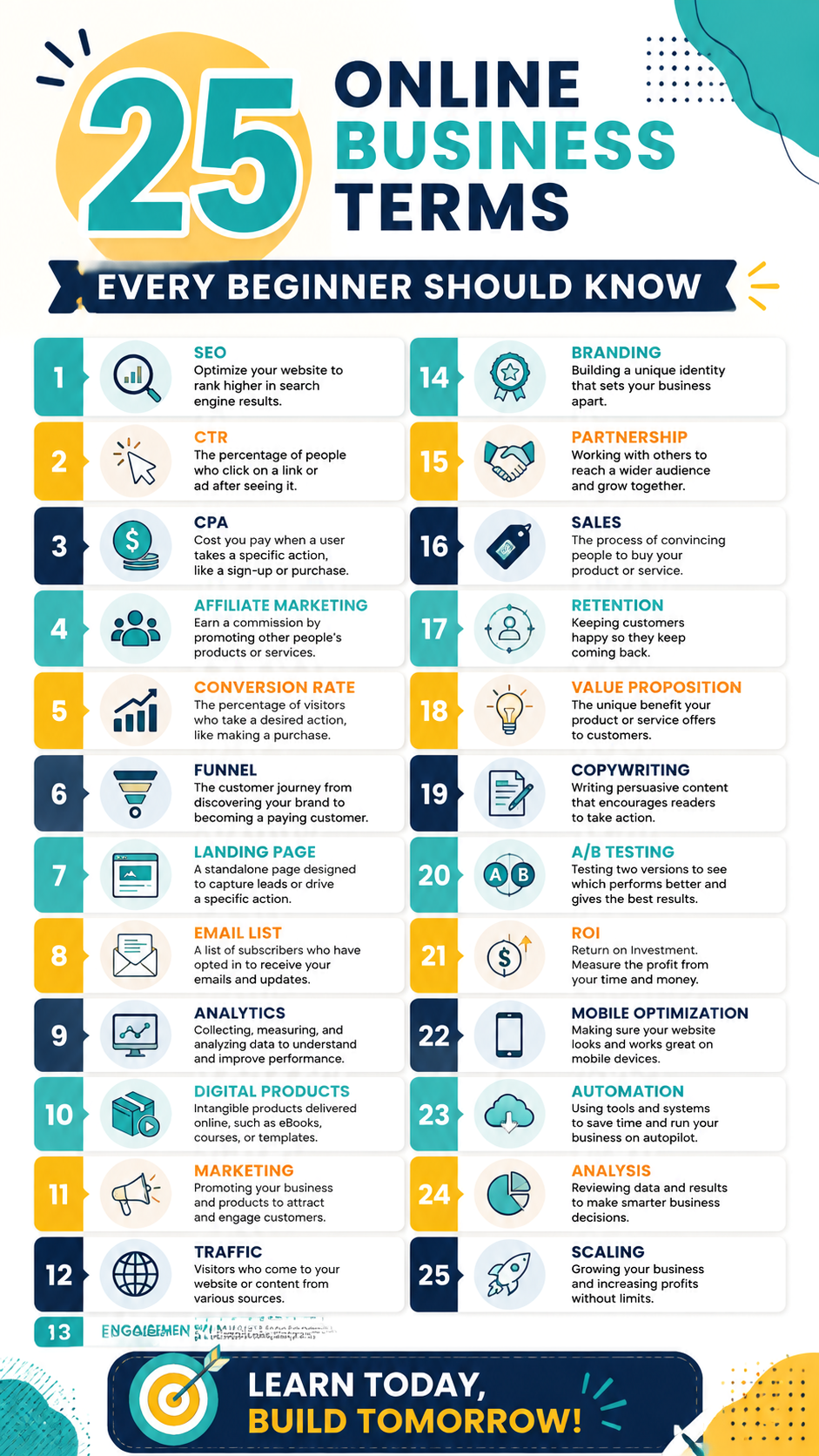
25 Online Business Terms Every Beginner Should Know
1. SEO (Search Engine Optimization)
SEO is the process of improving your website or content so it appears higher in search engine results. Strong SEO helps people discover your business naturally when they search for topics, products, or services related to your niche.
2. CTR (Click-Through Rate)
CTR measures how many people click on a link after seeing it. A higher click-through rate usually means your title, image, or message is attracting attention and encouraging users to take action.
3. CPA (Cost Per Action)
CPA refers to the cost involved when someone completes a specific action, such as signing up for a newsletter, downloading a resource, or making a purchase. Businesses use this metric to understand advertising efficiency.
4. Affiliate Marketing
Affiliate marketing allows creators and businesses to earn commissions by promoting products or services from other companies. It is a popular online business model because it can be started without creating your own products.
5. Conversion Rate
Conversion rate shows the percentage of visitors who complete a desired action. This could include buying a product, joining an email list, or filling out a contact form.
6. Sales Funnel
A sales funnel represents the journey customers take from discovering a brand to becoming buyers. A well-designed funnel helps guide potential customers through each stage of the decision-making process.
7. Landing Page
A landing page is a focused webpage created to encourage visitors to complete one specific action. It may be used for collecting leads, promoting products, or sharing special offers.
8. Email List
An email list contains subscribers who have chosen to receive updates, newsletters, or offers from your business. Building an email list helps you create direct relationships with your audience.
9. Analytics
Analytics involves collecting and studying data to understand how your website, content, and marketing efforts perform. These insights help you make informed improvements.
10. Digital Products
Digital products are items delivered online, such as ebooks, templates, courses, software, and downloadable resources. They are popular because they can be created once and sold repeatedly.
11. Branding
Branding is the process of creating a recognizable identity for your business. It includes your visuals, messaging, values, and the overall experience customers associate with your company.
12. Target Audience
Your target audience is the specific group of people most likely to need or enjoy your products and services. Understanding your audience helps you create better content and marketing strategies.
13. Content Marketing
Content marketing focuses on creating valuable content that attracts and educates your audience. Examples include blog posts, videos, guides, and social media content.
14. Lead Generation
Lead generation is the process of attracting potential customers and collecting their information for future communication.
15. Customer Journey
The customer journey describes the steps people take from discovering your brand to making a purchase and becoming repeat customers.
16. E-commerce
E-commerce refers to buying and selling products online. It includes online stores, marketplaces, payment systems, and digital shopping experiences.
17. Engagement
Engagement measures how people interact with your content through likes, comments, shares, clicks, and other actions.
18. Social Media Marketing
Social media marketing uses platforms like social networks to build awareness, connect with customers, and promote products or services.
19. Traffic
Traffic refers to the number of visitors coming to your website or online platforms. Increasing quality traffic is essential for growth.
20. Keyword Research
Keyword research helps you discover the words and phrases people search for online. These insights improve SEO and content planning.
21. Call To Action (CTA)
A CTA encourages users to take the next step, such as subscribing, buying, downloading, or learning more.
22. Revenue
Revenue is the income generated from selling products or services before expenses are removed.
23. Passive Income
Passive income refers to earnings that require less active involvement after an initial setup, such as some digital products or automated systems.
24. Customer Retention
Customer retention focuses on keeping existing customers engaged and encouraging repeat purchases.
25. Scalability
Scalability describes the ability of a business to grow without increasing costs at the same rate. Scalable systems help online businesses expand efficiently.
How Beginners Can Use These Terms Effectively
Knowing definitions is helpful, but applying these concepts is where real progress happens. Start by choosing a few areas that match your current business goals.
- If you are creating content, focus on SEO, keywords, and analytics.
- If you are selling products, learn about conversion rates, funnels, and customer journeys.
- If you are building an audience, explore email lists, engagement, and content marketing.
Expert Insight: Successful online businesses are built through continuous learning. Understanding basic terminology helps you test ideas, measure results, and improve your strategies over time.
At a Glance: Online Business Basics
Quick Points
- SEO helps people find your business online.
- Analytics reveal what is working and what needs improvement.
- Funnels guide customers toward decisions.
- Digital products create online selling opportunities.
- Marketing terms help you grow with confidence.
Conclusion
Building an online business becomes much easier when you understand the language behind it. These 25 online business terms provide a strong foundation for beginners who want to create content, market products, attract customers, and grow their digital presence.
Keep learning, experimenting, and applying new strategies. The more familiar you become with these concepts, the more confident you will feel making decisions that move your online business forward.
Tags
Online Business
Digital Marketing
SEO Basics
Entrepreneur Tips
Affiliate Marketing
Business Growth
Online Entrepreneurship