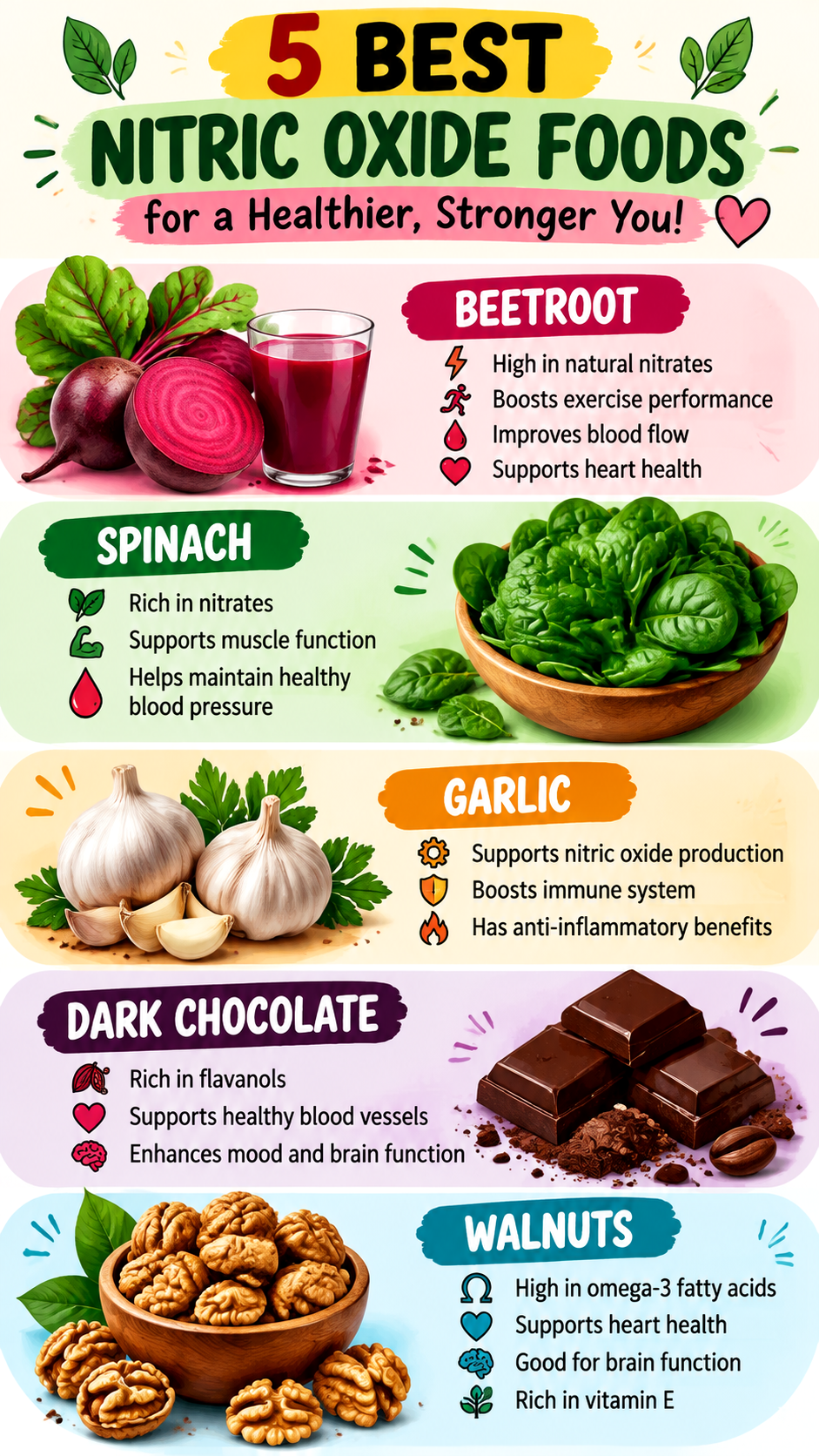
5 Best Nitric Oxide Foods to Boost Blood Flow and Support Heart Health
Many people are looking for simple ways to support heart health, energy levels, and overall wellness through everyday nutrition. Certain foods naturally contain compounds that help the body produce nitric oxide, a molecule that plays an important role in healthy blood vessel function and circulation. Adding more nitric oxide rich foods to your meals can be a practical step toward building a balanced, nutrient-focused lifestyle.
Nitric oxide foods are often valued because they support the body’s natural processes related to blood flow, exercise performance, and cardiovascular wellness. From vibrant vegetables to antioxidant-rich treats, many common foods provide nutrients that can help maintain a healthy lifestyle when combined with regular movement and a well-rounded diet.
Key Takeaways
- Beetroots are naturally rich in dietary nitrates that support nitric oxide production.
- Leafy greens like spinach provide important nutrients for circulation and wellness.
- Garlic contains natural compounds linked with heart-friendly benefits.
- Dark chocolate with high cocoa content offers beneficial flavanols.
- Walnuts provide healthy fats and nutrients that support cardiovascular health.
What Is Nitric Oxide and Why Does It Matter?
Nitric oxide is a naturally occurring molecule produced by the body. One of its most recognized roles is helping blood vessels relax and widen, which supports healthy circulation. Good circulation allows oxygen and nutrients to move efficiently throughout the body, making nitric oxide an important part of normal cardiovascular function.
The body can create nitric oxide in several ways, including through natural processes that use nutrients from foods. Diets that include nitrate-rich vegetables, antioxidants, and healthy fats can help support the systems involved in maintaining healthy blood vessel activity.
Important: Eating nitric oxide boosting foods does not replace medical treatment, but including a variety of nutrient-rich foods can be part of a healthy lifestyle that supports normal body functions.
Top Five Nitric Oxide Foods to Add to Your Diet
1. Beetroot: A Natural Nitrate Powerhouse
Beetroot is one of the most popular foods associated with nitric oxide production. This colorful root vegetable contains naturally occurring nitrates, which the body can convert into compounds involved in nitric oxide pathways.
Many active individuals include beetroot in their meals because it is commonly associated with exercise nutrition and endurance support. Beetroot can be enjoyed roasted, blended into smoothies, added to salads, or consumed as a natural juice.
Simple Ways to Enjoy Beetroot
- Add cooked beetroot slices to salads with leafy greens.
- Blend beetroot into fruit and vegetable smoothies.
- Use beetroot as a colorful side dish with meals.
2. Spinach: A Leafy Green Nutrition Favorite
Spinach is another excellent source of natural nitrates. This leafy green vegetable is also packed with vitamins, minerals, and plant compounds that contribute to a nutrient-dense eating pattern.
Adding spinach to your meals is an easy way to increase vegetable intake. It works well in salads, soups, smoothies, omelets, and cooked dishes.
Spinach Meal Ideas
- Create a fresh spinach salad with nuts and vegetables.
- Add spinach leaves to morning smoothies.
- Mix cooked spinach into pasta, eggs, or grain bowls.
3. Garlic: A Flavorful Heart-Friendly Ingredient
Garlic has been used in traditional cooking for centuries and is known for its unique plant compounds. One of its notable components is allicin, a compound created when garlic is chopped or crushed.
Beyond its strong flavor, garlic is valued as a versatile ingredient that can enhance meals while contributing beneficial plant compounds to the diet.
Easy Ways to Include Garlic
- Add fresh garlic to roasted vegetables.
- Use minced garlic in homemade dressings and sauces.
- Combine garlic with herbs for flavorful meals.
4. Dark Chocolate: A Delicious Source of Flavanols
Dark chocolate can be a surprising addition to a list of nitric oxide supporting foods. High-cocoa dark chocolate contains flavanols, plant compounds that have been studied for their connection with healthy blood vessel function.
Choosing dark chocolate with a higher cocoa percentage can provide more cocoa-based nutrients while reducing added sugar compared with many sweeter chocolate products.
Pro Tip: When choosing dark chocolate, look for options with higher cocoa content and enjoy it in moderate portions as part of a balanced diet.
5. Walnuts: Healthy Fats for Overall Wellness
Walnuts are known for their plant-based omega-3 fatty acids, fiber, and antioxidants. These nutrients make walnuts a popular choice for people focusing on heart-conscious eating habits.
Adding walnuts to meals can provide texture, flavor, and nutritional value. They can be eaten as a snack, sprinkled over oatmeal, or combined with salads and yogurt.
How Nitric Oxide Foods Support a Healthy Lifestyle
A diet rich in colorful vegetables, nuts, and minimally processed foods provides a wide range of nutrients that work together. Nitric oxide supporting foods are not a single solution, but they can be part of a broader approach to wellness.
Combining these foods with regular physical activity, adequate hydration, quality sleep, and balanced meals can help create sustainable healthy habits.
Expert Insight
- Focus on adding a variety of whole foods instead of relying on one ingredient.
- Colorful vegetables often provide a combination of vitamins, minerals, and plant compounds.
- Small daily nutrition choices can contribute to long-term wellness habits.
Tips for Creating Nitric Oxide Friendly Meals
Building meals around these foods does not need to be complicated. Simple combinations can make healthy eating enjoyable and practical.
- Start meals with a vegetable base such as spinach or other leafy greens.
- Add healthy fats like walnuts for flavor and nutrients.
- Use garlic and herbs to create delicious homemade meals.
- Include beetroot occasionally through salads, juices, or roasted dishes.
- Enjoy small portions of dark chocolate as a balanced treat.
At a Glance: Nitric Oxide Food Benefits
- Beetroot: nitrate-rich vegetable for circulation support.
- Spinach: leafy green packed with essential nutrients.
- Garlic: flavorful ingredient with beneficial plant compounds.
- Dark chocolate: cocoa-based source of flavanols.
- Walnuts: nutrient-rich food with healthy fats.
Conclusion: Build Better Nutrition Habits Naturally
Adding nitric oxide rich foods to your meals is a simple way to explore the benefits of nutrient-focused eating. Foods like beetroot, spinach, garlic, dark chocolate, and walnuts bring variety, flavor, and valuable nutrients to everyday meals.
A healthy lifestyle is built through consistent choices. By enjoying a wide range of whole foods and creating balanced meals, you can support your body’s natural functions while making nutrition more enjoyable.
Tags
Nitric Oxide Foods
Healthy Eating
Heart Health
Nutrition Tips
Superfoods
Clean Eating