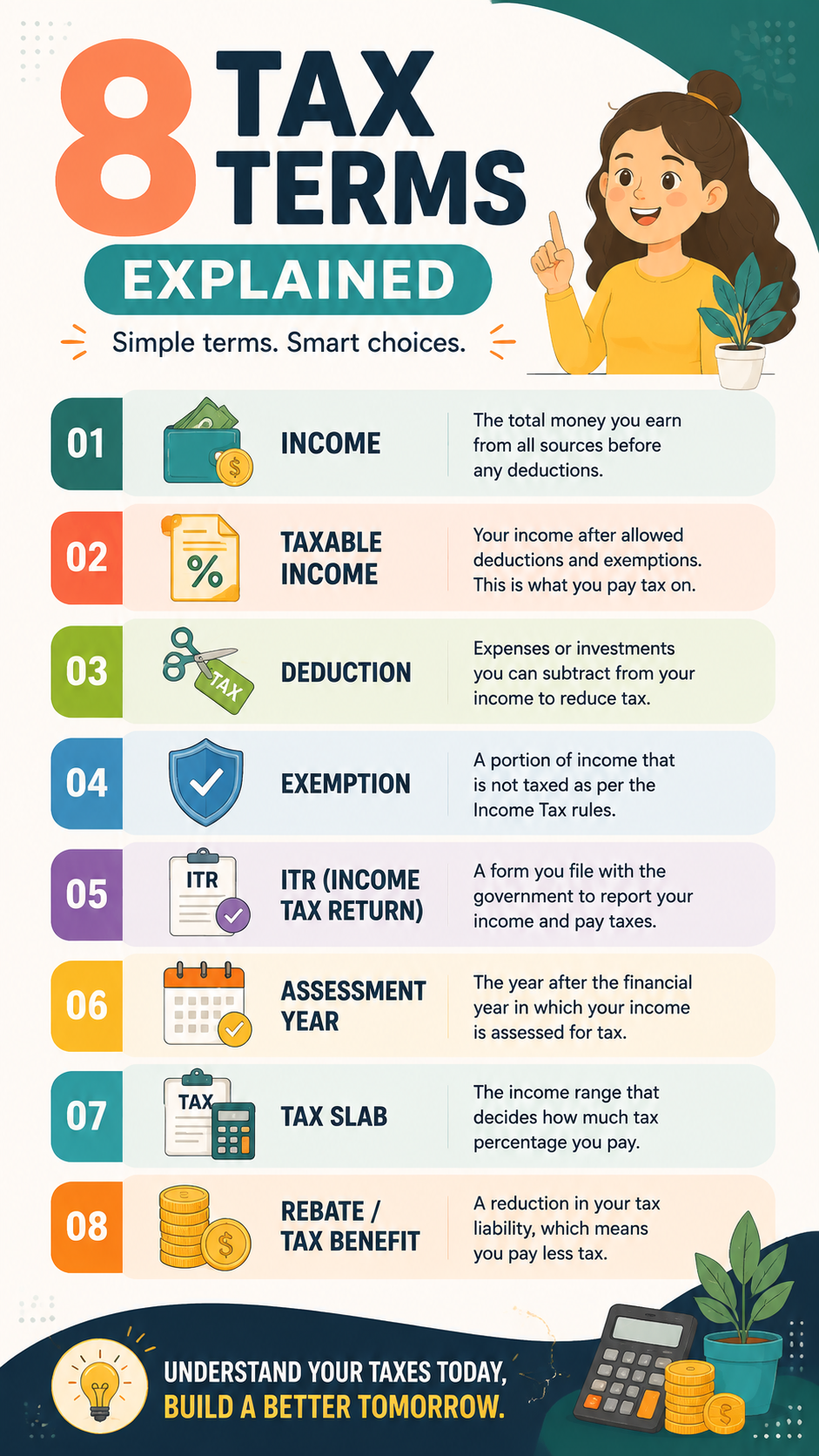
8 Tax Terms Explained Personal Finance Basics Everyone Should Know
Taxes are an important part of personal finance, but understanding the language around them can often feel confusing. Terms like income, taxable income, deductions, exemptions, tax returns, and rebates appear everywhere during tax season, yet many people are unsure what they actually mean. Learning these basic tax terms can help you make smarter financial choices, organize your money better, and feel more confident when managing your finances.
This beginner-friendly guide explains essential tax concepts in simple terms. Whether you are starting your first job, building your financial knowledge, or preparing for tax season, understanding these definitions can make the process much easier.
Key Takeaways
- Learn the difference between income and taxable income.
- Understand how deductions and exemptions can affect your taxes.
- Discover why filing a tax return is an important financial habit.
- Understand tax slabs and how tax rates are determined.
- Build stronger personal finance skills with basic tax knowledge.
Why Understanding Tax Terms Matters
Taxes affect many areas of your financial life. From your paycheck and savings decisions to investments and yearly planning, tax rules influence how much money you keep and how you manage it. However, tax information can seem overwhelming when it is filled with unfamiliar words and technical definitions.
Having a basic understanding of tax terminology gives you a stronger foundation for personal finance. Instead of simply filling out forms or following instructions, you can understand why certain amounts are included, reduced, or calculated.
Important: Tax knowledge is a valuable financial skill. Understanding common tax terms can help you organize your documents, avoid mistakes, and make more informed money decisions throughout the year.
8 Basic Tax Terms Everyone Should Know
1. Income
Income refers to the total money you earn from different sources before any deductions are applied. This may include wages, salaries, business earnings, investment returns, rental income, or other forms of payment.
Knowing your total income is the first step in understanding your overall tax situation. It provides the starting point for calculating how much of your earnings may be subject to taxation.
Why Income Is Important
Your income level often determines which tax rules apply to you. Keeping accurate records of all income sources helps create a clearer picture of your finances and makes tax preparation easier.
2. Taxable Income
Taxable income is the amount of income that remains after allowed deductions and adjustments are applied. It is the amount used to calculate your tax liability.
The difference between total income and taxable income is important because not every dollar earned may be taxed in the same way. Certain deductions and adjustments can reduce the amount considered taxable.
3. Deduction
A deduction is an expense, contribution, or financial adjustment that can reduce your taxable income. By lowering the amount of income considered taxable, deductions may help reduce the amount of tax you owe.
Common examples of deductions may include certain approved expenses, retirement contributions, education-related costs, or other eligible financial activities depending on local tax rules.
How Deductions Help
Deductions encourage certain financial behaviors while helping taxpayers reduce their taxable income. Understanding available deductions can help you plan your finances more effectively.
4. Exemption
An exemption refers to a portion of income or a specific category that may not be taxed under certain rules. Exemptions vary depending on the tax system and personal circumstances.
While tax laws change over time, the basic idea remains the same: exemptions can reduce the amount of income considered for taxation.
5. ITR (Income Tax Return)
An Income Tax Return, often called an ITR, is a document submitted to report income, deductions, and tax information to the relevant tax authority.
Filing a tax return helps keep financial records organized and allows taxpayers to report their earnings accurately. It may also help individuals claim eligible refunds or benefits.
6. Assessment Year
An assessment year is the period in which income from a previous financial year is reviewed and assessed for tax purposes. Understanding this term helps avoid confusion when completing tax documents.
Many tax systems use different names for specific periods, so knowing the terminology used in your region is helpful when planning and preparing your filings.
7. Tax Slab
A tax slab refers to income ranges that determine the applicable tax rate. Different income levels may have different percentages applied according to the tax structure.
Understanding tax slabs helps you estimate your potential tax obligations and plan your finances with greater awareness.
8. Rebate or Tax Benefit
A rebate or tax benefit reduces the amount of tax you need to pay. These benefits are usually designed to support specific financial activities or provide relief to eligible taxpayers.
Understanding available tax benefits can help you make more informed decisions about saving, investing, and managing expenses.
Simple Ways to Improve Your Tax Knowledge
Building tax knowledge does not require becoming a financial expert. Small steps can make a big difference over time. Start by learning common terms, organizing important documents, and reviewing your financial information regularly.
- Create a folder for income records, receipts, and important financial documents.
- Review your expenses to understand possible deductions.
- Learn basic tax vocabulary before starting your tax return.
- Stay updated on changes that may affect your financial planning.
Why This Matters
Financial confidence grows when you understand the basics. Knowing tax terms helps you communicate better, make smarter choices, and take greater control of your money.
Building Better Financial Habits Through Tax Awareness
Taxes are not just something to think about once a year. They are connected to everyday financial decisions. Understanding how income, deductions, and tax benefits work can help you create better money habits.
When you understand basic tax concepts, you can make more thoughtful choices about saving, spending, and planning for the future. Tax knowledge is one part of becoming financially responsible and confident.
At a Glance
- Income is the starting point for tax calculations.
- Taxable income determines what portion is taxed.
- Deductions and benefits may reduce tax liability.
- Tax returns help report financial information accurately.
Conclusion: Take Control of Your Financial Future
Understanding basic tax terms is an essential step toward improving your personal finance skills. You do not need to memorize every tax rule to become more confident with money. Learning the meaning behind common terms like income, deductions, taxable income, and tax benefits gives you a stronger foundation.
With better financial knowledge, tax season becomes less stressful and financial decisions become easier to manage. Start with the basics, continue learning, and build habits that support a healthier financial future.
Tags
Personal Finance
Tax Basics
Financial Literacy
Money Management
Tax Planning
Budgeting Tips