
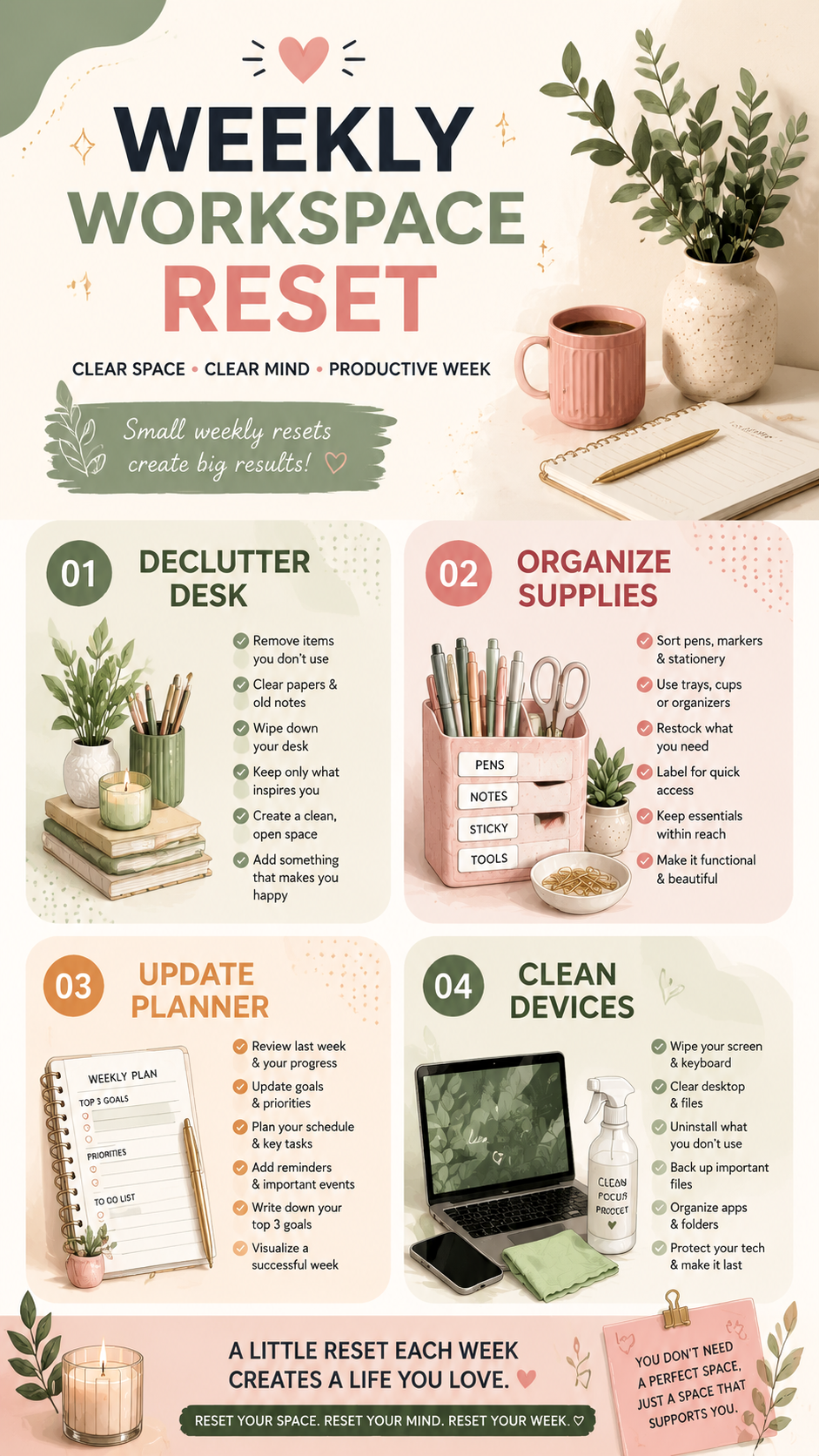
Weekly Workspace Reset Checklist Desk Organization Productivity Ideas
A productive week often begins with a simple reset. A cluttered desk can create distractions, while a clean and organized workspace can help you feel more focused, motivated, and ready to tackle your goals. A weekly workspace reset routine is a practical habit that transforms your desk into a calm environment where creativity and productivity can grow.
Whether you work from home, study, manage personal projects, or simply want a more peaceful corner for daily tasks, refreshing your workspace each week can make a noticeable difference. From decluttering your desk and organizing supplies to updating your planner and cleaning digital devices, small actions create a more efficient workflow.
Key Takeaways
- A weekly desk reset helps reduce clutter and improve focus.
- Organized supplies create a smoother and more enjoyable workflow.
- A refreshed planner helps you stay connected with your goals.
- Cleaning digital devices supports better productivity habits.
- A calm workspace can encourage creativity and consistency.
Why a Weekly Workspace Reset Matters
Your workspace is more than just a place where you complete tasks. It influences your mood, concentration, and daily habits. When papers pile up, supplies become difficult to find, and unnecessary items take over your desk, even simple tasks can feel overwhelming.
A weekly workspace reset creates a fresh starting point. Instead of waiting until clutter becomes stressful, you can spend a few minutes restoring order and preparing your environment for the days ahead. This simple routine encourages intentional work and helps you create a space that supports your goals.
Important: A productive workspace is not about having a perfect desk. It is about creating an environment where everything you need is easy to access and where your mind feels ready to focus.
Step 1: Declutter Your Desk for a Fresh Start
The first step in a weekly workspace reset is removing unnecessary items. A clean desk instantly creates a sense of openness and makes it easier to concentrate. Start by looking at everything currently sitting on your workspace and decide what truly belongs there.
Simple Desk Decluttering Ideas
- Remove papers, notes, or items you no longer need.
- Recycle old documents and organize important files.
- Clear empty cups, packaging, and unnecessary decorations.
- Keep only items that support your daily tasks.
- Create an open area for writing, planning, or working.
A minimal workspace does not mean removing everything. Personal touches such as plants, candles, inspiring notes, or favorite stationery can make your desk feel comfortable while still keeping it functional.
Step 2: Organize Office Supplies Efficiently
After clearing your desk, the next step is organizing the supplies you use regularly. Pens, markers, notebooks, and tools should have a dedicated place so you can quickly find what you need without interrupting your workflow.
Create Simple Storage Systems
Desk organizers, trays, cups, and small containers can help separate different categories of supplies. Keep frequently used items within reach and store occasional tools in drawers or containers.
- Use cups or holders for everyday writing tools.
- Separate stationery by purpose or category.
- Label containers if it helps maintain consistency.
- Avoid overcrowding your workspace with too many supplies.
Pro Tip: Organizing your workspace once is helpful, but creating a weekly reset habit is what keeps your desk functional long term.
Step 3: Refresh Your Planner and Weekly Goals
A workspace reset is not complete without reviewing your plans. Your planner connects your physical environment with your priorities. Taking a few minutes to review your schedule can help you approach the week with more clarity.
Planner Reset Checklist
- Review unfinished tasks from the previous week.
- Update important dates and reminders.
- Choose your main priorities for the coming days.
- Break large goals into smaller actions.
- Create a realistic weekly schedule.
When your planner is organized, your workspace becomes a place that supports progress instead of reminding you about unfinished responsibilities.
Why This Matters
Your surroundings can influence your habits. A simple reset routine creates a visual reminder that you are prepared, organized, and ready to focus.
- Clean spaces reduce unnecessary distractions.
- Planning ahead creates a clearer direction.
- Small routines build long-term productivity.
Step 4: Clean Your Digital Workspace
Your digital environment deserves attention too. A messy computer desktop, crowded folders, and unused applications can create the same frustration as a cluttered physical desk.
Digital Reset Ideas
- Clear unnecessary files from your desktop.
- Organize folders for easier access.
- Remove apps and programs you no longer use.
- Back up important documents.
- Clean your keyboard and screen.
A clean digital workspace saves time and makes it easier to locate important information when you need it.
How to Create a Workspace Reset Routine
The best workspace reset routine is one that feels simple enough to repeat. You do not need to spend hours reorganizing your entire office every week. A short, consistent routine can provide the same benefits.
A 15 Minute Weekly Reset
- 5 minutes: Remove clutter and clean surfaces.
- 5 minutes: Organize supplies and tools.
- 5 minutes: Review your planner and prepare priorities.
Consistency is more important than perfection. A workspace that is regularly refreshed will naturally become easier to maintain.
At a Glance: Weekly Workspace Reset
Quick Points
- Clear your desk before starting a new week.
- Keep essential supplies organized.
- Update your goals and planner.
- Refresh both physical and digital spaces.
Conclusion: Reset Your Space, Reset Your Week
A weekly workspace reset is a simple practice that can completely change the way you approach your tasks. By decluttering your desk, organizing your supplies, refreshing your planner, and cleaning your digital space, you create an environment that encourages focus and productivity.
Your workspace does not need to look perfect. It only needs to support the way you work and help you feel prepared for what comes next. A few intentional minutes each week can create a calmer, more productive routine that lasts.
Tags
Workspace Reset
Desk Organization
Productive Workspace
Home Office Ideas
Desk Setup
Weekly Planning


